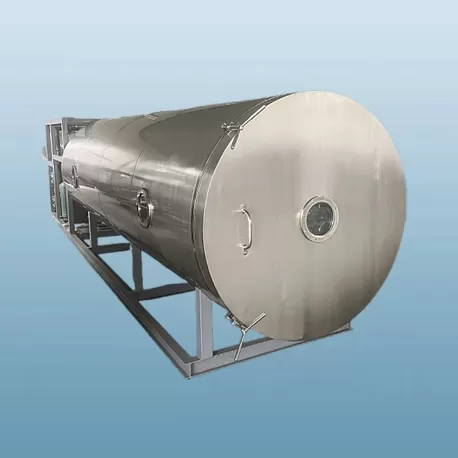
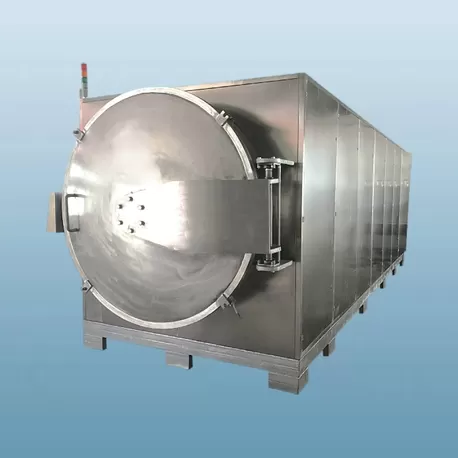
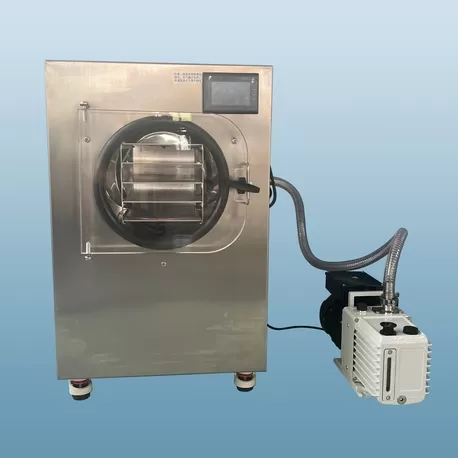
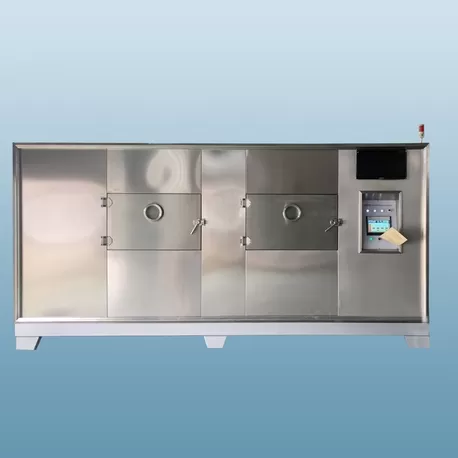
For food processors, agricultural cooperatives, and commercial dehydrators,
the choice of a fruit dryer factory directly impacts product quality, energy costs, and throughput capacity.
Industrial fruit drying is not simply about removing water – it requires precise
control of temperature, airflow, humidity, and drying time to preserve color,
flavor, vitamins, and microbial stability. This article provides a
component-level analysis of what to evaluate when sourcing from a fruit dryer factory, covering drying technologies
(heat pump, microwave, vacuum, infrared), capacity planning, energy efficiency
metrics, and post-drying handling. Drawing on data from Nasan's 20 years of industrial drying equipment
manufacturing, we will examine how to match dryer specifications to specific
fruits – mangoes, apples, bananas, berries, citrus peels – and avoid common
pitfalls like case hardening, uneven moisture, and high rehydration ratios.

1. Why the Choice of Fruit Dryer Factory Matters for Product Quality
The engineering competence of a fruit dryer factory determines the uniformity and efficiency of the drying process. Poorly designed
dryers cause:
Case hardening: Surface dries too fast, trapping moisture
inside, leading to spoilage during storage.
Non-uniform moisture content: Parts at the back of trays
remain wet while front is over-dried.
Nutrient degradation: Excessive heat destroys vitamin C,
polyphenols, and natural sugars.
High energy consumption: Inefficient insulation and airflow
increase drying cost per kilogram.
A reputable industrial fruit dryer
manufacturer like Nasan uses computational
fluid dynamics (CFD) to design airflow patterns, selects appropriate insulation
materials, and provides programmable logic controllers (PLC) for precise drying
curves. Field data show that well-engineered dryers reduce energy use by 30–50%
compared to basic cabinet dryers, while achieving moisture uniformity within
±1.5%.
2. Core Drying Technologies Offered by a Fruit Dryer Factory
Different fruits and production scales require different drying principles. A
capable fruit dryer factory should offer at least three of the
following technologies.
2.1 Heat Pump Drying (HPD)
Principle: Closed-loop refrigeration cycle – evaporator
removes moisture from air, condenser reheats dehumidified air. No exhaust to
outside.
Best for: Temperature-sensitive fruits (berries, kiwi,
citrus peels) at 30–60°C. Preserves color and volatiles.
Advantages: Energy efficiency (COP 3–4, meaning 1 kWh
electricity moves 3–4 kWh of heat), low operating cost, consistent humidity
control.
Limitations: Higher initial investment, slower drying than
direct heating, limited to 70°C max.
2.2 Microwave-Assisted Drying (MWD)
Principle: 915 MHz or 2450 MHz electromagnetic waves heat
water molecules volumetrically, not by conduction.
Best for: High-sugar fruits (dates, figs, raisins) where
surface heating causes burning. Also for rapid drying of fruit puree
sheets.
Advantages: Very fast (70% time reduction), uniform
heating, kills insects and bacteria.
Limitations: High equipment cost, requires shielding,
potential for arcing if fruit contains metal fragments.
2.3 Vacuum Drying
Principle: Reduced pressure lowers water boiling point,
allowing drying at 30–50°C without thermal damage.
Best for: Premium dried fruits (organic mango, papaya)
where appearance and rehydration are critical.
Advantages: Excellent retention of shape, color, and
nutrients; low oxidation.
Disadvantages: Batch process, low throughput, high capital
cost.
2.4 Continuous Belt Dryers
Principle: Multi-stage perforated belts with cross-flow or
through-flow hot air (60–90°C).
Best for: High-volume processing (apples, bananas,
pineapples) – 1–10 tons per hour.
Advantages: Fully automated, consistent residence time, can
integrate with pre-treatment (sulfiting, blanching).
Disadvantages: Large footprint, higher energy use per kg
than heat pump, risk of over-drying at belt edges.
Nasan offers all four configurations, with engineers
helping customers select based on fruit type, moisture content (initial 80–90%
to final 10–15%), and daily throughput. For most medium-scale operations
(500–2000 kg/day), a heat pump dryer provides the best balance of operating cost
and product quality.
3. Key Technical Specifications to Request from a Fruit Dryer Factory
When evaluating proposals from a fruit dryer factory, obtain these eight parameters in
writing:
Drying capacity (kg of fresh fruit per batch or per hour): Specify whether it's based on apples (high moisture) or dates (low moisture).
Typical: 100 kg fresh apples yields 15–20 kg dried.
Temperature range and control accuracy: ±1°C is acceptable
for most fruits; ±0.5°C for premium products.
Airflow volume (m³/h) and velocity (m/s) across trays: Minimum 1.5 m/s to break boundary layer.
Humidity control: Ability to set relative humidity (30–80%
RH) and ramp down during final stages.
Energy source and consumption: Electric heat pump (kWh per
kg water removed) vs. gas/diesel heater (kJ per kg). Target < 0.8 kWh/kg
water for heat pump, < 4 kWh/kg for electric resistance.
Number of trays and tray material: Stainless steel 304 or
food-grade PP. Tray spacing (50–80 mm) affects loading density.
Control system: PLC with HMI, data logging, and remote
monitoring (Industry 4.0). Ability to store 10+ drying recipes.
Cleaning and sanitation design: Removable trays, sloped
floors, CIP (clean-in-place) nozzles for hygienic processing.
Reputable factories like Nasan provide a
drying curve test report for your specific fruit sample – free
of charge – before you commit to a purchase. This report shows moisture removal
rate at each hour and predicts final product quality.
4. Industry Pain Points and Engineering Solutions in Fruit Drying
Even with good equipment, operators face recurring issues. Below are three
common problems and how a professional fruit dryer factory addresses them.
Non-uniform drying between trays: Caused by poor air
distribution. Solution – use a reverse-flow design where airflow direction
alternates every 10–15 minutes, or install perforated baffles. Nasan's dryers
include adjustable air vanes to balance flow within ±5% across all trays.
High energy cost due to heat loss: Poorly insulated walls
and doors waste 20–30% of heat. Remedy – specify 80–100 mm polyurethane foam
insulation (thermal conductivity < 0.025 W/m·K) and double-sealed magnetic
gaskets.
Microbial growth during drying: If initial drying rate is
too slow, bacteria and molds proliferate. Solution – use a two-stage profile:
first 2 hours at 50°C with high airflow to rapidly drop surface moisture below
0.7 water activity, then reduce to 40°C for interior drying. PLC-controlled
recipes automate this.
According to Nasan's field service records, these engineering solutions
reduce drying time by 18–25% and cut reject rates from 8% to under 2% for mango
and pineapple processors.
5. Energy Efficiency Metrics: Comparing Dryer Types
When sourcing from a fruit dryer factory, ask for the
Specific Moisture Extraction Rate (SMER) – kg of water removed per kWh of energy
input. Typical values:
Electric resistance (heating coils): SMER 0.5–0.8 kg/kWh – very
inefficient.
Heat pump (closed-loop): SMER 2.5–3.5 kg/kWh – best for most
applications.
Gas direct-fired: SMER 1.2–1.8 kg/kWh (but gas cheaper per MJ).
Microwave: SMER 0.9–1.2 kg/kWh (fast but energy-intensive).
For a dryer processing 1,000 kg of fresh apples (850 kg water to remove), a
heat pump dryer with SMER 3.0 consumes 283 kWh, costing $34 (at $0.12/kWh). An
electric resistance dryer would use 1,063 kWh ($128) – nearly four times higher.
The payback period for the higher upfront cost of a heat pump dryer is typically
12–18 months.
Nasan's industrial heat pump
dryers achieve SMER 3.2–3.8 in third-party tests, verified by TÜV
SÜD. Ask for the energy consumption report when comparing fruit dryer
factory quotations.
6. Post-Drying Handling and Quality Control
A complete solution from a fruit dryer factory should
include recommendations for post-drying steps:
Conditioning: After drying, fruits are left in sealed
containers for 24–48 hours to equalize moisture from center to surface. This
prevents mold during storage.
Sorting and metal detection: Integrated conveyor belts with
optical sorters and metal detectors remove discolored pieces or foreign
objects.
Packaging: Nitrogen-flushed vacuum bags or barrier films to
prevent oxidation. Dried fruits with moisture > 15% require refrigeration
storage.
Nasan provides optional integration of these downstream modules, creating a
turnkey fruit drying line from
washing to packaging.

7. Regulatory Compliance and Certifications
When selecting a fruit dryer factory, verify that equipment
meets food safety regulations:
Materials: Food-grade stainless steel (304 or 316) for all
contact surfaces. No aluminum or zinc.
Welding standards: Smooth, continuous welds with no
crevices where bacteria can hide (sanitary welding per 3-A standard).
Electrical safety: IP54 or higher for washdown areas. UL or
CE certification.
HACCP compliance: Dryer design allows easy cleaning and
inspection.
Nasan dryers are built to ISO 22000 and FSSC 22000
standards, with full material certificates (EN 10204 3.1) for stainless steel.
Each unit comes with an operation manual and sanitation guide.
8. Frequently Asked Questions (FAQ) – Fruit Dryer Factory Selection
Q1: How do I know which drying technology is best for my
fruit?
A1: Send a 5 kg sample to a fruit
dryer factory like Nasan for a free test. We run a drying curve and
analyze final product color, texture, and rehydration ratio. Generally: berries
and herbs → heat pump (low temp); bananas and mangoes → heat pump or continuous
belt; high-sugar dates → microwave assist; premium organic → vacuum.
Q2: What is the typical lead time for a custom fruit dryer from a
factory?
A2: Standard models (200–1000 kg/batch)
ship in 4–6 weeks. Custom continuous belt dryers with automation require 10–14
weeks. Nasan offers expedited manufacturing for an additional 15% fee.
Q3: Can I use the same dryer for different fruits without flavor
cross-contamination?
A3: Yes, if the dryer has
removable trays and a CIP (clean-in-place) system. Run a hot water rinse (70°C)
with mild detergent between batches. For heat pump dryers, also run a
dehumidification cycle to remove volatile residues. Nasan's dryers include a
"clean mode" that circulates hot air at 80°C for 30 minutes to sanitize.
Q4: What maintenance is required for an industrial fruit
dryer?
A4: Daily: clean trays and filters; check
door seals. Weekly: inspect condenser coils (heat pump) for dust; lubricate fan
bearings. Monthly: verify temperature sensors with a calibrated probe; check
refrigerant pressure. Annually: replace air filters and fan belts. Nasan
provides a maintenance checklist with each dryer.
Q5: How do I calculate the required dryer capacity for my farm or
factory?
A5: Use the formula: Capacity (kg
fresh/day) = (Harvest volume kg per season) / (Days available for drying). Then
multiply by 0.2 to 0.25 to get dried output. For example, 10,000 kg mangoes over
30 days = 333 kg/day fresh. A 400 kg/batch dryer (two batches per day) would
suffice. Nasan's engineers provide free capacity calculations with your harvest
data.
Q6: What is the warranty offered by a reputable fruit dryer
factory?
A6: Industry standard is 2 years on parts
and 1 year on labor for defects. Nasan offers 3 years on the compressor (heat
pump model) and lifetime technical support. Always read the warranty exclusions
– some factories exclude wear parts like belts and filters.
9. Partner with an Experienced Fruit Dryer Factory for Long-Term
Reliability
Selecting the right fruit dryer factory is a
strategic decision that affects your product quality, operating costs, and
ability to scale. Generic dryers from non-specialized manufacturers often lack
the precise airflow control, insulation, and food-safe construction required for
commercial fruit processing.
Nasan provides end-to-end support:
Free sample testing and drying curve analysis.
Custom engineering to match your facility's electrical and floor space
constraints.
Installation, training, and remote performance monitoring.
Spare parts availability for 10+ years.
Request your free drying test today – Click here to contact Nasan’s fruit
drying specialists or call+86 21 31006665 ext 801(Telephone) / +86 139 1616 2131(Mobile No.)for immediate assistance.