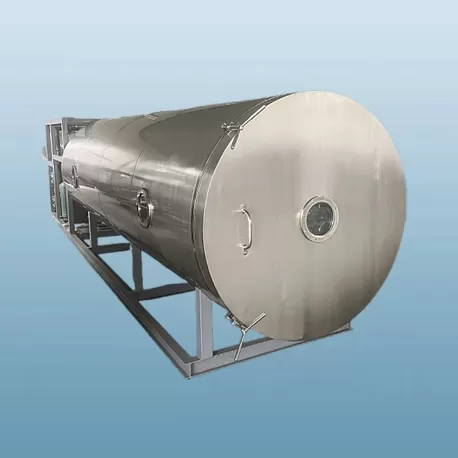
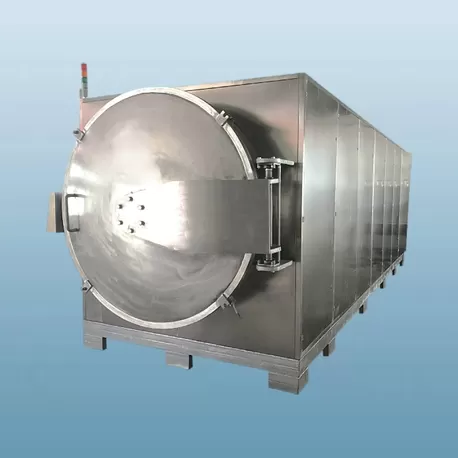
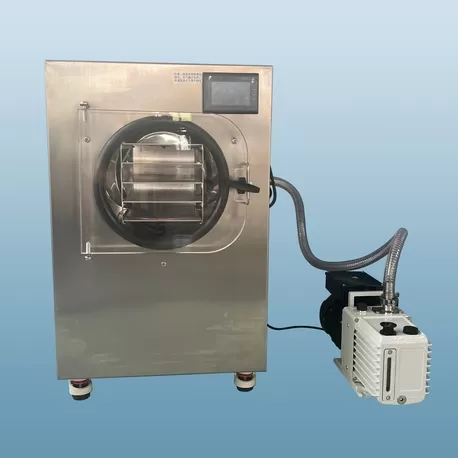
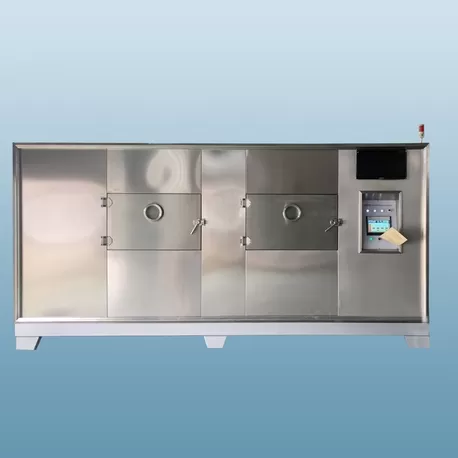
Industrial thermal processing requires a precise balance between energy
consumption and product output quality. In modern processing facilities, thermal
operations often account for up to 15% to 25% of total industrial energy usage.
For processing plants handling high-volume continuous production, optimizing
your tunnel
dryer system is a highly practical way to manage operational costs
and improve throughput consistency.
Many processing plants operate with outdated thermal configurations, relying
on high heat to expedite moisture removal. However, thermal dynamics in
continuous systems are governed by complex interactions between air movement,
humidity, and material surface characteristics. Simply increasing temperatures
can damage materials and lead to substantial energy loss.
This article provides an analysis of thermodynamic behaviors in continuous
drying systems. It offers practical adjustment strategies, looks at common
operational mistakes, and introduces a framework to help you improve the thermal
efficiency of your equipment.

The Physics of Continuous Industrial Drying
Continuous drying relies on steady heat transfer to evaporate moisture from
moving materials. In a commercial tunnel dryer,
heat is transferred through convection, conduction, or radiation, depending on
the design. The efficiency of this process is determined by how well the system
manages the evaporation rate relative to the thermal input.
Moisture removal occurs in two distinct phases: the constant-rate drying
period and the falling-rate drying period. During the constant-rate period,
surface moisture evaporates rapidly, and the product's temperature remains
relatively low due to evaporative cooling. As the surface dries, the process
enters the falling-rate period, where internal moisture must migrate to the
surface.
This transition requires precise control over air speed and humidity zones.
If the drying air in the early zones is too dry or too hot, it can cause "case
hardening." This seals the surface of the material, trapping moisture inside and
increasing the energy needed to complete the process. This highlights why
understanding thermal dynamics is so important.
To address these challenges, thermal engineering firms like Nasan design systems with
multiple heating zones. These zones allow operators to adjust temperature
profiles to match the specific moisture desorption curve of their materials,
preserving quality while managing energy use.
Unveiling the Thermal Equilibrium Triad (TET)
To help operators analyze and adjust their continuous thermal processes, we
developed the Thermal Equilibrium Triad (TET) framework. This
framework focuses on three interdependent variables that determine the
efficiency of any continuous drying operation.
The first component is Zone-Velocity Alignment. The air
velocity inside each zone of the tunnel dryer must match the moisture state of the product. High-velocity air is most
effective in early zones to remove surface moisture, while lower-velocity,
controlled-temperature air is better suited for later zones to prevent product
damage.
The second component is Boundary-Layer Management. A
stagnant boundary layer of saturated air often forms on the product surface,
slowing down evaporation. Managing air turbulence helps break up this layer,
allowing evaporation to continue efficiently without needing excessively high
temperatures.
The third component is Desorption Dynamics. This refers to
the rate at which a specific material releases trapped water. By matching the
thermal profile of your equipment to these dynamics, you can avoid wasting
energy on over-heating dry materials.
| TET Component | Primary Variable Controlled | Impact on Drying Efficiency | Common Operational Issue |
|---|
| Zone-Velocity Alignment | Air Velocity & Fan Speed | Optimizes heat transfer during early drying stages | High velocity in late stages causes product dusting |
| Boundary-Layer Management | Air Turbulence & Nozzle Angle | Reduces thermal resistance at the product surface | Stagnant air pockets delay moisture release |
| Desorption Dynamics | Temperature Profile & Residence Time | Prevents unnecessary energy use on dry materials | Over-drying due to uniform temperature settings |
Addressing the Hidden Costs of Thermal Overprocessing
A common misconception in process engineering is that higher heat always
yields faster drying times. In practice, running a tunnel dryer at excessively high temperatures often leads to thermal overprocessing. This
issue can damage product quality and increase utility costs.
When materials are subjected to high temperatures too quickly, the outer
layer can burn or crack while the core remains damp. This issue is particularly
problematic in food processing, chemical production, and ceramics manufacturing,
where structural integrity and chemical composition are critical.
Overprocessing also accelerates wear and tear on your equipment. Conveyor
belts, fan bearings, and heating elements degrade faster under constant,
high-temperature stress. By implementing zoned temperature profiles, operators
can often reduce energy consumption by 15% to 30% while extending the lifespan
of their systems.
Modern equipment, such as the systems engineered by Nasan, uses advanced
sensor integration to monitor internal humidity levels. These real-time feedback
loops allow the system to make automatic adjustments, helping to prevent
overprocessing and maintain consistent product quality.

Practical Checklist for Tunnel Dryer Optimization
Regular maintenance and calibration are essential for keeping your thermal
equipment running efficiently. Below is a practical checklist designed for
process engineers and maintenance technicians to help optimize performance.
Airflow Balancing: Verify that air distribution across the
width of the belt is uniform. Uneven airflow leads to wet spots in the product
bed, requiring operators to slow down the entire line.
Exhaust Damper Adjustment: Monitor exhaust air relative
humidity (RH). If the exhaust RH is below 30%, you may be venting heated air too
quickly. Adjust dampers to keep exhaust RH between 45% and 55% for better
efficiency.
Thermal Imaging Audits: Use infrared cameras to check the
exterior shell of your tunnel dryer.
Address any insulation gaps or air leaks around access doors to prevent heat
loss.
Sensor Calibration: Calibrate temperature and humidity
sensors at least twice a year. Inaccurate readings can cause the control system
to overheat the drying chamber.
Conveyor Speed Verification: Ensure that the conveyor drive
system matches the calibrated residence time. Minor belt slippage can alter the
drying profile and affect product consistency.
Frequently Asked Questions (FAQ)
Q1: What is the primary difference between co-current and
counter-current airflows in a tunnel dryer?
A1: In co-current systems, the drying air moves in the same
direction as the product. This exposes the wettest product to the hottest air,
which is ideal for heat-sensitive materials. In counter-current systems, the air
moves in the opposite direction. This exposes the driest product to the hottest,
driest air, making it highly efficient for removing residual moisture, though it
requires careful temperature monitoring.
Q2: How do you control humidity inside a tunnel dryer?
A2: Humidity is managed by balancing the recirculation of
warm process air with the intake of fresh, dry air and the venting of wet
exhaust air. Modern systems use automated dampers connected to humidity sensors
to maintain the correct humidity levels in each zone.
Q3: What types of materials are best suited for a conveyor-based
tunnel dryer?
A3: These systems are well-suited for bulk solids, granular
materials, extruded products, molded parts, and packaged foods that require
continuous, uniform drying. They are particularly useful for materials that need
consistent, gentle handling during the drying process.
Q4: How does air velocity impact the energy efficiency of the drying
process?
A4: Air velocity affects how quickly heat is transferred to
the product and how fast evaporated moisture is carried away. While higher
velocities can speed up drying in the early stages, excess speed in later stages
wastes fan power and can cause product dusting without improving drying
times.
Q5: How does Nasan assist in customized tunnel dryer
design?
A5: Nasan analyzes your
specific product characteristics, moisture profiles, space constraints, and
energy sources. This data is used to custom-engineer zoning, airflow paths, and
thermal capacities to help you achieve consistent, energy-efficient
production.
Conclusion and Action Steps
Optimizing your thermal processing equipment is an ongoing process of
monitoring and adjustment. By understanding thermodynamics, applying structured
frameworks like the TET, and performing regular calibration, plants can reduce
energy waste and improve product consistency.
If you are looking to upgrade your existing setup or design a custom system
for your facility, working with an experienced partner can help. To learn more
about how a customized tunnel dryer can fit into your production line, contact the engineering team at Nasan today.