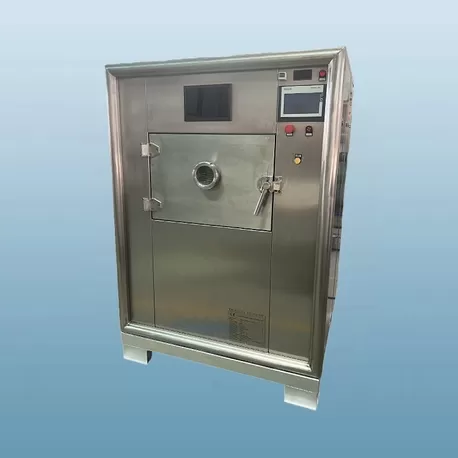
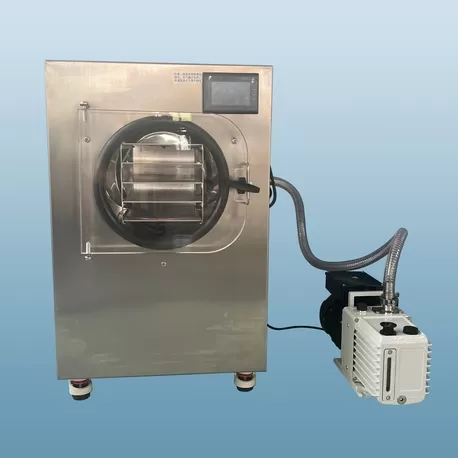
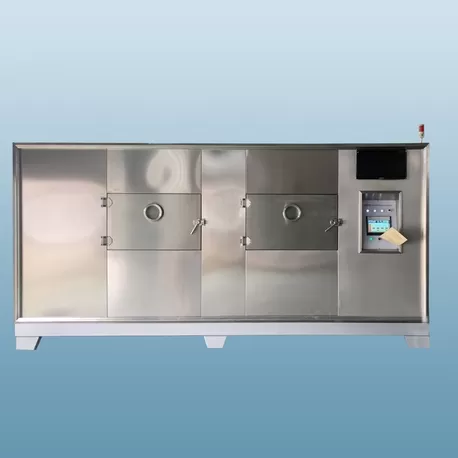
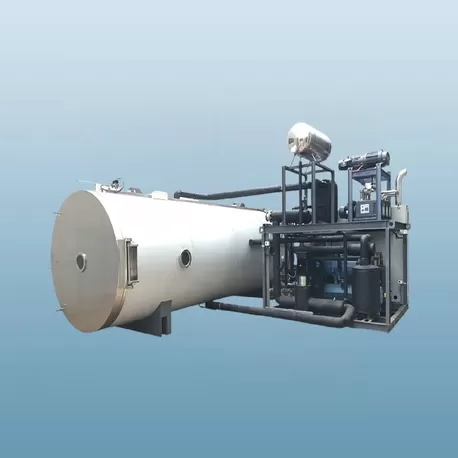
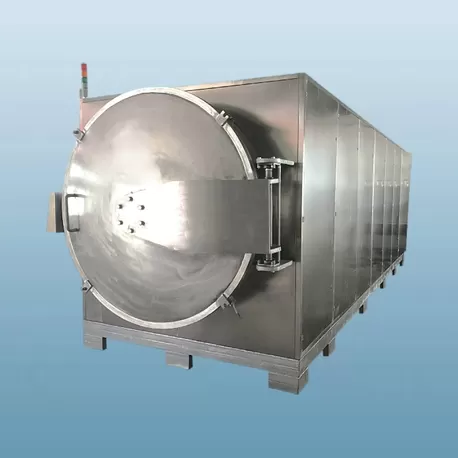
Lyophilization, or freeze-drying, represents the most sophisticated method
for preserving heat-sensitive biologicals, pharmaceuticals, and high-value food
products. Unlike traditional thermal dehydration, which uses heat to evaporate
moisture, lyophilization relies on the physical principle of sublimation—the
direct transition of water from a solid state (ice) to a gaseous state (vapor)
without passing through the liquid phase. For industrial operators, selecting a
competent freeze dryer
manufacturer is a decision that impacts the biochemical stability
of the end product and the operational efficiency of the entire facility. This
analysis explores the technical parameters, engineering standards, and
mechanical configurations necessary for high-performance freeze-drying
systems.

1. The Physics of Sublimation and the Triple Point of Water
The success of the freeze-drying process is governed by the phase diagram of
water. To achieve sublimation, the environment inside the drying chamber must be
maintained at a pressure and temperature below the triple point (0.01°C and
0.611 kPa). A proficient freeze dryer
manufacturer designs systems capable of reaching deep vacuum
levels, often down to 0.001 mbar, to facilitate the efficient migration of water
molecules from the product matrix.
Engineering these systems requires a deep understanding of the glass
transition temperature (Tg') and the eutectic point (Teu) of the specific
material being processed. If the product temperature exceeds these thresholds
during the primary drying phase, "collapse" occurs, leading to a loss of
structural integrity and poor rehydration characteristics. Therefore, the
thermal management system must be capable of precision cooling and controlled
heating with minimal fluctuations.
2. Shelf Design and Heat Transfer Fluid Dynamics
In large-scale industrial units, the shelves serve two purposes: they provide
the surface for pre-freezing and act as the heat source for sublimation. To
ensure batch uniformity, shelf temperature uniformity is paramount. Advanced
manufacturers, including Nasan, utilize internal channels
within the shelves through which silicone oil or other heat transfer fluids
circulate.
Thermal Uniformity: High-spec systems target a shelf
temperature variance of less than ±1.0°C across the entire surface area.
Shelf Flatness: To ensure consistent contact with vials or
trays, shelves must be machined to extreme flatness tolerances, preventing
localized "cold spots" or "hot spots" that could ruin a portion of the
batch.
Hollow Plate Technology: Modern plates are often
laser-welded to provide superior structural rigidity under high vacuum and
high-pressure sterilization cycles (SIP).
3. Ice Condenser Capacity and Vapor Pathways
The ice condenser, often referred to as the cold trap, is the "engine" of the
freeze dryer. Its role is to capture the water vapor migrating from the drying
chamber, preventing it from entering the vacuum pump. A freeze dryer
manufacturer must balance the condenser's surface area with its
cooling capacity. If the condenser temperature is not significantly lower than
the product temperature (typically a 20°C differential), the vapor pressure
gradient will be insufficient, leading to stalled drying cycles.
Vapor pathway design is equally significant. The ducting or "mushroom valve"
connecting the drying chamber to the condenser must be sized to minimize
resistance to vapor flow. At low pressures, water vapor occupies a massive
volume; any constriction in the path causes a pressure drop that increases the
product temperature, potentially leading to melt-back or collapse.
4. Vacuum System Integrity and Leak Rate Standards
The ability to maintain a stable vacuum over several days is a foundational
requirement for any lyophilizer. This requires the use of high-performance
vacuum pumps, such as rotary vane or dry scroll pumps, often backed by Roots
blowers for increased displacement. However, the mechanical hardware is only as
good as the chamber's sealing integrity.
Engineering benchmarks for vacuum integrity include:
Helium Leak Testing: The entire assembly should be tested
to ensure leak rates are below 1x10^-6 mbar·L/s.
Outgassing Prevention: Internal surfaces must be polished
to a mirror finish (Ra ≤ 0.4 μm) to minimize the surface area for gas molecules
to adhere, facilitating faster "pump-down" times.
Seal Material Selection: Utilizing Viton or specialized
silicone gaskets that remain pliable at -60°C and do not degrade during steam
sterilization.
5. The Three Stages of the Lyophilization Cycle
A high-performance freeze dryer must be programmable to handle the three
distinct phases of the cycle with absolute precision:
A. Pre-freezing and Annealing
The product is cooled to a temperature well below its eutectic point. In some
cases, an "annealing" step is introduced, where the temperature is slightly
raised and then lowered again. This encourages the growth of larger ice
crystals, which creates larger pores in the dried cake, facilitating faster
sublimation during the next stage.
B. Primary Drying (Sublimation)
This is the longest phase, where the bulk of the water is removed. The vacuum
is lowered, and heat is slowly applied to the shelves. The heat must be
precisely calibrated to provide the latent heat of sublimation without melting
the ice. Nasan integrates advanced PID control algorithms to manage this delicate energy
balance.
C. Secondary Drying (Desorption)
Once the mobile ice is gone, moisture remains bound to the product's
molecular structure. In this phase, the shelf temperature is increased
(sometimes as high as 40°C or 50°C) and the vacuum is pushed to its limit to
pull out the remaining "bound water." The goal is to reach a final moisture
content of 1% to 3%.
6. Automation, PAT, and Data Integrity
Modern industrial drying requires more than just mechanical components; it
requires sophisticated software. For pharmaceutical applications, the control
system must comply with 20 CFR Part 11, providing full audit trails and
electronic signatures. Process Analytical Technology (PAT) tools are now being
integrated by any leading freeze dryer
manufacturer to provide real-time monitoring of the drying
front.
Manometric Temperature Measurement (MTM): A technique that
uses rapid pressure rises to calculate the product temperature at the
sublimation interface without physical probes.
Tunable Diode Laser Absorption Spectroscopy (TDLAS): Measuring the concentration and velocity of water vapor as it moves toward the
condenser to determine the exact end-point of primary drying.
Automated Loading and Unloading (ALUS): For high-capacity
lines, robotic systems handle the placement of vials to minimize human
intervention and contamination risks.

7. Application Scenarios Across Divergent Sectors
The versatility of freeze-drying is seen in its varied applications. In the
biotechnology sector, it is used for live vaccines, monoclonal antibodies, and
enzyme stabilization. These applications require Clean-in-Place (CIP) and
Steam-in-Place (SIP) systems to ensure sterile conditions between batches.
In the functional food and nutraceutical sector, the focus shifts toward
preserving phytonutrients and probiotics. For instance, freeze-drying cordyceps
or berry extracts ensures that the antioxidant levels are nearly identical to
the fresh state. The pet food industry has also adopted this technology to
produce premium, high-protein snacks that are lightweight and shelf-stable
without the need for artificial preservatives. Each sector demands a specific
configuration of condenser capacity and shelf spacing.
8. Solving Industry Pain Points: Cycle Optimization
One of the primary challenges in industrial lyophilization is the duration of
the cycle, which can range from 24 to over 72 hours. An experienced freeze dryer
manufacturer solves this by optimizing the "vapor bypass" and
implementing more efficient refrigeration cycles. By utilizing
dual-refrigeration systems or liquid nitrogen cooling, manufacturers can achieve
faster pull-down times. Furthermore, sophisticated software allows for "cycle
development," where small-scale lab results are accurately scaled up to
production-level equipment, reducing the risk of batch failure during the
transition.
Frequently Asked Questions
Q1: What is the significance of the "cold trap"
temperature?
A1: The cold trap must be significantly colder than the product's ice
temperature. If the product is at -20°C, the condenser should ideally be at
-50°C or -60°C. This temperature difference creates the vapor pressure deficit
necessary for the moisture to move out of the product and onto the condenser
coils.
Q2: How do I know when the primary drying phase is
finished?
A2: This is typically determined by a "pressure rise test." The valve between
the chamber and the condenser is momentarily closed. If the pressure in the
drying chamber remains stable, no more sublimation is occurring, indicating the
phase is complete. If the pressure rises rapidly, ice is still present.
Q3: Why is 316L stainless steel preferred over 304?
A3: 316L stainless steel contains molybdenum, which provides superior
resistance to pitting and corrosion, especially when subjected to the harsh
chemicals used in CIP or the high-pressure steam used in SIP sterilization
cycles.
Q4: Can freeze dryers be customized for unconventional
products?
A4: Yes. Specialized manufacturers like Nasan can customize shelf spacing,
chamber geometry, and condenser placement to accommodate everything from bulk
powders to large-format biological samples or taxidermy.
Q5: What maintenance is required for the vacuum pumps?
A5: For oil-sealed pumps, regular oil changes are necessary to prevent
contamination from moisture or solvent vapors. For dry scroll pumps, tip seals
should be replaced at manufacturer-specified intervals to maintain the ultimate
vacuum level.
Inquiry for Professional Freeze-Drying Solutions
The engineering of an industrial lyophilizer requires a rigorous balance of
thermodynamic capability, mechanical precision, and software intelligence. As
industries move toward more sensitive biological formulations and premium
natural products, the role of a specialized freeze dryer
manufacturer becomes increasingly significant in the production
chain. At Nasan, we
focus on providing robust, validated, and high-efficiency systems designed to
meet the specific requirements of your sector. Whether you are looking to scale
up from laboratory R&D or require a full-scale production facility, our
technical team is available to assist with your inquiry and provide a tailored
solution for your drying needs.