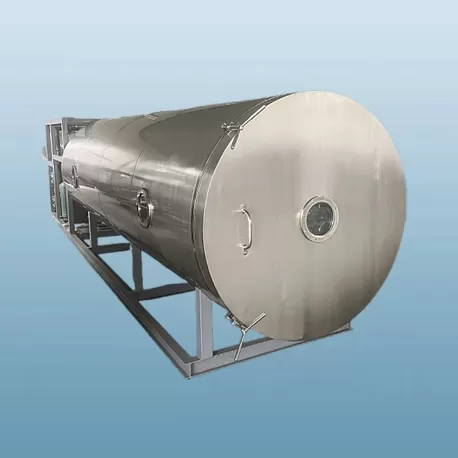
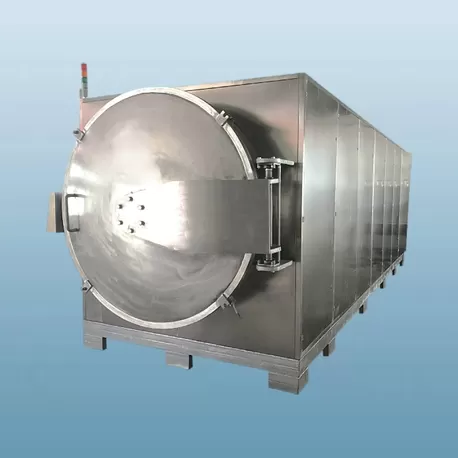
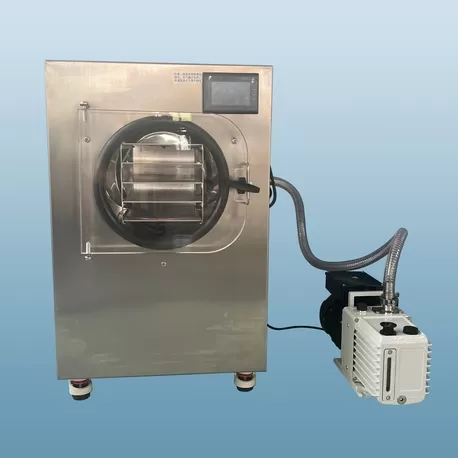
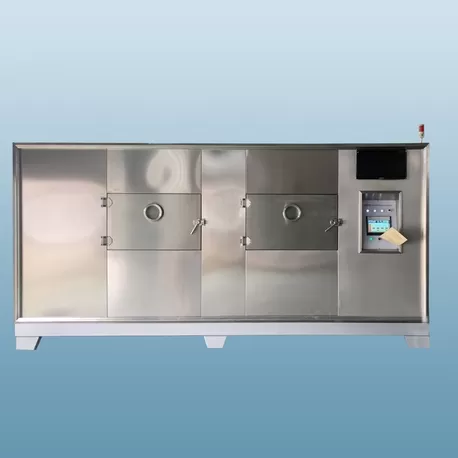
Industrial tray drying remains irreplaceable for small-batch pharmaceutical
intermediates, fine chemicals, food ingredients, and botanical extracts.
However, not all equipment delivers the same batch consistency or thermal
efficiency. A competent tray dryer manufacturer must provide validated
airflow distribution, sanitary finishes, and process documentation. This guide
dissects engineering specifications, application-specific modifications, and
total cost of ownership (TCO) to support B2B procurement decisions.

1. Core Engineering Specifications That Define a Reliable Tray Dryer
Manufacturer
Batch tray dryers consist of an insulated chamber, heating coils or
electrical elements, an air handling unit (AHU) with HEPA or pre-filters,
exhaust dampers, and programmable logic controllers. Below are non-negotiable
technical parameters.
1.1 Airflow Uniformity & Velocity Mapping
Uneven airflow causes over-drying at the inlet and under-drying near the
exhaust. A premium tray dryer manufacturer provides a 3D velocity profile measured across all trays at operating
temperature. Key criteria:
Maximum deviation from mean velocity: ≤ ±15% at 0.5–2.0 m/s range
Perforated baffles or turning vanes to eliminate dead zones
Reverse airflow capability for thick-layer drying (30–60 mm bed depth)
Real-time differential pressure sensors across each tray level
1.2 Heating System and Temperature Uniformity
Steam, electric, or thermal oil – each source affects ramp rate and control
precision. Sanitary designs demand stainless steel finned tubes with condensate
drains. Acceptable performance:
Temperature uniformity across all tray positions ≤ ±2.0°C at setpoints
40–150°C
Heating capacity to reach 80°C within 25 minutes under full load
Over-temperature protection with independent safety thermostat
1.3 Humidity Control and Exhaust Management
For hygroscopic materials or solvents, closed-loop exhaust with condensation
recovery is mandatory. Explore industrial drying systems with solvent recovery that
reduce VOC emissions. Relative humidity sensors at exhaust should control fresh
air damper modulation to maintain ≤10% RH during final drying stages.
2. Application-Specific Challenges and Engineered Solutions
Generic dryers fail in niche applications. Below are four industry pain
points with technical countermeasures from advanced tray dryer manufacturer suppliers like Nasan.
2.1 Pharmaceutical: Oxidation of API During Extended Drying
Pain point: Oxygen ingress through door seals and exhaust
dampers degrades active pharmaceutical ingredients. Solution:
Nitrogen purging with oxygen analyzer interlock (setpoint <1% O₂) and
magnetic coupled exhaust damper actuators. Result: Residual
oxygen below 0.5% throughout the cycle.
2.2 Food Ingredients: Caking and Surface Hardening
Pain point: High initial humidity causes case hardening in
protein hydrolysates or maltodextrin. Solution: Programmable
dew-point control – start with low temperature (35°C) and high air change rate,
then stepwise increase. Result: Uniform moisture content below
4% without crust formation.
2.3 Fine Chemicals: Solvent Retention and Explosion Hazards
Pain point: Ethanol or acetone residues above 500 ppm fail
specifications. Solution: Inert gas recirculation with cold
trap (-15°C condenser) and flameproof electrical classification (ATEX Category
2). Result: Residual solvents ≤50 ppm while maintaining
operator safety.
2.4 Botanical Extracts: Long Drying Cycles for Thick Pastes
Pain point: 48-hour cycles reduce throughput for turmeric or
ginseng extracts. Solution: Intermittent tray turning mechanism
(automated rake) and microwave-assisted hybrid heating. Result:
Cycle time reduction of 35-40% with consistent extract potency.
For customised batch sizes and tray dimensions, review modular tray drying equipment designed for rapid
changeover between products.
3. Energy Consumption and Heat Recovery in Batch Tray Drying
Energy accounts for 60-70% of operational expenditure in heated air drying. A
tray dryer manufacturer that prioritises efficiency will
offer:
Exhaust-to-fresh air crossflow plate heat exchangers (recovery efficiency
55-70%)
Variable frequency drives (VFD) on supply and exhaust fans
Insulation thickness ≥100 mm with thermal bridge-free construction
Automatic load sensing – reduces air change rate when product moisture
approaches target
Benchmark data: For a 96-tray dryer (stainless steel trays, 2.2 m³ chamber),
standard design consumes 38-45 kWh per batch (6-hour cycle at 80°C). With heat
recovery and VFD, consumption drops to 22-28 kWh per batch – a 40% reduction.
Nasan provides energy audits before final design.
4. Compliance, Validation, and Documentation for Regulated Industries
Pharmaceutical and food applications require traceable evidence. A competent
tray dryer manufacturer delivers:
IQ/OQ/PQ protocols including thermocouple mapping (minimum 9 points per tray
level)
Material certificates for 304/316L stainless steel (surface finish Ra ≤0.8μm
for contact parts)
Welding log with dye penetrant test reports for internal corners
Calibrated humidity and temperature sensors (NIST-traceable
certificates)
Software validation for batch reporting and audit trails (21 CFR Part 11
ready)
Leading manufacturers offer remote witnessed FAT via live camera feeds and
data streaming. Nasan supplies as-built
validation dossiers within three weeks after SAT.
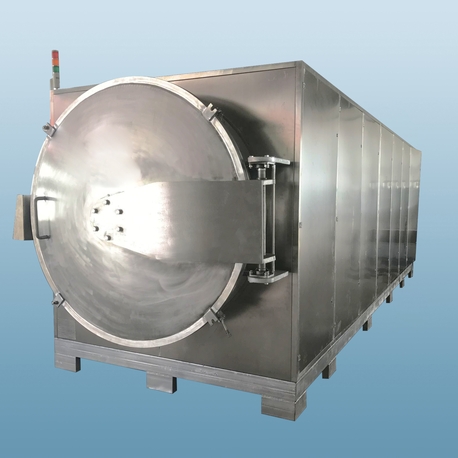
5. Total Cost of Ownership: Low-Cost vs. Precision-Engineered Tray
Dryers
Initial capital expense alone is misleading. Compare five-year costs using
the following framework.
| Parameter | Economy
tray dryer (unverified manufacturer) | Precision-engineered
unit (Nasan class) |
|---|
| Purchase
price (48-tray capacity) | $22,000
– $28,000 | $41,000
– $55,000 |
| Annual
energy cost (5 batches/day, 250 days) | $12,800
– $15,500 | $7,200
– $9,000 |
| Rejected
batches per year (due to non-uniform drying) | 4
– 7 | ≤1 |
| Spare
parts & service visits (5-year total) | $9,000
– $14,000 | $3,500
– $5,500 |
The data shows that while the initial investment for a verified tray dryer manufacturer is higher, the TCO over five
years is often 18-25% lower due to energy savings and reduced reject rates.
Additionally, validated documentation avoids regulatory penalties.
Frequently Asked Questions (Engineering & Procurement)
Q1: How to verify airflow uniformity before purchasing a tray dryer?
A1: Request a factory acceptance test (FAT) report using an
anemometer grid at 15-20 points across the tray loading zone, measured at both
empty and simulated load conditions. Acceptable variation: ≤±15% from mean
velocity. A credible tray dryer manufacturer will provide this as
standard.
Q2: Can a tray dryer be used for heat-sensitive probiotics or enzymes?
A2: Yes, with modifications: low-temperature drying
(30–45°C), dehumidified air (dew point -10°C), and short residence times. Some
units offer vacuum-assisted drying – see low-temperature drying systems that preserve
viability above 90%.
Q3: What materials are used for trays to prevent cross-contamination?
A3: 316L stainless steel with electrophoretic polished
finish (Ra ≤0.4μm) is standard for pharmaceutical and food contact. For acidic
products (citric acid, fruit juices), hastelloy C-22 trays are available. Always
request a material certificate with lot traceability.
Q4: How to integrate a tray dryer with a solvent recovery system?
A4: Specify a closed-loop design with a chilled water or
brine condenser (-10°C to 5°C) on the exhaust line. Condensate is collected in a
stainless steel tank with level sensor and explosion-proof pump. The Nasan engineering team provides P&ID drawings for
integration with your existing solvent handling system.
Q5: What is the typical lead time for a cGMP-compliant tray dryer with full
validation documentation?
A5: For a standard 96-tray model (steam heating, HEPA
supply, PLC with audit trail), lead time is 12-16 weeks from approved drawings.
Expedited manufacturing (10 weeks) is possible with existing modular components.
Always confirm FAT and SAT scheduling in the purchase order.
Q6: How often should temperature mapping be repeated after
installation?
A6: Re-mapping is recommended annually or after any major
maintenance (heater replacement, fan bearing change, door gasket replacement).
For sterile applications, re-mapping every six months is common. The mapping
protocol should follow the same points as the original IQ.
Request a Process Drying Audit and Quotation
Selecting the wrong tray dryer leads to batch inconsistency, high energy
bills, and compliance risks. Share your product specifications (particle size,
initial moisture, target moisture, thermal sensitivity, and batch volume) with
our technical team. We provide a non-binding drying process analysis, including
recommended airflow patterns, tray loading density, and cycle programming.
Submit your inquiry below or contact Nasan directly for a confidential consultation and a detailed
proposal tailored to your production environment.
For immediate technical data sheets and 3D model access, browse the complete industrial drying equipment catalog or request a live
virtual factory inspection.