Water removal is one of the oldest and most vital methods of food
preservation. In modern industrial operations, the challenge is no longer simply
removing water, but doing so while preserving color, texture, flavor, and
nutritional profiles. Achieving this at scale requires a precise understanding
of thermodynamics and airflow. Implementing a commercial-grade industrial food
dehydrator involves balancing energy consumption with product
throughput. This article analyzes the fundamental principles of industrial
drying, explores the mechanics of heat and mass transfer, and discusses how to
resolve common processing challenges in bulk dehydration.
Thermodynamic Fundamentals of Bulk Dehydration
The primary objective of bulk drying is to reduce water activity
(aw) to a level that prevents microbial growth and chemical
degradation, typically below 0.6. This transition is governed by heat transfer
(delivering thermal energy to vaporize moisture) and mass transfer (removing the
vaporized water from the food surface).
In a large-scale system, this process occurs in two primary stages:
The Constant-Rate Drying Period: During this phase, the
surface of the food remains completely wet. The rate of evaporation is governed
by the boundary layer of air surrounding the product. Increasing air velocity
and temperature during this stage yields rapid moisture reduction.
The Falling-Rate Drying Period: As surface moisture
depletes, the rate-limiting step shifts to internal moisture diffusion. The
water must migrate from the core of the product to the surface. Applying
excessive heat during this stage does not accelerate drying; instead, it causes
case hardening, where the outer layer becomes impermeable, trapping water
inside.
To manage these phases, manufacturers like Nasan design systems with variable
airflow velocity and temperature profiles, matching the dry-down curves of
specific ingredients.
To achieve consistent results across tons of material daily, the mechanical
architecture of the drying chamber must be built to exacting standards.
Airflow Configuration
Horizontal cross-flow is generally preferred over vertical airflow for
tray-based systems. It ensures that air passes evenly over the top and bottom of
each tray, preventing "cold spots" or wet pockets. Uniform air velocity across
the entire rack is necessary to prevent localized under-drying.
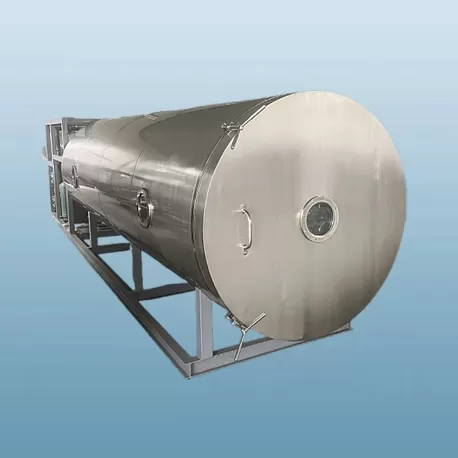
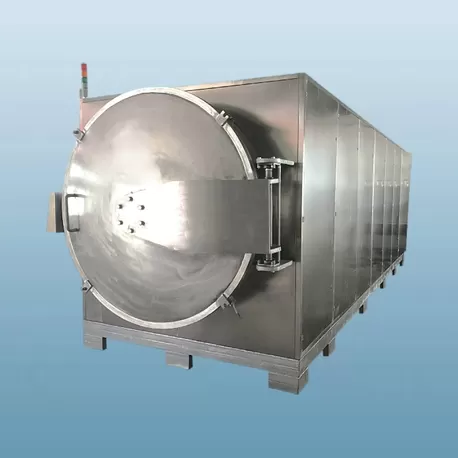
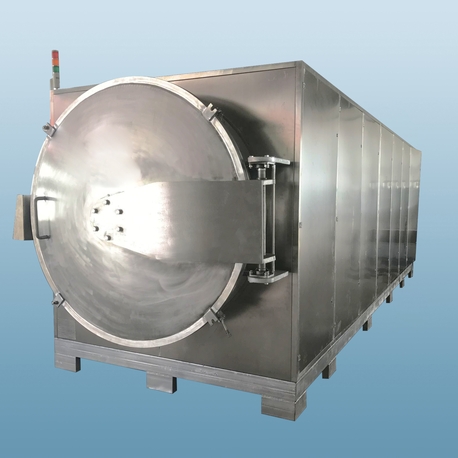
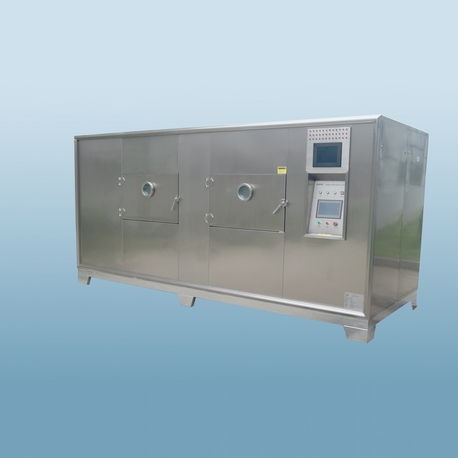
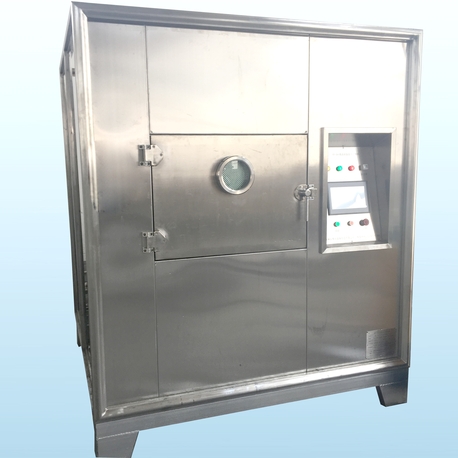
Cabinet Construction
High-grade stainless steel (SUS304 or SUS316) is mandatory to withstand high
humidity environments and aggressive sanitation protocols. Double-walled
insulated panels, filled with high-density polyurethane or rockwool, minimize
thermal losses to the surrounding factory floor, maintaining stable internal
temperatures.
Heating Mechanisms
Modern industrial units utilize diverse heat sources:
Heat Pump Systems: Highly efficient, reclaiming latent heat
from the exhaust air to preheat incoming dry air. This configuration can reduce
energy usage by up to 60% compared to open-loop electric heating.
Steam Coils: Ideal for facilities with existing boiler
infrastructure, providing clean, indirect heat.
Direct Electric Elements: Useful for applications requiring
rapid heat-up times and high temperatures.
By integrating these systems, a well-engineered industrial food
dehydrator ensures that the microclimate inside the cabinet remains
uniform, regardless of external ambient conditions.
The Thermal-Moisture Boundary Equilibrium (TMBE) Matrix
To systematically manage different food products, we utilize the TMBE Matrix.
This framework balances thermodynamic input against the specific desorption
isotherms of the material.
| Product Type | Initial Moisture Content (%) | Preferred Temperature (°C) | Target Air Velocity (m/s) | Critical Control Points |
|---|
| Leafy Herbs | 80 - 90% | 35 - 45°C | 1.2 - 1.5 m/s | Preservation of volatile essential oils; prevention of leaf
blowing. |
| Root Vegetables | 75 - 85% | 55 - 65°C | 1.8 - 2.2 m/s | Moisture gradient balancing; preventing case hardening of outer
skins. |
| High-Sugar Fruits | 80 - 85% | 50 - 60°C | 1.5 - 2.0 m/s | Prevention of caramelization; management of surface stickiness. |
| Lean Proteins / Jerky | 70 - 75% | 68 - 75°C | 2.0 - 2.5 m/s | Pathogen lethality step; fat migration prevention. |
By adjusting parameters according to the TMBE Matrix, operators can prevent
structural collapse in sensitive materials. For instance, drying high-sugar
items like mangoes requires a gentle temperature ramp-up to avoid caramelization
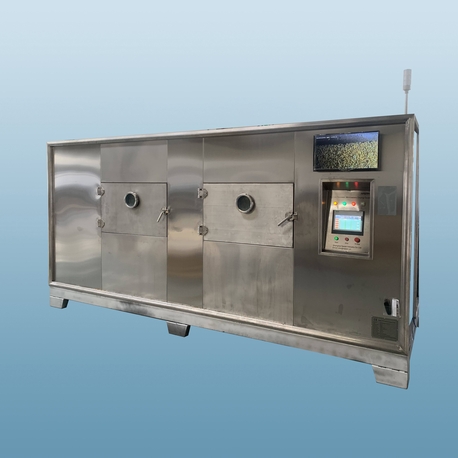
and sticky surface formation. Modern systems engineered by Nasan incorporate programmable PLC
controllers that store these multi-stage drying profiles, allowing operators to
switch from pet food to dried herbs with the press of a button.
Solving Common Industrial Dehydration Bottlenecks
In high-volume facilities, minor inefficiencies accumulate into significant
operational losses. Let us analyze the primary bottlenecks and how to resolve
them.
Uneven Drying Across Trays
When the product at the inlet of the airflow dries faster than the product
near the exhaust, batch quality becomes inconsistent. To resolve this, modern
chambers feature automatic airflow reversal mechanisms, switching the direction
of air circulation periodically. This balances moisture removal across the
entire load.
Excessive Energy Waste
Open-loop exhaust systems vent hot, moist air directly outside, losing
valuable thermal energy. Implementing closed-loop dehumidifying systems catches
this energy, condensing the moisture out of the air while retaining the sensible
heat. This is where an advanced industrial food
dehydrator with a heat recovery wheel or heat pump loop becomes
highly valuable.
Sanitation and Biofilm Formation
The combination of warmth and moisture in a food-processing environment is an
invitation for bacterial colonization. Dehydrator cabins must feature sloped
floors for easy drainage, continuous-weld seams, and no-tool-removable fan
assemblies to facilitate deep sanitation. Clean-in-place (CIP) spray balls can
also be integrated for automated sanitizing cycles.
Industrial Application Profiles
Different industries require distinct drying dynamics. A versatile industrial food
dehydrator must adapt to these unique material requirements:
Pet Food Processing: High-throughput drying of kibble and
raw meat treats is standard. The focus is on rapid water activity reduction to
halt pathogen growth while maintaining protein integrity and palatability.
Fruit and Vegetable Processing: Preserving color, vitamins,
and antioxidants is paramount. Low-temperature, gentle dehydration is necessary
to prevent enzymatic browning and preserve natural flavor compounds without
using excessive sulfites.
Herbal and Pharmaceutical Production: These applications
require precise temperature control, often strictly below 45°C, to preserve
volatile essential oils and active organic compounds. Overheating ruins the
product potency.
Selecting an experienced supplier ensures that these design parameters are
built into the hardware from day one. Utilizing an advanced drying chamber
protects your operation from volatile energy markets while ensuring compliance
with stringent food safety regulations.
Dry-Run Commissioning Checklist for Factory Managers
Before integrating a new drying system into your production line, run through
this verification checklist to ensure operational readiness:
Airflow Profiling: Measure air velocity across 9 distinct
points in the chamber; variance should be less than 0.2 m/s to guarantee even
drying.
Insulation Integrity: Run the machine at 75°C for 2 hours
and use a thermal imaging camera to detect heat leaks along gaskets and
seams.
Sensor Calibration: Verify that dry-bulb and wet-bulb
sensors align within 0.5°C of a certified reference thermometer.
Drainage Slope: Pour 5 liters of water onto the cabin floor
to confirm complete gravity drainage without pooling.
Exhaust Control: Verify that dampers modulate correctly in
response to relative humidity setpoints.
By conducting these steps systematically, operators can avoid batch failures
during the initial production runs.
Frequently Asked Questions
Q1: What is the benefit of heat pump dehumidification over direct
electric heating in commercial drying?
A1: Heat pump dehumidification recirculates air in a closed loop, removing
moisture by condensation rather than venting hot air. This recovers latent heat
and reduces energy consumption by up to 60%, making it highly efficient for
continuous drying operations.
Q2: How does case hardening occur, and how can it be prevented during
bulk processing?
A2: Case hardening happens when the drying temperature is too high during the
initial stage, causing the surface to dry too fast and seal. This traps moisture
inside. It can be prevented by maintaining higher relative humidity at the start
to keep surface pores open, followed by a gradual temperature ramp.
Q3: What grade of stainless steel is necessary for an industrial food
dehydrator?
A3: SUS304 is the standard for general food contact and high-humidity
resistance. However, for products with high acidity or salt content, SUS316 is
recommended due to its superior resistance to chloride-induced corrosion.
Q4: How does air velocity impact the overall drying curve of
high-moisture foods?
A4: During the constant-rate drying phase, higher air velocity accelerates
evaporation by sweeping away the boundary layer of saturated air. However, in
the falling-rate phase, internal moisture diffusion controls the speed, and high
air velocity offers diminishing returns.
Q5: Can a single drying chamber handle both high-fat pet treats and
delicate herbs?
A5: Yes, provided the system features a programmable PLC controller capable
of managing multi-stage recipes. Delicate herbs require low temperatures and
gentle air flow, while high-fat treats require higher temperatures to meet
pathogen lethality requirements and prevent fat rancidity.
Get a Tailored Drying Solution for Your Operation
Achieving consistent quality and throughput in food dehydration requires
precise control over humidity, heat distribution, and energy consumption. An
off-the-shelf solution rarely matches the unique drying curves of specialized
ingredients. To see how custom-engineered thermal configurations can improve
your processing efficiency, contact the application engineering team at
Nasan today. Submit
your product specifications, target daily throughput, and energy source
preferences to receive a comprehensive design proposal for your next industrial food
dehydrator project