In the commercial cultivation and processing of medicinal plants, the
preservation of active botanical compounds is highly dependent on post-harvest
treatment. Dehydration is the primary method utilized to stabilize raw plant
materials, preventing enzymatic degradation, chemical hydrolysis, and microbial
proliferation. However, thermal processing introduces complex thermodynamic
variables that can easily compromise volatile organic compounds, heat-sensitive
glycosides, and visual pigmentations if not managed with precise engineering
controls.
To transition from rudimentary agricultural drying to high-specification
pharmaceutical and food-grade operations, manufacturers must implement systems
that balance thermal efficiency with product integrity. Using a advanced herb
dryer designed for precise climate control allows processing
facilities to standardize moisture removal, thereby guaranteeing consistent
active ingredient concentrations across batches.

Thermodynamic Fundamentals of Botanical Preservation
The dehydration of botanical tissues is a coupled heat and mass transfer
process occurring under transient conditions. To design or operate an industrial
drying process, one must analyze the moisture migration mechanisms within the
plant matrix. Moisture exists in several states within a plant body: free water
on the surface, capillary water within the intercellular spaces, and bound water
chemically or physically attached to cellular walls and proteins.
1. Moisture Desorption and Isotherms
Each botanical species exhibits a unique Equilibrium Moisture Content (EMC)
at a given temperature and relative humidity (RH). The relationship between EMC
and water activity (Aw) is described by moisture desorption isotherms. For safe
long-term storage, water activity must be reduced to below 0.60, which
corresponds to a dry-basis moisture content of approximately 8% to 12% depending
on the specific herb. Maintaining this threshold prevents the growth of molds,
yeasts, and bacterial pathogens without requiring chemical preservatives.
2. The Constant and Falling Rate Drying Periods
During the initial stages of dehydration, surface evaporation occurs rapidly,
representing the constant-rate drying period. During this phase, the surface
temperature of the plant material remains near the wet-bulb temperature of the
drying air due to evaporative cooling. As the surface water depletes, the
process enters the falling-rate drying period, where internal liquid diffusion
and capillary action dictate the drying speed. At this stage, the material
temperature rises toward the dry-bulb temperature of the process air, making the
plant highly susceptible to thermal degradation.
Primary Engineering Challenges in Commercial Drying Operations
Commercial processors regularly encounter systemic obstacles that affect both
product yield and quality. Overcoming these issues requires a detailed
understanding of material behavior under varied thermal loads.
Loss of Volatile Bioactive Compounds: Many aromatic plants
rely on volatile oils (such as terpenes, monoterpenes, and sesquiterpenes) for
their therapeutic and sensory properties. These molecules often have boiling
points close to or below that of water, or they co-evaporate via steam
distillation during the drying cycle. Uncontrolled high-temperature exposure
leads to significant loss of these high-value components.
Case Hardening: If the drying rate is too aggressive in the
early phases, moisture evaporates from the surface far faster than internal
moisture can migrate to the exterior. This causes the surface cellular
structures to contract and form an impermeable barrier, trapping moisture in the
core of the leaf or root. This phenomenon, known as case hardening, results in
internal mold development and uneven moisture distribution.
Enzymatic Browning and Oxidation: Polyphenol oxidases and
other enzymes remain active within damp plant tissues. If the heating rate is
too slow, or if the oxygen concentration within the chamber is high at elevated
relative humidities, enzymatic browning occurs, deteriorating both the aesthetic
value and the active polyphenol content of the herb.
Microbial Bioburden and Mycotoxins: Raw botanicals
harvested from agricultural fields carry diverse microbial populations. If the
initial drying phase is prolonged due to inadequate airflow or insufficient heat
input, the high-humidity environment within the drying chamber becomes an
incubator for fungal spores, potentially leading to mycotoxin
contamination.
Comparative Analysis of Industrial Drying Mechanisms
Selecting the appropriate dehydration method is a pivotal decision that
directly influences the operational throughput and chemical yield of the
processed botanicals. Different drying systems utilize distinct thermodynamic
configurations to achieve moisture removal.
Closed-Loop Heat Pump Dehydration
Closed-loop heat pump drying systems operate by recirculating drying air
through an evaporator and a condenser. Moisture is condensed out of the air
stream at the evaporator, and the dried air is subsequently reheated at the
condenser before being reintroduced to the drying chamber. This system provides
precise control over temperature (typically between 20°C and 65°C) and relative
humidity, making it highly suitable for temperature-sensitive leaves and flowers
where preserving volatile oils is paramount.
Convective Tray and Cabinet Dehydration
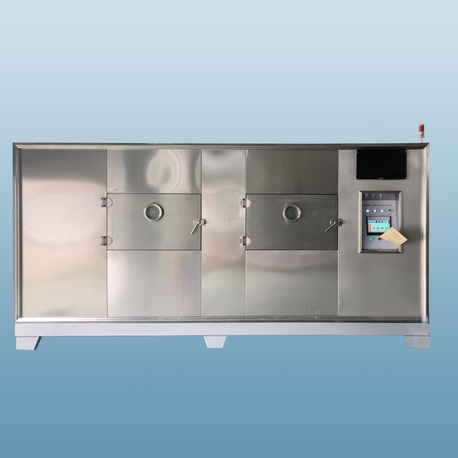
For batch-oriented operations, a convective tray herb
dryer offers high versatility. In these configurations, products
are distributed evenly on perforated trays, and hot air is forced horizontally
or vertically through the product beds. To optimize this setup, engineers must
ensure uniform air velocity profiles across all trays to eliminate localized
pockets of high moisture. Incorporating reversible airflow systems can
significantly improve drying uniformity throughout the chamber volume.
Continuous Belt Dehydration Systems
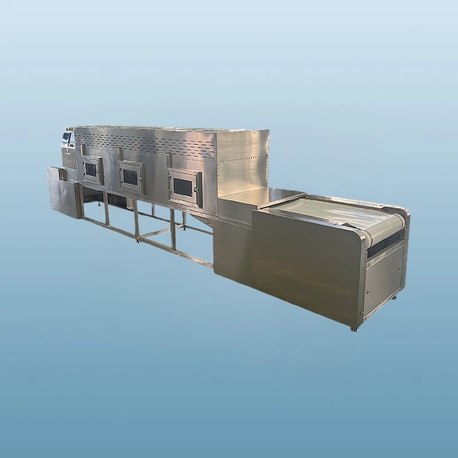
For high-volume processing facilities, continuous belt systems provide
automated, high-throughput drying. The raw material is fed onto a moving porous
conveyor belt, where it passes through multiple drying zones with independent
temperature and airflow controls. This allows processors to apply high
temperatures in the initial constant-rate drying phase to rapidly remove surface
moisture, followed by lower-temperature zones to prevent thermal damage during
the falling-rate phase.
System Configuration and Material Integration
Industrial processing machinery destined for botanical applications must
adhere to strict sanitary design standards. Materials and structural layouts
must support consistent sanitation procedures to prevent cross-contamination and
batch carryover.
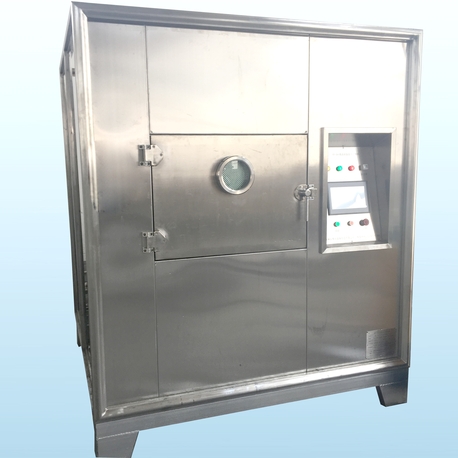
In accordance with global manufacturing guidelines, all product-contact
surfaces within a commercial herb
dryer must be constructed from high-grade stainless steel,
typically AISI 304 or AISI 316L. These materials offer superior resistance to
corrosion caused by organic acids, essential oils, and sanitizing chemical
agents. Furthermore, internal chamber walls should feature smooth, continuous
welds with coved corners to prevent raw material accumulation and bacterial
nesting.
Air filtration systems are also a major consideration. Intake air must pass
through multi-stage filtration units, often incorporating HEPA filters, to
eliminate airborne dust, pollen, and fungal spores. For volatile-rich herbs,
exhaust systems can be integrated with condenser units or carbon scrubbers to
recover evaporated aromatic components, creating secondary product streams and
reducing odor emissions in the surrounding facility environment.
Process Optimization and Recipe Management
Achieving consistent quality in industrial botanical processing requires the
transition from manual, operator-dependent drying to automated, sensor-driven
operations. Implementing multi-stage drying profiles is the standard method for
managing complex drying curves.
For example, a typical drying recipe for a leaf-based herb rich in volatile
compounds might involve three distinct phases:
| Drying Phase | Target Temperature Range | Target Relative Humidity (RH) | Primary Objective |
|---|
| Phase 1: Initial Dehydration | 45°C - 50°C | 40% - 50% | Rapid surface water removal; prevention of enzymatic activation without
thermal degradation. |
| Phase 2: Intermediate Drying | 40°C - 45°C | 25% - 35% | Controlled internal moisture diffusion; avoiding case hardening while
maintaining volatile oil stability. |
| Phase 3: Final Conditioning | 35°C - 40°C | 15% - 20% | Reducing moisture content to safe equilibrium storage levels (typically
8%-10% wet-basis). |
To execute these precise recipes, industrial drying cabinets manufactured by
Nasan utilize advanced
Programmable Logic Controllers (PLCs) integrated with high-precision temperature
and humidity sensors. These systems continuously adjust the heat input,
compressor load, and exhaust damper positions to track the programmed drying
curves dynamically, minimizing human error and maximizing batch
reproducibility.
Why Leading Processors Choose Nasan Dehydration
Equipment
For decades, Nasan has been at the forefront of designing and manufacturing high-performance
thermal processing systems for the global pharmaceutical, nutraceutical, and
food processing sectors. Our engineering philosophy centers on thermodynamic
efficiency, material longevity, and precise process control.
By leveraging advanced airflow dynamics and thermodynamic models, our systems
distribute heat and dry air evenly across all product zones, ensuring uniform
moisture removal. Whether you require a batch cabinet configuration or a highly
automated continuous system, our drying solutions are custom-engineered to meet
your specific physical layout and throughput targets, allowing you to maintain
the maximum concentration of active phytochemicals in your end products.
Frequently Asked Questions
Q1: What is the optimal temperature range for drying heat-sensitive
medicinal herbs?
A1: For most heat-sensitive medicinal plants containing volatile oils or
delicate glycosides, the recommended drying temperature range is between 35°C
and 50°C. Exceeding 55°C often leads to the rapid evaporation of volatile
compounds and the thermal degradation of active pharmaceutical ingredients
(APIs).
Q2: How does a professional herb
dryer prevent case hardening during processing?
A2: Case hardening is avoided by regulating the wet-bulb depression (the
difference between dry-bulb and wet-bulb temperatures). By maintaining higher
relative humidity in the initial drying phase, the surface of the plant tissue
remains pliable, allowing internal moisture to migrate to the exterior before
the surface cells dry and shrink completely.
Q3: Why is stainless steel 316L preferred over standard steel for
botanical drying chambers?
A3: Stainless steel 316L contains molybdenum, which significantly increases
its resistance to corrosion, pitting, and chemical attack by plant acids,
essential oils, and cleaning detergents. This material choice is standard for
meeting stringent Good Manufacturing Practice (GMP) requirements in the
pharmaceutical and food industries.
Q4: How does a heat pump dryer compare to direct electrical heating
in terms of energy consumption?
A4: Closed-loop heat pump drying systems are highly energy-efficient because
they recover latent heat from the moisture condensation process. Reheating the
air utilizing the heat pump's condenser requires significantly less electrical
energy compared to traditional direct electrical resistance heating, where hot,
humid air is constantly exhausted and replaced with cold ambient air.
Q5: Can Nasan drying systems
accommodate multi-product operations with different drying
profiles?
A5: Yes, our equipment features advanced PLC systems with multi-recipe
storage capabilities. Operators can easily program, save, and load tailored
drying curves for different botanical species, ensuring optimal parameters for
diverse product portfolios with a single machine interface.
Technical Consultation and Inquiries
Optimizing an industrial botanical processing line requires careful
consideration of physical chemistry, thermodynamics, and mechanical engineering.
Implementing the correct drying parameters can mean the difference between
high-value, active-rich extracts and degraded, low-potency materials.
If you are looking to scale your processing operations, resolve issues with
uneven moisture distribution, or upgrade to a GMP-compliant drying system, our
engineering team is available to assist you. Contact us today to discuss your
project requirements, request a detailed equipment proposal, or learn how a
customized herb
dryer from our product range can enhance your production efficiency
and product quality.
For detailed technical specifications or to request a consultation with our
system designers, please visit our website or submit your inquiry through our
contact form.