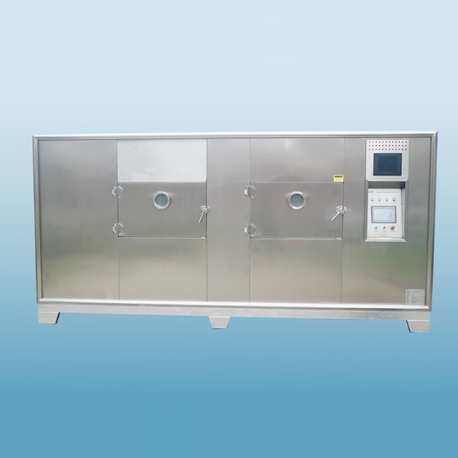
Conventional drying methods rely on surface heat transfer, which often leads
to uneven moisture profiles, prolonged processing cycles, and degradation of
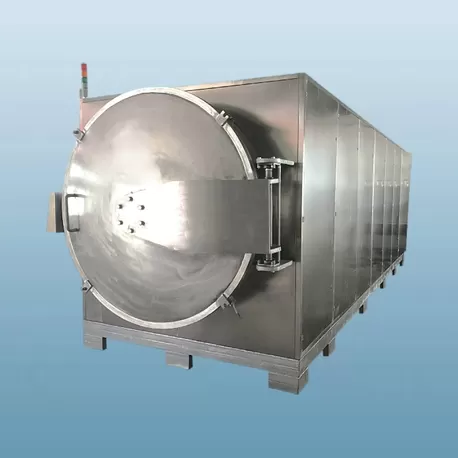
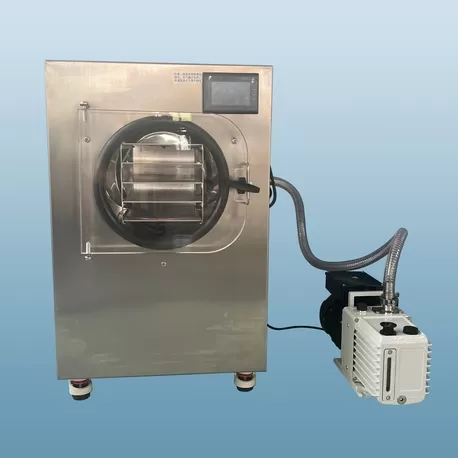
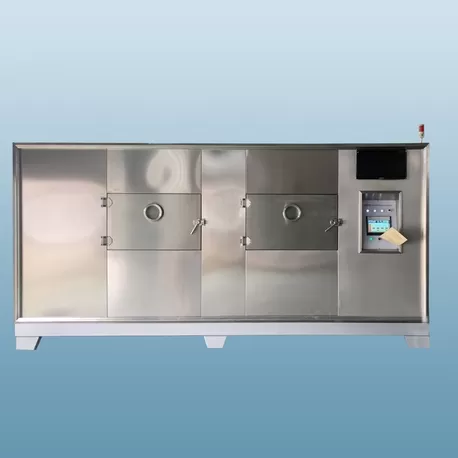
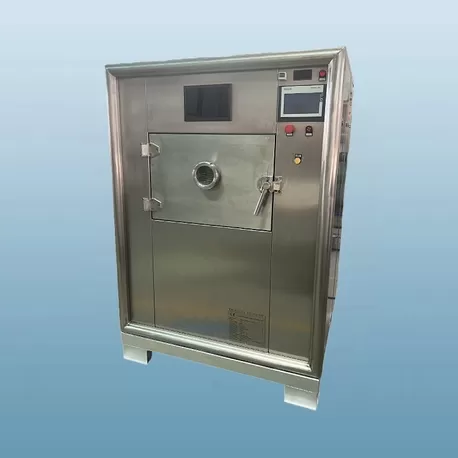
sensitive ingredients. A properly engineered microwave drying
equipment applies electromagnetic energy directly into the wet
mass, creating instant volumetric heating. This article explains the operating
principles, application-specific configurations, and practical solutions for
common drying challenges, drawing on engineering practices from Nasan’s
industrial platforms.

Physics of Microwave Drying – Dielectric Loss and Internal Heating
Unlike conduction or convection, microwave drying equipment uses
high-frequency alternating fields (typically 915 MHz or 2.45 GHz) to agitate
polar molecules – primarily water – within the product. This molecular friction
generates heat uniformly throughout the volume. The main outcomes for industrial
processes are:
Pressure-driven moisture transport: Vapor forms inside the
material and migrates outward along pressure gradients, avoiding surface
crusting.
Selective energy coupling: Water has a high loss factor;
dry solids and air absorb almost no energy, so electricity is used almost
exclusively for evaporation.
Reduced thermal stress: The core and surface stay within a
narrow temperature range, preserving heat-labile components.
These mechanisms explain why modern microwave drying
equipment can shrink processing time by 50‑70% compared to hot‑air
ovens while lowering energy consumption per kilogram of water removed.
Key Differentiators over Hot‑Air, Fluid Bed, and Vacuum Dryers
When selecting between drying technologies, the following advantages position
microwave systems as the preferred option for many mid‑ to high‑value
products.
Homogeneous end moisture: Self‑balancing absorption
eliminates over‑dried edges and wet centers; final moisture variation below ±1%
across the batch.
Retention of volatiles and bioactives: Drying at 40‑70 °C
preserves essential oils, vitamins, and enzymes – critical for herbs, spices,
and nutraceuticals.
No heated air exhaust: Energy is contained within the
cavity; only vapor is vented, reducing facility HVAC loads.
Compact footprint: A single microwave module can replace a
tunnel dryer four to five times longer.
Rapid start‑up and shutdown: Magnetrons reach full power in
seconds; no preheating of air masses.
Reliable continuous operation requires careful design of each subsystem.
Nasan’s engineering team focuses
on the following elements when building custom microwave drying
equipment:
Applicator and cavity design
The drying chamber must maintain uniform field distribution. Multi‑mode
cavities with rotating mode stirrers, moving belts, or rotating drums prevent
standing wave patterns. Entry and exit areas use choke tunnels (λ/4 stubs) to
contain radiation.
Magnetron array and power control
Industrial generators use continuous-wave magnetrons (0.75‑30 kW each).
Closed‑loop feedback from infrared sensors and load cells adjusts power to avoid
overheating. Phase‑controlled transformers or solid‑state power supplies enable
precise ramping profiles.
Material handling integration
Depending on product form, systems include belt conveyors, vibrating feeders,
paddle mixers, or rotary drums. Post‑drying cooling zones integrated with the
same control logic prevent condensation.
Safety and compliance
Certified equipment meets FCC/CE/ICNIRP leakage standards (max 5 mW/cm²).
Door interlocks, automatic power cut‑off, and continuous monitoring ensure
operator safety.
Industry‑Specific Configurations and Process Solutions
Each sector presents unique moisture removal constraints. Below are
representative applications with tailored engineering responses.
Food processing – fruits, vegetables, herbs, and meat
High‑sugar fruits (dates, raisins, mango): Pulsed power
(on/off cycles of 5‑15 seconds) prevents charring while achieving final moisture
below 18%.
Leafy herbs (basil, mint, oregano): Low belt speed
(0.5‑1 m/min) and 2.45 GHz frequency retain green color and aromatic oils.
Jerky and pet treats: Combined microwave and hot‑air
finishing (hybrid) improves texture and water activity below 0.85.
Pharmaceutical and nutraceutical drying
Wet granules, tablet coatings, and extraction residues often lose potency
under prolonged heating. Pharmaceutical‑grade microwave drying equipment with
validated power uniformity meets GMP standards. Drying of probiotics and enzyme
preparations becomes feasible at 35‑45 °C under inert atmosphere.
Chemical and mineral products
Catalysts, zeolites, pigments, and polymer beads require particle‑to‑particle
moisture consistency. Microwave drying eliminates crust formation and reduces
attrition. For solvents other than water (ethanol, acetone), nitrogen purging
and explosion‑proof design are integrated.
Solving Persistent Drying Pain Points
Process engineers frequently encounter the following failures with
conventional dryers. Each can be resolved by switching to or hybridising with
microwave drying equipment.
Pain point A – Long cycles cause production bottlenecks (12‑24h
batches).
Solution: Microwave reduces cycle to 2‑4h; continuous
systems allow 24/7 operation.
Pain point B – Case hardening traps moisture
inside.
Solution: Inside‑out vapour generation opens channels; no
surface sealing.
Pain point C – Loss of volatile active compounds during
drying.
Solution: Low‑temperature, rapid drying (40‑60 °C) preserves
>90% of volatiles.
Pain point D – Uneven colour and scorched
edges.
Solution: Uniform field with dynamic power modulation
eliminates hot spots.
Pain point E – Microbial growth due to slow initial drying
phase.
Solution: Moisture reduction to below 0.85 water activity
within 30 minutes prevents mould development.
Integration of Microwave Drying Equipment into Existing Production
Lines
Retrofitting a microwave dryer does not require a full plant redesign. Key
integration steps include:
Pre‑drying assessment: Measure dielectric properties of the wet product
(permittivity and loss factor) to determine power density requirements.
Inlet design: Use screw feeders or vibratory conveyors to form a uniform bed
(2‑5 cm thickness for most materials).
Interlocking: Connect to existing PLC via Modbus or Profibus; remote
monitoring and alarm forwarding.
Vapour extraction: Install a blower and condenser (for solvent recovery) to
remove evaporated water without pressure build‑up.
For sticky or tacky products (honey powder, molasses blends), a short
microwave pre‑drying zone reduces surface adhesion before the main belt,
preventing build‑up.
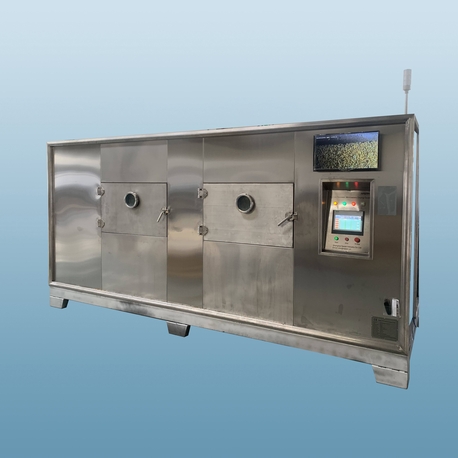
Selecting a Reliable Supplier for Microwave Drying Equipment
Not all microwave systems deliver uniform heating over years of service.
Evaluate potential manufacturers on these criteria:
In‑house material testing laboratory: The supplier must run
your specific wet product to generate power‑time curves and penetration depth
data. Nasan maintains a pilot‑scale lab
for this purpose.
Magnetron brand and service life: Industrial magnetrons
rated for 20,000+ hours with local replacement support reduce unplanned
downtime.
EMC and safety certifications: Verified compliance with
regional standards (CE, FCC, CCC) is mandatory for international shipping.
Modular design for scaling: Can the same applicator design
be extended from 50 kg/h to 2 t/h by adding more generator cabinets?
Frequently Asked Questions (FAQs)
Q1: Is microwave drying equipment suitable for products with very low
initial moisture (below 15%)?
A1: Yes, but drying efficiency decreases as moisture content
drops because the remaining water molecules become more tightly bound. For final
drying (15% down to 2‑5%), a short microwave finishing stage works well, often
combined with hot air to remove surface moisture economically. The dielectric
loss factor remains sufficient for controlled heating until about 2%
moisture.
Q2: What maintenance does microwave drying equipment require?
A2: Routine maintenance includes quarterly inspection of
choke seals and door interlocks, cleaning of waveguide windows (to prevent
arcing from dust deposits), and checking magnetron filament voltages. Magnetrons
typically need replacement after 15,000‑20,000 operating hours. Nasan provides
service manuals and remote diagnostic support.
Q3: Can a single microwave dryer handle different product shapes and sizes
without adjustments?
A3: Continuous microwave drying equipment with a conveyor
belt can process a mix of particle sizes if the bed height remains uniform.
However, products with drastically different dielectric properties (e.g., wet
granules vs. dry flakes) require different power profiles. Modern control
systems store up to 100 recipes, allowing quick changeover between product
types.
Q4: Does microwave drying equipment affect the structure or rehydration
properties of foods?
A4: Compared to hot‑air drying, microwave‑dried food
typically exhibits higher porosity and faster rehydration because the rapid
vapour formation creates micro‑channels. For example, microwave‑dried carrot
slices rehydrate to 80% of fresh weight within 5 minutes, versus 15 minutes for
air‑dried samples. This is desirable for instant soups and ready meals.
Q5: Is a vacuum chamber necessary for heat‑sensitive materials?
A5: Not always. Many heat‑sensitive products (herbs, certain
enzymes) tolerate 60‑70 °C if exposure time is short (minutes instead of hours).
For extremely delicate materials (probiotics, some vitamins), a microwave‑vacuum
dehydrator lowers the boiling point to 30‑40 °C, enabling safe drying.
Nasan offers both atmospheric and
vacuum microwave configurations.
Q6: How to prevent arcing or sparks inside the microwave cavity?
A6: Arcing occurs when conductive particles (metal
fragments, high‑carbon char) or pointed geometries concentrate electric fields.
Solutions include: (1) installing a particle separator upstream, (2) using a
belt made of PTFE‑coated fabric instead of metal mesh, and (3) applying a slow
power ramp during the first minute of drying to allow any fine metal to heat
gradually without sparking.
Conclusion – Moving Toward Predictable, Energy‑Efficient Drying
Adopting industrial microwave drying
equipment translates into shorter lead times, consistent product
quality, and lower energy use per ton of evaporated water. The technology has
moved beyond niche applications into mainstream food, pharmaceutical, and
chemical production. Success depends on proper pre‑feasibility testing and a
supplier that understands process integration at the production scale.
For a detailed evaluation of your material and throughput targets,
contact Nasan’s process engineering team. Submit your inquiry with product specifications (material type, initial
moisture, target moisture, desired capacity, and any thermal sensitivity
constraints). We will respond with a preliminary design concept and lab test
proposal.
→ Send your drying inquiry now to receive a
custom configuration and technical discussion. Use the inquiry form on
our website or email directly from the Nasan contact page. Every request is
reviewed by a senior applications engineer.