In industrial food processing, drying is often the most energy-intensive
phase of production. According to international energy studies, industrial
drying processes can consume up to 15% to 25% of the total energy utilized in
food manufacturing plants. Yet, a common issue facing plant managers is not just
the cost of energy, but the unexpected loss of product quality during
dehydration.
Many operations attempt to increase throughput by simply raising the
operating temperatures of their drying systems. This approach often leads to a
phenomenon known as case hardening, where the exterior of the food product dries
too rapidly, trapping moisture inside the core. This structural defect
compromises shelf-life and can lead to microbial spoilage.
To balance operational throughput with product quality, selecting the
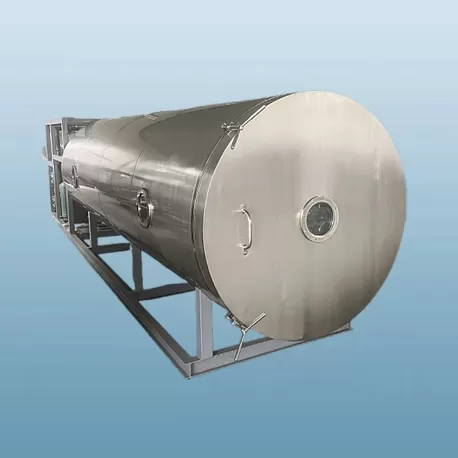
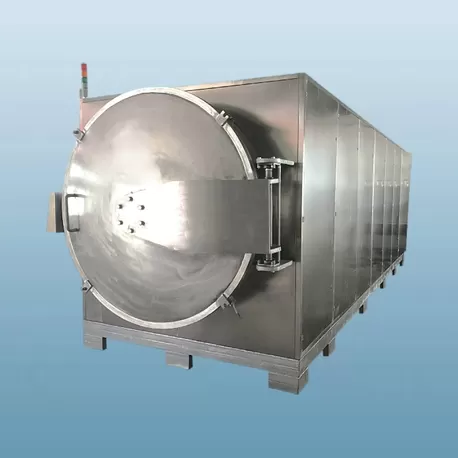
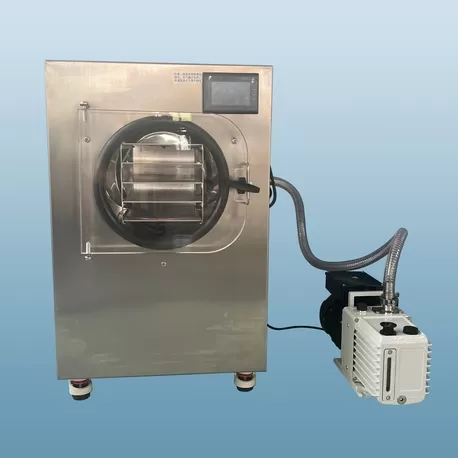
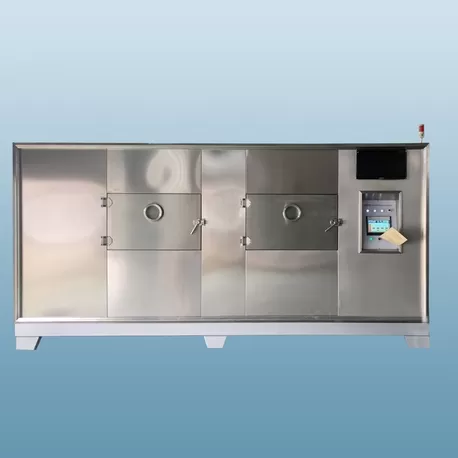
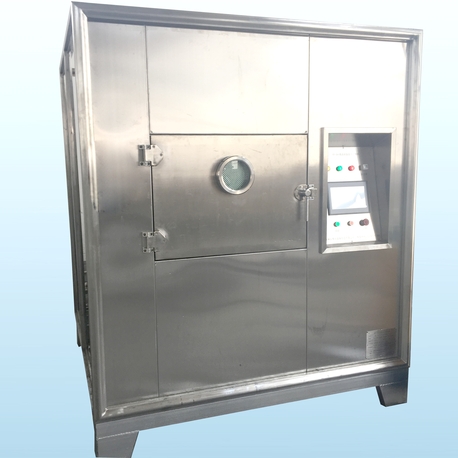
appropriate commercial food drying machine requires a transition from basic heating methods to advanced thermodynamic
control. Manufacturers like Nasan design systems that focus on
precise airflow distribution and humidity extraction rather than raw heat
application.
The Thermodynamic Counter-Intuition: Why Faster is Not Always Better
A frequent misconception in large-scale food processing is that maximizing
drying velocity yields the highest return on investment (ROI). In practice, food
dehydration is governed by two distinct phases: constant-rate drying and
falling-rate drying. During the constant-rate phase, moisture evaporates from
the surface as quickly as it can be carried away.
Once the surface moisture is depleted, the process enters the falling-rate
phase, where the drying rate is limited by how quickly internal moisture can
diffuse to the surface. Forcing high thermal energy during this second phase
does not speed up dehydration; instead, it scorches the surface, degrades
heat-sensitive vitamins, and wastes fuel or electricity.
By adjusting thermal inputs to match the natural moisture diffusion rate of
specific food matrices, processors can maintain product integrity. This
controlled approach preserves organoleptic properties, such as color, aroma, and
texture, while minimizing energy consumption.
The "Thermal Equilibrium Triad" (TET) Framework
To systematically evaluate and optimize drying systems, we utilize a
proprietary framework known as the Thermal Equilibrium Triad
(TET). This framework assists engineering teams in assessing how well a
system balances thermal energy, air dynamics, and product physical
characteristics.
1. Moisture Desorption Kinetics
Every food matrix has a unique moisture sorption isotherm. The drying system
must adapt its internal relative humidity (RH) to match these curves. If the
surrounding air is kept too dry too quickly, the product's cellular pathways
collapse. Modern drying equipment manages these kinetics by modulating humidity
levels throughout the drying cycle.
2. Air Velocity Uniformity
Consistent drying relies on uniform boundary layer control. If airflow varies
by even 0.5 m/s across different trays or zones, it can cause uneven moisture
content in the final batch. Utilizing alternating airflow patterns and variable
frequency drives (VFD) helps maintain consistent boundary layers across all
product surfaces.
3. Heat Recovery Integration
Direct discharge of humid exhaust air represents a major thermal loss.
Implementing heat recovery loops, such as heat-pipe heat exchangers or
run-around coil systems, allows a modern food drying machine to preheat incoming fresh air using the sensible heat of the exhaust stream,
often reducing energy requirements by 20% to 35%.
Comparing Industrial Dehydration Technologies
Choosing the correct equipment configuration requires comparing how different
thermal designs interact with target food materials. Below is a comparative
analysis of primary industrial drying technologies utilized in B2B food
processing:
| Drying Technology | Primary Heat Transfer Mode | Typical Energy Efficiency | Best Suited For | Key Operational Limit |
|---|
| Hot Air Circulation | Convection | Moderate (40% - 60%) | Slices, roots, herbs, pet food | Risk of case hardening if unmonitored |
| Heat Pump Drying | Convection (Dehumidification) | High (65% - 85%) | Heat-sensitive fruits, seafood | Longer cycle times for high-density items |
| Vacuum Drying | Conduction / Radiation | High (At low temperatures) | High-value extracts, pharmaceuticals | High initial capital expenditure (CAPEX) |
For high-capacity operations, hot air circulation systems integrated with
heat recovery remain highly common due to their reliability and lower upfront
capital requirements. However, heat pump systems engineered by Nasan are increasingly selected
for premium botanical and fruit applications where color retention and volatile
compound preservation are critical parameters.
Sanitation Standards and Materials Engineering
In B2B food production, equipment hygiene is just as critical as thermal
performance. Cross-contamination, allergen control, and microbial accumulation
are ongoing risks in continuous drying operations. Therefore, the physical
construction of the drying chamber must facilitate thorough sanitation
protocols.
High-grade stainless steel (such as AISI 304 or AISI 316L) is the standard
for product-contact zones due to its resistance to organic acids and cleaning
chemicals. Internal corners should be radiused (curved) to prevent food
particles from accumulating in crevices, and continuous welding should be used
instead of pop rivets or overlapping joints.
Furthermore, integration of Clean-in-Place (CIP) systems or high-pressure
washdown designs reduces manual labor and minimizes system downtime. When
evaluating a food
drying machine, verify that the unit complies with international
hygienic design guidelines, such as those set by EHEDG or 3-A Sanitary
Standards.
B2B Procurement Evaluation Matrix
To assist engineering and procurement teams in assessing potential drying
equipment acquisitions, we have developed the following evaluation matrix. This
tool helps score systems based on operational parameters rather than purchase
price alone.
| Evaluation Parameter | Target Specification / Requirement | Weight | Self-Assessment Score (1-10) |
|---|
| Thermal Control Accuracy | PID control within ±0.5°C of setpoint | 25% |
|
| Airflow Uniformity Deviation | Less than ±0.3 m/s variance across zones | 20% |
|
| Specific Energy Consumption | Target < 1.5 kWh per kg of water evaporated | 20% |
|
| Sanitation & Access | Removable racks, radiused corners, CIP compatible | 20% |
|
| Material Quality | All contact surfaces AISI 304 or higher | 15% |
|
Frequently Asked Questions (FAQ)
Q1: What is the primary difference between a heat pump dryer and a
traditional electric hot air dryer?
A1: Traditional electric hot air dryers heat ambient air,
pass it through the product, and vent the warm, moist air directly into the
atmosphere, which can result in significant heat loss. A heat pump dryer
operates on a closed-loop refrigeration cycle. It condenses moisture out of the
recirculated air, recovers the latent heat of vaporization, and uses that energy
to reheat the dry air, which typically results in lower energy consumption.
Q2: How does altitude affect the performance of a food drying
machine?
A2: At higher altitudes, atmospheric pressure is lower,
which decreases the boiling point of water and increases the rate of
evaporation. While this can speed up the drying process, it also requires
adjustments to airflow velocity and temperature control parameters to prevent
surface case hardening and maintain product quality consistency.
Q3: How can we prevent sticky, high-sugar fruits from adhering to the
drying trays?
A3: Sticking can be managed by using food-grade PTFE
(Teflon) coated mesh trays or silicone mats. Additionally, implementing a
multi-stage drying profile that starts with a higher temperature to flash-dry
the surface, followed by a lower temperature to finish dehydration, helps
prevent surface sugars from caramelizing and sticking to the contact
surfaces.
Q4: Why is water activity (aw) more important than total moisture
content when assessing dried food safety?
A4: Total moisture content measures the total amount of
water in the food, whereas water activity (aw) measures the availability of that
water to support microbial growth. Pathogenic bacteria generally cannot grow at
water activities below 0.85, and molds are inhibited below 0.60. A drying system
must reduce the product to the target aw level rather than just a target weight
percentage to ensure microbiological stability.
Q5: What maintenance steps are critical to preserving the thermal
efficiency of an industrial dryer?
A5: The most critical maintenance tasks include regular
cleaning of air intake and exhaust filters, inspecting heat exchangers for soot
or scale build-up, and verifying the calibration of temperature and humidity
sensors. Even minor sensor drift can lead to over-drying, which increases energy
consumption and reduces final yield weight.
Conclusion and Next Steps
Selecting an industrial drying system is a balancing act between thermal
performance, product quality, and long-term operating costs. Focusing solely on
lower initial capital costs can result in higher utility expenses and
inconsistent product quality over the equipment's lifecycle.
By applying structured frameworks like the Thermal Equilibrium Triad and
carefully defining moisture desorption requirements, food processors can improve
efficiency and maintain product standards. For engineered thermal drying systems
designed for specific processing requirements, contact the engineering team at
Nasan to explore custom
testing and configuration options.