The evolution of dehydration technology has transitioned from simple moisture
removal to the sophisticated preservation of molecular structures. In the
high-stakes manufacturing of pharmaceuticals, biologics, and premium
nutraceuticals, the objective is to remove water while maintaining the
biological activity, color, and structural integrity of the substrate.
Traditional lyophilization, though effective, is often hindered by exceptionally
long processing cycles and inefficient heat transfer. This is where the
integration of electromagnetic energy, specifically microwave freeze
drying, provides a sophisticated alternative to conventional
conductive methods.
By utilizing volumetric heating, this process addresses the fundamental
bottleneck of freeze drying: the slow migration of thermal energy through the
increasingly insulating layer of dried material. As a pioneer in vacuum and
thermal engineering, Nasan has developed systems that
harmonize vacuum physics with microwave energy to ensure uniform sublimation
without compromising the product's thermal limits.
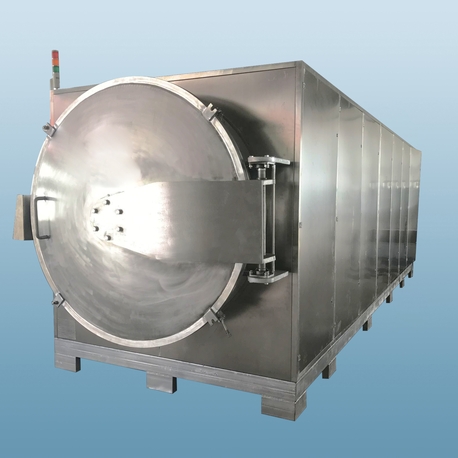
Understanding the Sublimation Interface
Freeze drying, or lyophilization, operates based on the principle of
sublimation, where water transitions directly from a solid (ice) to a gas
(vapor) without passing through the liquid phase. This occurs below the triple
point of water (0.01°C at 611.73 Pa). In a standard system, heat is applied to
the frozen product via heated shelves. As the "ice front" retreats into the
center of the material, the dried outer layer acts as a thermal insulator,
making it progressively harder for heat to reach the frozen core. This disparity
often results in processing times that can span several days.
The introduction of microwave freeze
drying fundamentally alters this dynamic. Instead of relying on
surface-to-core conduction, electromagnetic waves penetrate the entire volume of
the material. The energy is absorbed directly by the ice crystals and any
residual bound water molecules, facilitating a much faster phase transition.
This internal energy generation ensures that the sublimation rate remains high
throughout the primary drying phase, significantly reducing the overall
residence time in the vacuum chamber.
Overcoming Heat Transfer Limitations in Conventional Lyophilization
The primary constraint in traditional lyophilization is the thermal
conductivity of the dried layer. As water vapor leaves the product, it leaves
behind a porous, honeycomb-like structure. While this structure is desirable for
rapid rehydration, it is a poor conductor of heat. Consequently, to speed up the
process, operators often increase shelf temperatures, which carries the severe
risk of "melt-back" or glass transition temperature (Tg) violation. If the
frozen core melts, the structural integrity of the product is lost, leading to a
collapsed cake and poor solubility.
Volumetric energy absorption sidesteps this limitation. Since the microwave
energy interacts with the polar molecules throughout the sample, the heat is
generated exactly where the sublimation is occurring. This targeted approach
allows for a much higher mass transfer rate. Furthermore, because the energy
delivery is instantaneous and easily modulated, the temperature of the product
can be maintained within a very narrow window, just below its collapse
temperature. Nasan engineering focuses on precisely calibrating these energy pulses to match the
vapor removal capacity of the vacuum system, ensuring a stable equilibrium.
Dielectric Properties and Energy Absorption during Primary Drying
The efficiency of microwave freeze
drying is dictated by the dielectric properties of the material.
Specifically, the dielectric loss factor (ε'') determines how effectively the
frozen substrate converts electromagnetic energy into heat. Interestingly, ice
has a much lower dielectric loss factor than liquid water. This might seem like
a disadvantage, but it actually provides a self-regulating mechanism. The energy
is absorbed preferentially by the areas with higher dielectric loss, which are
typically the areas where sublimation is most active or where bound water is
present.
Key Variables in Dielectric Heating:
Permittivity: The ability of the material to store and
transmit electromagnetic energy.
Loss Tangent: The ratio of energy lost as heat to energy
stored, which varies significantly with temperature and physical state.
Penetration Depth: The distance the waves travel into the
material before the power drops to 1/e of its surface value. In frozen
materials, penetration depth is generally much greater than in wet materials,
allowing for the processing of larger batches or thicker cakes.
Frequency Dynamics: Most industrial systems operate at 2450
MHz, though 915 MHz is sometimes utilized for larger industrial volumes to
achieve greater uniformity in very thick loads.
Operational Control and Plasma Prevention
One of the most significant engineering hurdles in combining vacuum
environments with microwave energy is the prevention of glow discharge, or
plasma formation. At certain vacuum levels—typically between 10 and 100 Pa—the
air molecules become ionized more easily under the influence of an
electromagnetic field. This plasma can damage the product surface, cause
localized scorching, and interfere with the sensors. Managing this requires a
deep understanding of the Paschen curve, which describes the breakdown voltage
of a gas as a function of pressure and gap distance.
To mitigate this risk, sophisticated microwave freeze
drying systems employ several strategies. First, the vacuum level
must be carefully controlled to stay outside the peak ionization range whenever
the magnetrons are active. Second, the electric field strength is managed
through advanced waveguide design and the use of mode stirrers to prevent "hot
spots" where the field intensity might exceed the ionization threshold.
Nasan utilizes
high-fidelity simulation software to model these fields before fabrication,
ensuring that the applicator design minimizes the risk of discharge while
maximizing energy uniformity.
Strategic Applications in High-Value Sectors
While the adoption of this technology requires a systematic approach to
process design, the benefits across specific industries are profound. The
ability to dry heat-sensitive materials rapidly without high temperatures makes
it a preferred choice for the next generation of high-value goods.
Pharmaceuticals and Biotechs
In the production of vaccines, enzymes, and monoclonal antibodies,
maintaining the tertiary structure of proteins is necessary. Conventional freeze
drying can sometimes take a week for a single batch. By using microwave-assisted
methods, this can be reduced to less than 24 hours. The rapid removal of water
minimizes the time the proteins spend in a "partially hydrated" state, which is
often when they are most vulnerable to denaturation.
Advanced Food Science
For premium ingredients like truffles, medicinal mushrooms, or concentrated
fruit extracts, flavor and aroma retention are paramount. Microwave-assisted
sublimation preserves the volatile organic compounds (VOCs) that are often lost
during long conventional cycles. The resulting product has a superior sensory
profile and a much faster rehydration rate due to the preserved capillary
structure.
Chemical and Material Science
In the synthesis of aerogels or specialized catalysts, the drying stage is a
pivotal step that determines the surface area and porosity of the final
material. Controlled electromagnetic heating allows for the precise removal of
solvents, ensuring that the delicate nanostructures do not collapse under
capillary forces.

Integrating Vacuum Systems with Electromagnetic Waveguides
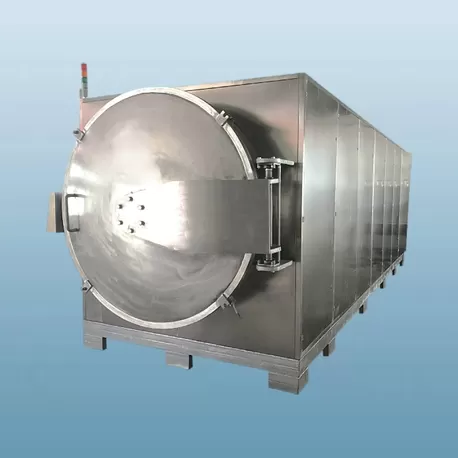
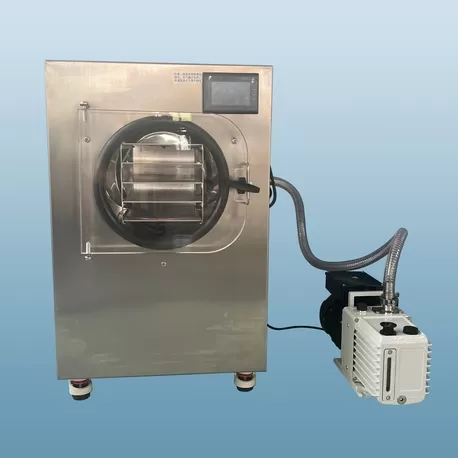
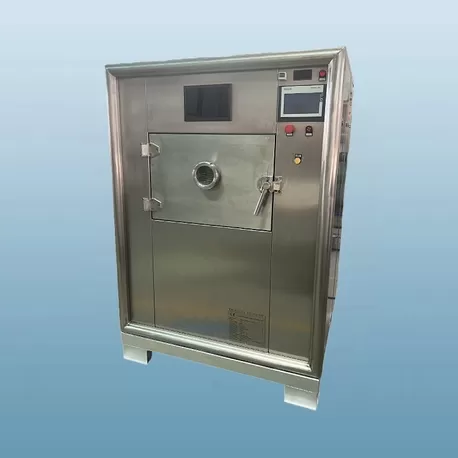
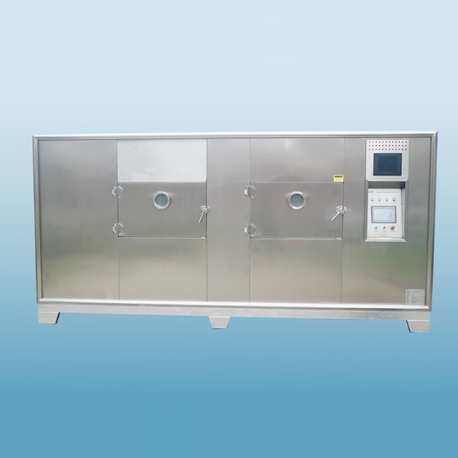
The mechanical assembly of a microwave freeze
drying unit is a feat of precision engineering. The vacuum chamber
must be constructed from materials that do not interfere with the microwave
field—typically high-grade stainless steel with specialized ports. The windows
through which the microwaves enter the chamber (pressure windows) must be
transparent to electromagnetic waves but capable of withstanding the pressure
differential between the atmosphere and the vacuum.
Common materials for these windows include specialized ceramics or
high-performance polymers like PTFE. These windows must be kept clean and free
of moisture, as any condensation on the surface could lead to localized heating
and potential failure of the seal. Furthermore, the vacuum pumps must be sized
to handle the rapid surge of vapor produced by the increased sublimation rate.
High-capacity condensers are required to trap this vapor quickly and prevent it
from reaching the vacuum pump oil.
Systematic Comparison: Conventional vs. Microwave-Assisted
Lyophilization
| Operational Metric | Conventional Freeze Drying | Microwave-Assisted Freeze Drying |
|---|
| Heat Transfer Mechanism | Conduction/Radiation (Surface-limited) | Dielectric/Volumetric (Internal) |
| Drying Cycle Time | High (24–72+ hours) | Low (4–12 hours) |
| Energy Efficiency | Low (Heat loss through walls/shelves) | High (Energy targeted at moisture) |
| Uniformity | Varies by shelf position | Highly uniform with proper mode stirring |
| Risk of Product Degradation | Moderate (Long exposure to heat) | Minimal (Shortened thermal exposure) |
Data-Driven Process Optimization
To achieve repeatable results, manufacturers must utilize a suite of sensors
that provide real-time feedback. Traditional temperature probes like
thermocouples can act as antennas in a microwave field, leading to arcing and
false readings. Instead, fiber-optic sensors or infrared pyrometers are used.
These tools allow for the monitoring of the product's surface and core
temperatures without interfering with the electromagnetic environment.
By mapping the "sublimation end-point"—the moment when the rate of energy
absorption drops significantly—operators can prevent the over-drying of the
product, which can lead to the removal of structurally necessary bound water.
This level of control is fundamental for maintaining the stability of the cake
and ensuring a long shelf life for the lyophilizate.
Future Directions in Lyophilization
As the industry moves toward continuous manufacturing, the role of microwave freeze
drying is expected to expand. Batch processing is inherently less
efficient than continuous flow, and the speed of microwave heating makes it
uniquely suited for belt-driven vacuum systems. In such a setup, frozen pellets
or granules move through a series of vacuum locks and microwave zones, emerging
at the other end as a fully dried, shelf-stable product. This shift will require
even more precise control over wave distribution and vapor management, areas
where engineering firms are currently focusing their research and development
efforts.
Final Observations
The transition to microwave freeze
drying represents a significant leap forward in thermal processing.
By addressing the physical limitations of heat conduction in a vacuum, this
technology allows for faster, safer, and more efficient production of the
world's most sensitive materials. Whether the goal is to preserve the efficacy
of a life-saving drug or the flavor profile of a rare botanical, the marriage of
vacuum science and electromagnetic energy provides a robust solution for modern
industrial challenges.
Frequently Asked Questions (FAQ)
Q1: Is microwave energy safe for delicate biological
molecules?
A1: Yes. Microwave radiation is non-ionizing, meaning it does not have the
energy required to break DNA or molecular bonds. Its effect is purely thermal.
By reducing the total time the molecules spend at elevated temperatures compared
to conventional drying, it often preserves biological activity better than
traditional methods.
Q2: How do you ensure the product doesn't melt during the
process?
A2: Melting is prevented by maintaining a vacuum level well below the triple
point and by using precise power modulation. Sensors monitor the product
temperature in real-time, and the microwave power is adjusted instantaneously to
ensure the substrate stays below its glass transition or collapse
temperature.
Q3: Can metals be present in the drying chamber?
A3: The chamber walls are metal, which is necessary to contain the
microwaves. However, loose metal objects or sharp metallic edges inside the
chamber can cause arcing. Industrial systems are designed with smooth internal
surfaces and specialized racks to eliminate this risk.
Q4: Why isn't every freeze dryer equipped with
microwaves?
A4: The integration requires sophisticated engineering to balance vacuum
physics with electromagnetic field distribution. It is a more complex system to
design and requires a deeper understanding of the material's dielectric
properties, making it most suitable for high-value products where quality and
speed are the primary drivers.
Q5: What is the typical reduction in drying time?
A5: While results vary based on the material and moisture content, it is
common to see a reduction in drying time of 60% to 80% compared to traditional
shelf-based lyophilization. This allows for significantly higher throughput
within the same production footprint.
Ready to revolutionize your production cycle? Our
engineering experts are available to help you evaluate the feasibility of
electromagnetic drying for your specific application. Contact us today to
discuss your process requirements and receive a detailed consultation on our
advanced vacuum solutions. Inquiry
Now