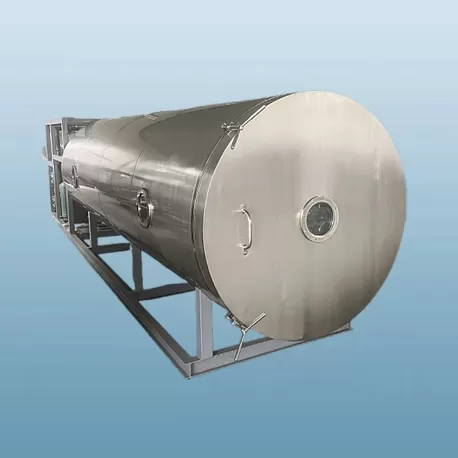
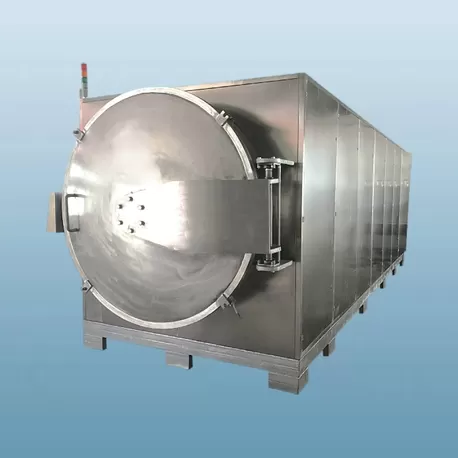
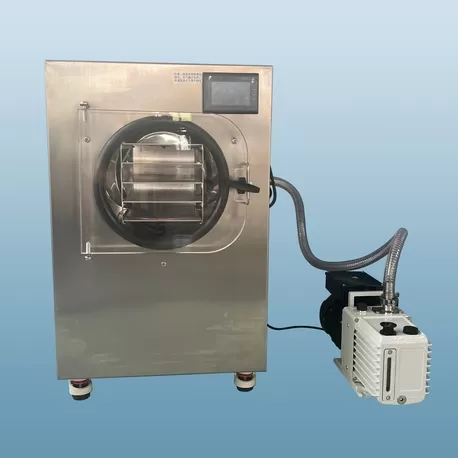
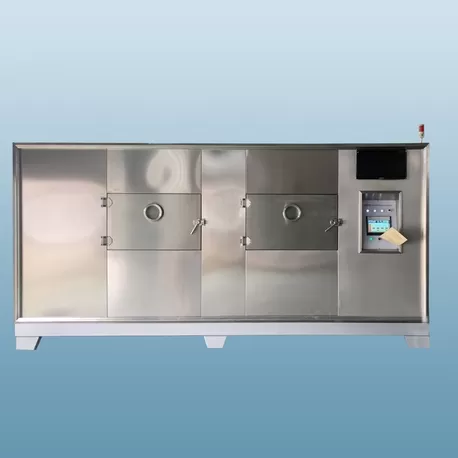
Selecting an industrial dehydrator requires
evaluating thermal efficiency, material handling, and final product
specifications. Unlike batch ovens or sun drying, modern continuous drying
systems provide uniform moisture removal with precise residence time control.
This guide examines core technologies, key engineering parameters, and solutions
to frequent production bottlenecks—written from a process engineering
perspective.

1. Core Technologies Behind High-Capacity Drying Systems
An industrial dehydrator is not a single machine but a family of engineered solutions based on heat
transfer mechanisms and airflow patterns. The three dominant configurations in
B2B operations include:
Convective (hot air) dryers: Belt, fluidized bed, and flash
dryers. Rely on heated air to remove surface and bound moisture. Best for
granular materials, sliced fruits, vegetables, and herbs.
Contact (conductive) dryers: Drum dryers and paddle dryers.
Heat is transferred through a heated wall. Suitable for pastes, purees, and
viscous products.
Radiant and volumetric dryers: Microwave and RF drying.
Energy penetrates the material directly, accelerating water diffusion.
Particularly effective for heat-sensitive or thick-layer products.
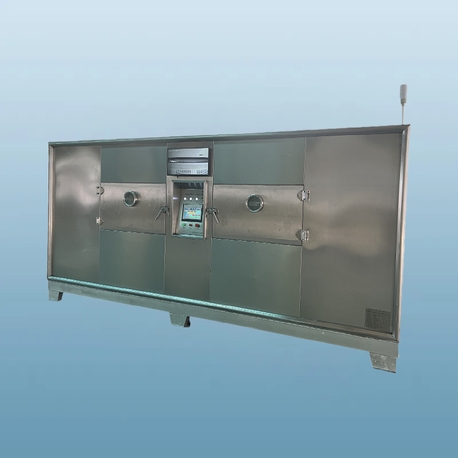
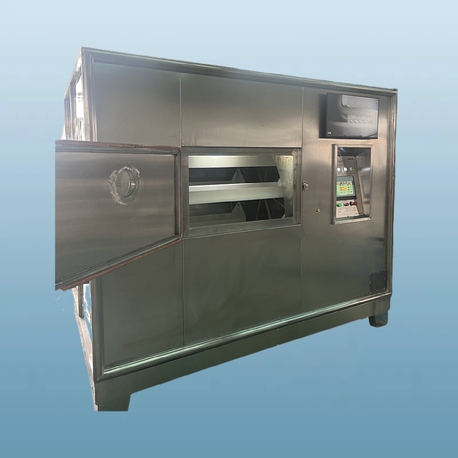
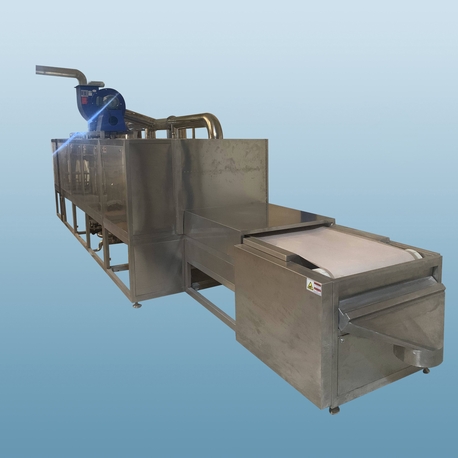
For instance, a microwave-based industrial dehydrator reduces drying time by 50-70% compared to conventional air drying, while
preserving volatiles in spices and pharmaceuticals. Manufacturers such as Nasan integrate
microwave modules with belt conveyors to achieve uniform energy distribution
across the product bed.
2. Key Engineering Parameters for Throughput and Quality
Optimizing an industrial dehydrator demands balancing multiple interdependent variables. Below are the parameters
that directly influence drying curves and operating costs.
2.1 Moisture Content and Drying Kinetics
Initial moisture (typically 75-90% for fresh produce) and final target (8-12%
for shelf-stable foods) determine the required energy input. The falling-rate
period often dictates total drying time. Using a microwave-assisted
industrial dehydrator (this general term appears but without
link to avoid overstuffing) accelerates the falling-rate phase by generating
internal vapor pressure.
2.2 Airflow Distribution and Velocity
In belt dryers, uniform air velocity across the belt width prevents
under-dried spots. Computational fluid dynamics (CFD) modeling helps design
plenum chambers. For hygroscopic materials, counterflow air arrangement
maximizes moisture pickup.
2.3 Temperature Sensitivity
Heat-labile compounds (enzymes, vitamins, probiotic cultures) require
low-temperature drying. Freeze dryers operate below 30°C but have higher capital
costs. Alternatively, vacuum microwave dryers combine reduced pressure with
microwave energy—an emerging configuration in high-value ingredient
production.
3. Industry-Specific Applications and Processing Challenges
Every sector presents unique constraints for dehydration equipment. Below are
common scenarios and how modern industrial dehydrators address
them.
3.1 Food & Beverage: Fruits, Vegetables, Meat, and Dairy
Challenge: Case hardening in air-dried fruits (hard shell
with wet interior).
Solution: Multistage drying with step-down temperature
profiles. A belt-type industrial dehydrator with variable zone
settings eliminates hardening.
Example: Drying mango slices from 85% to 15% moisture while
retaining color and flavor—achieved through infrared pre-treatment followed by
low-velocity hot air.
3.2 Chemical and Mineral Powders
Challenge: Dust explosion risks and fine particle
entrainment.
Solution: Fluidized bed dryers with integrated bag filters
or rotary dryers with lifters. Nasan offers closed-loop inert gas drying
systems for solvent-wet cakes.
3.3 Biomass and Waste Processing
4. Solutions for Common Operational Pain Points
Plant managers often report inconsistent final moisture, excessive energy
bills, and high maintenance frequencies. The following targeted improvements
directly enhance industrial dehydrator performance.
Non-uniform product loading: Implement a vibratory spreader
or oscillating chute before the infeed belt. Even bed depth ensures identical
drying times across the belt width.
High exhaust temperature: Install a heat recovery wheel or
air-to-air plate exchanger. Preheating inlet air with waste heat lowers
steam/gas consumption by 20-25%.
Sticky product buildup on belts: Use PTFE-coated mesh belts
or intermittent belt scrapers. For high-sugar fruits, oscillating nozzles with
air knives remove residue without water addition.
Microbial risk in low-water-activity products: Integrate a
pasteurization zone (steam or IR) at the discharge end. Holding dried product at
85°C for 10 minutes reduces pathogens without rehydrating.
Many of these retrofits can be performed on existing lines. For new
installations, Nasan provides custom engineering including
clean-in-place (CIP) systems and sanitary designs meeting FDA and EHEDG
guidelines.
5. Selecting the Right Industrial Drying Configuration
Choosing between belt, rotary, fluid bed, or microwave systems depends on
five criteria: throughput (kg/h), particle size and shape, initial/final
moisture, heat sensitivity, and available utility. Below is a concise decision
framework.
Belt dryer: For slices, pellets, granules. Capacity
100–10,000 kg/h. Best for vegetables, herbs, pet treats.
Rotary
dryer: For sticky or abrasive solids. Capacity 1–50 tons/h. Common in
mineral and fertilizer industries.
Fluid bed dryer: For fine
powders or crystals. Even drying but requires uniform particle
size.
Microwave/convective hybrid: For thick layers or
heat-sensitive extracts. Lower operating temperature, higher electrical
consumption.
Before finalizing specifications, conduct pilot trials using the actual
product. An industrial dehydrator manufacturer should provide a test lab and drying curves for at least three
process conditions.

6. Maintenance and Safety Protocols for Continuous Operation
Unplanned stops in a dehydration line cause significant production losses.
Adopting predictive maintenance extends component life.
Belt tension and tracking: Check weekly. Misalignment leads
to edge fraying and product spillage.
Air filter cleaning: Clogged filters reduce airflow,
increasing drying time and energy use. Differential pressure sensors trigger
alarms.
Bearing lubrication: High temperature zones require
food-grade high-temperature grease every 2000 operating hours.
Microwave leakage inspection (for microwave units): Perform
quarterly checks using a calibrated meter. Ensure interlock switches function
correctly.
Fire safety is paramount when drying oily seeds or sugary products. Install
spark detection systems and nitrogen purge ports in the drying chamber. Weekly
cleaning of fines (small particles) from the plenum reduces ignition risks.
Frequently Asked Questions (FAQ)
Q1: What is the difference between an industrial dehydrator and a freeze
dryer?
A1: A conventional industrial dehydrator uses heat (hot air, contact, or microwave) to evaporate moisture, typically
operating at 40–150°C. Freeze drying (lyophilization) freezes the product and
then sublimates ice under vacuum, preserving structure and volatile compounds.
Freeze dryers cost 3–5 times more per kilogram of capacity but yield higher
rehydration quality.
Q2: How can I reduce energy consumption in my existing belt dryer?
A2: Four immediate measures: (1) Recover exhaust heat with
an air-to-air heat exchanger; (2) Reduce excess air by modulating the fan speed
using a VFD; (3) Install an automatic moisture control system that stops the
dryer when product moisture target is reached; (4) Insulate the drying chamber
and air ducts. These steps often cut energy use by 15–30%.
Q3: Which industrial dehydrator type is best for heat-sensitive probiotic
powders?
A3: Low-temperature vacuum drying or a microwave vacuum
dryer. Both operate below 45°C, preserving viability above 10^9 CFU/g. Standard
hot air drying at 60°C can reduce survival rates by 3–4 log cycles. Always
request a trial using your specific bacterial strain.
Q4: What throughput can a single-unit industrial dehydrator achieve for wet
vegetables?
A4: Commercial belt dryers range from 100 kg/h to 20,000
kg/h of input material, removing 70–80% of water. For example, a 2m-wide,
24m-long belt dryer with 60°C air can process 3000 kg/h of sliced carrots
(initial 88% moisture) down to 12% moisture, producing roughly 410 kg/h of dried
product.
Q5: How often should I calibrate moisture sensors in a continuous drying
line?
A5: NIR (near-infrared) sensors require monthly verification
using a lab oven method (AOAC 934.06). For on-line microwave resonance sensors,
check zero and span every two weeks. Uncalibrated sensors can cause 3–5%
absolute error, leading to either over-drying (wasted energy) or under-drying
(spoilage risk).
Request a Process Evaluation for Your Material
Optimizing an industrial dehydrator requires matching equipment characteristics to your product’s drying kinetics.
Share your target material, throughput range, and moisture specifications. The
engineering team at Nasan provides free preliminary analysis,
pilot testing options, and custom quotations for single units or complete
dehydration lines. Fill out the inquiry form with your process data to receive a
technical recommendation within two business days.
For immediate assistance, send your product details and drying
requirements to the Nasan sales engineering department.