In fruit processing, post-harvest losses and inconsistent product quality
remain persistent challenges. An industrial-grade fruit drying machine bridges the gap between raw harvest and shelf-stable, nutrient‑retained dried
fruit. For B2B manufacturers, the right drying system directly influences color
preservation, rehydration ratio, energy footprint, and throughput stability.
This article provides a technical deep dive into modern fruit
dehydration—covering critical parameters, technology selection, sugar-related
sticking phenomena, and hygienic design—while adhering to Google’s E‑E‑A‑T
standards for authoritative content.

Why Industrial Fruit Drying Demands Process-Level Precision
Unlike vegetables or grains, fruits contain high levels of reducing sugars,
organic acids, and thermosensitive vitamins (e.g., vitamin C, carotenoids). A
poorly controlled drying cycle leads to case hardening, enzymatic browning,
off-flavors, and collapsed cellular structures. Commercial operations require a
fruit drying
machine that manages three interdependent variables: air
temperature, relative humidity, and airflow velocity. When these parameters are
precisely profiled, the final product achieves water activity (aw) below 0.60,
inhibiting mold and yeast growth while preserving natural sweetness and
texture.
Core Technical Parameters That Define Drying Performance
Every fruit drying machine operates on thermodynamic principles. Below are
the key engineering parameters that separate industrial-grade systems from
generic dehydrators:
Temperature zoning & ramp rates: Fruits like mango and
papaya require a 55–65 °C initial stage to avoid skin sealing, followed by a
gradual rise to 70 °C. Apple slices can tolerate 70 °C constant airflow.
Relative humidity control: Closed-loop dehumidification
prevents moisture saturation inside the chamber. High-humidity conditions
increase drying time and promote microbial growth.
Airflow uniformity (m/s): Cross-flow or through-flow
designs must guarantee velocity variation ≤ ±0.5 m/s across trays to ensure
batch consistency.
Data logging & PID control: Real-time sensors for core
moisture content and exhaust dew point enable automatic adjustments, reducing
operator intervention.
These parameters interact non-linearly. For instance, drying berries at 60 °C
with 25 % RH and 1.8 m/s airflow yields a uniform moisture gradient, whereas the
same settings for banana chips would cause sugar migration to the surface. An
advanced fruit drying
machine offers pre‑programmed drying recipes for different fruit
families, eliminating trial‑and‑error on the production floor.
Selecting the Right Drying Technology for Your Fruit Portfolio
No single drying principle fits all fruits. Industrial fruit drying machines
typically employ one of four core technologies, each with distinct
advantages:
1. Heat Pump Assisted Drying (HPD)
Heat pump systems recover latent heat from exhaust air, delivering 50–70 %
energy savings compared to conventional electric heating. They excel at drying
temperature‑sensitive fruits (kiwi, strawberries, citrus peels) at 30–45 °C
while maintaining low oxidation rates. HPD also allows precise humidity control
down to 12 % RH, ideal for hygroscopic fruits.
2. Continuous Belt / Multi‑Stage Dryers
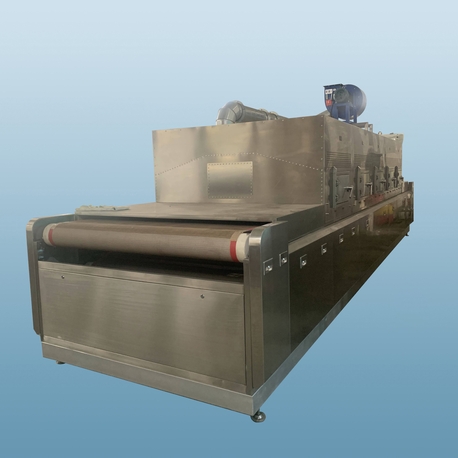
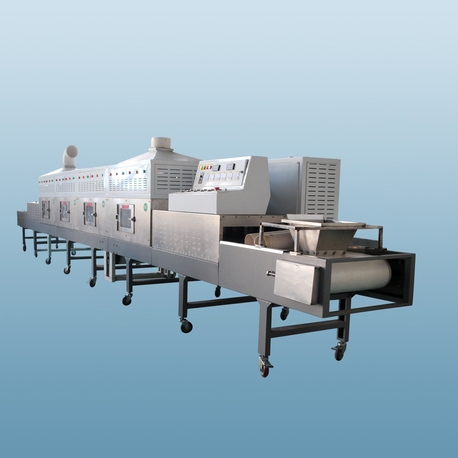
For high‑volume lines (≥2 tons/day), continuous belt dryers provide
uninterrupted production. Fruits are spread on perforated stainless steel belts
moving through zones with increasing temperature and decreasing humidity. This
configuration minimizes labor costs and ensures uniform residence time. However,
sticky fruits require belt scrapers or anti‑stick coatings.
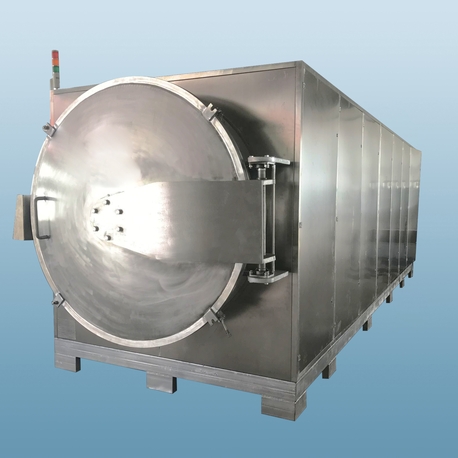
Batch systems remain the standard for co‑ops and medium‑scale processors
(500 kg–3 tons per cycle). They offer flexibility to dry different fruits
without cross‑contamination, and modern designs incorporate automated tray
loading/unloading. Batch dryers are preferred for dried fruit mixes and
specialty products requiring long drying schedules (24–48 hours).
4. Hybrid Infrared + Hot Air
Infrared radiation accelerates moisture migration from the interior, reducing
total drying time by 20–30 % while improving vitamin retention. Hybrid units
pair IR emitters with traditional convective airflow, ideal for stone fruits
(peaches, plums) that tend to develop hard skins.
For processors handling multiple fruit types, a modular fruit drying machine with interchangeable tray systems and adjustable airflow patterns offers the
best return on investment. Nasan engineers each line based on specific
fruit characteristics, drying curves, and production targets.
Solving Common Industrial Fruit Drying Challenges
Fruit drying is prone to three persistent issues. Below are root causes and
engineering countermeasures:
Issue 1 – Sugar Exudation and Sticking (Bananas, Dates, Figs)
High‑sugar fruits release fructose/glucose syrups as moisture evaporates,
causing product adhesion to trays and belt surfaces. Solutions: Pre‑treatment with a thin vegetable oil coating (≤0.5 ml/kg), vibrating belt
mechanisms, or pulsed airflow that disrupts boundary layer formation. Also,
osmotic dehydration before drying (immersing fruit in sugar solution) reduces
free water without heavy exudation.
Issue 2 – Non‑Enzymatic Browning & Vitamin Degradation
Prolonged exposure to temperatures above 75 °C accelerates Maillard reactions
and destroys heat‑labile nutrients. Solutions: Implement a
two‑stage drying profile: first stage at 50–55 °C with high airflow to remove
surface moisture; second stage at 65–70 °C until final aw is reached.
Integrating vacuum‑assisted drying (for premium products) lowers boiling points,
preserving color and bioactive compounds.
Issue 3 – Inconsistent Final Moisture Across Batches
Variability in fruit slice thickness, initial moisture content, or loading
density leads to some trays overdried while others remain wet.
Solutions: Laser‑guided slice cutters maintain ±0.5 mm
thickness uniformity. Inline near‑infrared (NIR) moisture sensors placed at the
dryer exit provide real‑time feedback, automatically adjusting conveyor speed or
zone temperatures.
Industrial fruit drying machine designs that incorporate these
countermeasures reduce waste by 8–12 % and improve first‑pass yield, directly
impacting profitability for contract drying operations.
Energy Efficiency and Intelligent Monitoring Features
Modern fruit drying machines integrate energy recovery and Industry 4.0
connectivity. Key advancements include:
Waste heat recovery exchangers: Capture exhaust heat to
pre‑heat incoming fresh air, cutting energy consumption by 18–25 %.
Variable frequency drives (VFDs) on fans: Adjust airflow
based on real‑time moisture evaporation rates, avoiding over‑ventilation.
Remote IoT monitoring: Cloud dashboards display live energy
usage, drying progress, and predictive maintenance alerts. Operators can modify
drying recipes from a central control room or mobile device.
Solar‑assisted pre‑heating: In sunny climates, roof‑mounted
solar collectors pre‑heat inlet air to 45 °C, reducing electrical load during
summer months.
These features not only lower operational expenses but also support
sustainability certifications (ISO 14001, LEED) that large retailers
increasingly require from their supply chain partners.
Hygienic Design and Food Safety Compliance
Any fruit drying machine used for human consumption must meet strict sanitary
standards. Critical design elements for compliance with FDA, EU 2023/2006, and
GFSI benchmarks include:
Fully welded, crevice‑free interiors: Stainless steel 304
or 316L with electropolished surfaces (Ra ≤ 0.8 µm) prevents biofilm
formation.
Tool‑less disassembly: Trays, plenums, and access panels
removable without tools for daily cleaning. CIP (clean‑in‑place) nozzles
integrated for automated wash cycles.
Drainage and sloping floors: Avoid standing water; all
internal surfaces slope ≥ 3° toward floor drains.
HEPA filtration on inlet air: Prevents airborne
contaminants (spores, dust) from contacting drying fruit.
Nasan constructs its fruit drying machines according to EHEDG guidelines, providing
full material traceability and weld documentation—essential for passing
third‑party audits (BRC, SQF). For organic dried fruit lines, dedicated
sanitization protocols prevent cross‑contact with non‑organic residues.
Integrating a Fruit Drying Machine Into Your Production Flow
Adopting an industrial drying system requires planning beyond the machine
itself. Three upstream and downstream considerations determine line
efficiency:
Pre‑drying preparation: Automated washing, destoning, slice
cutting, and blanching (for enzyme deactivation). A uniform slice thickness
reduces drying time variations by up to 40 %.
Post‑drying handling: Tempering bins allow moisture
equalization before packaging. Optical sorters remove discolored pieces.
Nitrogen‑flushed packaging extends shelf life to 18 + months.
Water recovery: Condensate from heat pumps can be treated
and reused for fruit washing, closing the water loop.
Proper integration also includes operator training on drying kinetics and
troubleshooting. Many fruit drying machine suppliers offer on‑site commissioning
and remote support, reducing ramp‑up time from weeks to days.
Frequently Asked Questions About Fruit Drying Machinery
Q1: What is the typical capacity range of an industrial fruit drying
machine?
A1: Batch systems range from 200 kg to 5 metric tons per
cycle. Continuous belt dryers can process 500 kg/h to over 10 tons/h, depending
on belt width and number of stages. Capacity is usually specified based on fresh
fruit input at 75–85 % initial moisture.
Q2: Can the same fruit drying machine handle both low‑sugar (apples,
pears) and high‑sugar (bananas, mangoes) fruits without compromising
quality?
A2: Yes, provided the machine offers adjustable temperature
zoning, humidity control, and removable tray surfaces with different coatings
(PTFE for high‑sugar, perforated for apples). You must perform a full CIP
between fruit families to avoid flavor transfer and sugar residue build‑up.
Q3: How do I prevent case hardening on thick fruit slices like
pineapple or mango?
A3: Case hardening occurs when the surface dries
too rapidly, trapping moisture inside. Use a lower initial temperature (55 °C)
and higher relative humidity (40–50 %) for the first 90 minutes. Osmotic
pre‑treatment (dipping in 20 °Brix sugar solution for 2 h) also reduces surface
hardening.
Q4: What maintenance schedule is required for a commercial fruit
drying machine?
A4: Daily: clean trays and check belt tension.
Weekly: inspect seals, exhaust dampers, and sensor calibration. Monthly: clean
heat exchanger coils and replace HEPA filters if pressure drop exceeds 150 Pa.
Annually: bearing replacement and thermal imaging of electrical panels. Nasan provides a
detailed maintenance logbook with every machine.
Q5: Does Nasan offer customized fruit drying machines for unusual
fruits like jackfruit or dragon fruit?
A5: Yes. Nasan’s
engineering team analyzes the fruit’s cellular structure, sugar composition, and
initial moisture distribution to design customized airflow patterns, tray
geometries, and drying profiles. Clients receive pilot‑scale test results before
full production units are built.
Ready to Upgrade Your Fruit Dehydration Line?
Selecting the right fruit drying machine is a strategic decision that impacts product quality, energy costs, and
compliance. Whether you process stone fruits, berries, tropical varieties, or
citrus by‑products, a purpose‑engineered drying solution eliminates guesswork
and maximizes throughput. Contact Nasan today to discuss your production
targets, receive a customized airflow simulation, and obtain a technical
proposal. Send your inquiry with your fruit type, required capacity, and
preferred drying technology—our experts will respond within 24 hours with a
detailed assessment.
For direct assistance, reach out via the inquiry form or email
sales@nasandry.com. Include your drying floor dimensions and electrical
specifications for a faster quotation.