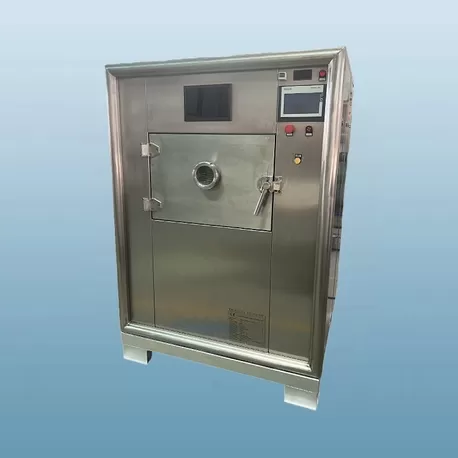
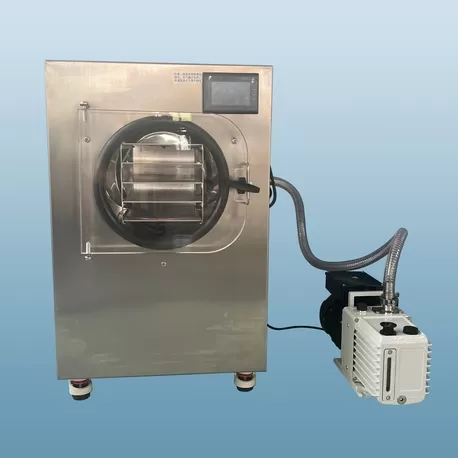
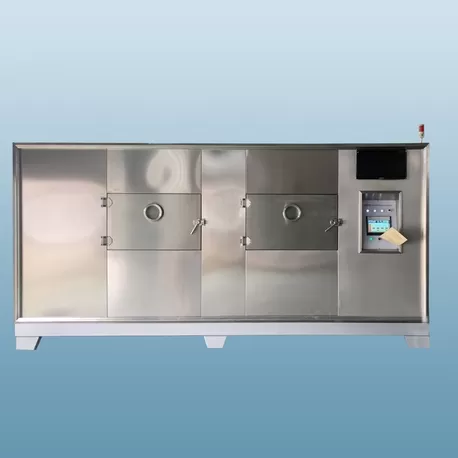
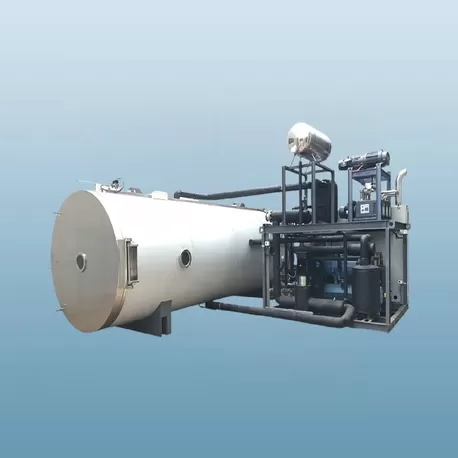
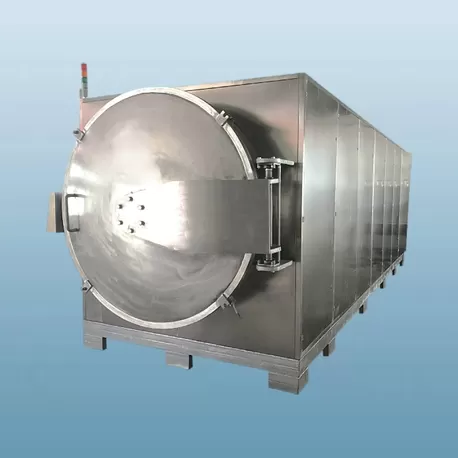
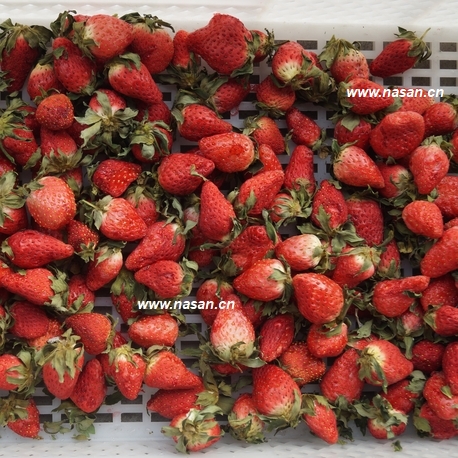
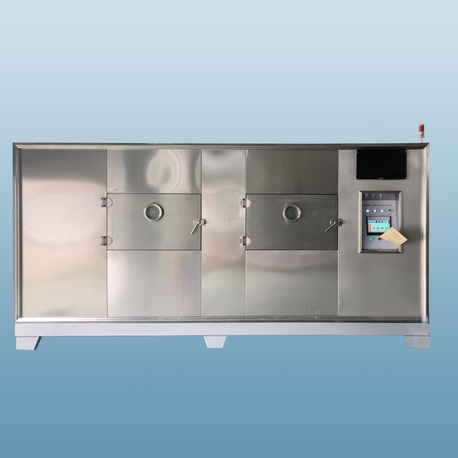
The industrial dehydration of fruit is a complex process that extends far
beyond simple moisture removal. It involves the precise management of heat
transfer, mass transfer, and biochemical stabilization to ensure that the final
product retains its nutritional profile, texture, and color. For large-scale
food processors, the technical capabilities of a fruit dryer factory determine the efficiency of the production line and the marketability of the
finished goods. This analysis examines the engineering standards and
thermodynamic principles that define high-performance drying systems.

1. Thermodynamics of Moisture Removal and Sorption Isotherms
At the core of dehydration is the requirement to overcome the latent heat of
vaporization. Moisture exists in fruit in various states: free water, capillary
water, and bound water. A sophisticated fruit dryer factory must design equipment that accounts for the "falling rate period" of drying,
where the internal resistance to moisture migration becomes the limiting factor.
Engineers utilize psychrometric charts to determine the optimal air state
points, ensuring that the circulating air has sufficient water-carrying capacity
without exceeding the glass transition temperature of the fruit’s sugars. If the
temperature is too high, caramelization and "case hardening" occur—a condition
where the exterior surfaces dry too quickly, trapping moisture inside and
leading to microbial instability. Precise control over the vapor pressure
deficit between the fruit surface and the drying medium is the only way to
achieve uniform results.
2. Advanced Airflow Dynamics and Uniformity
Airflow distribution is perhaps the most significant factor in preventing
"hot spots" within a drying chamber. Standard convection ovens often suffer from
uneven air velocity, leading to inconsistent batches. Modern facilities, such as
those operated by Nasan, implement computational
fluid dynamics (CFD) to model how air moves through trays and racks.
Parallel Flow: Air moves in the same direction as the
product on a conveyor, which is useful for highly sensitive fruits that require
high initial heat to prevent enzymatic browning.
Crossflow: Air moves perpendicular to the product,
providing excellent penetration through dense layers of sliced produce.
Reversing Airflow: Automated systems that periodically
switch the direction of the air to ensure that both the leading and trailing
edges of the product trays receive equal thermal exposure.
By optimizing the boundary layer of the air surrounding the fruit,
manufacturers can significantly reduce drying times while maintaining the
structural integrity of the cellular matrix.
3. Heat Pump Integration and Thermal Recovery
Traditional open-loop drying systems are notoriously inefficient, as the
humid exhaust air carries away a massive amount of sensible and latent heat. A
forward-thinking fruit
dryer factory now focuses on closed-loop heat pump technology. This
system operates as a refrigeration cycle in reverse: the evaporator dehumidifies
the air, recovering the latent heat of condensation, which is then reintroduced
to the drying air via the condenser.
The technical advantage of this approach includes:
Dehumidification Power: The ability to dry at lower
temperatures (30°C to 50°C), which is vital for preserving volatile aromatic
compounds and Vitamin C.
Environmental Isolation: Since the system can be fully
enclosed, it is unaffected by ambient weather conditions, providing consistent
year-round performance.
Energy Scavenging: Utilizing secondary heat exchangers to
pre-heat incoming air or maintain internal temperatures with minimal electrical
input.
4. Material Science and Hygienic Design Standards
In the context of food safety, the construction materials of the drying
chamber are non-negotiable. High-grade stainless steel, specifically SUS304 or
SUS316L, is required for all surfaces in contact with the product. These
materials offer the necessary corrosion resistance against the organic acids
found in fruits like citrus or pineapple. Nasan emphasizes the importance of
seamless welding and rounded internal corners to prevent the accumulation of
organic debris and biofilm formation.
Furthermore, the tray design must allow for maximum open area to facilitate
airflow while being rigid enough to resist warping under thermal cycling.
Food-grade silicone seals and specialized insulation materials, such as
high-density polyurethane or rock wool, ensure that the thermal envelope remains
intact, preventing energy leakage and external contamination.
5. Precision Control via PLC and Sensor Arrays
The transition from manual operation to automated precision is a hallmark of
a leading fruit dryer
factory. Modern systems rely on Programmable Logic Controllers
(PLC) that manage PID (Proportional-Integral-Derivative) loops for temperature
and humidity.
Advanced sensor arrays provide real-time feedback on:
Exhaust Humidity: Indicating when the rate of evaporation
has slowed, signaling the end of a drying cycle.
Product Core Temperature: Using non-contact infrared
sensors to ensure the fruit does not overheat.
Differential Pressure: Monitoring filter loads and fan
performance to maintain consistent air volumes.
This data-driven approach allows for the creation of "drying recipes"
tailored to specific varieties. For instance, the drying curve for a high-sugar
mango slice differs significantly from that of a low-moisture apple ring.
Automation ensures that these curves are replicated perfectly across every
batch.

6. Addressing Industry Pain Points: Quality Retention and Rehydration
A common grievance in the fruit processing industry is the loss of
"organoleptic quality"—the sensory experience of eating the fruit. When a
fruit dryer
factory fails to control the drying rate, the resulting product may
become tough, lose its vibrant color, or fail to rehydrate properly in
applications like muesli or snack mixes.
The solution lies in multi-stage drying. Initial high-temperature phases
inhibit enzymatic activity (preventing browning), while the final stages use
lower temperatures and lower humidity to reach the target water activity (Aw)
level—typically below 0.6 to prevent mold growth. By managing the desorption
isotherms precisely, manufacturers can produce dried fruits that maintain a
"flexible" texture rather than becoming brittle, which is often preferred in the
premium snack market.
Application Scenarios in Large-Scale Production
Industrial fruit dryers are employed across a variety of sectors beyond
simple snack production. In the ingredients industry, dryers produce fruit
powders through a combination of dehydration and subsequent milling. In the
nutraceutical sector, low-temperature drying is used to preserve antioxidants
and polyphenols. Each of these scenarios requires a customized configuration of
the drying chamber, whether it is a continuous belt dryer for high-volume
throughput or a batch-style tray dryer for specialty, high-value harvests.
Frequently Asked Questions
Q1: What is the optimal moisture content for shelf-stable dried
fruit?
A1: For most fruits, a final moisture content of 15% to 20% is targetted, but
the more accurate measure is water activity (Aw). An Aw level below 0.6 is
required to inhibit the growth of bacteria, yeast, and molds without the need
for heavy preservatives.
Q2: How does heat pump drying compare to traditional steam
heating?
A2: While steam heating can provide high temperatures for rapid drying, it
often lacks precision in humidity control. Heat pump drying is superior for
temperature-sensitive fruits, as it allows for dehumidification at much lower
temperatures, preserving color and nutritional value.
Q3: Why is stainless steel 304 or 316 necessary for fruit
dryers?
A3: Fruit juices contain natural acids (like citric and malic acid) that can
corrode galvanized or lower-grade steels. Stainless steel ensures that no
metallic contaminants enter the food chain and allows for rigorous cleaning with
caustic or acidic sanitizers.
Q4: Can a single dryer be used for different types of
fruit?
A4: Yes, provided the system features a programmable PLC. Different fruits
require different drying profiles (temperature/humidity/time). A versatile
system allows the operator to switch between pre-set recipes for mangos, apples,
berries, or citrus.
Q5: What causes "case hardening" during the drying
process?
A5: Case hardening occurs when the surface of the fruit dries too quickly due
to excessive heat or low humidity. This creates a hard shell that prevents
internal moisture from escaping, which can lead to internal spoilage despite the
exterior appearing dry.
Technical Consultations and Inquiries
Selecting the right dehydration technology is a pivotal decision for any food
processing operation. The integration of thermodynamic efficiency, hygienic
construction, and automated control systems is what separates industry-standard
equipment from inferior alternatives. At Nasan, we specialize in
engineering solutions that prioritize product quality and operational
reliability. If you are looking to enhance your production capacity or require a
customized drying system for specific fruit varieties, our technical team is
available to provide detailed insights and support. Please contact us for a
professional inquiry regarding your upcoming projects.