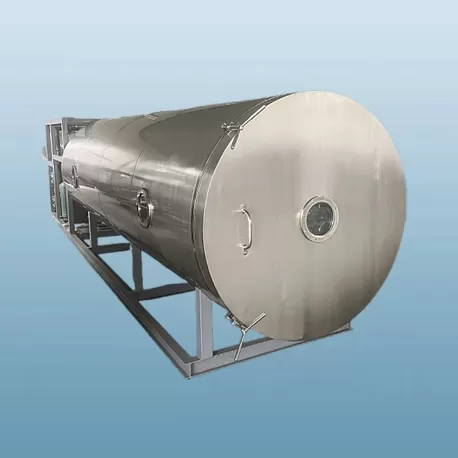
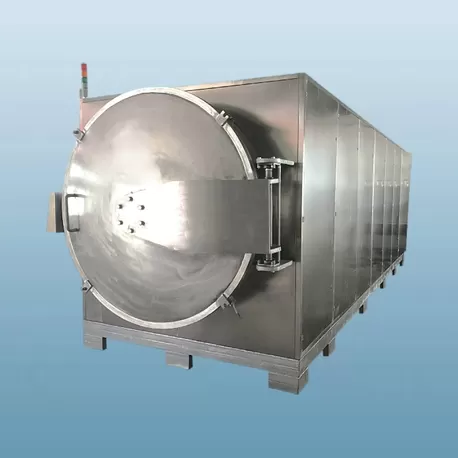
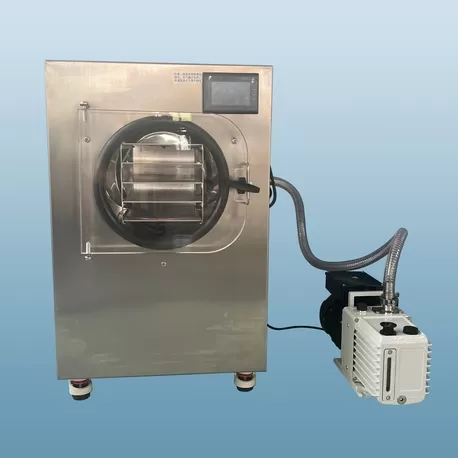
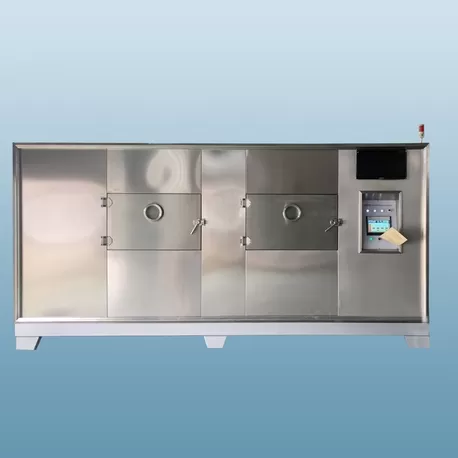
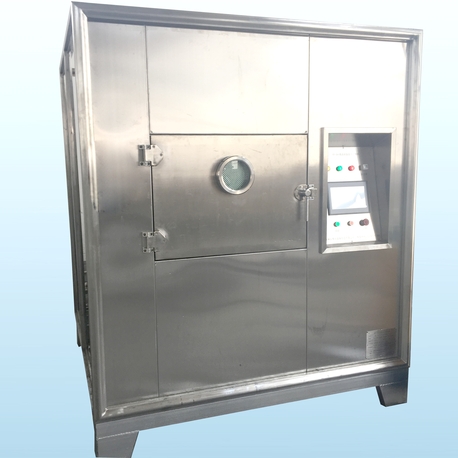
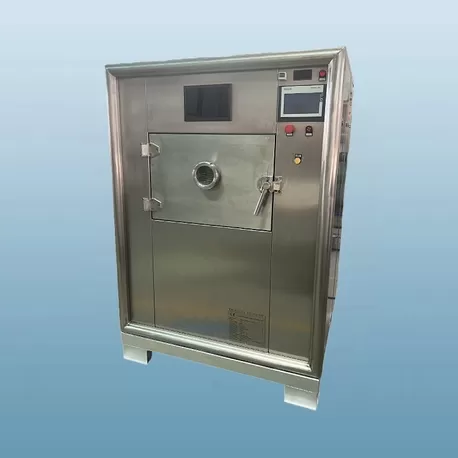
In the landscape of industrial drying, the demand for gentle yet efficient
moisture removal from temperature-sensitive products has never been higher.
Conventional drying methods often compromise product quality due to prolonged
exposure to high temperatures and oxygen. Microwave vacuum technology has emerged as the definitive solution, combining the rapid
volumetric heating of microwaves with the low-temperature environment of a
vacuum. This synergy allows processors to achieve unparalleled drying rates
while preserving the structural, nutritional, and functional integrity of the
material. As a trusted name in this domain, Nasan has engineered systems that translate
these scientific principles into robust, industrial-scale performance.

1. Principles of Microwave Vacuum Drying Technology
Understanding the core physics behind microwave vacuum drying is essential for appreciating its capabilities. Unlike conventional
conduction or convection drying, which rely on thermal gradients to move heat
from the surface inward, microwave drying employs electromagnetic waves to
directly interact with polar molecules—primarily water—within the material. This
interaction induces molecular rotation and friction, generating heat
volumetrically.
1.1 Dielectric Heating and Moisture Migration
The efficiency of this process is governed by the dielectric properties of
the material being dried. Water, having a high loss factor, absorbs microwave
energy readily. This creates an internal vapor pressure gradient that drives
moisture from the core to the surface rapidly, preventing case hardening. When
combined with a vacuum environment, the boiling point of water is significantly
reduced. At an absolute pressure of 30-50 mbar, water boils at approximately
25-30°C. This enables:
Low-temperature drying: Ideal for thermolabile compounds
like enzymes, pharmaceuticals, and natural extracts.
Oxygen-free processing: The vacuum inhibits oxidation
reactions, preserving color and preventing lipid rancidity.
Enhanced drying kinetics: The pressure gradient accelerates
moisture transport, reducing drying time by up to 70% compared to vacuum-only or
hot-air methods.
2. Key Technical Parameters and Equipment Design
Industrial implementation of microwave vacuum technology requires precise engineering to ensure uniform energy distribution
and consistent vacuum levels. A standard system comprises a microwave generator
(magnetron), a resonant cavity, a vacuum chamber, a condenser, and a control
unit. Critical design considerations include:
2.1 Microwave Frequency Selection
915 MHz vs. 2450 MHz: Industrial dryers often utilize 915
MHz (or 896 MHz in some regions) because this frequency offers greater
penetration depth into bulky or dense products. 2450 MHz, commonly used in
domestic ovens, is suitable for thinner layers or smaller particulate materials.
Nasan's systems allow frequency optimization based on product geometry.
Power modulation: Modern systems employ solid-state
generators or advanced inverter technology to modulate power output, preventing
localized overheating (arcing) and allowing fine control over drying
curves.
2.2 Vacuum System and Condensation
The vacuum pump and condenser are integral to the dryer's efficiency. As
water vaporizes under vacuum, it must be rapidly removed to maintain the
pressure differential. The condenser captures the vapor, converting it back to
liquid, which protects the vacuum pump and allows for potential solvent recovery
in pharmaceutical applications. The design of the condenser—whether surface or
direct-contact—impacts the overall energy balance. Data from pilot trials
indicate that an optimized condenser can reduce total energy consumption by
15-20%.
2.3 Rotary and Batch Configurations
For pasty, sticky, or viscous materials, a rotary microwave vacuum dryer is often employed. The rotation ensures constant exposure of new surfaces
to the microwave field, preventing agglomeration and promoting uniform drying.
Nasan offers both batch
and continuous rotary systems, with options for paddles or internals that break
up agglomerates, ensuring that even high-viscosity pastes achieve a consistent
final moisture content.
3. Industrial Applications Across Sectors
The versatility of microwave vacuum drying has led to its adoption in diverse
industries where product quality is paramount. Below are specific applications
backed by technical rationale.
3.1 Food Processing: Preserving Nutraceuticals and Sensorials
In the food industry, the technique is used for drying fruits, vegetables,
herbs, and functional food ingredients. Traditional hot-air drying degrades
vitamin C and volatile aromatic compounds. With microwave vacuum drying, processors have reported retention rates of over 90% for anthocyanins in
berries and curcumin in turmeric. The porous structure created by rapid internal
vapor expansion also leads to superior rehydration properties—a critical quality
parameter for instant soup mixes and ingredients.
3.2 Pharmaceutical and Biotech: Stabilizing Active Ingredients
Drying of active pharmaceutical ingredients (APIs), intermediates, and herbal
extracts is a delicate operation. Oxidation and thermal degradation can render a
batch unusable. Microwave vacuum drying operates at temperatures as low as 30°C,
which is well below the degradation point of most APIs. Furthermore, the absence
of air prevents oxidative stress. The technology is also employed for drying
labile biological materials like collagen and chitosan, where maintaining the
native structure is essential for bioactivity.
3.3 Advanced Materials and Chemicals
In the chemical sector, the technology is used to dry catalysts, polymers,
and ceramic powders. For nanopowders, conventional drying often leads to
agglomeration due to capillary forces. The gentle, uniform heating of microwave
vacuum drying minimizes these forces, yielding a free-flowing product with high
surface area. Manufacturers of lithium-ion battery materials, such as cathode
precursors, are increasingly adopting this method to achieve ultra-low moisture
levels without compromising particle morphology.

4. Addressing Industry Pain Points with Microwave Vacuum Solutions
Despite the advantages, adopting new drying technology requires solving
specific operational challenges. Nasan addresses these pain points
through customized engineering.
4.1 Challenge: Non-Uniform Drying and Hot Spots
Solution: Field uniformity is enhanced through mode stirrers
and variable-frequency drives. By rotating the product bed and using tunable
microwave applicators, standing wave patterns are eliminated. Advanced infrared
sensors and fiber-optic probes provide real-time temperature feedback, allowing
the control system to adjust power to different magnetrons independently,
ensuring every particle experiences the same drying conditions.
4.2 Challenge: Scale-Up from Lab to Production
Solution: Many processors struggle with translating results
from a 2 kW lab unit to a 50 kW production dryer. Nasan offers pilot-scale rental
units and provides computational modeling (e.g., COMSOL Multiphysics) to
simulate electromagnetic field distribution and drying kinetics. This
data-driven approach ensures that production-scale equipment—whether batch or
continuous—delivers identical product quality.
4.3 Challenge: Energy Costs and Sustainability
Solution: Microwave drying directly transfers energy to the
water molecules, minimizing heat losses to the surroundings. When coupled with a
heat pump or energy recovery system on the condenser side, the specific energy
consumption (kWh/kg of water removed) can be as low as 0.8-1.2 kWh/kg, compared
to 1.5-2.5 kWh/kg for conventional vacuum drying. This translates to a reduction
in operational carbon footprint, aligning with corporate sustainability
goals.
5. Economic and Environmental Benefits
Adopting microwave vacuum technology is not merely a quality improvement
measure; it offers a compelling economic case. Independent studies comparing
drying technologies for high-value botanicals show that the shortened drying
time (from 10-12 hours to 1-2 hours) drastically reduces in-process inventory
and labor costs. The ability to dry at lower temperatures also reduces fouling
and cleaning requirements, increasing equipment uptime.
Energy efficiency: Direct energy transfer reduces thermal
inertia losses.
Reduced footprint: A single microwave vacuum dryer often
replaces multiple conventional tray dryers, saving floor space.
Enhanced product value: Superior quality—better color,
higher potency, and instant rehydration—commands premium pricing in markets like
nutraceuticals and specialty foods.
6. Future Trends and Innovations
The evolution of microwave vacuum drying is moving toward Industry 4.0 integration. We are witnessing the
development of continuous microwave vacuum systems with multi-mode cavities and
robotic loading. Smart sensors employing machine learning algorithms can now
predict drying end-points based on real-time dielectric property measurement.
Additionally, the combination of microwave vacuum with other technologies, such
as infrared or radio frequency, is being explored to create hybrid drying
profiles that maximize throughput for complex formulations.
Frequently Asked Questions (FAQ)
Q1: What is the working principle of a microwave vacuum
dryer?
A1: It combines two physical phenomena. First, microwave
radiation penetrates the material and causes polar molecules (primarily water)
to vibrate, generating heat volumetrically. Second, the vacuum environment
lowers the pressure, which reduces the boiling point of water. This allows
moisture to evaporate rapidly at low temperatures, preventing heat damage to the
product.
Q2: What are the main advantages of microwave vacuum drying over
conventional hot air drying?
A2: The key advantages include
significantly faster drying times (often 50-70% faster), lower drying
temperatures (preserving heat-sensitive compounds), an oxygen-free environment
that prevents oxidation, better retention of volatile aromatics, and superior
rehydration characteristics of the final product due to the porous structure
created.
Q3: Which industries commonly use microwave vacuum drying
equipment?
A3: It is widely used in the pharmaceutical industry for
drying APIs and herbal extracts, the food industry for drying fruits,
vegetables, and functional ingredients, the chemical industry for processing
catalysts and polymers, and in advanced materials sectors like battery materials
and ceramics.
Q4: How does Nasan customize microwave vacuum dryers for specific
products?
A4: Nasan begins with a thorough analysis of the product's
dielectric properties and drying kinetics in a pilot facility. Based on the
data, we optimize the microwave frequency (915 MHz or 2450 MHz), chamber
geometry, vacuum level, and material handling system (batch, rotary, or
continuous) to ensure uniform drying and maximum energy efficiency for that
specific application.
Q5: What is the typical energy savings achieved with microwave vacuum
drying?
A5: Depending on the product and initial moisture content,
energy savings can range from 30% to 50% compared to conventional vacuum drying
or freeze-drying. The specific energy consumption is typically between 0.8 and
1.4 kWh per kilogram of water removed, as the energy is targeted directly at the
water molecules rather than heating the entire drying chamber and product
mass.
Q6: Can microwave vacuum drying handle liquid or pasty
materials?
A6: Yes, absolutely. For liquids, pastes, and slurries,
rotary microwave vacuum dryers are commonly employed. The rotation continuously
exposes fresh surfaces to the microwave field, preventing scorching and
promoting uniform drying. This configuration is ideal for drying honey, fruit
concentrates, herbal extracts, and fermentation broths.