For production managers and process engineers, conventional hot air drying
frequently yields non‑uniform moisture content, surface hardening, and extended
thermal cycles that degrade product quality. Microwave drying equipment addresses these
limitations through volumetric dielectric heating. This article provides a
technical evaluation of industrial‑scale microwave drying equipment, covering energy
efficiency metrics, material compatibility, common engineering challenges, and
financial modeling. For B2B operations, selecting the correct system requires
understanding six interdependent parameters.

1. Principles of Dielectric Drying vs. Convective and Conductive
Systems
Unlike thermal drying methods that rely on surface heat transfer, microwave drying equipment generates heat directly
inside the wet material. Electromagnetic waves (typically 915 MHz or 2.45 GHz)
cause polar water molecules to rotate, producing uniform internal friction. This
volumetric effect reverses the traditional moisture gradient: internal vapor
pressure expels water outward, preventing case hardening and reducing processing
time by 60‑85% compared to hot air systems.
Key technical differentiators include:
Selective energy coupling: Water absorbs microwave energy
more efficiently than dry solids, avoiding overheating of already‑dry
zones.
Reduced bulk temperature: Most products remain below 70 °C,
preserving thermolabile vitamins, enzymes, and volatile compounds.
Uniform moisture distribution: Coefficient of variation
below 3% versus 12‑18% for tray dryers.
Lower microbial loads: Combined thermal and non‑thermal
effects reduce aerobic plate counts by 2‑3 log cycles without chemical
preservatives.
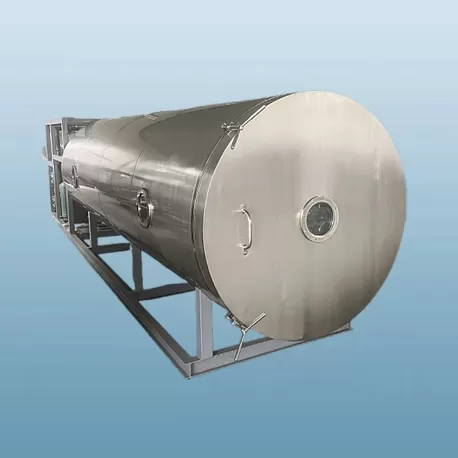
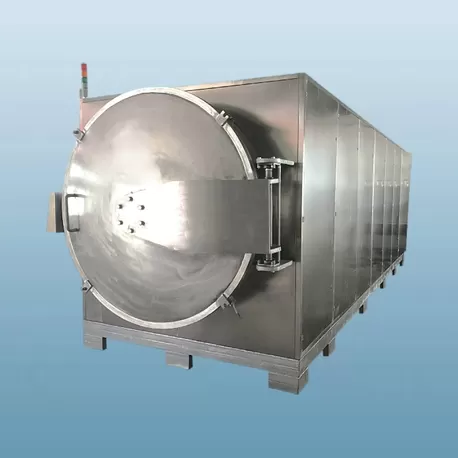
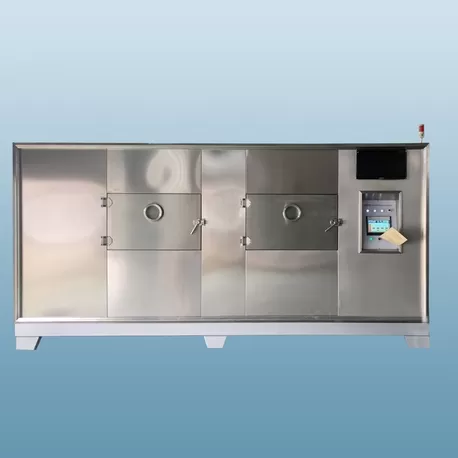
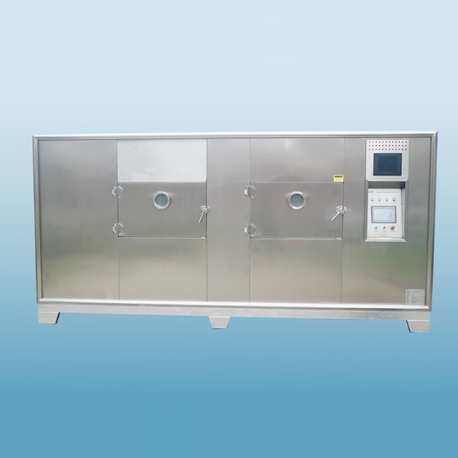
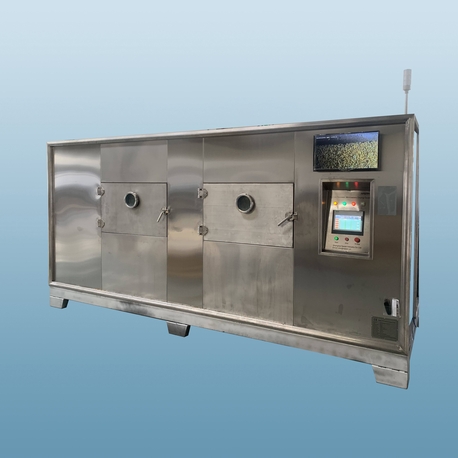
Industrial microwave drying equipment integrates
rotating applicators, variable power magnetrons, and real‑time moisture sensors.
Nasan designs continuous belt and batch tunnel
configurations with power outputs from 6 kW to 500 kW, depending on throughput
requirements.
2. Performance Metrics: Energy Consumption, Drying Kinetics, and Product
Quality
Procurement decisions require quantitative comparisons. Based on industrial
operation data across fruit, vegetable, herb, and protein applications, the
following benchmarks apply to modern microwave drying equipment.
2.1 Energy Efficiency Indicators
Specific energy consumption: 1.2‑1.9 kWh per kg of water
removed (microwave) vs. 2.8‑4.5 kWh (hot air) vs. 8‑14 kWh (freeze drying).
Drying time reduction: 70‑85% shorter than hot air; 90%
shorter than freeze drying for similar final moisture.
Electrical efficiency: Modern magnetron arrays achieve
85‑88% conversion from line power to microwave field energy.
2.2 Quality Retention Data
Vitamin C retention in fruits: 82‑94% (microwave) vs.
45‑65% (hot air).
Color difference (ΔE): ≤4.0 for microwave‑dried mango and
herbs, meeting premium export standards.
Rehydration ratio: 4.5‑5.5 (microwave) vs. 2.8‑3.8 (hot
air), approaching freeze‑dried quality at substantially lower operating
cost.
Volatile oil retention in basil and mint: 3‑4 times higher
than convective drying.
Nasan provides material‑specific drying curves and
quality predictions through pilot testing, validating these metrics before
full‑scale investment.
3. Industrial Applications and Material Compatibility
The versatility of industrial drying systems based on
microwave technology extends across multiple B2B sectors. Below are high‑demand
applications where microwave drying equipment has replaced conventional
lines.
3.1 Food Ingredients
Fruit slices (banana, apple, mango): Crisp texture without
oil frying; natural sweetness retained.
Vegetable powders (carrot, beetroot, tomato): Uniform
drying preserves betalains and carotenoids for natural colorants.
Herbs and spices (basil, oregano, turmeric): Volatile oil
retention 3‑5x higher than hot air.
3.2 Protein and Meat Products
Beef jerky, chicken breast strips: Uniform moisture
distribution prevents case hardening; reduced cooking loss (5‑8% vs. 12‑15% for
hot air).
Insect protein (crickets, black soldier fly larvae): Rapid
drying at ≤60 °C avoids protein denaturation.
3.3 Nutraceutical and Botanical Extracts
Ginseng, echinacea, chamomile: Microwave drying eliminates
mold risks while preserving active glycosides and phenolic compounds.
Mushroom powders (shiitake, reishi): Maintains β‑glucan
integrity and flavor profile.
3.4 Technical Materials
Wood veneers and engineered lumber: No warping or surface
checks; drying time reduced from days to hours.
Paper honeycomb cores: Uniform moisture without adhesive
degradation.
PLA and biopolymer pellets: Controlled microwave drying
prevents thermal hydrolysis.
Each application requires precise tuning of power density, conveyor speed,
and air circulation. Nasan operates a pilot facility to determine optimal
drying curves for customer‑supplied materials.
4. Addressing Engineering Pain Points: Non‑Uniform Heating, Arcing, and
Throughput Limitations
Despite clear benefits, B2B buyers often cite specific technical concerns.
Below we address each with validated solutions.
4.1 Non‑Uniform Heating and Hot Spots
Problem: Poor field uniformity leads to scorching or
incomplete drying. Solution: Advanced microwave drying equipment uses mode stirrers,
rotating belts, and variable power magnetrons (pulse‑width modulation) to
achieve field uniformity >95%. Nasan applies 3D electromagnetic
simulation to map energy distribution before manufacturing.
4.2 Arcing and Plasma Discharge
Problem: Metallic contaminants or sharp product edges cause
arcing. Solution: Install metal detectors upstream; use rounded
product carriers and PTFE‑coated waveguides. Modern systems include arc
detection and automatic power shutoff within microseconds.
4.3 Limited Throughput for High‑Moisture Feeds
Problem: Single‑cavity batch systems may not match
continuous production needs. Solution: Industrial continuous
microwave drying equipment with multi‑stage power
zones and hybrid hot‑air assistance handles 1‑10 tons per hour. Modular designs
scale from 50 kW to 500 kW.
4.4 Regulatory Compliance and Safety Standards
Problem: Microwave leakage and emission compliance.
Solution: All systems comply with FCC (USA), CE (EU), and IEC
60519‑6 standards, featuring double‑interlock doors, leakage monitors
(<5 mW/cm² at 5 cm), and automatic power cutoff. Nasan provides certification documentation for each installation.

5. Total Cost of Ownership: Capital, Energy, Maintenance, and Payback
Modeling
Beyond purchase price, engineering managers must evaluate long‑term
operational costs. Below is a five‑year TCO comparison for a 100 kW microwave drying equipment line versus a 15‑meter hot
air tunnel (both processing 800 kg/h of pre‑cut vegetables at 75% initial
moisture).
Capital investment: Microwave system $210,000; hot air
$85,000.
Annual energy cost: Microwave $42,000 (based on $0.12/kWh);
hot air $98,000.
Annual maintenance: Microwave $9,500 (magnetron replacement
every 8,000 hours); hot air $7,000 (burner cleaning, belt replacement).
Labor reduction: Automated microwave system saves 1.5
full‑time equivalents ($52,000/year).
Product quality premium: Superior color and rehydration
allow 18‑22% higher selling price for dried output.
Resulting payback period: 14‑18 months. Five‑year net
savings (including quality premium): $382,000.
Nasan provides site‑specific ROI calculators based on
local energy tariffs, labor costs, and product market prices.
6. Integration, Automation, and Retrofit Strategies
Modern industrial drying solutions are designed for seamless
integration into existing processing lines. Key features include:
SCADA compatibility: Real‑time data logging of power,
temperature, and moisture via Modbus TCP/IP or Profibus.
Hybrid retrofitting: Install microwave applicators in the
final zone of an existing hot air dryer to eliminate residual non‑uniformity,
reducing retrofit cost by 40‑50%.
Closed‑loop moisture control: Near‑infrared sensors adjust
power density automatically based on outlet moisture targets.
Remote diagnostics: Magnetron health monitoring and
predictive maintenance alerts via cloud portal.
Case example: A European spice processor retrofitted two hot air tunnels with
40 kW microwave finishing sections. Results: moisture uniformity improved from
±4.5% to ±0.8%; drying time reduced by 55%; annual energy savings of €67,000.
Retrofitting cost was recovered in 11 months.
Q1: Can microwave drying equipment handle products with high sugar or
fat content, such as fruit pastes or oily
seeds?
A1: Yes, with modifications. High‑sugar
products require lower power density (≤1 W/g) and intermittent operation to
avoid caramelization. Oily seeds (e.g., sunflower, flax) need a short hot‑air
pre‑drying to reduce surface moisture before microwave exposure. Nasan supplies custom waveguide coatings and power sequencing protocols for these
challenging materials.
Q2: What is the typical lifespan of industrial microwave drying
equipment?
A2: With proper maintenance, the
structural components (stainless steel chamber, conveyor, waveguides) last 15‑20
years. Magnetrons require replacement every 8,000‑10,000 operating hours,
costing $800‑$2,000 each depending on power rating. Nasan uses industrial‑grade magnetrons with 2‑year warranty and provides stock for
rapid exchange.
Q3: How does microwave drying compare to freeze drying for
pharmaceutical or nutraceutical powders?
A3: Freeze
drying remains necessary for extremely heat‑labile biologicals (e.g., some
vaccines). However, for small molecules, herbal extracts, and many APIs,
microwave drying achieves equivalent residual moisture (<1%) at 25‑35% of the
capital cost and 15‑20% of the operating cost (no vacuum pumps or condensation
systems). Drying time reduces from 24‑48 hours to 2‑4 hours.
Q4: What certifications are required for microwave drying equipment
used in organic food production?
A4: The equipment
must be constructed from food‑grade stainless steel (316L) with no chemical
lubricants near product zones. Microwave drying is recognized as a physical
processing method under EU Organic Regulation (EC) 2018/848 and USDA NOP.
Nasan provides validation documentation for organic
certification bodies.
Q5: Is it possible to test my material before purchasing industrial
microwave drying equipment?
A5: Yes. Reputable
suppliers, including Nasan, offer pilot‑scale testing services. You supply
10‑50 kg of raw material; we run controlled drying trials, measure moisture
curves, quality parameters (color, rehydration, nutrient retention), and provide
a scale‑up report. This data forms the basis of equipment sizing and ROI
projection.
Q6: What safety features prevent microwave leakage during
operation?
A6: Industrial units are equipped with
double interlocked doors, automatic power cutoff when doors open, continuous
leakage monitoring with alarms at >2 mW/cm², and reinforced metal mesh
viewing windows. Routine monthly leakage tests with a calibrated meter are
recommended. All Nasan systems comply with FCC and CE emission
limits.
Request a Process Validation and Custom Quotation
Every industrial drying project has unique parameters: initial moisture
content, target final moisture, thermal sensitivity, required throughput,
available floor space, and integration constraints. Generic equipment rarely
meets all requirements without engineering adjustments. Nasan offers a structured technical consultation process:
Sample submission: Send 10‑20 kg of your material to our
pilot facility.
Test drying: We perform multiple trials to identify optimal
power density, conveyor speed, and air flow settings.
Quality analysis: Report includes moisture uniformity,
color (ΔE), rehydration ratio, and nutrient retention data.
Scale‑up simulation: Finite element modeling predicts
energy consumption and throughput at full industrial scale.
Proposal package: CAD drawings, electrical schematics,
detailed ROI model, and delivery timeline.
Contact our process engineering team directly via the website. Include your
material type, target daily output, and any specific quality constraints. We
will respond within 24 hours with a preliminary feasibility assessment and
available test slots.
Send your drying requirements to Nasan’s technical specialists — provide material name, moisture targets, and desired throughput for a
prioritized engineering review.