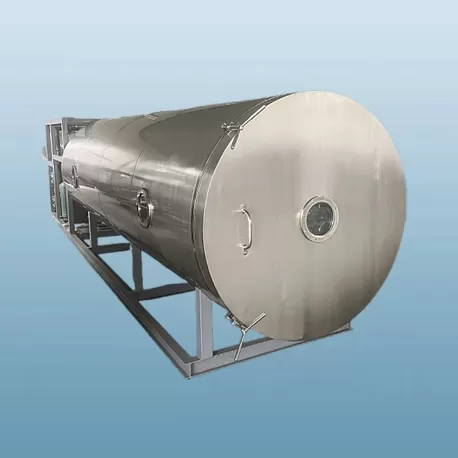
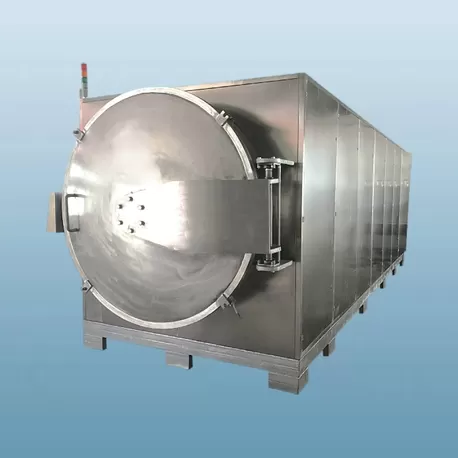
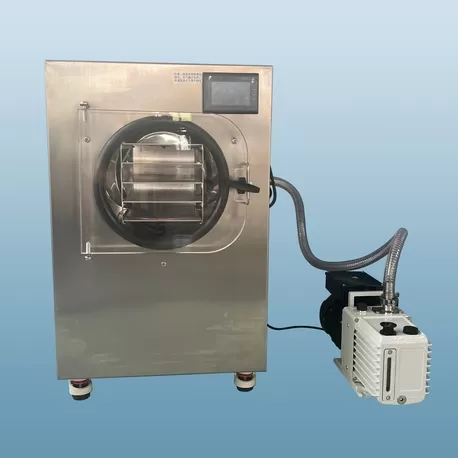
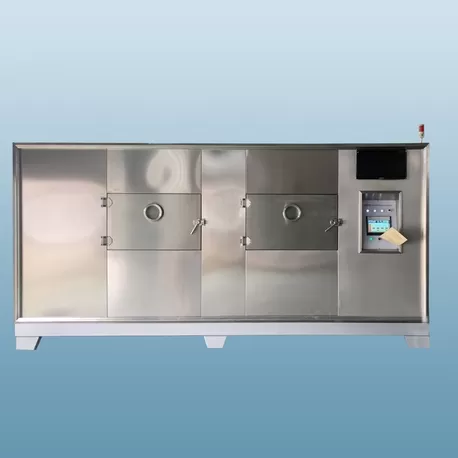
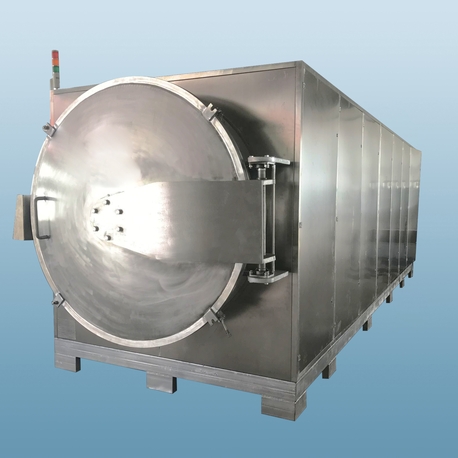
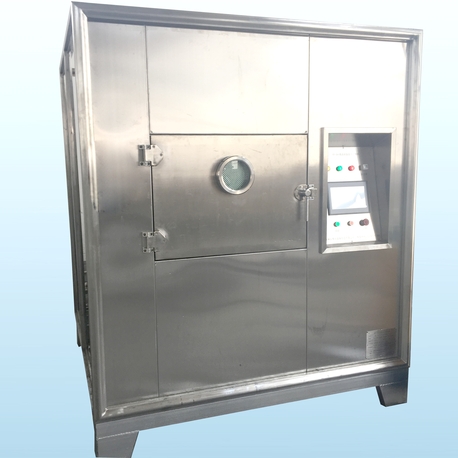
In the world of industrial drying, efficiency, quality, and energy conservation are paramount. The microwave vacuum dryer has emerged as a game-changing technology, addressing critical challenges that conventional hot air or freeze dryers cannot. This advanced system combines the rapid, volumetric heating of microwaves with the low-temperature environment of a vacuum chamber.
For companies seeking superior drying solutions, understanding this technology is crucial. Nasan has been at the forefront of implementing and refining microwave vacuum drying technology for demanding commercial and industrial applications.

The principle is elegantly powerful. A microwave vacuum drying system integrates two core components.
First, the vacuum pump drastically reduces the pressure inside the sealed drying chamber. This lowers the boiling point of water, allowing moisture to evaporate at temperatures as low as 20-40°C.
Second, microwave generators (magnetrons) emit electromagnetic waves. These waves penetrate the product evenly, causing water molecules to oscillate rapidly and generate heat from within the material itself.
This synergy means heat is generated directly inside the product, not transferred from the outside. Combined with low-temperature evaporation, it creates an exceptionally gentle and fast drying process.
Core Advantages Over Conventional Drying Methods
Why choose a microwave vacuum dryer? The benefits are tangible and impact both product quality and the bottom line.
Unmatched Speed: Microwave energy heats the entire volume simultaneously, reducing drying times by up to 80% compared to conventional methods.
Superior Product Quality: Low-temperature operation preserves heat-sensitive compounds—vitamins, colors, flavors, and active pharmaceutical ingredients. It minimizes case-hardening and maintains better texture.
High Energy Efficiency: Energy is directly absorbed by the water molecules, not the entire chamber or the dry material. This targeted approach leads to significant energy savings.
Uniform Drying: The volumetric heating effect tackles the common problem of uneven drying, resulting in a consistent final product batch after batch.
Precise Control: Modern systems allow for exact control over temperature, pressure, and microwave power, enabling perfect process repeatability.
Standard Operational Workflow
Operating an industrial microwave vacuum dryer follows a logical, controlled sequence.
Loading: The wet material is spread evenly on trays designed for optimal microwave penetration and placed inside the chamber.
Sealing & Vacuum: The door is securely closed, and the vacuum pump activates to reach the pre-set pressure level.
Drying Cycle: Microwave power is applied according to the programmed recipe. Sensors monitor product temperature and chamber pressure in real-time.
Conditioning (Optional): Some cycles may include a tempering or conditioning phase to equalize moisture distribution.
Cooling & Unloading: After microwaves cease, the product may be cooled under vacuum before the chamber is vented to atmospheric pressure for safe unloading.
Primary Industrial Applications and Use Cases
The microwave vacuum drying machine is versatile, serving sectors where quality and efficiency are non-negotiable.
Pharmaceutical & Nutraceutical: Ideal for drying granules, powders, herbal extracts, and probiotics without degrading their biological activity. It's crucial for achieving precise moisture content in active pharmaceutical ingredients (APIs).
Food Processing: Used for high-value fruits, vegetables, herbs, and spices. It retains vibrant colors, potent flavors, and nutritional value far better than air drying. Instantizing coffee and tea is another key application.
Chemical & Advanced Materials: Gently dries catalysts, ceramics, polymers, and nanomaterials where maintaining specific chemical structures and particle size is critical.
Biotechnology: Preserves enzymes, bacteria cultures, and other sensitive biological materials effectively.
Electronics: Used in the precise drying of components and materials where moisture must be removed without thermal stress.
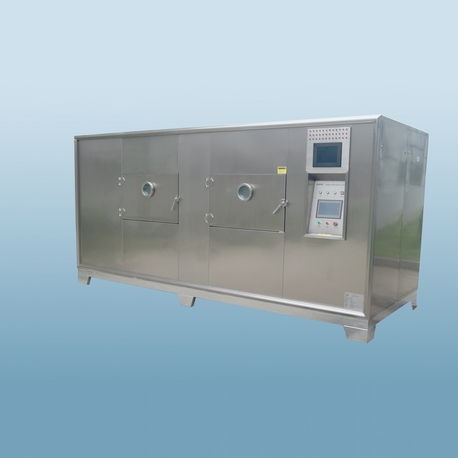
Solving Critical Industrial Drying Challenges
Investing in a microwave vacuum dryer is often the solution to persistent problems.
Problem: Long drying cycles creating production bottlenecks.
Solution: The drastic reduction in processing time increases throughput and capacity.
Problem: High energy costs from inefficient thermal transfer.
Solution: Direct molecular heating cuts energy consumption substantially.
Problem: Product degradation, loss of potency, or poor rehydration.
Solution: Low-temperature vacuum drying preserves the essential qualities of the material.
Problem: Inconsistent final product quality and moisture content.
Solution: Uniform volumetric heating and precise process control ensure batch-to-batch consistency.
Companies like Nasan work closely with clients to tailor microwave and vacuum drying systems that solve these specific challenges, ensuring a strong return on investment.
The Future of Drying Technology
As industries push for greener, more efficient processes, the adoption of microwave vacuum dryer technology will continue to grow. Its ability to marry speed with quality while reducing energy use aligns perfectly with modern manufacturing goals. For processors of high-value, sensitive materials, it has shifted from being an alternative to becoming the definitive drying method.
Choosing a reliable supplier with proven expertise is vital. Nasan's experience in engineering robust and efficient microwave vacuum drying systems provides industries with a reliable partner for upgrading their drying capabilities and securing a competitive edge.
Frequently Asked Questions (FAQ)
Q1: Is a microwave vacuum dryer safe for operators and the environment?
A1: Yes, when properly engineered. Industrial systems are fully enclosed with robust shielding that contains microwave radiation entirely within the chamber. They comply with strict international safety standards. Furthermore, because they are often more energy-efficient and can operate without combustion gases, their environmental footprint is typically lower than many conventional dryers.
Q2: What types of materials are NOT suitable for microwave vacuum drying?
A2: Materials that are inherently microwave-transparent (where microwaves pass through without heating) or contain significant amounts of metal are generally not suitable. Highly fatty or oily products can also be challenging, as fats heat differently in microwave fields. A reputable supplier like Nasan can conduct material tests to determine suitability.
Q3: How does the cost of a microwave vacuum dryer compare to a freeze dryer?
A3: While both are premium technologies, microwave vacuum drying systems often have a lower initial capital cost and significantly higher operational efficiency (shorter cycles, less energy). They provide a different quality profile; freeze-drying is excellent for structure but can be slower and more energy-intensive. The choice depends on the specific product requirements and production economics.
Q4: What are the main maintenance considerations for this equipment?
A4: Key maintenance focuses on the vacuum system (pump oil changes, seal inspections) and the magnetrons, which have a finite lifespan (typically thousands of hours). Modern industrial dryers are designed for easy access to these components. Regular cleaning of the chamber and waveguide covers is also essential for consistent performance.
Q5: Can microwave vacuum drying be scaled for large-scale, continuous production?
A5: Absolutely. While batch systems are common, continuous microwave vacuum dryer designs exist for high-volume applications. These systems use conveyor belts or rotating drums that move product through sealed vacuum zones with applied microwave energy. Scaling requires careful engineering to maintain uniform vacuum and microwave distribution.