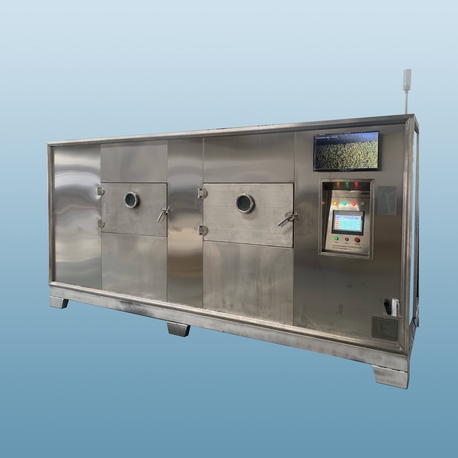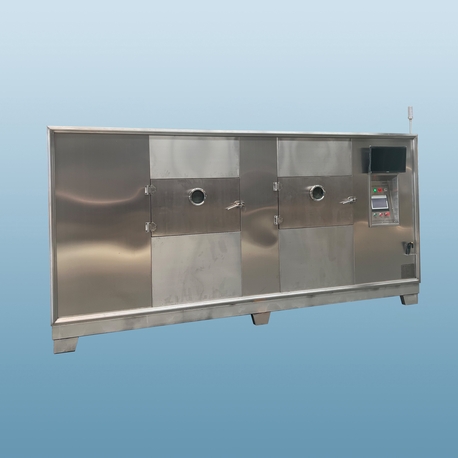
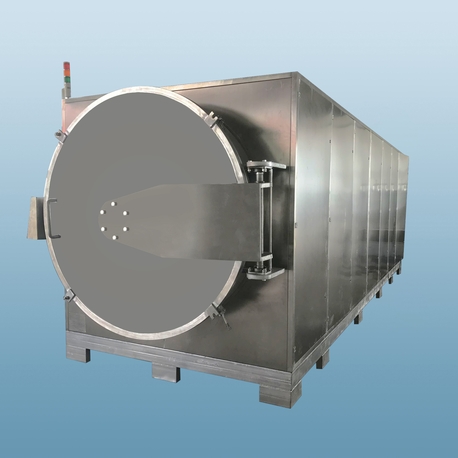
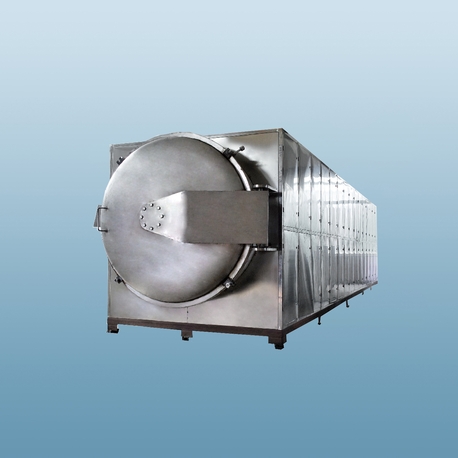
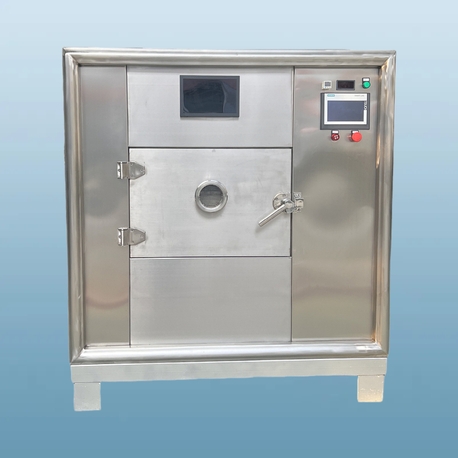
Conventional solid-liquid extraction (maceration, Soxhlet, percolation) relies on conductive heat transfer and prolonged solvent contact, leading to thermal degradation of thermolabile compounds, high energy consumption, and substantial solvent waste. A microwave extractor applies dielectric volumetric heating to accelerate mass transfer and selectively rupture cell matrices. This article examines the design principles, process parameters, industrial applications, and economic justification for microwave-assisted extraction (MAE). Nasan has developed modular microwave extraction platforms that integrate with downstream drying and concentration stages.
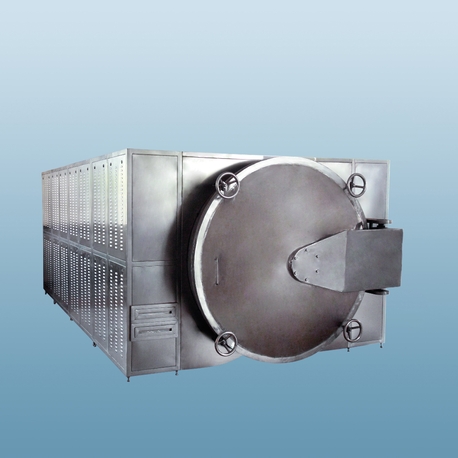
Traditional methods suffer from three inherent bottlenecks: long extraction times (2–24 hours), high solvent-to-feed ratios (10:1 to 30:1), and localized overheating at vessel walls. For heat-sensitive compounds like anthocyanins, curcuminoids, or cannabinoids, prolonged exposure to elevated temperatures reduces yield and purity. Furthermore, post-extraction solvent evaporation adds energy and capital costs. The industry requires a technology that accelerates diffusion without destroying target molecules—a need addressed by microwave extractor systems.
Microwaves (typically 2450 MHz or 915 MHz) penetrate the plant matrix and interact with polar solvent molecules and residual moisture inside cells. Rapid dipole rotation generates internal heat, building pressure that disrupts cell walls and vacuoles. Unlike conventional heating, microwave extractor creates thermal gradients from inside-out, releasing intracellular compounds directly into the solvent. This mechanism reduces diffusion resistance and cuts extraction time to minutes rather than hours.
MAE allows tuning of microwave frequency and power density to preferentially heat materials with higher dielectric loss factors. Polar solvents (ethanol, water, methanol) absorb microwaves strongly, while non-polar solvents (hexane, ethyl acetate) are relatively transparent. Hybrid solvent systems—e.g., ethanol-water mixtures—combine good microwave coupling with desired polarity. Closed-loop pressure control prevents solvent boiling and maintains subcritical conditions for enhanced extraction.
Frequency selection: 2450 MHz for lab/pilot scale (2–50 L); 915 MHz for industrial reactors (100–2000 L) due to deeper penetration depth.
Power density: Typical range 5–15 W/mL of extraction mixture; higher for robust matrices (roots, seeds).
Temperature control: Fiber-optic probes or infrared sensors to avoid degradation; ramping profiles (e.g., 5°C/min to 80°C).
Agitation and flow: Continuous microwave extractor designs include recirculation loops or screw conveyors for sequential extraction.
Solvent recovery: Integrated vacuum distillation units reduce solvent consumption by 70% compared to batch Soxhlet.
Extraction time: 5–20 minutes (MAE) vs. 2–24 hours (Soxhlet or maceration).
Solvent usage: 4–8 mL/g dry matter vs. 20–40 mL/g.
Energy consumption: 0.5–1.5 kWh per kg of raw material vs. 3–8 kWh.
Yield increase: 15–40% higher for polyphenols, flavonoids, and essential oils.
Degradation of heat-sensitive markers: <5% loss vs. 15–25% loss in conventional.
Independent studies on rosemary (rosmarinic acid), chamomile (bisabolol), and grape pomace (anthocyanins) confirm that microwave extractor technology consistently outperforms both Soxhlet and ultrasound-assisted extraction in terms of productivity per batch.
For green tea catechins, MAE with 70% ethanol at 60°C for 8 minutes yields 98% of total polyphenols while retaining epigallocatechin gallate (EGCG) integrity. Nasan has supplied 500L microwave extractor units to nutraceutical manufacturers, reducing per-kg extraction cost by 40%.
Microwave hydrodistillation combines solvent-free extraction with rapid heating. Citrus peel oil recovery reaches 2.8% (w/w) in 15 minutes versus 1.9% in 3 hours of steam distillation. The oxygenated fraction (linalool, limonene oxide) remains higher due to shorter thermal exposure.
Closed-loop microwave extractor systems using ethanol achieve 92% decarboxylation control and preserve monoterpenes (myrcene, pinene) that are lost in conventional CO₂ or ethanol extraction. Post-extraction microwave drying integrates seamlessly with Nasan's vacuum drying line.
Fucoidan and alginate from brown algae: MAE reduces solvent consumption by 80% and produces higher molecular weight fractions due to minimized shear and heat degradation.
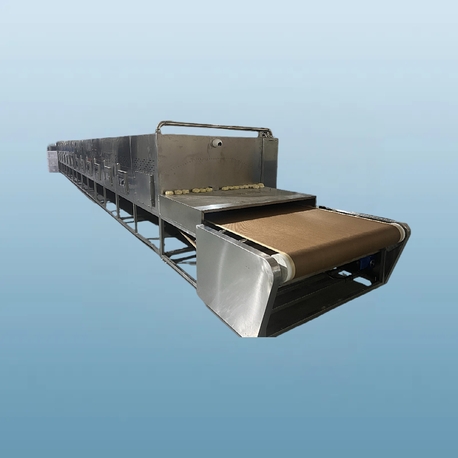
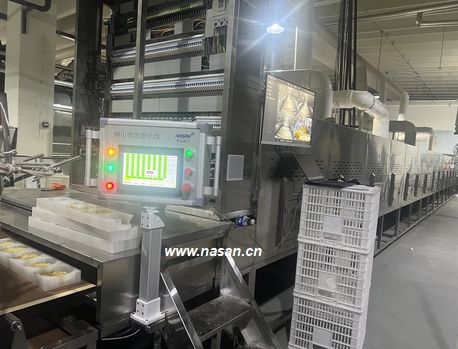
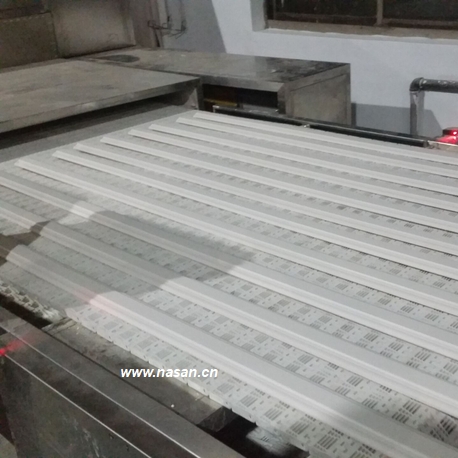
Batch microwave extractors are suitable for high-value, low-volume products. For throughput above 500 kg/day, continuous microwave extractor designs employ a horizontal screw conveyor inside a microwave cavity. Raw material moves through irradiation zones while solvent flows counter-currently. Residence time is controlled by screw pitch and rotation speed. Nasan’s industrial continuous MAE systems handle up to 2 tons per hour of dried botanicals, with automatic solvent-to-feed ratio adjustment based on near-infrared (NIR) moisture sensing.
Microwave leakage: Double-interlock doors and waveguide seals maintain <5 mW/cm² at 5 cm (well below FCC/CE limits).
Flammable solvents: Inert gas purging (N₂) and explosion-proof magnetrons are mandatory for ethanol or methanol. Nasan units meet ATEX and NFPA 70 standards.
GMP compliance: Sanitary microwave extractor designs feature electropolished 316L stainless steel, CIP spray balls, and FDA-compliant seals.
Residual solvent validation: ICH Q3C guidelines; microwave extraction typically produces lower residual solvents due to efficient mass transfer.
A 2025 TCO model for a medium-scale herbal extractor (200 kg batch) compares a 20 kW microwave extractor to a 2000 L jacketed reactor. Capital investment for MAE is 35% higher, but operating costs are 55% lower due to: reduced solvent purchase and disposal (savings $18,000/year), lower energy ($7,200/year), and shorter cycle times (3 batches per day vs. 0.5 batches). Payback period: 14 months. For contract extraction services, the faster throughput enables higher customer volume without additional floor space.
Hybrid systems combining microwave with ultrasound or pulsed electric fields (PEF) show synergistic effects. Additionally, real-time dielectric spectroscopy coupled with machine learning can predict optimal extraction endpoints. Nasan offers a modular control platform with recipe management for 50+ botanical matrices. The next frontier is solvent-free microwave extraction using natural moisture as the only heating medium—already demonstrated for citrus and eucalyptus oils.
The transition from laboratory curiosity to validated industrial asset is complete. Microwave extractor systems deliver quantifiable advantages in speed, yield, solvent reduction, and product quality. For processors of botanicals, pharmaceuticals, or marine ingredients, adopting MAE is a strategic move toward sustainable and profitable manufacturing.
A1: Yes. For dry material (moisture <10%), a polar solvent (ethanol/water) is necessary to absorb microwaves and transfer heat. For fresh biomass (60–80% moisture), the internal water acts as the primary microwave absorber, enabling solvent-free or reduced-solvent extraction. Nasan provides dual-mode systems with adjustable power profiles for both scenarios.
A2: Current commercially available units range from 5 L (lab) to 2000 L (production). Nasan’s industrial series includes 500 L and 1200 L jacketed microwave reactors with magnetron arrays up to 60 kW. For continuous extraction, throughput equivalents exceed 2000 L batch equivalent per day.
A3: Shorter extraction time and lower bulk temperatures (typically 50–70°C) preserve labile compounds better than conventional methods. Studies show anthocyanin retention above 90% in MAE vs. 70% in hot maceration. However, very sensitive molecules (certain enzymes) may still degrade; a cooling step post-extraction is recommended.
A4: Yes, provided the system is validated for cleaning (CIP/SIP) and complies with GAMP 5 guidelines. Nasan offers GMP-compliant microwave extractors with 21 CFR Part 11 data logging, password-protected recipes, and material certificates. Several FDA-inspected facilities have successfully used MAE for botanical drug substances.
A5: Polar solvents with high dielectric constants (ethanol, methanol, water, acetone, ethyl acetate) are ideal. Non-polar solvents (hexane, heptane) require addition of a polar co-solvent (e.g., 10% ethanol) to couple microwaves. Chlorinated solvents (dichloromethane) are generally avoided due to corrosion and toxicity. Nasan systems include explosion-proof design for ethanol up to 96%.
A6: Scale-up is linear when maintaining power density (W/g), solvent-to-feed ratio, and extraction temperature. Nasan provides a scale-up service: lab trials on a 5 L unit define the time-power profile; pilot 50 L unit validates the heating uniformity; then final 500 L production unit replicates the profile using multi-port waveguide feeds. The same dielectric properties ensure reproducible yields.
A7: Absolutely. Many clients integrate microwave extraction with downstream Nasan vacuum belt dryers or microwave freeze dryers to produce dry, stable extracts in one continuous line. This eliminates solvent recovery bottlenecks and reduces handling losses.
Ready to upgrade your botanical extraction line with a microwave extractor? Contact Nasan’s extraction engineering team with your raw material, target compounds, and desired throughput. Request a free feasibility study, pilot trial, or ROI calculator. Optimize yield while reducing solvent and energy costs.
Send your inquiry now – include plant matrix, moisture content, extraction solvent preference, and batch size expectation. Our specialists will respond within 24 hours with technical recommendations and commercial options.