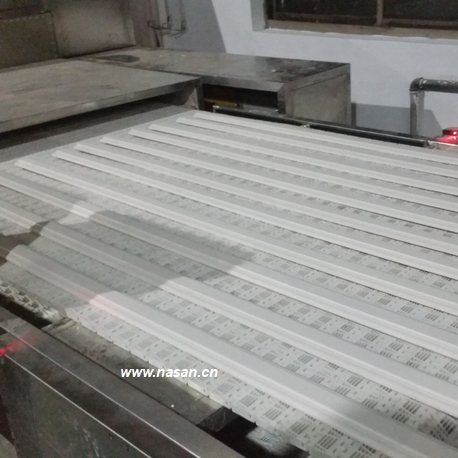
In the demanding world of industrial processing, efficiency and product quality are paramount. Traditional drying methods often fall short, leading to degraded materials, high energy costs, and slow throughput. This is where advanced microwave vacuum drying technology becomes a game-changer.
By combining the rapid, volumetric heating of microwaves with the low-temperature environment of a vacuum, this method offers unparalleled control. Industries from pharmaceuticals to food processing are now leveraging microwave vacuum dryers to preserve sensitive compounds, enhance product properties, and slash processing times. Leading innovators like Nasan are at the forefront of engineering robust systems for these complex commercial needs.

How Microwave Vacuum Drying Works: A Efficient Process
The operation of a microwave vacuum dryer is a sophisticated yet logical sequence. Understanding this flow clarifies its superiority.
First, the wet material is loaded into a sealed chamber. The system then creates a vacuum, significantly lowering the air pressure inside. This pressure reduction lowers the boiling point of water.
Next, precisely controlled microwave energy is introduced. Unlike conventional heating which works from the outside-in, microwaves penetrate the entire product mass, heating water molecules uniformly throughout.
Because the water’s boiling point is so low under vacuum, it rapidly vaporizes at a low temperature—often between 30°C and 60°C. The vapor is then evacuated from the chamber by the vacuum system and condensed, leaving behind a perfectly dried product.
This microwave vacuum process is gentle and incredibly fast, minimizing thermal stress.
Core Benefits: Why Industries are Switching
The shift to microwave vacuum technology is driven by tangible, bottom-line benefits that address core industrial challenges.
Superior Product Quality: Low-temperature drying preserves heat-sensitive nutrients, flavors, colors, and active pharmaceutical ingredients (APIs). It avoids case-hardening, where a crust forms on the outside, trapping moisture within.
Unmatched Speed and Efficiency: Volumetric heating means the entire product dries simultaneously, reducing cycle times from hours or days to minutes. This drastically increases production throughput.
Energy Efficiency: Energy is directed almost exclusively at the water molecules, not the entire chamber or product carrier. This targeted approach, combined with shorter cycles, leads to significant energy savings.
Precision and Control: Modern systems offer precise control over microwave power, vacuum level, and temperature. This allows for repeatable results and fine-tuning for different product batches.
Versatile Applications: From delicate herbs to viscous extracts and ceramic powders, the microwave vacuum method handles a wide array of materials that are difficult or impossible to dry effectively with other technologies.
Primary Industrial and Commercial Use Cases
The application of microwave vacuum drying spans numerous sectors where product integrity is critical.
Pharmaceutical and Biotechnology: This is a premier application. The technology is ideal for drying vaccines, probiotics, enzymes, and bacterial cultures without deactivating them. It ensures high survival rates and stable, long-shelf-life products.
Food and Nutraceuticals: Preserving the bioactive compounds in fruits, vegetables, herbs, and marine extracts is essential. Microwave vacuum drying creates vibrant, nutritious powders, instant teas, and whole pieces of fruit with superior rehydration properties.
Advanced Materials and Chemicals: The process is used to dry ceramic precursors, metal oxides, and sensitive chemical catalysts without causing cracks or agglomeration. It’s also vital for removing solvents from polymer membranes and composites.
Agricultural and Botanical Extracts: For high-value botanical concentrates and cannabis extracts, removing residual solvents or water at low temperatures is vital to maintaining terpene profiles and cannabinoid potency. Companies like Nasan specialize in scalable systems for this precise purpose.
Solving Common Industrial Drying Challenges
Every technology addresses specific pain points. Here’s how microwave vacuum systems provide direct solutions.
Problem: Long Drying Times for Thick or Viscous Materials.
Solution: Microwave penetration is not limited by material thickness. Heat is generated throughout, enabling rapid drying of pastes, gels, and thick slabs uniformly.
Problem: Thermal Degradation of Sensitive Products.
Solution: The synergistic low-temperature vacuum environment ensures products never see high heat, locking in volatile compounds and biological activity.
Problem: Inefficient, High-Energy Consumption.
Solution: Direct energy transfer to water molecules and shorter cycles reduce total energy use per kilogram of product removed compared to convection or freeze dryers.
Problem: Non-Uniform Drying and Inconsistent Batches.
Solution: Volumetric heating minimizes moisture gradients. Advanced control systems in units from providers like Nasan ensure batch-to-batch consistency critical for GMP (Good Manufacturing Practice) compliance.
Problem: Difficulty Drying Oxygen-Sensitive Materials.
Solution: The vacuum chamber inherently creates an oxygen-deficient environment, preventing oxidation during the drying process.

The Nasan Engineering Difference
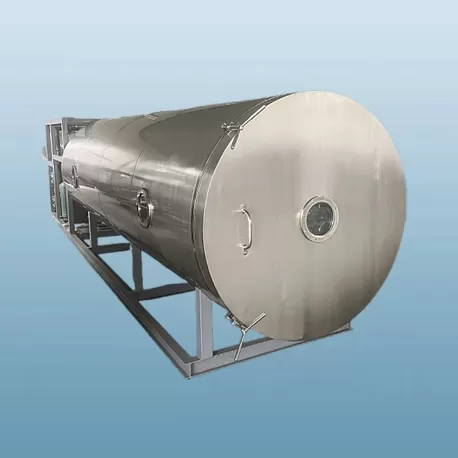
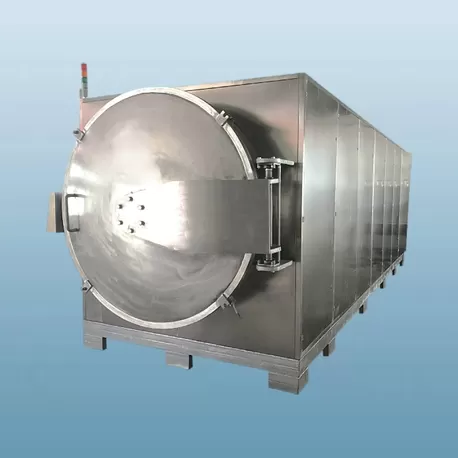
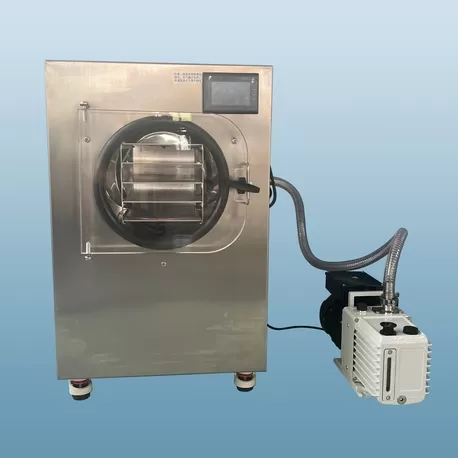
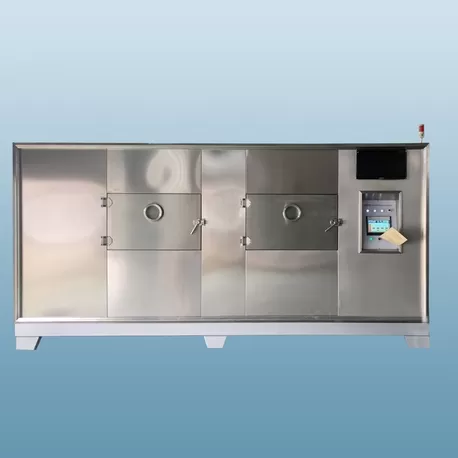
Selecting the right equipment partner is crucial. Nasan designs and manufactures industrial microwave vacuum drying systems with a focus on durability, control, and scalability. Their engineers understand that commercial success depends on reliable, continuous operation and adherence to strict industry standards.
Nasan systems integrate advanced magnetron control for even power distribution, robust vacuum systems for consistent low-pressure environments, and intelligent PLC interfaces for seamless process management and data logging. This commitment to robust engineering makes their microwave vacuum dryers a trusted solution for mission-critical production lines worldwide.
Future Outlook
As industries continue to prioritize product quality, speed, and sustainability, the adoption of microwave vacuum drying is set to expand. Innovations in control software and system design will further enhance its accessibility and efficiency. For businesses looking to gain a competitive edge, investing in this technology is not just an upgrade—it’s a strategic move toward future-proof, superior manufacturing.
Frequently Asked Questions (FAQ)
Q1: How does microwave vacuum drying differ from freeze-drying?
A1: Both are low-temperature methods, but their mechanisms differ. Freeze-drying (lyophilization) involves freezing the product and then sublimating ice under a deep vacuum. Microwave vacuum drying does not require a freezing step; it uses microwave energy to directly vaporize liquid at low temperatures, often resulting in significantly faster processing times while still preserving quality.
Q2: Is microwave vacuum drying safe for all materials?
A2: While highly versatile, it is not universal. Materials that are highly reflective to microwaves (like some metals) or have no polar molecules to interact with the radiation may not dry effectively. A thorough material test in a pilot-scale system, like those offered by Nasan, is always recommended to determine suitability.
Q3: What are the main operational cost factors?
A3: The primary costs are electrical power for the microwave generators and the vacuum pumps, as well as cooling water for the condenser. However, these are often offset by the dramatic reduction in total drying time and higher product yield/quality compared to conventional methods, leading to a favorable total cost of ownership.
Q4: Can it handle solvent recovery, not just water removal?
A4: Yes, a significant advantage of microwave vacuum systems is their ability to efficiently remove and recover organic solvents like ethanol, methanol, or acetone. The vacuum lowers their boiling points, and the condensed solvent can often be collected and reused, which is critical for pharmaceutical and extract industries.
Q5: How scalable is the technology from lab to full production?
A5: The technology scales effectively. The principles remain consistent from small R&D units to large, continuous or batch-industrial dryers. Working with an experienced manufacturer is key to scaling. They can design systems with appropriate microwave distribution, vacuum capacity, and material handling to meet specific throughput targets, ensuring a smooth transition from pilot to production.