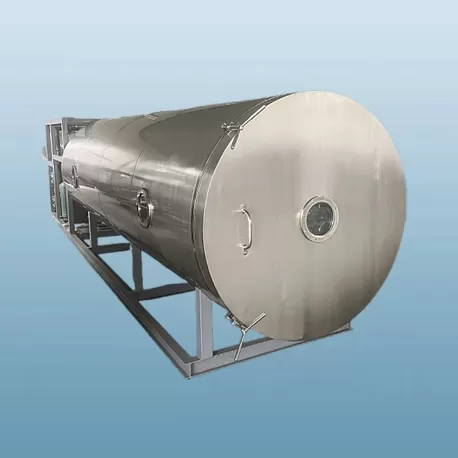
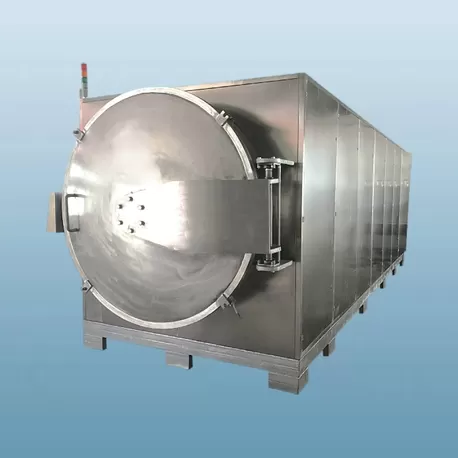
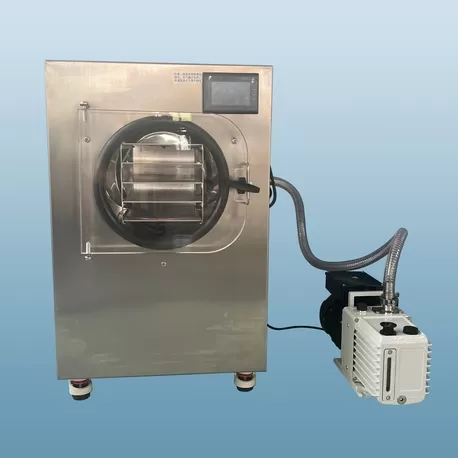
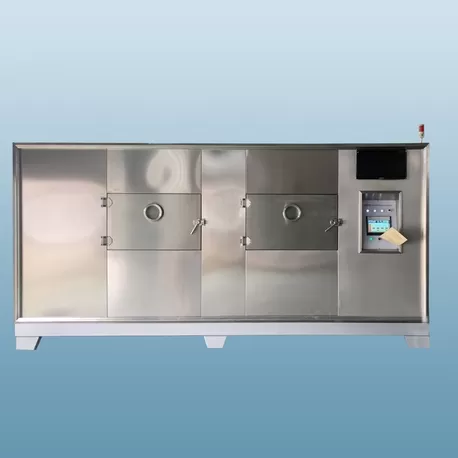
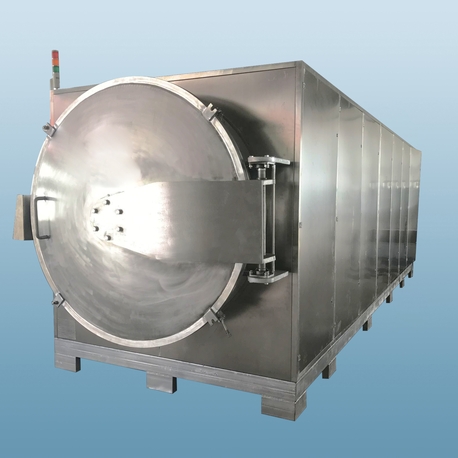
Microwave Vacuum Dryer Technology: Principles, Applications and Industrial Solutions | Nasanmicrowave vacuum dryer has emerged as a sophisticated hybrid technology that directly addresses these pain points. By combining the volumetric heating of microwaves with the low-temperature environment of vacuum, this equipment enables rapid, uniform dehydration of heat-sensitive materials while preserving structural and functional integrity. This article provides a technical examination of how microwave vacuum dryers work, their quantifiable benefits, critical application areas, and selection criteria, drawing on the engineering expertise of Nasan.
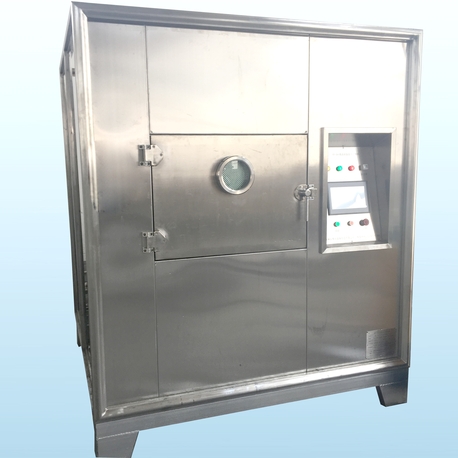
1. Fundamental Principles of Microwave Vacuum Drying
To appreciate the capabilities of a microwave vacuum dryer, one must first understand the synergistic effect of its two core technologies: microwave dielectric heating and vacuum-induced pressure reduction.
1.1 Microwave Volumetric Heating
Microwaves, typically at frequencies of 915 MHz or 2450 MHz for industrial applications, penetrate the material and interact with polar molecules (primarily water) and charged ions. This interaction causes rapid molecular rotation and friction, generating heat uniformly throughout the volume of the product. Unlike conduction-based heating, where heat must travel from the surface inward, microwave heating eliminates temperature gradients, preventing case hardening and allowing moisture to escape freely. This phenomenon is governed by the dielectric loss factor of the material, which changes dynamically as drying progresses.
1.2 Vacuum Environment and Evaporation Dynamics
Simultaneously, the dryer maintains a vacuum, typically in the range of 10 to 100 mbar absolute pressure. At these reduced pressures, the boiling point of water drops significantly—to as low as 40°C or even lower. This allows moisture to evaporate at temperatures that are safe for thermolabile compounds such as vitamins, enzymes, and pharmaceutical actives. The combination of internal heat generation and low boiling point creates a powerful driving force for moisture migration, often resulting in drying times that are 50% to 80% shorter than those of conventional vacuum drying or freeze drying.
2. Quantifiable Advantages Over Conventional Drying Methods
When evaluating drying technologies, metrics such as specific energy consumption, drying time, and product quality indices are critical. The microwave vacuum dryer consistently outperforms legacy systems across these parameters.
Energy Efficiency: Because energy is directly absorbed by water molecules and not wasted heating the chamber walls or air, microwave vacuum drying can achieve thermal efficiencies exceeding 70-80%. Comparative studies show energy savings of 30-50% compared to hot-air drying and up to 60% compared to freeze drying for certain products.
Product Quality Retention: The rapid, low-temperature process minimizes the degradation of heat-sensitive components. For example, drying ginseng or fruits in a microwave vacuum dryer has been shown to retain over 90% of original saponins or anthocyanins, whereas conventional drying might retain only 60-70%.
Uniform Moisture Distribution: The volumetric heating ensures that both surface and internal moisture are driven out simultaneously, eliminating the "wet core" phenomenon common in thick materials dried with conventional methods.
Improved Rehydration and Texture: The porous structure created by rapid internal vapor generation allows dried products to rehydrate faster and more completely, closely mimicking fresh texture—a critical factor for food ingredients and freeze-dried instant products.
3. Industrial Applications Across Sectors
The versatility of microwave vacuum dryer technology has led to its adoption in diverse industries. Below are specific use cases where the technology provides distinct process advantages.
3.1 Food and Botanical Processing
In the food industry, preserving aroma, color, and nutritional value is paramount. Microwave vacuum dryers are extensively used for:
Fruits and Vegetables: Producing high-quality dried snacks from apples, bananas, carrots, and tomatoes with vibrant color and crisp texture.
Herbs and Spices: Drying basil, oregano, or chili peppers while retaining volatile essential oils that are typically lost in hot-air processes.
Extracts and Concentrates: Converting liquid herbal extracts or fruit juices into stable powders (often called "puff drying") with high bulk density and instant solubility.
3.2 Pharmaceutical and Biotech Manufacturing
For active pharmaceutical ingredients (APIs), excipients, and intermediates, maintaining polymorphic purity and biological activity is non-negotiable. The gentle drying environment of a microwave vacuum dryer allows for:
Drying of heat-sensitive antibiotics (e.g., penicillin intermediates) without degradation.
Removal of organic solvents from wet cakes, with the added benefit of potential solvent recovery via condensation.
Processing of biological materials like enzymes and proteins where low temperatures are mandatory.
3.3 Chemical and Advanced Materials
Beyond food and pharma, the chemical sector utilizes microwave vacuum technology for drying catalysts, dyes, pigments, and specialty polymers. The uniform heating prevents hotspots that could otherwise cause discoloration or premature curing. Nasan has engineered systems capable of handling viscous pastes and granular materials, ensuring consistent final moisture content below 0.5%.

4. Engineering Considerations and Customization
Selecting the optimal microwave vacuum dryer requires careful analysis of the material properties, production scale, and desired outcomes. Not all dryers are created equal; design intricacies significantly impact performance and reliability.
4.1 Batch vs. Continuous Systems
For low-volume, high-value products (like certain pharmaceuticals), batch microwave vacuum dryers with rotating drums or trays are common. They offer flexibility and easy cleaning. For high-throughput industrial lines (e.g., 500 kg/hour of dehydrated vegetables), continuous systems on a conveyor belt under vacuum are employed. Nasan provides both configurations, with advanced microwave shielding and vacuum lock systems that ensure uninterrupted operation.
4.2 Microwave Power Control and Uniformity
One of the technical challenges in microwave drying is achieving uniform field distribution to avoid arcs or localized overheating. Modern dryers incorporate multiple microwave sources (magnetrons) with tunable power and mode stirrers. Advanced models also feature real-time fiber-optic temperature sensors that allow feedback control, adjusting microwave intensity as the material's dielectric properties change during drying.
4.3 Material Handling and Containment
For applications involving toxic compounds or potent APIs, containment is critical. Nasan's microwave vacuum dryer designs include CIP/SIP (Clean-in-Place / Sterilize-in-Place) capabilities, polished stainless steel surfaces, and absolute containment systems to prevent cross-contamination and ensure operator safety.
5. Economic and Environmental Impact Analysis
While the initial capital investment for a microwave vacuum dryer can be higher than that for a conventional hot-air dryer, the total cost of ownership often favors the advanced technology. A typical return-on-investment analysis considers:
Reduced energy costs: As noted, energy consumption per kilogram of water removed is significantly lower.
Increased throughput: Faster drying times mean that a smaller machine can handle the same output as a much larger conventional dryer, saving floor space.
Waste reduction: Higher product yield and fewer rejects due to superior quality control directly impact the bottom line.
Environmental footprint: Lower energy usage translates directly to reduced CO₂ emissions. Some systems also enable solvent recovery, minimizing volatile organic compound release.
6. How to Select a Reliable Microwave Vacuum Dryer Manufacturer
Given the complexity of the technology, partnering with an experienced manufacturer is essential. Here are key criteria to evaluate potential suppliers:
Process Expertise: Do they offer lab-scale testing to determine drying kinetics and optimal parameters for your specific product? Nasan operates a state-of-the-art test center where clients can run trials on their materials.
Customization Capability: Can the equipment be adapted for your specific feed form (liquid, paste, granular) and production volume?
Regulatory Compliance: Ensure the manufacturer adheres to international standards for microwave safety (e.g., IEC 61010-2-010) and, if applicable, cGMP for pharmaceutical applications.
After-Sales Support: Look for comprehensive service agreements, spare parts availability, and technical support. Nasan provides global installation, training, and maintenance services backed by decades of experience.
Q1: What types of materials are best suited for a microwave vacuum dryer?
A1: Materials with a high dielectric loss factor (i.e., they absorb microwaves well) and those that are heat-sensitive benefit the most. This includes most wet foods, biological materials, pharmaceuticals, and many chemical intermediates. Materials that are very low in moisture initially or are pure non-polar solids (like some plastics) may not dry efficiently without the addition of microwave-absorbing media.
Q2: How does the drying time in a microwave vacuum dryer compare to freeze drying?
A2: For many products, microwave vacuum drying is 4 to 10 times faster than freeze drying. For example, drying a batch of strawberries might take 24-48 hours in a freeze dryer, but only 3-6 hours in a properly optimized microwave vacuum dryer, while achieving comparable quality in terms of structure and nutrient retention.
Q3: Can a microwave vacuum dryer handle liquid or pasty materials?
A3: Yes, absolutely. With appropriate feeding mechanisms such as rotary atomizers, spray nozzles, or thin-film spreaders, liquids and slurries can be dried into powders or flakes. The vacuum environment also prevents boiling over, which can be an issue in atmospheric drying.
Q4: What safety measures are in place to prevent microwave leakage?
A4: Industrial microwave vacuum dryers are designed with multiple redundant shielding systems. The vacuum chamber acts as a Faraday cage, and all doors and ports have choke systems and microwave absorbers. Interlocks ensure the magnetrons cannot operate if the door is open. Units from reputable manufacturers like Nasan comply with strict international leakage standards (typically < 5 mW/cm²).
Q5: Is it possible to scale up from a lab-scale dryer to a full production unit?
A5: Yes, but it requires careful engineering. Nasan offers a range of dryers from 2 kW lab units to 100 kW industrial systems. Scale-up is based on maintaining similar microwave power density per unit mass and optimizing material transport. It is always recommended to conduct trials at multiple scales to validate the process.
Q6: What are the maintenance requirements for a microwave vacuum dryer?
A6: Routine maintenance includes checking and replacing magnetrons (which have a typical lifespan of several thousand hours), inspecting vacuum seals and gaskets, cleaning the chamber to prevent buildup, and verifying microwave shielding integrity. Nasan provides comprehensive maintenance schedules and training for in-house teams.
The microwave vacuum dryer represents a pivotal advancement in industrial drying technology, offering a compelling combination of speed, energy efficiency, and superior product quality. For processors facing challenges with heat-sensitive materials or seeking to reduce operational costs, this technology provides a scientifically proven pathway. By understanding the underlying principles and carefully evaluating equipment design, manufacturers can successfully integrate microwave vacuum drying into their operations. As a leader in the field, Nasan continues to innovate, providing robust and customizable microwave vacuum dryer solutions that meet the rigorous demands of modern industry. Contact their engineering team to discuss your specific application and discover how this technology can transform your drying process.