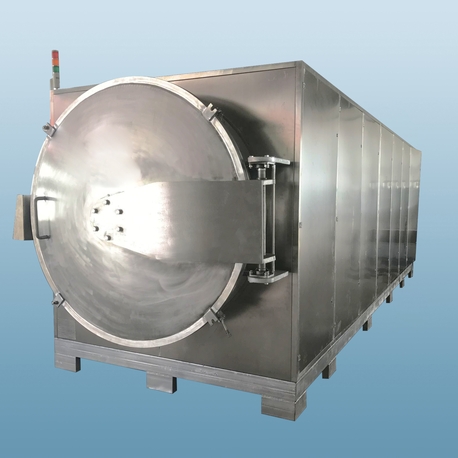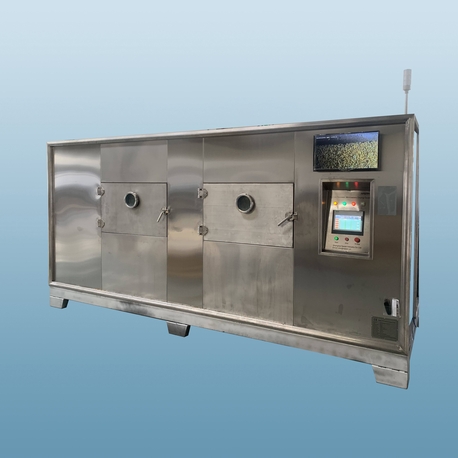


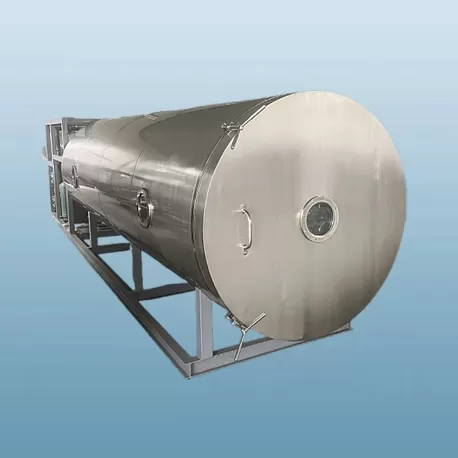
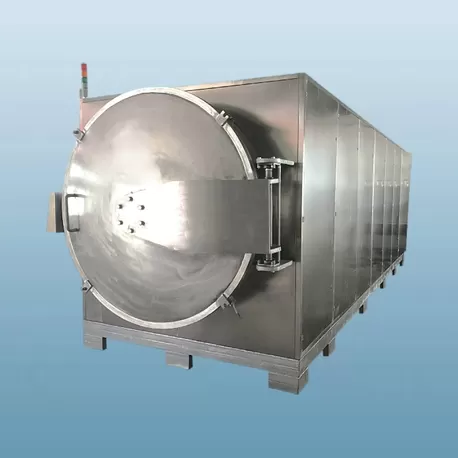
Industrial drying accounts for 10–25% of manufacturing energy consumption in sectors ranging from ceramics to food ingredients. Conventional convective or conductive methods often suffer from slow heat transfer, surface crusting, and non-uniform moisture removal. Microwave heating offers a fundamentally different mechanism: volumetric dielectric loss converts electromagnetic energy directly inside the wet material. This article examines the physics of microwave-material interactions, equipment design parameters for continuous operation, and solutions to common pitfalls such as thermal runaway and arcing. Drawing on field data from Nasan installations, we provide a technical reference for process engineers and production managers.

1. Principles of Microwave Heating: Dielectric Loss and Penetration Depth
Unlike thermal conduction that relies on a temperature gradient from surface to core, microwave heating generates heat uniformly within a dielectric material. The power absorbed per unit volume (Pv) is given by Pv = 2πf ε0 εr'' E2, where f is frequency (commonly 915 MHz or 2.45 GHz), εr'' is the dielectric loss factor, and E is the electric field strength. Key implications:
Frequency selection: 915 MHz penetrates deeper (up to 10–15 cm in wet materials) – suitable for thick logs, wood, or bulk chemicals. 2.45 GHz provides faster heating for thin webs or granular layers.
Loss factor dependency: Water has a high εr'' at room temperature, making microwave heating exceptionally selective for moisture removal. Dry solids absorb much less energy, preventing overheating.
Penetration depth (Dp): Dp = λ0 / (2π √(2εr')) * (1/√(1+(tanδ)2)-1). For wet granular materials at 2.45 GHz, Dp typically ranges 10–30 mm, dictating layer thickness in conveyorized dryers.
Engineers must match applicator geometry to product dimensions. Multi-mode cavity applicators and traveling wave applicators offer different field uniformity profiles. Nasan designs adjustable phase-shifting arrays to flatten the electric field distribution, reducing hot spots.
2. Critical Technical Challenges and Mitigation Strategies
2.1 Thermal Runaway and Hot Spots
When a region absorbs microwave energy faster than adjacent zones, its temperature rises, further increasing its dielectric loss factor (positive feedback). This leads to charring or meltdown. Solutions:
Load rotation or conveyor oscillation to average field exposure.
Pulsed power operation (duty cycle 30-70%) allowing thermal diffusion between pulses.
Feedback control using infrared sensors or fiber-optic thermometry to modulate magnetron output per zone.
2.2 Arcing and Plasma Generation
Metallic inclusions or sharp edges in the product can concentrate electric field exceeding dielectric strength of air (3 kV/mm), causing sparks. Prevention: magnetic separators before the dryer, and design cavities with rounded internal corners. For continuous belts, use non-metallic mesh (PTFE-coated fiberglass).
2.3 Non-Uniform Moisture Profiles
Even with uniform power distribution, initial moisture variation across the product width results in differential heating – wetter areas absorb more power and dry faster, but the final product may have residual pockets. Implement closed-loop moisture sensing (near-infrared or microwave transmission sensors) with individual magnetron control per 300 mm zone.
3. Industrial Applications and Process Integration
Microwave heating excels where conventional drying causes quality degradation. Below are documented cases with quantified benefits.
3.1 Ceramic Foam Filters and Refractories
Convection drying of water-based ceramic slurries often produces surface skin that traps moisture, leading to cracking during firing. Microwave drying (915 MHz, 50 kW) reduces drying time from 18 hours to 45 minutes, with defect rate dropping from 12% to 1.8%. Dielectric property tuning: add silicon carbide as a susceptor to improve low-temperature absorption.
3.2 Food Ingredients – Diced Vegetables and Herbs
Traditional hot air drying of parsley or bell peppers results in loss of volatile oils and color degradation. A continuous microwave belt dryer (2.45 GHz, 75 kW) operating at 40–50°C product temperature preserves >90% of chlorophyll and essential oils. Throughput: 800 kg/h removing 65% moisture (wet basis). Key design: exhaust vapor extraction with condensate trap to avoid re-absorption.
3.3 Chemical Powders – Catalysts and Pigments
Many catalysts (zeolites, activated alumina) require gentle drying to preserve pore structure. Conventional vacuum drying takes 24 hours. A combined microwave-vacuum system (pressure 30–50 mbar) lowers boiling point to 40°C, achieving residual moisture <0.5% in 90 minutes. Nasan has supplied modular units with integrated solvent recovery condensers for organic-wetted powders.
3.4 Wood and Biomass
Microwave pretreatment of wood chips for pelletizing reduces grinding energy by 30% due to micro-cracking from internal steam pressure. For lumber, 915 MHz tunnels achieve sterilization (kill wood nematodes) and reduce checking. Typical power density: 10–30 kW/m³ of wood.
4. System Design: From Magnetron to Material Handling
An industrial microwave dryer comprises four subsystems:
Power generation: Continuous-wave magnetrons (750 W to 100 kW each), often arranged in redundant arrays. Air-cooled or water-cooled anodes. Efficiency 70-85%.
Applicator (cavity): Overmoded rectangular or circular waveguide with mode stirrers. For continuous processes, choke tunnels (λ/4 stubs) prevent leakage below 5 mW/cm² at operator access points.
Material transport: PTFE-coated woven belts, vibrating trays, or pneumatic conveying for powders. For liquid pastes, use a microwave-transparent tube (quartz or PTFE) with internal screw conveyor.
Control & safety: Interlock switches, microwave leakage detectors (three independent channels), and PLC with recipe storage for power profile versus time.
Hybrid heating systems that combine microwave heating with infrared or hot air are gaining traction. The air flow removes evaporated moisture, while microwave provides volumetric energy. This synergy reduces total installed power by 25-40% compared to microwave-only designs for thick products.
5. Energy Efficiency and Lifecycle Cost Analysis
Energy conversion efficiency from grid electricity to delivered heat: conventional electric resistance (95% efficient) vs. microwave (65-75% due to magnetron and power supply losses). However, microwave's selective absorption into water molecules often halves the required kWh per kg of water removed, because no energy is wasted heating dry solids or the surrounding air. A comparative example for 1000 kg water removal from ceramic paste:
Gas-fired hot air: 4.2 GJ (1100 kWh thermal) @ 45% efficiency → 2.44 MWh gas equivalent, plus fan power.
Microwave (2.45 GHz): 0.9 kWh per kg water (typical) → 900 kWh electrical → 2.7 MWh primary energy (assuming grid 33% efficiency), but drying time reduced from 12h to 2h, decreasing labor and space costs.
For high-value products where quality and throughput matter, microwave heating provides a faster return on investment (ROI < 18 months in pharmaceutical excipient drying). Nasan offers a proprietary energy monitoring dashboard that tracks real-time specific energy consumption (kWh/kg water) and predicts magnetron replacement intervals.

6. Future Developments: Solid-State Generators and AI Control
Emerging solid-state microwave sources (GaN transistors) allow precise frequency tuning and phase control, enabling adaptive focusing of energy into wetter zones. Early adopters in textile drying report 30% higher uniformity. Combined with machine vision and moisture prediction models, these systems will define the next generation of microwave heating equipment.
Frequently Asked Questions (FAQ)
Q1: What materials are unsuitable for microwave heating?
A1: Materials with very low dielectric loss (εr'' < 0.01) like PTFE, glass, or dry mineral wool hardly heat – they require a susceptor. Conversely, highly conductive materials (bulk metals) reflect microwaves, causing arcing. Thin metal foils can be used if edge geometry is carefully designed to avoid charge concentration. Always test sample in a lab-scale applicator before scaling.
Q2: How does product thickness affect drying uniformity?
A2: Thickness should not exceed 1.5 times the penetration depth Dp. For a wet granule with Dp ≈ 20 mm at 2.45 GHz, layer height >30 mm will leave the bottom underheated. Solutions: apply power from both top and bottom via dual waveguide feeds, or use a lower frequency (915 MHz) with Dp up to 100 mm.
Q3: Is microwave heating safe for organic solvent drying?
A3: Solvents with low flash points (e.g., ethanol, acetone) present explosion risks because sparks can occur. Use intrinsically safe designs: inert atmosphere (nitrogen purging), explosion-proof magnetron enclosures, and solvent monitoring with LEL sensors. Solvent-compatible microwave dryers from Nasan include pressurized cavities and flame arrestors.
Q4: What maintenance is required for industrial microwave systems?
A4: Magnetrons typically have 8,000–15,000 operating hours before power drops 20%. Replace high-voltage capacitors every 5 years. Weekly: clean waveguide windows with isopropyl alcohol, inspect door seals for leakage (using a calibrated probe), and check cooling airflow. Annual: measure field uniformity using a water load array.
Q5: Can microwave heating be retrofitted into an existing hot air dryer?
A5: Yes, hybrid retrofits are common. A microwave applicator section is inserted in the middle of a conveyor dryer. The hot air preheats and removes surface moisture, while microwave finishes internal drying. Nasan provides modular retrofit kits (15–200 kW) with choke interfaces that fit standard belt widths. ROI analysis available.
Q6: How do you validate temperature uniformity for regulated industries (pharma)?
A6: Use fiber-optic probes (immune to electromagnetic interference) placed at nine positions across the load. Perform a "worst-case" moisture challenge: add 20% extra water to a corner of the batch. Acceptance criteria: temperature variation ≤±5°C after 80% of drying time, and no charring observed. Documented validation protocols available from Nasan.
Need to improve drying uniformity and energy efficiency? Share your material properties (initial/final moisture, throughput, thermal sensitivity) with the Nasan engineering team. We provide free feasibility testing using our 10 kW lab dryer and deliver turnkey industrial systems with performance guarantees.
© 2026 Nasan – Advanced Microwave Heating & Drying Systems