In large-scale food manufacturing, consistent moisture removal from
perishable produce remains a core engineering challenge. A properly designed
vegetable dryer does more than extract water—it preserves color, vitamins, and rehydration
characteristics while meeting strict hygiene standards. For operations
processing tons of carrots, onions, potatoes, or leafy greens daily, selecting
the right drying platform directly influences final product value and shelf
life. Below we examine technical parameters, application-specific
configurations, and strategies to overcome common production bottlenecks.

Why Traditional Drying Methods Fail Modern Vegetable Processing
Open-air sun drying and batch-type hot air cabinets introduce multiple risks:
non-uniform moisture distribution, microbial contamination, prolonged processing
cycles, and high labor costs. When dealing with hygroscopic vegetables like
mushrooms or fibrous roots such as ginger, uncontrolled drying leads to case
hardening—a dry surface traps internal moisture, causing spoilage weeks later.
Industrial operations require enclosed, continuously运行的 (continuously operating)
systems with zoned temperature control, adjustable belt speeds, and real-time
humidity monitoring. A modern vegetable dryer eliminates these variables through precise airflow engineering.
Core Engineering Features of a Commercial Vegetable Dryer
High-throughput dehydration equipment integrates several subsystems that work
in harmony. Below are the non-negotiable design elements for consistent
results:
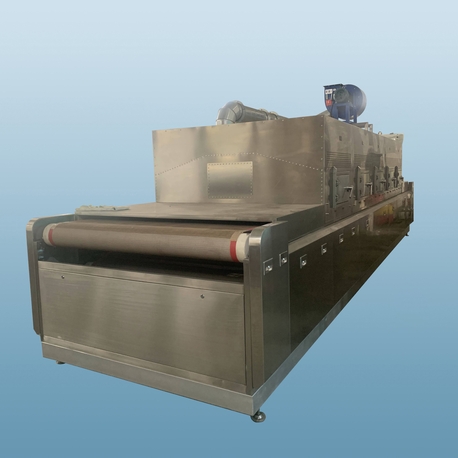
Multi-stage airflow distribution: Perforated belts combined
with adjustable baffles ensure uniform air velocity across the product bed,
preventing over-drying at edges.
Zoned temperature profiling: First zones operate at 85–95°C
to rapidly reduce surface moisture without cooking; final zones gradually lower
to 50–60°C for gentle core drying.
Closed-loop humidity control: Sensors placed along the
chamber feed back to exhaust dampers, maintaining optimal dew point to maximize
evaporation rates while saving energy.
Modular belt construction: Stainless steel mesh belts with
different aperture sizes accommodate diced, sliced, or whole vegetables without
product fall-through.
CIP-friendly design: Removable access panels, sloped
floors, and sanitary welds allow routine high-pressure washing, essential for
allergen changeovers.
Nasan integrates these features
into its continuous drying lines, offering real-time data logging for each zone.
Operators can retrieve historical batch reports—critical for HACCP validation
and customer traceability requests.
Matching Vegetable Dryer Configuration to Product Characteristics
No single drying profile fits all vegetables. Process engineers must analyze
three product-specific variables: initial moisture content, sugar/acid ratio,
and cellular structure. Let’s break down common categories:
Root Vegetables (Carrots, Beetroot, Parsnips)
High sugar content demands moderate inlet temperatures (75–80°C) to avoid
caramelization. A vegetable dryer with counter-current airflow
prevents sugar migration to the surface, which otherwise causes stickiness.
Typical drying time: 4–6 hours for 8 mm cubes, final moisture ≤8%.
Leafy Greens (Spinach, Kale, Chard)
Thin leaves require short residence times and low air speeds to prevent
blow-off. Using a three-belt system with gentle turning plows maintains product
integrity. Inlet temperature: 60–70°C; duration: 90–120 minutes; final moisture
5–7% for powder or flake applications.
Bulb & Stem Vegetables (Onions, Celery, Leeks)
High initial moisture (85–90%) combined with volatile sulfur compounds calls
for fast initial drying at 95°C to deactivate enzymes, followed by a 65°C
finishing stage. A multi-stage vegetable dryer equipped with a pre-dryer section cuts total processing time by 25% compared to
single-zone units.
Energy Efficiency and Operational Metrics
Energy consumption represents the largest variable cost in dehydration.
Modern systems recover waste heat through air-to-air heat exchangers, reducing
steam or electricity demand by up to 35%. For a line processing 1,500 kg/h of
wet onions (85% moisture down to 10%), the thermal load exceeds 2.8 MW. By
recirculating 60% of exhaust air through a dehumidification bypass, operators
lower make-up air preheating requirements significantly. When evaluating a
vegetable dryer, request specific energy consumption (SEC)
expressed as kWh per kg of water evaporated. Values below 0.9 kWh/kg indicate
efficient design.
Additional savings come from variable frequency drives (VFDs) on fans and
belts. Adjusting airflow during the final drying stage—when moisture gradient is
low—cuts electrical use without extending overall cycle time. Nasan systems feature intelligent VFD control integrated with moisture sensors,
automatically reducing fan speed by 40% during the last two zones.
Integrating Pre-treatment and Post-drying Handling
To maximize a vegetable dryer performance, upstream and downstream equipment must be matched. Key
considerations include:
Washing & sorting: Vibratory dewatering screens remove
surface moisture before drying, preventing clumping on the infeed belt.
Cutting uniformity: Dicers and slicers should produce
pieces with thickness variation <±0.5 mm; uneven pieces lead to under-dried
chunks that spoil final blends.
Blanching: Steam or hot water blanching inactivates
peroxidase enzymes, fixing color and reducing drying time by 12–18%. However,
over-blanching leaches soluble solids—optimize time-temperature via rapid
tests.
Post-dryer cooling: A vibratory fluid bed cooler drops
product temperature to +5°C above ambient before packaging, preventing
condensation inside bags.
For high-value organic vegetables, closed-system drying with HEPA-filtered
inlet air prevents recontamination after blanching. Many inspectors now require
differential pressure monitoring between drying chamber and packing area—a
feature available on Nasan sanitary lines.
Food Safety, Hygiene, and Regulatory Compliance
Dehydration does not automatically eliminate pathogens; it only reduces water
activity. A vegetable dryer used for ready-to-eat products must maintain certain
critical limits: product core temperature above 70°C for at least 2 minutes to
achieve a 5-log reduction in Salmonella. Stainless steel grade 316L in product
contact areas resists pitting from acidic vegetable juices (e.g., tomato,
pepper). Additionally, belt tracking sensors and self-cleaning idlers reduce
harborage points for molds. Regular ATP swabbing of the dryer’s interior should
yield <10 RLU (relative light units) after sanitation.
Operators should document weekly: air filter pressure drops, condensate drain
operation, and belt tension uniformity. Any deviation exceeding 15% from
baseline requires immediate investigation—moisture pockets may develop.
Nasan provides a validation
protocol template that aligns with GFSI-benchmarked standards (BRCGS, SQF).
Selecting the Right Industrial Vegetable Dryer Capacity
Capacity planning begins with wet feed per hour and desired output moisture.
Use the following formula to estimate evaporative load:
Evaporation
(kg/h) = Wet feed (kg/h) × (Initial MC – Final MC) / (1 – Final MC)
Example: 2,000 kg/h carrots, 88% initial MC to 10% final MC → evaporation =
2,000 × (0.88 – 0.10)/(0.90) = 1,733 kg/h water removal.
Select a dryer
whose nominal water evaporation rating exceeds this by at least 15% to allow for
voltage fluctuations and produce variability. Belt width options range from 1.2
m to 3.5 m; wider belts reduce bed depth for delicate products. Most industrial
configurations use 3 to 7 drying zones, each 2–3 m long. For operations
requiring flexibility across multiple vegetable types, a modular design with
adjustable zone dividers is recommended.
When requesting quotations, ask for a drying curve simulation using your
actual product samples. Reputable manufacturers, including Nasan,
offer lab-scale testing to verify color retention and energy consumption before
full-scale investment.
Frequently Asked Questions (FAQ)
Q1: What is the typical lifespan of a commercial vegetable dryer
under 16-hour daily operation?
A1: With proper maintenance (belt
tracking, bearing greasing, filter changes), a stainless steel dryer lasts 15–20
years. Wear parts like mesh belts and air seals need replacement every 4–6 years
depending on product abrasiveness (e.g., ginger vs. spinach). Nasan provides a 5-year structural warranty on its drying chambers.
Q2: Can a vegetable dryer handle frozen vegetables directly without
thawing?
A2: Yes, but only dryers with a pre-heat zone above 100°C
and a sloped floor to drain meltwater. Introducing frozen produce without a
defrost section causes uneven drying and bacterial growth on cold surfaces. We
recommend a tempering conveyor to raise product temperature to 5°C before
feeding.
Q3: How do I prevent color darkening during drying of light-colored
vegetables (cauliflower, parsnips)?
A3: Darkening results from
polyphenol oxidase (PPO) activity. Solutions: ① Blanch in 0.5% citric acid
solution for 90 seconds; ② Start drying at 95°C for first 15 minutes to
instantly deactivate enzymes; ③ Use a vegetable dryer with
UV-blocking inspection windows. Sulfite dips are discouraged for clean-label
products.
Q4: What is the minimum order quantity for a custom-built vegetable
dryer?
A4: Manufacturers typically require a single unit as MOQ, but
custom configurations (special belt materials, extra inspection ports, gas vs.
electric heating) may have additional engineering fees. For standard models, MOQ
is 1 machine. Always request a dimensional layout and utility consumption table
before commitment.
Q5: How often should the humidity sensors be
calibrated?
A5: Capacitive humidity sensors drift ±2% per year.
Calibrate every 6 months using a saturated salt solution (LiCl for 11% RH, NaCl
for 75% RH). Without regular calibration, the vegetable dryer may over-dry product, increasing shrink by 4–7% and wasting energy. Nasan controllers include a built-in calibration reminder.
Next Steps: Optimize Your Dehydration Line Today
Selecting the correct vegetable dryer impacts product quality, operating margins, and regulatory compliance. Whether
you process mixed vegetables for soup mixes or single-ingredient powders, the
right combination of airflow zoning, belt design, and energy recovery yields
consistent results batch after batch. Avoid generic equipment that forces
compromises between capacity and quality.
Send your inquiry to the engineering team at Nasan today. Provide your wet product specs, target moisture, and desired
throughput (kg/h). You will receive a detailed proposal including GA drawings,
drying curve predictions, and a factory acceptance test plan.