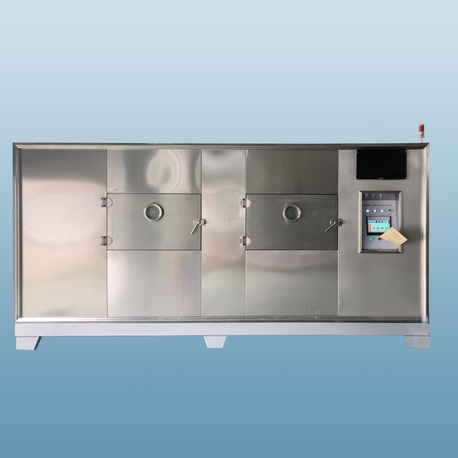
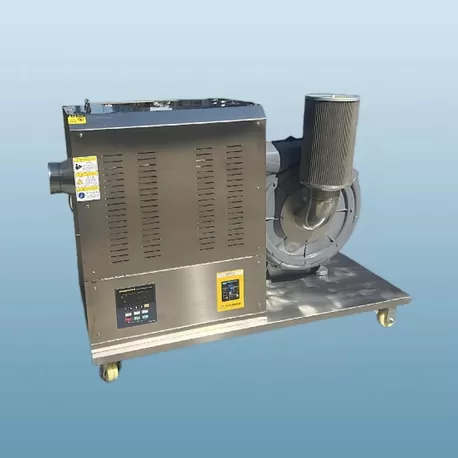
Industrial drying processes require a reliable source of clean,
temperature-controlled heated air. While electric heaters and steam coils serve
some applications, the most cost-effective solution for large-scale operations
is a combustion-based hot air generator. This
equipment burns gaseous or liquid fuels to produce a continuous stream of hot
air at temperatures ranging from 50°C to 650°C, with flow rates from 1,000 to
100,000 m³/h. A properly engineered hot air generator maintains
precise outlet temperature (±2°C), low emissions (NOx < 50 ppm), and high
thermal efficiency (85–95%). This article examines the technical distinctions
between direct and indirect firing, component specifications, safety controls,
and integration with dryers, spray towers, and ovens. As a manufacturer of
industrial drying systems, Nasan supplies hot air generator units
that can be integrated with our continuous belt, fluidized bed, and hybrid
microwave dryers.
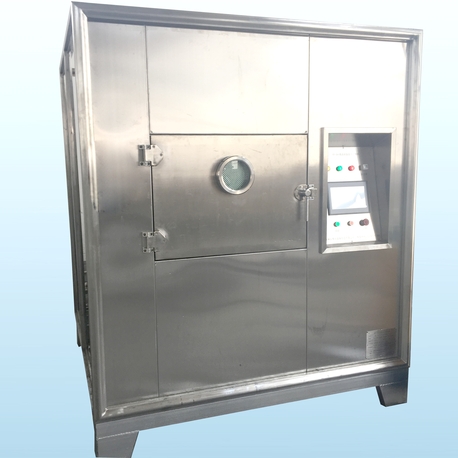
The fundamental distinction between hot air generator designs lies in whether combustion products mix with the process air.
1.1 Direct-Fired Hot Air Generator
In direct-fired systems, the burner flame is exposed directly to the air
stream. Combustion gases (CO₂, H₂O, N₂, and trace O₂) become part of the drying
medium. Advantages:
Highest efficiency (92–98%): No heat exchanger losses.
Virtually all fuel energy goes into heating the air.
Lower capital cost: Simpler construction without
high-temperature alloy heat exchangers. A direct-fired hot air
generator costs 40–60% less than indirect of equal capacity.
Compact footprint: Burner, combustion chamber, and mixing
section fit in a 2–3 meter long module.
Limitations: Direct firing adds water vapor (about 8–12% by volume from
natural gas combustion) to the air, raising relative humidity. This reduces
drying rate. Also, any unburned hydrocarbons or soot can contaminate the
product. Therefore, direct-fired hot air generator is suitable
for non-sensitive materials (aggregates, biomass, animal feed) but not for food,
pharmaceutical, or fine chemical drying.
1.2 Indirect-Fired Hot Air Generator
An indirect system separates the combustion circuit from the process air via
a metallic or ceramic heat exchanger. Combustion gases pass through tubes or
plates, while clean air flows around the outside. Key features:
Zero contamination: Process air remains pure, meeting
food/pharma standards. Suitable for temperatures up to 400°C with stainless
steel exchangers; up to 650°C with Inconel or silicon carbide.
Recirculation capability: The clean air loop can be fully
recirculated (with bleed-off) to capture solvents or prevent oxidation.
Lower efficiency (75–88%): Heat loss through flue gas
(exhaust at 150–250°C) reduces overall efficiency. However, adding an economizer
to preheat combustion air can recover 5–8%.
For food drying, an indirect hot air generator is mandatory.
Nasan’s indirect units feature a tube-in-shell design with spiral fins to
maximize surface area (30–50 m² per MW of heat input).
2. Burner Technology and Fuel Options
The burner is the core of any hot air generator.
Selection depends on fuel availability, emission regulations, and turndown
requirements.
Natural gas (most common): Low sulfur, clean burning.
Requires gas train with double-block valves, pressure regulators, and leak
detection. Typical burner capacity: 100 kW to 10 MW. Turndown ratio: 10:1 to
30:1 (ability to reduce output without losing flame stability).
Propane / LPG: Used where natural gas is unavailable.
Requires vaporizer for large flow rates. Higher flame temperature than natural
gas, so combustion chamber must be refractory-lined.
Light fuel oil / diesel: Higher energy density but requires
preheating (to 40–80°C) for proper atomization. Produces more NOx and
particulates; after-treatment (SCR or bag filter) may be needed.
Biogas / syngas: For sustainable operations, but variable
methane content (40–60%) requires a flame stability control system. The
hot air generator must have a gas analyzer to adjust air-fuel
ratio in real time.
All Nasan hot air generator burners meet EN 746 or NFPA 86
standards, with UV flame scanners and automatic purge cycles.
3. Temperature Control and Safety Systems
Maintaining precise outlet temperature is critical for product quality. A
modern hot air generator uses a
three-element control loop:
Fuel flow control valve: Modulating (0–100% open)
controlled by a PID algorithm.
Combustion air blower: Variable frequency drive (VFD) to
maintain optimal air-to-fuel ratio (typically 10:1 for natural gas, 14:1 for
oil).
Temperature sensor: Three redundant thermocouples (type K
or N) at the outlet plenum; the control system uses median value.
Safety interlocks include:
High temperature limit: Independent mechanical thermostat
set at 30°C above setpoint – cuts fuel supply if exceeded.
Air flow proving switch: Verifies combustion air blower is
running before allowing ignition.
Flame failure response: If flame signal lost for >2
seconds, main gas valves close within 0.5 seconds.
Overtemperature of heat exchanger (indirect units): Thermocouples on the exhaust side prevent overheating of tube walls (max 650°C
for stainless steel).
Nasan provides a safety logic diagram and SIL rating (typically SIL 2) for
each hot air generator system.
4. Integration with Drying Systems
The hot air generator is rarely
a standalone device; it supplies heated air to a dryer, oven, or spray chamber.
Key integration parameters:
4.1 Air Distribution and Ductwork
From the generator outlet, air travels through insulated ducts to the dryer
inlet. Design considerations:
Maximum velocity: 15–20 m/s to avoid pressure drop and
noise. Larger ducts reduce fan power.
Expansion joints: For air above 150°C, stainless steel
bellows accommodate thermal expansion (2–3 mm per meter of duct).
Manual isolation damper: Allows the dryer to be serviced
while the generator runs (bypass to stack).
4.2 Recirculation and Exhaust Balance
Most industrial dryers recirculate 50–80% of exhaust air to save energy. The
hot air generator must be able to handle return air with up to
20% RH and possible dust loading. Therefore, the generator’s combustion air
intake should be separate from the recirculation loop to avoid oxygen depletion.
Nasan designs dual-air systems: fresh air for combustion, and recirculated
process air for the main heating pass.
4.3 Cascade Control for Multi-Zone Dryers
A continuous belt dryer may have three heating zones, each requiring a
different temperature. One large hot air generator supplies air
at the highest temperature (e.g., 120°C) to zone 1; then zone 2 uses a mixing
box to add ambient air to reduce to 90°C; zone 3 further reduces to 60°C. This
cascade approach is simpler and cheaper than multiple generators. Nasan provides
mixing boxes with actuated dampers for precise zone control.
5. Energy Efficiency and Waste Heat Recovery
Operating a hot air generator represents a significant energy cost – often 30–50% of total plant fuel
consumption. Proven recovery methods include:
Flue gas heat exchanger (economizer): Installed on the
exhaust of an indirect generator. Preheats incoming combustion air from 20°C to
120–150°C, improving efficiency by 8–12%. Payback: 1–2 years.
Recirculation of dryer exhaust to generator inlet: For
direct-fired generators, mixing 30–50% of warm, moist exhaust air into the
generator intake reduces the temperature lift required. However, moisture
content must be kept below 15% to avoid condensation in the burner. Nasan’s
control system monitors dew point.
Cogeneration (combined heat and power): For large
installations (>5 MW), a gas turbine or engine can generate electricity, and
its exhaust (450–550°C) becomes the hot air generator’s heat
source – total efficiency up to 90%.
6. Common Problems and Troubleshooting
Even reliable hot air generator systems experience
performance issues. Field data from Nasan’s service records highlight these
frequent cases:
Flame instability or pulsation: Caused by incorrect
air-fuel ratio or dirty burner head. Solution: Clean burner, calibrate gas valve
with a manometer, and verify combustion air fan speed. An oxygen sensor in flue
gas should read 3–5% O₂.
High NOx emissions (>100 ppm): Usually due to excessive
flame temperature. Solution: Install flue gas recirculation (FGR) – a pipe that
returns 15–20% of flue gas to the combustion air, reducing peak temperature.
Nasan offers low-NOx burners with FGR as a standard option.
Heat exchanger cracking (indirect units): Caused by thermal
shock (rapid cooling) or sulfur corrosion. Solution: Always maintain a minimum
air flow through the exchanger before and after burner operation (post-purge).
For high-sulfur fuels, use 316L stainless steel or ceramic exchangers.
Outlet temperature swings > ±5°C: Indicates PID tuning
issues or fluctuating fuel pressure. Solution: Perform auto-tuning of
controller; install a fuel gas pressure regulator with a buffer tank.

7. Selecting the Right Hot Air Generator for Your Process
To specify a hot air generator, provide the following data
to your supplier:
Required air flow (m³/h) at operating temperature: Based on
dryer heat balance.
Inlet air temperature (ambient or preheated): Affects
burner sizing.
Desired outlet temperature range: Minimum and maximum.
Product sensitivity to combustion products: Determines
direct vs. indirect.
Fuel type and available pressure.
Emission limits (NOx, CO, particulates).
Nasan provides a free heat load calculation
worksheet. Based on your inputs, we recommend a specific hot air
generator model with a guaranteed thermal efficiency and emissions
compliance.
Frequently Asked Questions (FAQ) About Hot Air Generators
Q1: What is the typical price range for an industrial hot air
generator?
A1: A small indirect-fired unit (100 kW, 3,000 m³/h at
120°C) costs $15,000–$25,000. A medium system (1 MW, 30,000 m³/h) ranges from
$45,000 to $90,000. Large direct-fired generators (5 MW) cost $120,000–$200,000.
Nasan offers packaged hot air generator skids including burner,
controls, and safety train – installation and commissioning are additional
(10–15% of equipment cost).
Q2: Can a hot air generator be used for spray drying?
A2:
Yes. Spray dryers require very high inlet air temperatures (180–350°C) and clean
air to avoid product contamination. Therefore, an indirect-fired hot air
generator with a stainless steel heat exchanger is standard. The outlet
air should be filtered (F9 or HEPA) before entering the spray chamber. Nasan has
supplied generators for dairy, ceramic, and catalyst spray dryers.
Q3: How often must a hot air generator be inspected?
A3:
Daily: Check fuel pressure, flame appearance, and safety interlocks. Monthly:
Clean burner head and flame scanner lens; test high-temperature limit switches.
Annually: Have a certified combustion technician measure flue gas composition,
inspect heat exchanger for cracks (using borescope), and recalibrate all
sensors. Nasan provides a maintenance contract covering these inspections.
Q4: What is the maximum altitude for a hot air
generator?
A4: At altitudes above 500 meters, air density decreases,
reducing burner output. A hot air generator must be derated by
approximately 4% per 300 meters above 500 m. For installations at 2,000 m, the
burner size should be increased by 20–25% to achieve the same thermal output.
Nasan adjusts fan and orifice sizes for high-altitude sites.
Q5: Can I convert my existing steam heater to a hot air
generator?
A5: Yes, but it requires major modifications. Steam coils
cannot withstand temperatures above 180°C and have poor temperature control
above 120°C. Replacing a steam system with a direct-fired hot air
generator reduces energy costs by 30–50% (no boiler losses). However,
you must install a new air duct, burner management system, and possibly a new
fan. Nasan offers retrofit studies and turnkey conversion.
Q6: What is the noise level of a typical hot air
generator?
A6: Combustion blowers and flame roar produce 85–95 dB(A)
at 1 meter. For indoor installations, Nasan provides acoustic enclosures that
reduce noise to 75 dB(A). Also, a silencer on the air intake can lower noise by
10–15 dB. Always check local occupational noise limits (e.g., OSHA requires
hearing protection above 85 dB).
Need a Custom-Engineered Hot Air Generator for Your Drying Line?
The efficiency and reliability of your drying process depend on the correct
specification of the hot air generator. Whether
you require a direct-fired unit for low-cost mineral drying or an indirect-fired
system with HEPA filtration for pharmaceutical applications, Nasan provides complete engineering support – from
heat balance calculation and burner selection to PLC control integration and
commissioning. Our generators are built to meet CE, UL, or ASME standards, with
optional remote monitoring via IoT.
Send your inquiry today – include desired air flow (m³/h or
CFM), outlet temperature, fuel type, and any emission limits. We will respond
within 24 hours with a preliminary datasheet, layout drawing, and fixed price
quotation. For urgent projects, we can arrange a video call to review your
existing ductwork and control panel requirements.
Request a quote for a hot air generator
from Nasan – references available from food processors, chemical
plants, and recycling facilities worldwide.