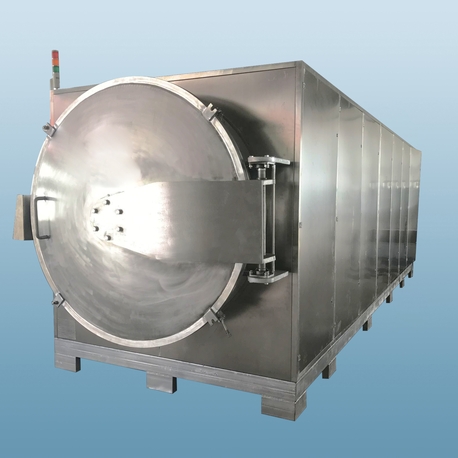
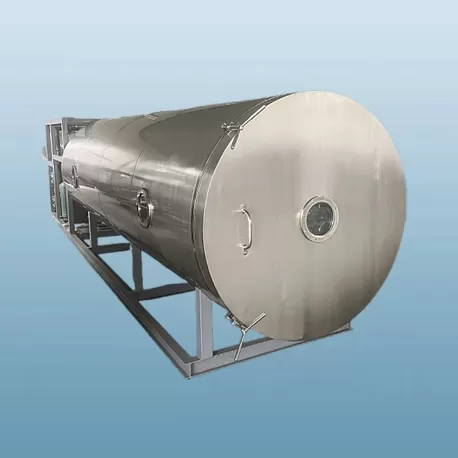
Conventional solvent extraction methods – Soxhlet, maceration, and reflux –
are energy‑intensive and time‑consuming, often degrading heat‑labile compounds.
A properly designed microwave
extractor uses volumetric dielectric heating to accelerate mass
transfer, reducing extraction time from hours to minutes while improving yield
and bioactivity retention. Nasan engineers industrial
microwave extraction systems for botanicals, food ingredients, and
pharmaceutical actives. This article examines the physics, design parameters,
and operational strategies for moving from lab‑scale to production microwave
extraction.

How a Microwave Extractor Works: Dielectric Heating and Mass Transfer
Unlike conventional heating that relies on conduction from a hot surface, a
microwave
extractor exposes the solvent‑matrix mixture to electromagnetic
fields at 915 MHz or 2450 MHz. Polar molecules (water, ethanol, methanol) rotate
rapidly, generating internal heat. This causes three effects that enhance
extraction:
Rupture of plant cell walls: Rapid heating of intracellular
moisture creates steam pressure, causing micro‑explosions that release target
compounds.
Improved solvent penetration: Elevated temperature reduces
solvent viscosity and surface tension, allowing deeper infiltration into the
matrix.
Selective heating: Materials with higher dielectric loss
factors (e.g., water‑rich regions) heat faster, avoiding overheating of the
already dried matrix.
These mechanisms allow a microwave
extractor to achieve equilibrium extraction in minutes, compared to
4‑24 hours for conventional methods.
Comparison with Conventional Extraction Technologies
Process engineers evaluate several parameters when selecting an extraction
platform. The table below summarizes differences between microwave extraction
and common alternatives.
| Parameter | Microwave extractor | Soxhlet | Maceration | Ultrasound-assisted |
|---|
| Extraction time | 5–30 min | 6–24 h | 24–72 h | 30–90 min |
| Solvent volume | Low (10–20 mL/g) | High (30–50 mL/g) | Moderate | Low |
| Energy consumption | 0.5–1.5 kWh/kg | 3–6 kWh/kg | 1–2 kWh/kg (heating) | 1–2 kWh/kg |
| Thermal degradation risk | Low (uniform & rapid) | High | Low (ambient) | Low |
| Scalability to tonnes | Proven (batch & continuous) | Poor | Simple but slow | Moderate |
For heat‑sensitive bioactives like anthocyanins, curcuminoids, or
thermolabile vitamins, a microwave
extractor offers the best balance of speed and quality.
Key Engineering Parameters for Microwave Extractor Design
To achieve reproducible extraction at industrial scale, several parameters
must be optimized.
1. Frequency and Power Density
2450 MHz (domestic oven frequency): Suitable for laboratory
batch extractors (capacity <10 L). Penetration depth in wet biomass is 2–5
cm.
915 MHz (industrial frequency): Penetration depth of 10–20
cm, allowing treatment of larger particle beds or continuous flow reactors.
Preferred for microwave
extractor systems >100 L.
Power density: 5–20 W per gram of dry matrix. Lower
densities prolong extraction; higher densities risk solvent superheating and
bumping.
2. Solvent Selection and Dielectric Properties
The extraction efficiency depends on the solvent's loss factor (ε″). Water
has high ε″ at both frequencies. Ethanol (ε″ ~ 10 at 2450 MHz) is moderate;
hexane (ε″ ~ 0.1) is microwave‑transparent and will not heat directly – a
co‑solvent like ethanol must be added. For green extraction, water‑ethanol
mixtures (e.g., 50% v/v) provide optimal heating and polarity for phenolics.
3. Reactor Design: Batch vs. Continuous
Batch microwave extractor: Rotating turntable or stirrer
ensures field uniformity. Suitable for small‑scale herbal processing (10–500
kg/batch).
Continuous tubular or screw conveyor systems: Biomass moves
through a microwave‑exposed tunnel, with solvent recirculation. Offers higher
throughput for large‑volume production (1–10 tonnes per day).
4. Temperature and Pressure Control
Closed‑vessel microwave extractors operate above solvent boiling point (up to
150°C and 5–10 bar), reducing extraction time further. Open‑vessel systems at
atmospheric pressure are simpler but require longer exposure. Fiber‑optic
thermometers are inserted directly into the matrix for feedback control.
The following sectors have adopted microwave extraction as a standard
technique.
Phytopharmaceuticals: Extraction of artemisinin from
Artemisia annua, paclitaxel from Taxus bark, and silymarin from milk thistle.
Yields increase 2‑3 times versus maceration.
Essential oils and oleoresins: Microwave hydrodiffusion
(solvent‑free) extracts citrus peel oils, rosemary, and lavender in 30 minutes
compared to 3‑hour steam distillation.
Functional food ingredients: Recovery of polyphenols from
grape pomace, anthocyanins from purple corn, and β‑glucan from mushrooms –
retaining antioxidant capacity.
Cosmeceutical actives: Extraction of caffeine from green
tea, hyaluronic acid from rooster comb, and flavonoids from licorice.
Overcoming Scale‑Up Challenges from Lab to Production Microwave
Extractor
Many companies successfully develop a method on a 5‑L lab microwave extractor
but struggle at 500‑L scale. Common issues and solutions include:
Field non‑uniformity: In a large cavity, standing waves
create hot and cold zones. Solution: multiple microwave feed ports (4‑6
magnetrons) with phase shifting, plus a rotating drum or conveyor agitator.
Solvent boil‑over: Rapid volumetric heating causes bumping.
Solution: controlled power ramping (e.g., 20% power for 1 min, then stepwise
increase) and an anti‑foam sensor with automatic venting.
Particle settling and channeling: In a continuous
extractor, dense particles may settle at the bottom, receiving less exposure.
Solution: a screw conveyor that lifts and turns the bed, or a fluidized‑bed
microwave design.
Reproducibility batch‑to‑batch: Raw material moisture
content varies, altering dielectric properties. Solution: inline moisture
measurement (NIR) and adaptive power control algorithm.
Nasan provides engineering
services for scale‑up, including electromagnetic simulation (COMSOL
Multiphysics) to predict field distribution and temperature profiles, followed
by pilot trials on a 50‑L semi‑industrial microwave
extractor before final production unit fabrication.
Integration with Downstream Processing
A microwave extractor typically feeds into filtration, concentration, and
drying steps. The extract can be:
Filtered through a cartridge or membrane filter to remove fine
particles.
Concentrated under vacuum at low temperature to preserve volatiles.
Spray‑dried or freeze‑dried into powder form – Nasan offers
matching vacuum drying and microwave drying equipment that interfaces directly
with the extractor output.

Process Validation and Quality Control Parameters
For regulated industries (nutraceutical GMP, pharmaceutical API
manufacturing), a microwave extraction process must demonstrate:
Extraction yield repeatability: Coefficient of variation
<5% across three consecutive batches.
Marker compound content: HPLC assay of target analyte
(e.g., hypericin for St. John’s wort) within 90‑110% of label claim.
Residual solvent analysis: GC headspace to ensure below ICH
limits.
Pesticide and heavy metal profiles: Unchanged or reduced
compared to conventional extraction.
Frequently Asked Questions (FAQs) on Microwave Extractors
Q1: Can a microwave extractor handle dry plant material without added
water?
A1: Direct microwave extraction of dry material is
inefficient because dry biomass has low dielectric loss. You need either a polar
solvent (ethanol/water mixture) or pre‑hydration of the matrix. Solvent‑free
microwave extraction (SFME) works only for fresh plant tissues with high
internal moisture (e.g., citrus peels, fresh herbs).
Q2: What is the maximum particle size recommended for a microwave
extractor?
A2: For batch extractors, particles should be ≤5 mm to
ensure uniform heating and solvent penetration. Coarser material (up to 10 mm)
can be processed with longer extraction times or a pre‑soaking step. Continuous
systems often use a coarse grind (1‑3 mm) to prevent bridging in the screw
conveyor.
Q3: How does microwave extraction compare to supercritical CO₂
extraction?
A3: Supercritical CO₂ produces solvent‑free extracts but
requires high pressure (200‑500 bar) and is capital‑intensive. A microwave
extractor works at atmospheric or moderate pressure (up to 10 bar)
with lower investment. For polar compounds (polyphenols, glycosides), microwave
extraction gives higher yields; for non‑polar (terpenes, waxes), CO₂ is
superior. Hybrid processes exist where microwave pre‑treatment enhances CO₂
extraction efficiency.
Q4: What safety features should an industrial microwave extractor
have?
A4: Essential features: interlocked doors preventing
microwave emission when open; radiation leakage monitoring <5 mW/cm² at 5 cm;
pressure relief valves for closed vessels; solvent vapor sensors with automatic
ventilation; magnetron overheat protection. Nasan systems
comply with CE and UL standards for industrial microwave equipment.
Q5: Can I extract essential oils without organic solvents using a
microwave extractor?
A5: Yes – solvent‑free microwave hydrodiffusion (SFME) uses
the plant's natural moisture. The microwave extractor heats the water inside the
plant tissue, bursting oil glands. Vapor passes through a condenser, yielding
essential oil and hydrosol separate. This method is approved for organic
certification as no solvents are introduced.
Ready to Implement Microwave Extraction for Your Product?
Choosing the right microwave
extractor geometry, frequency, and power profile is specific to
your raw material and target compound. Nasan offers laboratory
feasibility tests and pilot‑scale trials. Send a representative sample (500 g to
5 kg) of your botanical or biomass material along with your desired extract
specifications (yield, purity, residual solvent limits). Our application
engineers will return a comparative report: microwave extraction vs. your
current method, including recommended system design and scale‑up roadmap.
Submit your inquiry here: https://www.nasandry.com/contact –
Include material description, target compounds, and required batch size. A
process specialist will contact you within 48 hours.