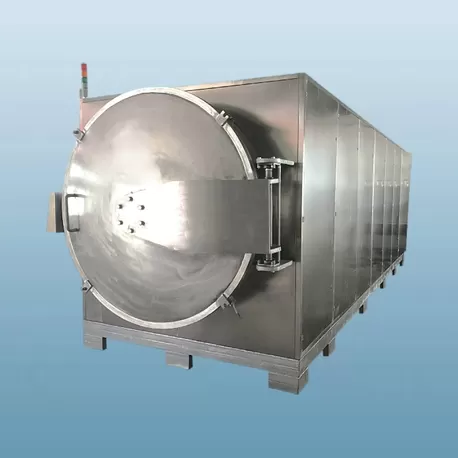
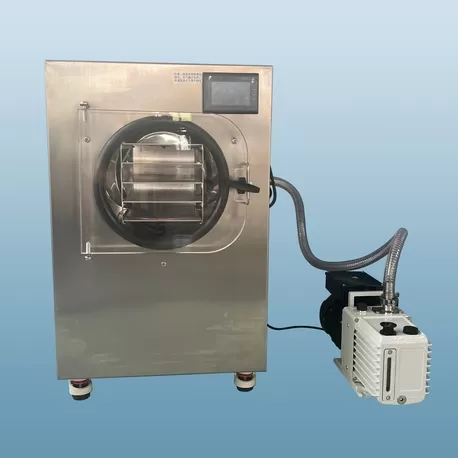
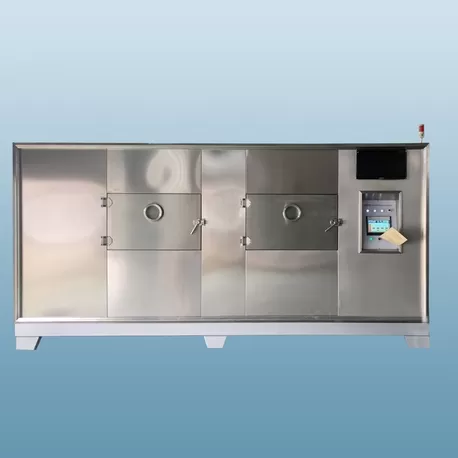
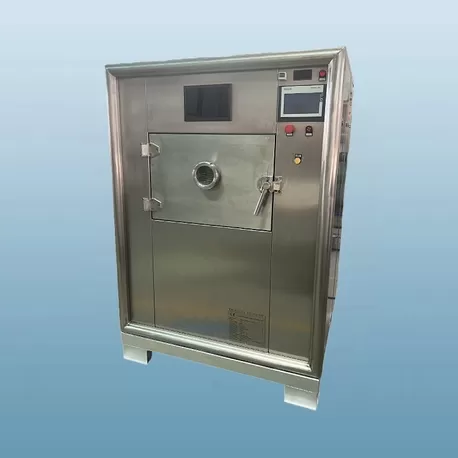
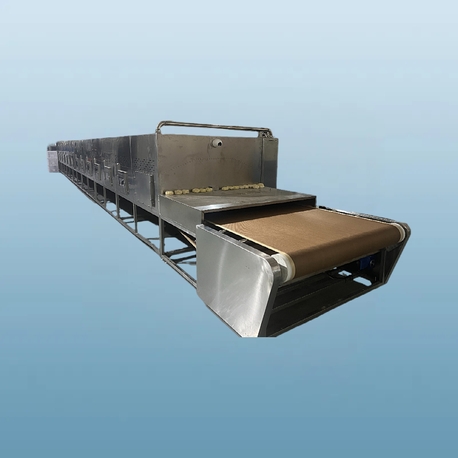
In batch and continuous production lines, conventional hot-air drying often
creates a trade‑off between throughput and product quality. A well‑designed
microwave
dehydrator eliminates this compromise by delivering energy directly
into the wet material. This article examines the physics, process integration,
and sector‑specific advantages of microwave dehydration, drawing on engineering
practices from Nasan’s industrial systems.
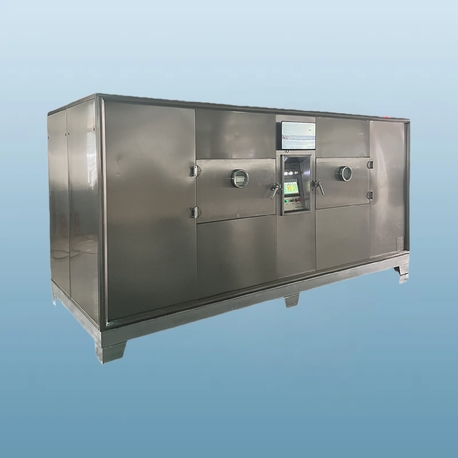
How Microwave Dehydration Works – Dielectric and Volumetric Principles
Unlike thermal conduction or convection, microwave drying relies on
dielectric heating. A microwave dehydrator generates
high‑frequency electromagnetic fields (typically 915 MHz or 2.45 GHz) that cause
polar molecules – mainly water – to rotate millions of times per second. This
molecular friction produces heat instantly throughout the product’s volume, not
only at the surface. The main consequences for industrial drying are:
Inside‑out moisture migration: Vapour pressure builds
inside the material, pushing water toward the cooler surface, which accelerates
evaporation without case hardening.
Selective energy absorption: Water has a high dielectric
loss factor compared to dry solids or air; therefore energy is directed
precisely where removal is needed.
Lower thermal gradient: The product core and surface remain
closer in temperature, preserving heat‑sensitive compounds.
This volumetric mechanism explains why a modern microwave
dehydrator can reduce drying time by 50–70% compared to forced‑air
ovens while using less floor space and lowering energy consumption per kilogram
of evaporated water.
Key Advantages over Conventional Drying Technologies
When evaluating dehydration methods for industrial scales (from 50 kg/h to
several tons per hour), the following differentiators position microwave systems
as a superior choice for many applications.
Preservation of nutrients & volatiles: Rapid,
low‑temperature drying retains vitamins, essential oils, and aromatic compounds
– crucial for herbs, spices, and nutraceuticals.
Uniform end‑moisture profile: Hot‑air dryers often produce
over‑dried edges and wet centers. Microwave’s self‑levelling effect yields
product moisture variation below ±1%.
Selective heating eliminates hot spots: Advanced designs
(mode stirrers, moving belts, or rotating drums) ensure field uniformity,
preventing thermal runaway.
Sanitary operation: Surface temperatures stay lower than
100 °C in most cases, reducing Maillard reactions and making the equipment
simpler to clean.
Energy conversion efficiency: Over 85% of electrical input
is converted into dielectric heating; no need to preheat massive airflows or
compensate for heat losses.
Critical Engineering Parameters for Industrial Microwave Dehydrator
Design
Designing a reliable microwave dehydrator for continuous
operation involves balancing several technical variables. Nasan’s
engineering team focuses on these core parameters during custom system
development:
Frequency selection (915 MHz vs. 2.45 GHz)
915 MHz offers deeper penetration (up to 150 mm in wet materials), suitable
for thick slabs or large pieces. 2.45 GHz provides faster surface heating and is
common for thinner products like flakes or granules. Many hybrid systems use
both ranges.
Power density & applicator configuration
Measured in kW per square metre of belt or per batch. Too high a density
chars product edges; too low reduces throughput. Computer modelling determines
optimum cavity dimensions, waveguide placement, and choke designs.
Process integration & PLC control
Modern microwave dehydrators include closed‑loop feedback using infrared
sensors, load cells (to monitor moisture loss rate), and variable power
magnetrons. Recipe management allows switching between products without
mechanical adjustments.
Industry Applications and Tailored Solutions
Each sector presents specific moisture removal challenges. A standard hot‑air
cabinet cannot address them all, but a properly configured microwave dehydrator
can. Below are representative use cases with process solutions.
Food & agricultural processing
Fruits & vegetables: Dehydrate apple rings, carrot
cubes, or banana slices without sulphites. Microwave drying produces rehydrated
textures close to fresh.
Herbs & spices: Oregano, basil, and ginger retain their
green colour and essential oils; microbial load is reduced simultaneously.
Nuts & seeds: Almonds, walnuts, and sunflower seeds
achieve low final moisture (<5%) without oil oxidation or rancidity.
Meat jerky & pet treats: Uniform drying prevents hard
edges while achieving water activity below 0.85 for shelf stability.
Pharmaceutical & nutraceutical drying
Wet granulation, tablet coating, and extraction residues often demand
low‑temperature, non‑oxidative drying. A pharmaceutical‑grade microwave
dehydrator with validated power distribution meets cGMP standards. Drying
heat‑sensitive probiotics or enzymes becomes feasible.
Chemical & specialty materials
Ceramic precursors, catalysts, pigments, and polymer beads require consistent
particle‑to‑particle moisture. Microwave drying avoids crust formation and
reduces fines generation.
Solving Industrial Drying Pain Points – Six Common Scenarios
Experienced process engineers recognise specific failures of legacy dryers.
The following table‑free list shows how a microwave dehydrator addresses each
pain point without altering upstream or downstream equipment drastically.
P1 – Long drying cycles (>12h) causing production
bottlenecks.
Solution: Microwave dehydrator cuts cycle to 2‑4h,
allowing just‑in‑time manufacturing.
P2 – Surface hardening that traps internal
moisture.
Solution: Volumetric heating creates vapour channels from
inside out; no crust forms.
P3 – Loss of volatile actives in herbal
extracts.
Solution: Drying at 40–60 °C under controlled power
ramping preserves 95% of volatiles.
P4 – Non‑uniform colour and scorched edges.
Solution:
Uniform field with variable belt speed eliminates localised overheating.
P5 – Microbial regrowth due to slow drying.
Solution:
Rapid moisture reduction (within 30 minutes) prevents germination of moulds and
mesophiles.
P6 – High energy bills from heated air
exhaust.
Solution: Microwave energy is contained, and no heated air
is exhausted; only water vapour is vented.
Integrating a Microwave Dehydrator into Existing Production Lines
Retrofitting a microwave dryer does not require a factory redesign.
Nasan provides modular units that
connect via inlet hoppers, screw feeders, or belt conveyors. Key integration
aspects include:
Pre‑drying for sticky materials – using a low‑power microwave zone to reduce
surface tackiness before main drying.
Post‑drying cooling tunnels – integrated with the same control panel to
avoid condensation.
Interlocking with upstream equipment (mixers, granulators) via digital I/O;
remote monitoring and alarm handling.
Safety interlocks: door switches, choke tunnels, and leakage monitoring
below 5 mW/cm² for operator safety.
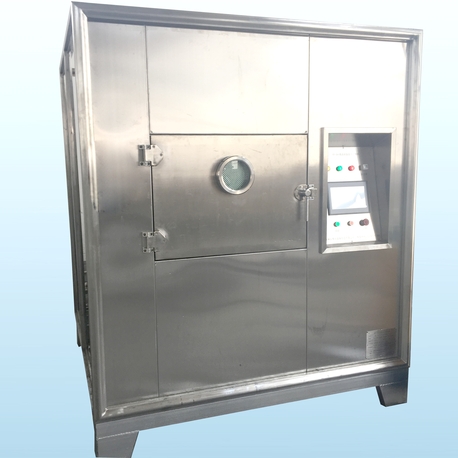
Selection Criteria for a Reliable Microwave Dehydrator Manufacturer
Not all microwave drying equipment delivers the promised uniformity or
longevity. When purchasing a microwave dehydrator, evaluate
these aspects:
Material testing laboratory: The manufacturer should run
your specific wet product to determine absorption coefficients, penetration
depth, and power‑time curves. Nasan offers free lab‑scale
trials.
Magnetron brand & service life: Industrial magnetrons
(rated for 20,000+ hours) with easy replacement access reduce downtime.
EMC compliance: Compliance with FCC/CE/ICNIRP standards is
mandatory for international shipping.
Modularity for scale‑up: Can the same cavity design be
expanded from pilot to full production? Plug‑in generator cabinets allow power
upgrade.
Frequently Asked Questions (FAQs)
Q1: Does microwave dehydration destroy nutrients or enzymes in food?
A1: On the contrary, because a microwave
dehydrator operates much faster and at lower bulk temperatures (usually
40–80 °C), the retention of heat‑sensitive vitamins (C, B‑complex) and enzymes
is consistently higher than in hot‑air or freeze‑drying cycles. Independent
studies show 20‑30% higher ascorbic acid retention compared to conventional
drying.
Q2: Can a microwave dehydrator handle products with high sugar or fat
content?
A2: Yes, but power control and uniform field distribution
become more important. Sugars (e.g., honey, fruit pastes) exhibit strong
dielectric absorption, which can lead to localised charring if power density is
too high. Industrial designs from Nasan incorporate pulsed power and
variable belt speed to manage such materials. Fatty products (nuts, seeds)
require lower initial power to avoid oil migration; pre‑calibration runs
determine safe parameters.
Q3: What is the typical throughput range for a continuous microwave
dehydrator?
A3: Throughput depends on initial moisture, final target,
and product density. A single‑unit industrial microwave dehydrator (50–200 kW
installed power) commonly processes 200–3000 kg/h of vegetables, 500–1500 kg/h
of grains, or 100–500 kg/h of high‑value pharmaceuticals. Multiple units can be
cascaded for greater capacity.
Q4: Is there a risk of microwave leakage or operator exposure?
A4: Certified industrial microwave dehydrators are designed
with multiple safety systems: quarter‑wavelength choke tunnels at entry/exit,
automatic power cut‑off when access doors are opened, and continuous leakage
monitoring. Regular maintenance of door seals and choke elements keeps emissions
well below international limits (5 mW/cm² at 5 cm distance).
Q5: Can a microwave dehydrator be combined with vacuum drying for
temperature‑sensitive products?
A5: Absolutely. Microwave‑vacuum (MWV) dehydrators are an
advanced configuration where the drying chamber is kept under reduced pressure
(50–200 mbar). This lowers the boiling point of water to 30‑50 °C, enabling
dehydration of extremely heat‑sensitive materials like bioactive peptides, some
probiotics, and fine chemicals. Nasan provides MWV systems with
integrated vacuum pumps and condenser recovery.
Q6: How do we clean a microwave dehydrator between batches, especially for
allergen‑free lines?
A6: Most industrial microwave dehydrators are built with
stainless steel cavities and removable belt sections. For hygienic applications,
Nasan offers
CIP (clean‑in‑place) nozzles and smooth internal welds. A standard cleaning
procedure includes a water spray, followed by a short low‑power microwave cycle
to dry the interior, preventing biofilm formation.
Conclusion – Moving Toward Efficient, Low‑Impact Drying
Replacing or supplementing a conventional drying line with a microwave
dehydrator directly translates to higher throughput, consistent
product quality, and lower energy consumption per ton. The technology has
matured from laboratory curiosities to robust, industrial‑scale installations in
food, chemical, and pharmaceutical plants across the globe. The key is proper
feasibility testing and a partner that understands process integration.
For a detailed assessment of your material and production goals,
contact Nasan’s engineering team. Submit
your inquiry with sample specifications (product type, initial moisture, target
moisture, desired throughput). Our specialists will respond with a preliminary
configuration and lab test proposal.
→ Send your drying inquiry now to receive a
custom quotation and technical discussion. Use the contact form on our
website or email directly from the Nasan contact page. Every inquiry is
reviewed by a senior process engineer.