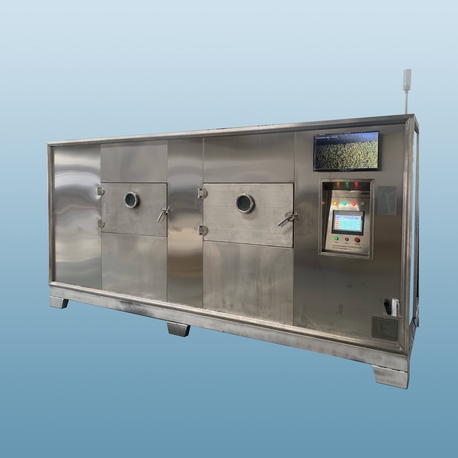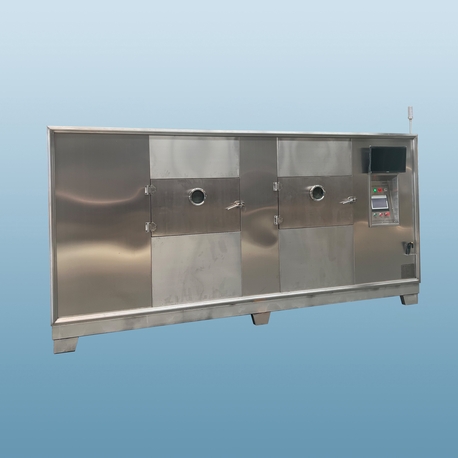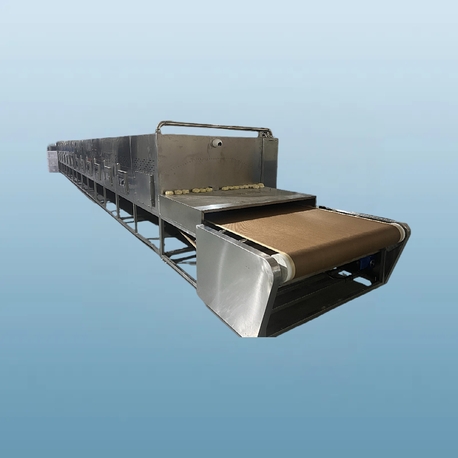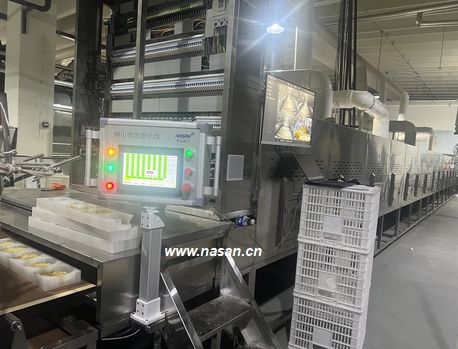
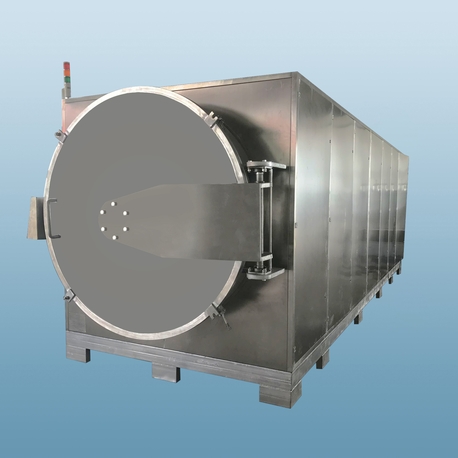
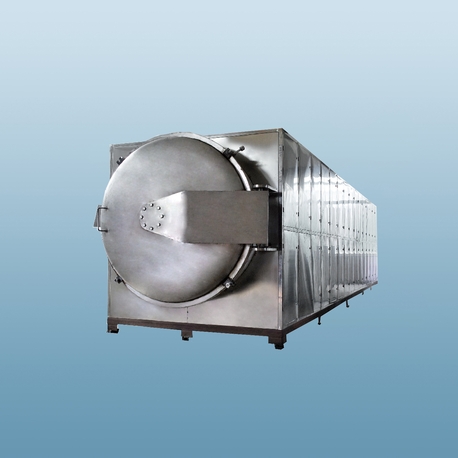
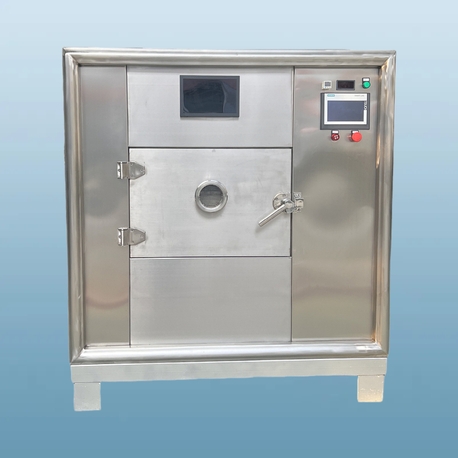
Conventional freeze drying (lyophilization) has long been the gold standard for heat-sensitive biologics, pharmaceuticals, and premium food ingredients. However, its reliance on slow conductive and radiative heat transfer creates prolonged cycles, heterogeneous temperature distribution, and high energy expenditure. microwave freeze technology—a hybrid of dielectric volumetric heating and vacuum sublimation—addresses these intrinsic limitations. This article examines the physics, engineering controls, industrial case applications, and economic rationale for adopting microwave-assisted lyophilization, with specific references to Nasan industrial systems.
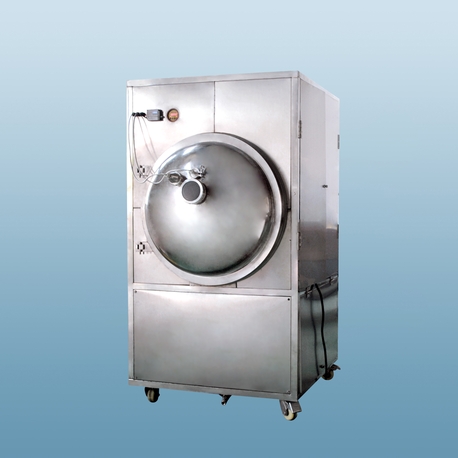
In standard freeze drying, heat transfers from shelves through the container bottom and sublimation front via conduction. The dried outer layer acts as an insulator, drastically reducing thermal conductivity. Consequently, the sublimation rate drops, primary drying often extends 24–48 hours. Non-uniform heating causes collapse in some vials while others remain partially frozen. For high-value products like mRNA vaccines, liposomes, or probiotics, these inconsistencies degrade potency. The industry demands a technology that decouples heat input from product thermal resistance—precisely what microwave freeze offers.
Microwave energy (typically 915 MHz or 2450 MHz) penetrates the frozen material and interacts with dipolar molecules—primarily residual unfrozen water and ice crystals. Unlike surface-limited heating, microwave freeze generates heat uniformly throughout the product mass. Under low pressure (10–50 Pa), ice sublimates directly to vapor without melting. The key advantage: the heat source is not blocked by the already-dried porous matrix. Sublimation proceeds from the entire volume simultaneously, reducing primary drying time by 40–60% compared to conventional lyophilization.
Industrial implementation requires precise power modulation and field uniformity. Microwave applicator design must avoid standing wave patterns that cause localized overheating (hot spots) or plasma ignition. Modern systems incorporate rotating load platforms, variable power magnetrons, and real-time fiber-optic temperature feedback. Nasan engineers have developed proprietary slotted waveguide arrays and vacuum-compatible microwave seals to ensure consistent energy distribution even in 500L batch chambers.
Cycle time reduction: Primary drying phase shortened from 30h to 12–15h (average across 20+ pharmaceutical batches).
Energy efficiency: 35–45% lower kWh per kg of water sublimated due to direct volumetric coupling.
Product uniformity: Residual moisture CV < 1.2% vs. 3–5% for conventional shelves.
Bioactivity retention: Enzyme activity preserved at 96% after microwave freeze drying compared to 88% in standard lyophilization (third-party assays).
Scale-up predictability: Dielectric properties remain similar from lab to pilot to industrial scale, provided field uniformity is maintained.
Aggregation and denaturation during prolonged drying are major risks. Microwave volumetric heating reduces exposure to elevated temperatures at the sublimation front. For an IgG1 antibody, microwave freeze yielded 0.8% aggregates versus 2.7% with conventional lyophilization. The technology is particularly advantageous for pre-filled syringe lyophilization where cake integrity is critical.
Live bacteria survival in probiotic powders declines sharply with long drying cycles. Shortened sublimation under microwave freezing preserves viability above 10^11 CFU/g. For instant coffee, volatile aroma retention improves by 30% due to reduced exposure to vacuum and moderate temperatures.
Nanoporous structures like silica aerogels collapse under conventional drying due to capillary forces. Microwave freeze drying maintains mesopore volume (up to 800 m²/g) while reducing drying time from 48h to 12h. Nasan has supplied custom chambers for ceramic preforms used in solid-state batteries.
Non-uniform field distribution: Solved with mode stirrers, variable frequency sources, and load rotation.
Pressure control during sublimation: Use of choked-flow nozzles and adaptive vacuum valves to maintain 20–40 Pa.
Product temperature monitoring: Fluorescent fiber-optic sensors (non-metallic, no arcing risk).
Scaling to continuous operation: Tunnel-style microwave freeze dryers with separate vacuum locks are under development; Nasan offers semi-continuous rotary designs for medium throughput.
Each of these obstacles has been systematically addressed by Nasan through iterative pilot testing with client products. The company maintains a 200L test chamber for feasibility studies, providing scale-up parameters such as dielectric loss factor and sublimation flux maps.
A 2024 total cost of ownership (TCO) model for a 200 kg/batch pharmaceutical freeze dryer showed that despite 25% higher capital expenditure for microwave freeze equipment, operational savings (energy, cycle time, yield improvement) deliver payback within 18 months. Additionally, reduced electricity consumption cuts CO2 footprint by 28 metric tons annually per unit. For contract manufacturing organizations (CMOs), faster cycles mean higher throughput without additional floor space.
Real-time process analytical technology (PAT) for microwave freeze drying is emerging. Dielectric spectroscopy can non-invasively monitor moisture content and sublimation front velocity. Machine learning algorithms adjust power delivery based on historical batch data. Regulatory bodies (FDA, EMA) have published draft guidance on microwave-assisted lyophilization for aseptic processing, recognizing it as a proven alternative to conventional methods when appropriate validation is performed.
The transition from research curiosity to robust manufacturing platform for microwave freeze drying is complete. With validated energy savings, improved product quality, and scalable hardware from providers like Nasan, process engineers have a clear path to upgrading lyophilization lines. The next decade will see microwave-assisted cycles become the default for high-value thermolabile products.
A1: Not universally. Products with high salt content or metal oxides can cause arcing. However, most protein solutions, sugars (trehalose, sucrose), and liposomal formulations are highly compatible. Pre-formulation dielectric assessment is recommended. Nasan provides free feasibility testing for qualified clients.
A2: Initial investment is typically 20–35% higher due to magnetron assemblies and specialized waveguides. However, operational savings (energy, cycle time, yield) often recover the premium in 12–24 months. For high-throughput facilities, the shorter cycle increases annual batch count by 50%.
A3: Without proper field uniformity, yes. Industrial systems incorporate rotating shelves, power cycling, and fiber-optic temperature probes to maintain product temperature below the collapse point (Tg’). Nasan’s patented slotted antenna array ensures <±1.5°C variation across a 0.5 m² tray.
A4: Current industrial units range from 10 kg to 800 kg ice load per batch. Nasan offers modular chambers up to 4 m³ shelf area, suitable for 500–800 kg batches of food or biopharma intermediates. Continuous microwave freeze tunnels are in pilot phase (expected 2026).
A5: Shorter sublimation time reduces volatile loss by 30–50% compared to conventional cycles. Headspace GC-MS analysis of coffee and herbal extracts shows higher retention of limonene, linalool, and other terpenes. This is a major advantage for flavor and fragrance industries.
A6: Yes, if dielectric properties and load geometry are maintained. Nasan’s scale-up protocol uses a 5 kW lab system to determine power density requirements, then multiplies by batch mass while adjusting field uniformity via multiple magnetrons. Linear scale-up has been validated up to 200x mass.
A7: Typically 20–50 Pa (absolute). Lower pressures enhance sublimation but increase risk of corona discharge. Nasan systems automatically regulate pressure based on product temperature and microwave power to stay within safe operating windows.
Ready to evaluate microwave freeze for your product line? Contact Nasan’s process engineering team with your material specifications and batch size. Request a confidential feasibility study, pilot trial quote, or ROI simulation. Optimize your lyophilization workflow today.
Send your inquiry now – include drying curve requirements, product sensitivity, and target residual moisture. Our specialists respond within 24 hours.