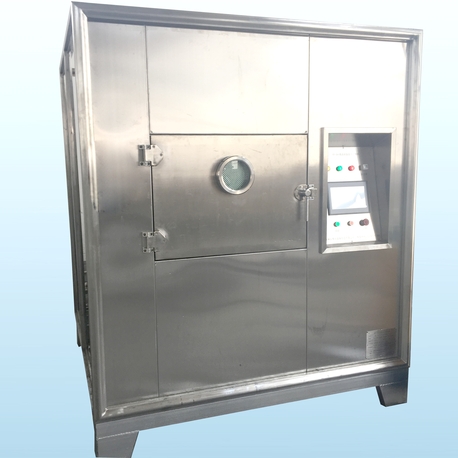
In the industrial food processing sector, dehydration remains one of the most
energy-intensive and quality-sensitive unit operations. For processors handling
onions, carrots, potatoes, or leafy greens, the specification of a vegetable dehydration machine determines not only the plant's operating cost but also the color, nutrient
retention, and rehydration characteristics of the final product. With global
demand for shelf-stable ingredients rising, moving beyond batch-type equipment
to continuous, precision-engineered systems is essential. This article provides
a technical examination of modern dehydration technologies, heat and mass
transfer considerations, and strategies for minimizing product degradation,
drawing on process expertise from leading OEMs like Nasan.
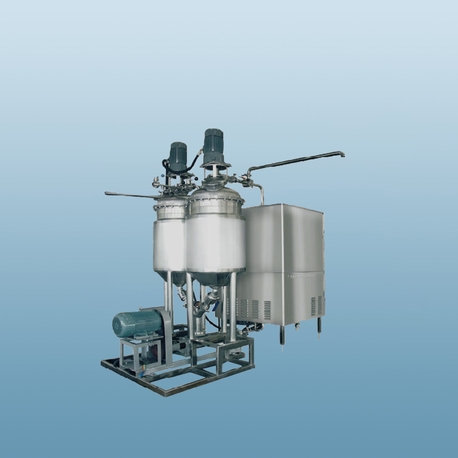
The selection of a vegetable dehydration machine hinges on the physical form of the input material—diced, sliced, or pureed—and
the desired throughput. Three primary industrial configurations dominate the
market, each with distinct thermodynamic characteristics.
1.1 Continuous Belt (Conveyor) Dryers for Gentle Processing
Multi-stage belt dryers are the industry standard for drying particulate
vegetables while preserving color and structure. In this design, wet material is
fed onto a perforated stainless steel belt, forming a bed of uniform depth.
Heated air is forced through the bed from below or above, depending on the zone.
The primary advantage is the ability to precisely control temperature, humidity,
and airflow in each stage. The first stage (often called the "pre-dryer" or
"wax-setting zone") uses higher temperatures to rapidly remove surface moisture
without causing case hardening. Subsequent stages operate at lower temperatures
to equalize internal moisture. Advanced Nasan belt systems incorporate modular
plenums and variable frequency drives on fans to maintain a constant pressure
drop as the product shrinks, ensuring uniform drying across the belt width.
1.2 Tunnel Dryers for High-Capacity, Batch-Continuous Operations
For processors handling large volumes of a single product, such as potato
strips or onion rings, tunnel dryers offer a robust solution. Here,
product-laden trays or trucks move slowly through a long insulated tunnel,
encountering progressively hotter air. While capital costs are lower than
multi-stage belts, labor requirements for loading/unloading can be higher unless
fully automated. Tunnel dryers are also more prone to stratification of air
temperature and velocity, requiring careful baffle design to ensure all trays
reach final moisture simultaneously.
1.3 Drum Dryers for Pastes and Purees
When dehydrating high-viscosity materials like tomato paste, garlic puree, or
cooked pumpkin, a drum dryer is employed. In this configuration, a thin layer of
product is applied to the surface of one or two heated rotating drums. The
product dries within a single revolution (typically 20-120 seconds) and is
scraped off by a doctor blade. This method produces a flaky or powdered product
with high solubility. The critical parameters are drum temperature, rotational
speed, and film thickness, which must be tightly controlled to prevent scorching
or incomplete drying.
2. Thermodynamic Efficiency and Specific Energy Consumption
For a commercial vegetable dehydration machine,
the Specific Energy Consumption (SEC), measured in kilowatt-hours per kilogram
of water removed (kWh/kgH₂O), is the definitive performance metric. An
inefficient dryer directly erodes profit margins in a commodity business.
Theoretical Minimum vs. Actual: The theoretical energy
required to evaporate 1 kg of water at atmospheric pressure is approximately
0.63 kWh (or 2257 kJ). However, real-world industrial systems consume between
0.9 and 1.5 kWh/kgH₂O. The difference represents losses through exhaust air,
radiation from the dryer body, and inefficiencies in the burner or heat
exchanger.
Heat Recovery Integration: Modern vegetable dehydration machine designs increasingly incorporate heat recovery systems. Exhaust air, still
carrying significant thermal energy, is passed through an air-to-air heat
exchanger to preheat the incoming fresh air. This can reduce SEC by 15-25%. For
closed-loop systems using heat pumps, the coefficient of performance (COP) can
reach 3-4, dramatically lowering operating costs compared to direct gas-fired
units.
Insulation Standards: Heat loss through walls is often
underestimated. Specifying a dryer with high-density mineral wool insulation
(100-150 mm thickness) and thermally broken supports is non-negotiable for
year-round efficiency in temperate climates.
3. Quality Metrics: Color, Nutrient Retention, and Rehydration Ratio
For food processors, the dryer is a quality gate. Poorly controlled
dehydration can degrade the product to a point where it is unsalable for premium
applications like soups or ready meals.
3.1 Preventing Enzymatic Browning and Caramelization
Vegetables contain enzymes that cause browning when cells are ruptured and
exposed to oxygen. While blanching (brief steam or hot water treatment) prior to
drying inactivates these enzymes, the drying process itself must avoid
temperatures that trigger non-enzymatic browning (Maillard reaction) or sugar
caramelization. For onions and garlic, which are high in sugars, this means
using lower temperatures (below 65°C) in the final drying stages. A multi-stage
Nasan dehydration line allows for this
descending temperature profile, critical for light-colored, high-value
products.
3.2 Controlling the Rehydration Ratio
The rehydration ratio (weight of rehydrated product / weight of dry product)
is a key quality index for industrial ingredient buyers. It indicates how well
the cellular structure has been preserved. Rapid drying at excessively high
temperatures collapses cell walls, trapping the structure in a dense state that
cannot fully reabsorb water. Gentle, staged drying that matches the falling-rate
period of the drying curve preserves porosity. In-line moisture sensing and
control loops prevent over-drying, which permanently damages rehydration
capacity.
3.3 Volatile Compound Retention
Herbs and certain vegetables (e.g., celery, leek) derive their value from
volatile aromatic compounds. These are easily stripped away by high airflow.
Recirculating a portion of the exhaust air (while managing humidity) can reduce
the loss of volatiles. Low-temperature, long-residence-time drying, often
combined with dehumidification heat pumps, is the preferred method for
preserving the essential oils in botanicals and herbs.
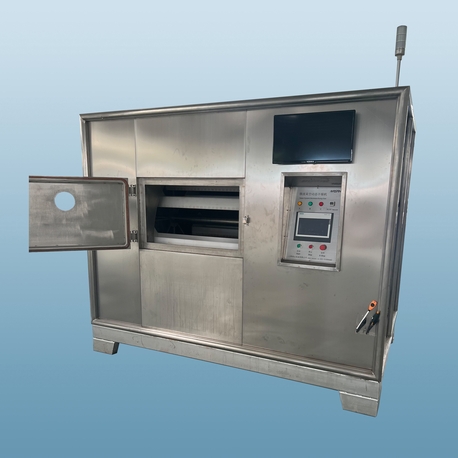
4. Solving Common Operational Challenges in Vegetable Dehydration
Even the best-designed vegetable dehydration machine requires proper integration to avoid downtime and product loss.
Challenge: Stickiness and Agglomeration. High-sugar
vegetables like carrots or sweet potatoes can become sticky during the
intermediate moisture phase (20-40% MC), causing them to clump together or
adhere to the belt. Solution: Back-mixing—recycling a portion of the dry product
and mixing it with the wet feed—coats the wet particles and prevents
agglomeration. This technique is standard in Nasan lines for difficult-to-dry
produce.
Challenge: Non-Uniform Drying. Variation in piece size or
bed depth leads to moisture variation. Solution: Implementing a upstream grader
to ensure uniform dice size, and using a "spreader" or "oscillating belt" at the
dryer infeed to create a perfectly level bed. Air distribution baffles and
pressure sensors ensure airflow uniformity.
Challenge: Cross-Contamination. Switching between products
(e.g., onion to apple) requires rigorous cleaning to prevent flavor transfer.
Solution: Specifying a dryer with a fully welded interior, smooth surfaces, and
integrated CIP (Clean-in-Place) nozzles. Belt washing systems at the return
strand are essential for food safety in multi-product facilities.
5. Automation and Data-Driven Drying
Industry 4.0 principles are transforming vegetable dehydration from a manual
art to a data-driven science. Modern control systems on a vegetable dehydration machine do more than regulate temperature; they optimize the entire process.
Advanced PLCs with model-based predictive algorithms adjust belt speed, zone
temperatures, and airflow based on real-time feedback from NIR (Near-Infrared)
moisture sensors at the outlet. This "feed-forward" control compensates for
variations in infeed moisture, which can fluctuate due to seasonal changes or
washing efficiency. Furthermore, data logging of all process parameters
(temperatures, fan speeds, energy consumption) per batch provides full
traceability, a requirement for major food retailers and QSR (Quick Service
Restaurant) supply chains. This data can be analyzed to predict maintenance
needs, such as bearing wear or belt tension loss, before they cause a
breakdown.
Frequently Asked Questions (FAQ)
Q1: What is the difference between a dehydrator and a freeze-dryer for
vegetables?
A1: A thermal vegetable dehydration machine uses heated air to evaporate water from the solid matrix. It operates above
freezing and is a continuous process suitable for bulk ingredients. A
freeze-dryer (lyophilizer) freezes the product and then sublimates the ice under
a vacuum. Freeze-drying produces superior quality with perfect shape retention
but costs 4-8 times more per kilogram of water removed. Thermal dehydration
remains the standard for cost-effective, large-scale production.
Q2: How do I calculate the required size (capacity) of a vegetable
dehydration machine for my plant?
A2: Sizing is based on the water removal load, not just the
input tonnage. You need to know: Fresh product throughput (kg/hr), Initial
Moisture Content (IMC, %), and Final Moisture Content (FMC, %). Calculate the
water to evaporate: Water (kg/hr) = Fresh Weight x [(IMC - FMC) / (100 - FMC)].
The dryer manufacturer will use this figure, along with your product type and
drying temperature limitations, to determine the necessary belt area or drum
size. Always oversize by 10-15% to account for future capacity increases and
seasonal variations in IMC.
Q3: Is it necessary to pre-treat vegetables before putting them in a
dehydration machine?
A3: For many vegetables, pre-treatment is highly
recommended. Common pre-treatments include: (1) Blanching (steam or hot water)
to inactivate enzymes that cause off-flavors and color loss during storage. (2)
Sulfiting or dipping in ascorbic acid to prevent browning in light-colored
produce like apples or potatoes. (3) Osmotic pre-treatment (soaking in sugar or
salt solutions) for fruits or specific vegetable applications to modify flavor
and texture. Skipping pre-treatment can result in a poor-quality product with a
short shelf life.
Q4: What are the typical utility requirements for an industrial vegetable
dryer?
A4: Beyond the electrical supply for motors and controls, a
direct-fired dryer requires a clean fuel source—typically natural gas, propane,
or indirectly heated via steam or thermal oil. You also need a robust
ventilation and exhaust system, often with cyclones or scrubbers if the exhaust
contains particulates. A clean water supply may be needed for belt washing or
humidity control in certain designs. Compressed air is required for pneumatic
actuators and cleaning systems.
Q5: How can I improve the color of my dried vegetables without using
chemical additives?
A5: Color preservation is primarily achieved through process
control. (1) Optimize blanching parameters (time/temperature) to fully
deactivate enzymes. (2) Reduce drying temperature and increase airflow in the
critical first stage to rapidly pass through the high-moisture zone where
degradation is fastest. (3) Minimize oxygen exposure during drying by using a
higher recirculation rate of inert (low-oxygen) air, often from a nitrogen
generator or by combusting gas in a direct-fired system which consumes oxygen.
(4) Ensure rapid cooling after drying and immediate packaging in moisture-proof,
light-barrier materials.
For a detailed process audit or to discuss specifications for a new vegetable dehydration machine,
contact the food processing engineers at Nasan to schedule a consultation.