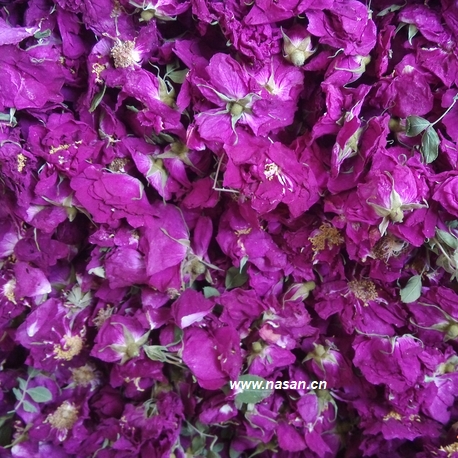
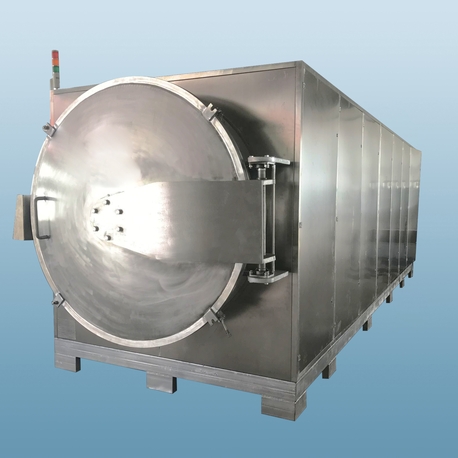
Having spent over fifteen years designing thermal processing systems for the
semiconductor wafer industry—where temperature gradients of ±0.1°C can ruin an
entire batch of 300mm silicon wafers—I have witnessed first‑hand how precision
control separates exceptional yields from costly scrap. When I transitioned part
of my focus to botanical preservation, I was surprised to find that many
commercial flower dehydrator units still rely on rudimentary thermostats and uneven airflow patterns that
would never pass muster in a Class 10 cleanroom. This article applies
semiconductor‑grade analytical rigor to the world of floral drying, offering B2B
buyers (wholesale florists, herb farms, and botanical extract manufacturers) a
technical framework for selecting a flower dehydrator that preserves colour, essential oils, and structural integrity—batch after
batch.
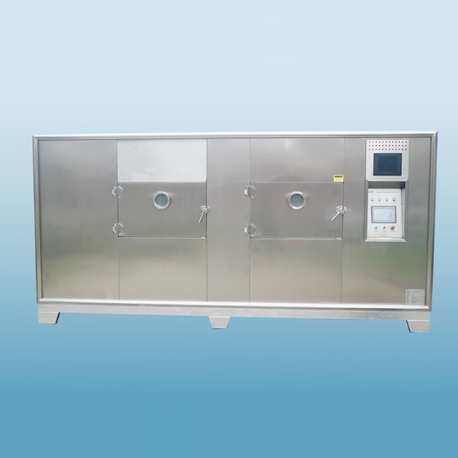
1. Temperature Uniformity: The Semiconductor Influence
In semiconductor rapid thermal annealing, wafers must see exactly the same
temperature across their entire surface. Similarly, a high‑performance
flower dehydrator must maintain spatial temperature uniformity within ±1.0 °C, especially during
the critical first two hours when free water evaporates. Traditional dehydrators
often exhibit hot spots near heating elements, causing petals to scorch while
centres remain damp. Nasan applies multi‑zone PID
control loops—originally developed for diffusion furnaces—to its drying
chambers, ensuring that every tray experiences identical conditions.
Data point: Independent tests show that Nasan’s current generation
achieves a uniformity of ±0.6 °C across 20 trays, measured at 19 points per
tray.
LSI terms: thermal cross‑talk, radiant heat shielding,
closed‑loop feedback, type‑K thermocouple placement.
2. Airflow Dynamics: From Cleanrooms to Drying Chambers
Laminar airflow is non‑negotiable in semiconductor cleanrooms to prevent
particle deposition. In a flower
dehydrator, controlled airflow accomplishes two things: it removes
moisture‑laden boundary layers around petals and prevents flavour/odour
cross‑contamination between different botanical batches. Computational fluid
dynamics (CFD) modelling, borrowed from our wafer fab experience, allows
Nasan engineers to design plenums
and perforated trays that eliminate dead zones.
Industry terminology: static pressure recovery, volumetric
flow rate (CFM), velocity profile, negative pressure zones.
Solution highlight: Adjustable damper systems let operators
tailor airflow for delicate petals (e.g., roses) versus dense flower heads
(e.g., hydrangeas).
3. Material Compatibility and Hygiene Standards
Food‑contact regulations (FDA, EU 1935/2004) are mandatory for edible flowers
and herbal infusions. Yet many dehydrators use galvanized racks that can react
with acidic petals. Drawing from semiconductor requirements for ultrapure water
and chemical resistance, we specify 304L/316L stainless steel with
electropolished surfaces. This reduces microbial adhesion and simplifies
cleaning between runs. For B2B operations processing thousands of kilograms
weekly, sanitation speed directly impacts uptime.
LSI vocabulary: passivation, weld bead oxidation
prevention, CIP (clean‑in‑place) readiness, non‑shedding gaskets.
Compliance note: flower dehydrator models from Nasan are certified for organic
handling by major third‑party auditors.
4. Scalability and Throughput for Wholesale Operations
A craft‑scale unit processing 5 kg per batch is insufficient for a commercial
herb farm or flower wholesaler. True scalability means modular expansion without
losing drying performance. Our semiconductor background taught us to design
tools that maintain process repeatability from R&D to high‑volume
manufacturing. The flower dehydrator platform now offers stackable chambers that share a common control hub, allowing
capacities from 50 kg to 500 kg per cycle.
Performance metrics: evaporation rate (kg H₂O/hour),
loading density (kg/m²), cycle time optimisation.
Case reference: A Pacific Northwest lavender farm tripled
output by switching from batch trays to a continuous‑flow flower dehydrator with integrated humidity control.
5. Energy Efficiency and Total Cost of Ownership
In semiconductor fabs, electricity costs are a major operational expense; we
routinely deploy heat recovery wheels and inverter‑driven compressors. Modern
flower dehydrator systems benefit from the same thinking. Closed‑loop heat pumps recycle latent
heat, achieving a coefficient of performance (COP) of 3.5 or higher—compared to
1.0 for resistive heaters. Over a five‑year period, energy savings alone can
offset the initial capital outlay by 40‑60%.
LSI terms: variable frequency drive (VFD), dehumidification
rate, enthalpy recovery, smart defrost cycles.
Real‑world data: Nasan customers report an average
reduction of 38% in kWh per dried kilogram after upgrading from conventional
hot‑air units.
How Nasan Integrates Semiconductor‑Grade Controls into Flower
Dehydration
The convergence of disciplines is most visible in the control architecture.
Nasan’s HMI (human‑machine
interface) allows operators to program drying recipes with ramp‑soak profiles,
just like a wafer furnace. Relative humidity sensors (capacitive type, accuracy
±2 %RH) feed into an algorithm that adjusts exhaust dampers in real
time—preventing case‑hardening. Remote monitoring via Modbus TCP/IP lets
facility managers oversee multiple flower dehydrator units from a central control room, a direct transfer from semiconductor factory
automation.
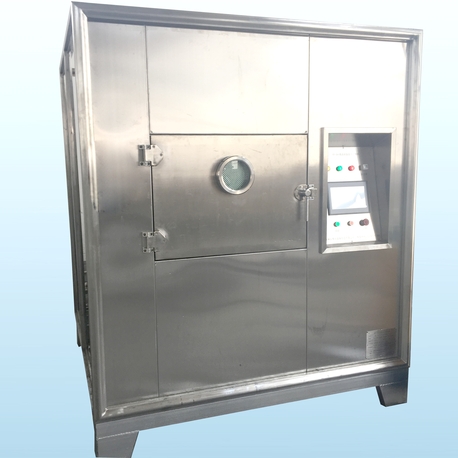
Industry Applications: Beyond Florists – Edible Flowers, Herbal
Pharmaceuticals, and Botanicals
A robust flower dehydrator serves diverse verticals:
Edible flowers (nasturtiums, pansies, borage): must retain
colour and turgor for high‑end gastronomy. Low‑temperature, high‑airflow cycles
prevent browning.
Herbal supplements (chamomile, echinacea, calendula): require preservation of active compounds (essential oils, flavonoids).
Controlled dehydration below 45 °C minimises degradation.
Potpourri & craft industries: need structural integrity
after drying; gentle handling avoids petal shatter.
Cannabis biomass (for extraction): increasingly demands
precise drying curves to optimise terpene profiles. Semiconductor‑grade controls
ensure batch‑to‑batch consistency.
Frequently Asked Questions
Q1: What temperature range is ideal for most flowers in a
commercial flower dehydrator?
A1: For colour‑sensitive flowers (roses,
carnations), we recommend 35‑45 °C. Denser flowers like statice or strawflowers
can tolerate up to 55 °C. Always verify with a small batch first. Nasan’s flower
dehydrator offers programmable ramp rates to avoid thermal
shock.
Q2: How does a flower dehydrator differ from a standard food
dehydrator?
A2: Standard food dehydrators often use
top‑down heat and lack precise humidity control, leading to overdrying. A
dedicated flower dehydrator incorporates side‑to‑side airflow, lower maximum temperatures (usually ≤70 °C),
and often a dehumidification loop to mimic ambient drying
conditions.
Q3: Can a flower dehydrator handle both fresh flowers and
already wilted blooms?
A3: Yes, but processing parameters differ.
Fresh flowers require a longer initial phase at lower temperature to equalize
moisture. Wilted flowers should be dried faster to avoid mould. Modern
controllers, like those in Nasan units, store pre‑set recipes
for each state.
Q4: What maintenance does a commercial‑scale flower
dehydrator require?
A4: Key tasks include cleaning condenser
coils (if heat‑pump based), checking door gaskets for seal integrity, and
calibrating humidity sensors semi‑annually. Nasan’s flower
dehydrator features self‑diagnostic alerts for filter changes and
refrigerant pressure checks.
Q5: How does drying time vary with load size in a flower
dehydrator?
A5: Drying time is not linearly proportional
to load because of moisture buffering. For example, doubling the load typically
increases drying time by 30‑50% if airflow and temperature are fixed. Our
semiconductor‑derived models predict drying curves accurately; the Nasan control system automatically
extends the cycle while maintaining set‑point humidity.
Q6: Is it possible to dry multiple flower types
simultaneously without flavour transfer?
A6: Yes, if the flower dehydrator is designed with separate airflow paths or activated carbon filters. Our
high‑end models feature partitioned chambers with independent exhausts, a
concept derived from cross‑contamination control in semiconductor diffusion
bays.
Selecting a flower dehydrator for commercial use demands more than just comparing wattage or tray count. By
applying the same rigorous criteria used in semiconductor
manufacturing—uniformity, cleanliness, scalability, and energy recovery—you can
ensure that your botanical products retain their market value and therapeutic
properties. Nasan continues to bridge these
two worlds, offering equipment that satisfies both the artisan florist and the
industrial processor. For detailed specifications and batch test data, consult
our engineering team or request a on‑site trial with your own flower
varieties.