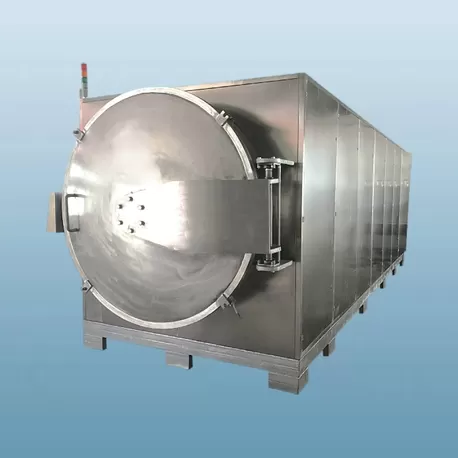
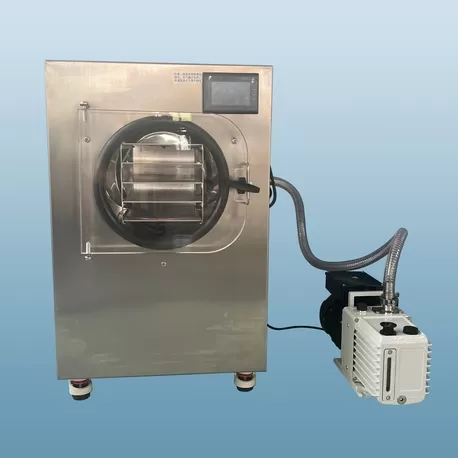
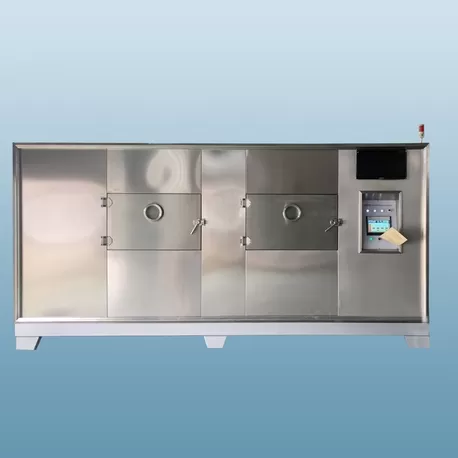
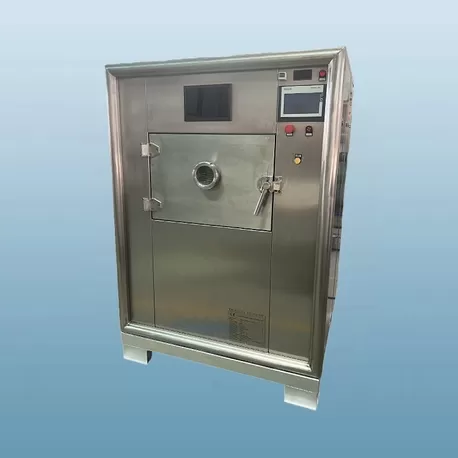
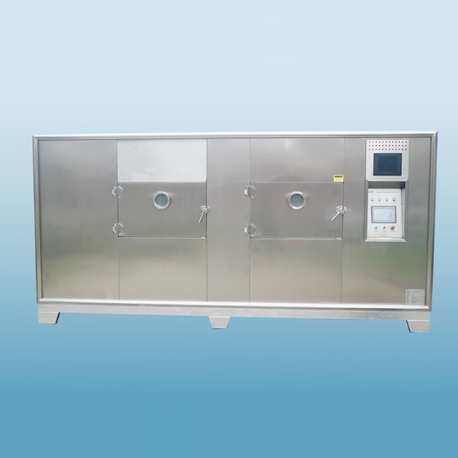
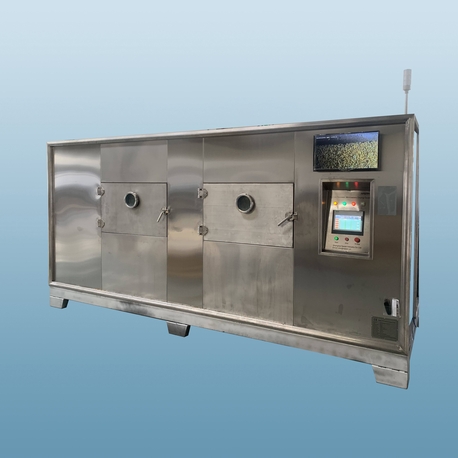
Industrial thermal processing requires methods that preserve the structural, nutritional, and chemical integrity of raw materials while achieving target moisture levels. Conventional drying technologies, such as hot-air convection or contact drying, rely on thermal conduction from the external surface inward. This mechanism frequently leads to case hardening, where the outer layer of the material dries rapidly, shrinks, and forms an impermeable barrier that traps internal moisture. To overcome this transport limitation, industrial processing plants utilize advanced electromagnetic heating technologies. Investing in microwave drying equipment offers a direct solution to this physical bottleneck by generating volumetric heating that drives moisture outward without thermal degradation.
Understanding the physics of dielectric heating is necessary for process engineers looking to scale up production. Unlike surface-heating methods, microwave radiation interacts directly with polar molecules within the product matrix. This interaction initiates rapid polarization and dipole rotation, converting electromagnetic energy into kinetic thermal energy instantly throughout the entire volume of the material.

Thermodynamic Principles of Dielectric Heating
To analyze why volumetric heating surpasses surface convection, one must examine the electrical properties of the process material. The behavior of a substance exposed to high-frequency electromagnetic fields is governed by its complex relative permittivity:
ε* = ε' - jε"
In this equation, ε' (the dielectric constant) represents the ability of the material to store electromagnetic energy, while ε" (the loss factor) represents the material's capability to dissipate that stored energy into heat. The ratio of these two parameters defines the loss tangent (&tan;δ = ε" / ε'), which indicates how readily a material will heat when processed within a microwave cavity.
Water molecules possess a highly asymmetric molecular structure, resulting in a permanent dipole moment. When placed in an alternating electromagnetic field—typically operating at industrial frequencies of 915 MHz or 2450 MHz—these dipoles rotate billions of times per second to align with the changing electric field. The molecular friction generated during this rotation produces rapid, uniform heat. Because water has a significantly higher loss factor than most dry solids, the microwave energy is selectively absorbed by the areas of highest moisture concentration. This phenomenon, known as selective heating, ensures energy efficiency and prevents over-drying of already dehydrated zones.
This localized heat generation creates a positive vapor pressure gradient. Internal moisture is converted to vapor, creating internal pressure that pushes liquid and gas outward to the surface. Since the surface remains wet throughout the bulk of the drying cycle, case hardening is physically prevented, and structural shrinkage is minimized.
System Architecture and Component Design
Industrial thermal processing systems require precise engineering to ensure uniform field distribution, stable magnetron operation, and continuous material throughput. Standard systems developed by Nasan utilize high-grade magnetrons, impedance-matching wave networks, and custom-designed multi-mode cavities to manage continuous processing loads.
1. Electromagnetic Power Generators (Magnetrons)
The magnetron is the core vacuum tube responsible for converting high-voltage direct current into microwave radiation. Industrial systems typically operate at two primary frequencies:
- 915 MHz: Suitable for deep penetration depths and high-volume bulk processing. This frequency is utilized for bulk chemical processing, large-scale agricultural drying, and frozen food tempering.
- 2450 MHz: Offers shallower penetration but higher heating rates in thin layers. This is ideal for thin-film applications, pharmaceutical powders, and delicate food ingredients.
2. Waveguides and Circulators
Waveguides are rectangular or cylindrical metal conduits designed to channel electromagnetic waves from the generator to the applicator cavity without power loss. Circulators are installed between the magnetron and the cavity to protect the tube from reflected microwave energy. Any unabsorbed energy returning from the drying chamber is directed by the circulator into a dummy water load, preventing thermal damage to the magnetron filament.
3. Multi-Mode Cavities and Field Stirrers
In continuous belt operations, achieving field uniformity is a key engineering objective. Inside the applicator cavity, standing wave patterns can create hot and cold spots. To counteract this, manufacturers utilize field stirrers—rotating metallic fans that continuously deflect the waves—and design the cavity dimensions to support multiple resonant modes. The continuous movement of the conveyor belt through these overlapping fields ensures that every portion of the material receives an equivalent energy dose.
4. Automated Sensor Arrays and PLC Control
Modern industrial setups require real-time process monitoring. Non-contact infrared pyrometers and fiber-optic temperature sensors track surface and internal temperatures along the conveyor path. The engineering team at Nasan incorporates advanced PLC feedback loops that dynamically adjust magnetron power output and conveyor belt speed based on real-time moisture and temperature readings, preventing thermal runaway.
Material Compatibility and Industrial Application Areas
Implementing microwave drying equipment is highly effective across industries where structural conservation, color preservation, and rapid processing times are required. The response of different materials depends heavily on their physical state and chemical formulation.
| Industry Sector | Primary Materials Processed | Specific Processing Action | Key Process Benefit |
|---|
| Food & Beverage | Vegetables, herbs, grains, extruded snacks, pet food | Low-temperature dehydration, pasteurization, puffing | Retention of volatile flavor compounds, vitamins, and natural coloration. |
| Pharmaceuticals | Active Pharmaceutical Ingredients (APIs), granules, herbal extracts | Vacuum-assisted low-temperature solvent evaporation | Prevents thermal degradation of sensitive molecular compounds. |
| Chemical & Polymer | Catalyst carriers, synthetic resins, molecular sieves | Deep pore moisture removal, polymerization acceleration | Rapid cycle times and homogeneous moisture profiles across bulk solids. |
| Ceramics & Minerals | Green body ceramics, refractory molds, gypsum boards | Pre-kiln moisture reduction, structural stabilization | Eliminates internal tension and cracking caused by uneven drying. |
Deep Dive: Pharmaceutical and API Applications
In pharmaceutical manufacturing, active ingredients are often highly sensitive to elevated temperatures. Conventional tray drying requires prolonged exposure to heat, which can denature proteins or alter chemical structures. Integrating industrial microwave drying equipment under vacuum conditions allows water to evaporate at temperatures as low as 35°C to 45°C. This combination protects the physical structure of the granules, ensures uniform density, and accelerates the drying cycle from hours to minutes.
Deep Dive: Food Dehydration Mechanics
During the drying of fruits and vegetables, traditional hot air causes cellular collapse, resulting in a shriveled appearance and poor rehydration properties. Volumetric microwave heating creates a slight internal steam pressure that puffs the cellular walls. This structural preservation leads to a product that rehydrates quickly and retains its original texture, taste, and nutritional value.
Comparing Mass and Heat Transfer: Microwave vs. Convection
To fully grasp the operational differences, it is helpful to contrast the physical pathways of moisture removal in convective and electromagnetic systems.
In convective drying, heat transfers from the air to the material surface via boundary layers, and then slowly penetrates the interior via thermal conduction. Moisture must then diffuse outward against the temperature gradient, as the surface is hotter than the core. This thermal mismatch limits the drying speed and often compromises product quality.
In contrast, when implementing continuous microwave drying equipment, the temperature gradient is reversed. The core of the material, which holds the most water, becomes the hottest zone. This creates a high internal vapor pressure that aligns with the moisture concentration gradient, driving water out of the material matrix rapidly. Because heat transfer does not depend on the thermal conductivity of the dry solid barrier, overall processing times are reduced by 60% to 90% compared to traditional convective ovens.
Custom configurations manufactured by Nasan provide tailored waveguide geometries that match specific product footprints, maximizing energy coupling efficiency and guaranteeing process repeatability across production runs.
Resolving Engineering Challenges in Microwave Operations
While volumetric drying offers clear processing advantages, system designers must address specific engineering challenges during the deployment phase, particularly regarding thermal uniformity and field control.
Preventing Thermal Runaway (Hot Spotting)
As materials dry, their dielectric properties change. If certain zones remain wet while others dry, the drier areas can sometimes absorb excess energy if their loss factor increases with temperature. This feedback loop can cause localized burning. Engineers mitigate this by using variable-frequency microwave generators and integrating air-convection systems alongside the microwave field. Combining hot air with microwave energy helps equalize surface temperatures and sweep away evaporated surface moisture.
Arcing and Metal Interaction
High electric field intensities can cause ionization of the air, leading to electrical discharges or arcing, especially in materials with sharp geometries or those containing trace metals. Correct chamber design, wave polarization, and continuous belt grounding are necessary to prevent ionization. Advanced PLC systems monitor the cavity for sudden spikes in reflected power, instantly cutting magnetron current if an arc is detected to safeguard both the equipment and the product.

Frequently Asked Questions
Q1: How do you determine the penetration depth of microwaves in a specific material?
A1: Penetration depth ($d_p$) is defined as the distance at which the power density of the microwave drops to $1/e$ (about 37%) of its value at the surface. It is mathematically calculated using the operating frequency, the dielectric constant ($\epsilon'$), and the loss factor ($\epsilon''$). Generally, materials with high moisture levels have shorter penetration depths, requiring careful selection between 915 MHz (deeper penetration) and 2450 MHz (shallower penetration) based on the thickness of the material bed.
Q2: Can microwave drying be paired with vacuum systems?
A2: Yes. Combining vacuum chambers with microwave excitation allows moisture to vaporize at much lower boiling points. This combination is highly effective for heat-sensitive pharmaceuticals, proteins, and premium food extracts that degrade when exposed to standard atmospheric drying temperatures.
Q3: What is the average lifespan of magnetrons in industrial microwave drying equipment?
A3: The operational lifespan of an industrial magnetron typically ranges between 5,000 and 8,000 hours for water-cooled units, depending on running conditions, reflected power management, and maintenance schedules. Utilizing circulators to absorb reflected waves and keeping the cooling systems clean help maximize magnetron longevity.
Q4: How does dielectric loss factor change as moisture is removed?
A4: For most materials, the dielectric loss factor ($\epsilon''$) decreases significantly as free water is evaporated. This change means the dry product absorbs less microwave energy, reducing the risk of overheating at the end of the drying cycle. However, some materials exhibit a rising loss factor with temperature, which requires advanced sensor arrays and power-modulation controls to prevent thermal runaway.
Q5: What safety measures are required to prevent microwave leakage in continuous conveyor systems?
A5: Continuous systems utilize specialized entry and exit suppression tunnels, often called choke zones or reactive suppressors. These tunnels feature internal metallic geometries designed to reflect and cancel out stray electromagnetic waves, ensuring that emissions remain well below international safety limits (such as 5 mW/cm² measured at 5 cm from the system surface).---
Inquiry and Consultation
Selecting and configuring industrial drying systems requires a detailed analysis of your material’s physical and dielectric properties. To evaluate your process needs, determine optimum throughput rates, or request a custom system design, please contact our engineering department to submit your technical Inquiry. Our team of specialists will assist you in modeling, testing, and scaling your thermal processing operations.