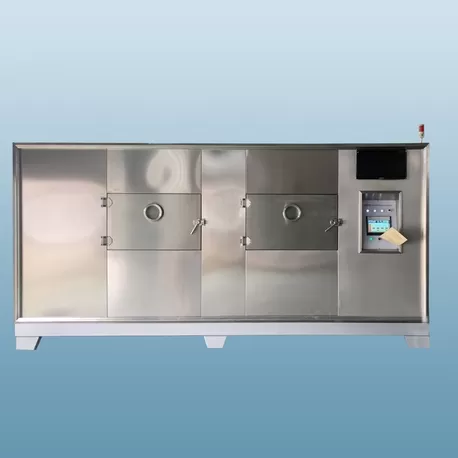
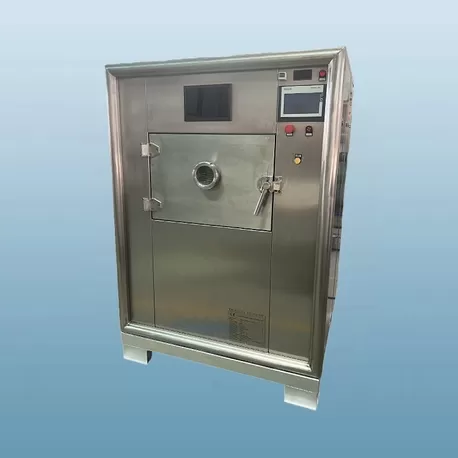
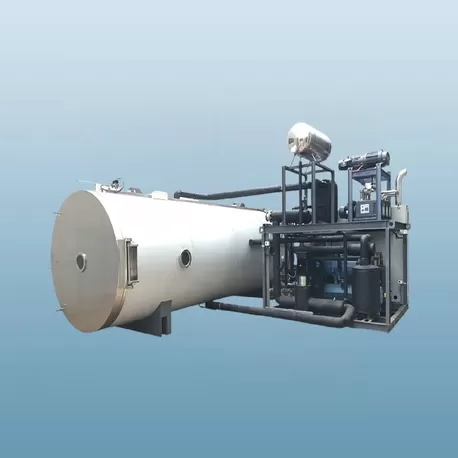
In the seafood processing industry, the drying stage plays a decisive role in
product quality, shelf life, and nutritional retention. Selecting a fish
dryer involves balancing multiple engineering parameters—heat
transfer efficiency, airflow uniformity, moisture extraction rate, and energy
consumption—against the specific characteristics of the raw material. This
analysis provides a structured approach to evaluating fish drying equipment,
covering thermodynamic principles, material handling, and process control
strategies.
Core Technology Platforms for Fish Dryer Systems
The market offers several distinct drying technologies, each with its own
suitability for different fish species, product forms (whole, fillets, mince),
and final quality targets. A thorough understanding of these platforms enables
processors to select a fish
dryer that aligns with production goals.
Heat Pump Drying (Dehumidification Drying)
Heat pump dryers operate by circulating air through a closed-loop system
where moisture is condensed and removed via a refrigeration cycle. This approach
maintains low drying temperatures (typically 15–40°C), which preserves
heat-sensitive nutrients and prevents case hardening—a condition where the outer
layer dries too quickly, trapping moisture inside. The controlled environment
also reduces oxidation of unsaturated fats, a common concern in oily fish such
as mackerel and herring. Heat pump systems deliver consistent product moisture
content and offer energy efficiency advantages in temperate climates.
Hot Air Convection Drying (Direct/Indirect Fired)
Convection dryers use heated air—generated by gas burners, electric heaters,
or steam coils—to remove moisture from fish surfaces. Air temperatures typically
range from 50°C to 90°C, depending on the product. These systems are
characterized by high drying rates and simple construction, making them
cost-effective for high-volume operations. However, temperature control requires
careful management to avoid protein denaturation or surface scorching.
Indirect-fired designs use heat exchangers to keep combustion gases separate
from the drying air, ensuring product purity. Direct-fired systems are more
energy-efficient but must incorporate filtration to remove combustion
by-products.
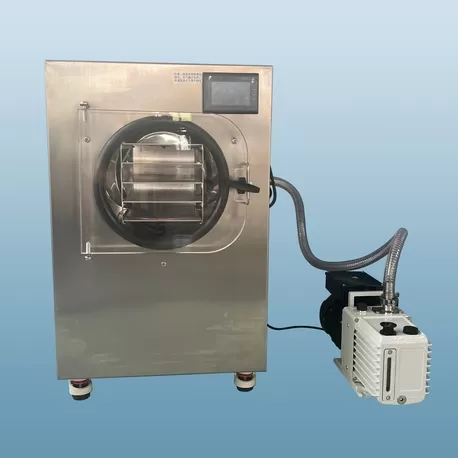
Freeze Drying (Lyophilization)
Freeze dryers remove moisture by sublimation—water transitions directly from
ice to vapor under vacuum conditions. This method yields products with
exceptional texture, color, and rehydration properties, making it the preferred
choice for premium dried fish snacks and ingredients for instant soups. The
process operates at sub-zero temperatures, essentially eliminating bacterial
growth and enzymatic reactions. The capital and operational costs are higher
than other technologies, and cycle times are longer, but the resulting product
commands premium pricing in specialty markets.
Solar and Hybrid Drying Systems
In regions with abundant sunshine, solar-assisted dryers offer a low-energy
alternative. These systems typically combine solar collectors with backup
electric or gas heaters to maintain consistent drying conditions during cloudy
periods. Hybrid designs integrate thermal storage or waste heat recovery to
improve reliability. While solar dryers reduce operating expenses, they require
larger floor areas and are sensitive to weather variability. Advanced
controllers that blend solar and auxiliary heating help stabilize production
output.
Key Engineering Parameters in Fish Dryer Specification
Beyond the technology type, several quantifiable parameters determine a
fish
dryer's performance and suitability for a given application.
Airflow Distribution and Velocity
Uniform airflow across the drying chamber is essential to achieve consistent
moisture removal across all product trays or conveyors. Dead zones—areas with
low air circulation—lead to under-dried batches and uneven quality. Modern
dryers employ adjustable baffles, perforated floor plates, or reversing airflow
designs to minimize these variations. Air velocity also affects the drying rate:
higher velocities accelerate moisture removal but may cause product displacement
or physical damage. The optimal velocity depends on fish size and loading
density; for small fish or thin fillets, lower velocities (1–2 m/s) prevent
warping, while larger whole fish tolerate higher velocities.
Temperature Control and Profiling
Drying temperature influences both kinetics and product quality. A stepwise
temperature profile—starting with moderate heat to equalize surface moisture,
then gradually increasing to remove bound water—often yields the best results.
Advanced controllers with multiple sensor inputs (wet-bulb, dry-bulb, product
core temperature) enable real-time adjustments. In hot air systems, maintaining
a narrow temperature band (±2°C) prevents hotspots and ensures batch-to-batch
repeatability. For heat pump units, the dehumidification capacity must be
matched to the moisture load to avoid over-cooling, which can slow drying.
Moisture Extraction Rate and Specific Moisture Evaporation Rate (SMER)
SMER, expressed as kilograms of water removed per kilowatt-hour of energy
input, is a key efficiency metric. Heat pump dryers generally achieve higher
SMER values (2.5–4.0 kg/kWh) compared to conventional hot air dryers (1.5–2.5
kg/kWh) because they recover latent heat. However, SMER decreases as the product
approaches final moisture content, as the driving force for evaporation
diminishes. Selecting a dryer with adequate capacity—typically 10–20% above the
calculated peak moisture load—prevents overloading and maintains efficiency.
Material Handling and Loading Density
The physical arrangement of fish within the dryer affects air circulation and
drying uniformity. Tray dryers allow individual tray adjustment, making them
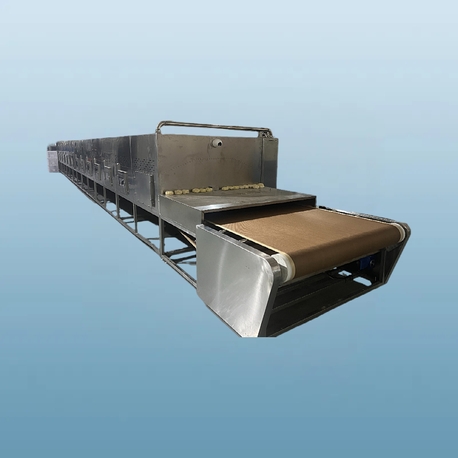
suitable for irregular-shaped fish. Belt conveyor dryers offer continuous
processing with automated loading and unloading, ideal for high-throughput
operations. Fluidized bed dryers, used for small particles like fish meal,
provide excellent heat and mass transfer but are not applicable for whole fish
or fillets. Loading density (kg of fish per square meter of tray area) must be
optimized—too dense restricts airflow, too sparse wastes energy and floor
space.
Process Integration and Control Strategies
A fish dryer does not operate in isolation; its
performance is interconnected with upstream preparation (washing, salting,
sizing) and downstream handling (packaging, storage). Designing the drying
process as part of an integrated line yields operational benefits.
Pre-Drying Treatment and Uniformity
Salting or brining before drying modifies the water activity and influences
drying kinetics. Salt concentration affects the moisture diffusion coefficient,
and uniform salt uptake across batches is necessary for consistent final
moisture. Some dryers incorporate in-line salting or seasoning applicators,
reducing manual handling. Additionally, pre-drying air circulation (tempering)
helps equalize initial moisture content across the load, reducing the drying
time variation.
Real-Time Moisture Monitoring and End-Point Detection
Traditional drying relies on time-based schedules, which can lead to
over-drying or under-drying if batch variability exists. Modern dryers
incorporate near-infrared (NIR) moisture sensors or weight-based feedback
systems that monitor product moisture continuously. When the target moisture
content (e.g., 18–22% for salted fish, 10–12% for dried fish snacks) is reached,
the dryer automatically transitions to a cooling phase or initiates unloading.
This adaptive control reduces waste and ensures compliance with
specification.
Energy Recovery and Heat Integration
Exhaust air from the drying chamber carries significant latent and sensible
heat. Recovery systems—such as plate heat exchangers or run-around coils—preheat
incoming fresh air, reducing the thermal load on the heater. For heat pump
dryers, the condenser heat can be used for pre-drying or space heating.
Implementing energy recovery can cut operating costs by 15–30% without affecting
product quality. The choice of recovery method depends on exhaust temperature
and the available temperature differential with ambient air.
Quality Attributes Influenced by Drying Parameters
The drying process directly impacts several sensory and nutritional
characteristics of the final product. Understanding these relationships helps
processors set appropriate operating windows.
Texture and Rehydration Ratio: Rapid drying at high
temperatures tends to create a hard, brittle structure that rehydrates poorly.
Controlled low-temperature drying preserves the fibrous network, yielding a
tender texture and higher rehydration capacity—a key quality parameter for dried
fish used in soups or stews.
Color and Appearance: Maillard reaction and caramelization
are temperature-dependent. For light-colored products like cod or tilapia,
keeping temperatures below 60°C minimizes browning. For dark-fleshed fish,
moderate browning may be acceptable or even desired. Uniform color requires
uniform temperature and airflow.
Lipid Oxidation and Rancidity: Polyunsaturated fatty acids
(PUFA) are susceptible to oxidation during drying, particularly at elevated
temperatures and in the presence of oxygen. Vacuum drying or inert atmosphere
(nitrogen) drying are options for premium products, though they increase
complexity. Antioxidant treatments (e.g., tocopherols) can be applied pre-drying
as a mitigation measure.
Microbiological Safety: Drying reduces water activity (aw)
to levels that inhibit pathogenic and spoilage organisms. However, the drying
rate and final aw must be carefully controlled—too slow drying allows bacterial
growth, while too low aw can cause product brittleness. Most fish dryers operate
with an aw target below 0.85 for shelf-stability.
Operational Considerations for Fish Dryer Installation
Beyond the engineering specifications, practical factors influence the
success of a drying line. Nasan provides comprehensive support that
covers these aspects, ensuring smooth integration into existing facilities.
Sanitation and Cleanability
Fish processing equipment must withstand rigorous cleaning protocols to
prevent cross-contamination and allergen carryover. Dryer interiors should
feature smooth, crevice-free surfaces, preferably stainless steel construction.
Removable panels and access doors facilitate manual cleaning and inspection.
Automated CIP (clean-in-place) systems are available for large continuous
dryers, reducing downtime and labor.
Exhaust Management and Odor Control
Drying fish produces characteristic odors that may require treatment before
discharge to the atmosphere. Scrubbers, biofilters, or carbon adsorption systems
can be integrated with the dryer exhaust stack. Local environmental regulations
dictate allowable emission levels, so early consultation with authorities and
suppliers is advisable. Nasan offers odor control solutions as
optional modules for their dryer systems.
Building Services and Utility Requirements
Installation planning must account for electrical supply, compressed air (for
pneumatic actuators), steam or hot water (for preheating), and drainage. The
dryer's footprint and clearance heights should be verified against the building
layout. Additionally, the ambient conditions (temperature, humidity) in the
production hall affect the dryer's performance—air conditioning or
dehumidification may be needed in hot, humid climates to maintain inlet air
conditions.

Frequently Asked Questions About Fish Dryer Selection
Q1: Which type of fish dryer is best for preserving omega-3 fatty
acids?
A1: Heat pump and freeze dryers operate at lower
temperatures, minimizing oxidation of polyunsaturated fats. For oily fish, heat
pump drying (typically 30–40°C) offers a good balance between preservation and
energy efficiency, while freeze drying provides the highest retention but at a
higher cost.
Q2: How does fish fat content affect drying time and temperature
settings?
A2: Fatty fish have lower initial moisture and higher oil
content, which slows moisture migration and may require longer drying times.
Lower drying temperatures (below 50°C) are recommended to prevent oil migration
to the surface, which can cause off-flavors and stickiness. Lean fish dry faster
and tolerate slightly higher temperatures.
Q3: What is the typical moisture content target for dried fish
products?
A3: For salted dried fish, the final moisture content is
usually 18–25% (wet basis) to achieve a water activity below 0.85. For unsalted
dried fish snacks, values of 10–15% are common. The exact target depends on the
intended shelf life, packaging, and consumer expectations.
Q4: Can a fish dryer handle different fish species without
cross-contamination?
A4: Yes, provided that thorough cleaning protocols are
implemented between batches. Dryers with smooth surfaces and CIP capability
reduce the risk of allergen carryover. For multi-species operations, dedicated
trays or product zones can be used, but validation of cleaning effectiveness is
required.
Q5: What factors affect the drying uniformity in a tray
dryer?
A5: Uniformity depends on air velocity distribution,
loading density, and the geometry of the trays. Uneven filling, oversized fish
pieces, or blocked air passages create non-uniform drying. Using standardized
tray sizes, proper spacing, and periodic rotation of trays within the chamber
improve batch consistency.
Q6: How do ambient humidity levels impact fish dryer
performance?
A6: High ambient humidity reduces the moisture gradient
between the product and the drying air, slowing evaporation. In humid regions,
heat pump dryers are less affected because they condense moisture regardless of
ambient conditions. For hot air dryers, pre-heating the inlet air increases its
moisture-holding capacity, compensating for high humidity.
Request a Customized Fish Dryer Design for Your Production Line
Selecting the optimal fish
dryer requires a detailed analysis of product characteristics,
throughput targets, and quality specifications. Nasan specializes in engineered drying solutions for seafood processors, offering
equipment configurations that range from batch tray dryers to continuous
conveyor systems with advanced control automation.
Our engineering team provides process modelling, heat and mass balance
calculations, and pilot-scale testing to validate performance before full-scale
installation. We also offer integration support with upstream preparation and
downstream packaging lines, ensuring a seamless material flow.
To receive a tailored proposal and technical documentation for your fish
drying project, please contact our food processing specialists through the
Nasan website. We welcome detailed discussions
about your product portfolio and production goals.