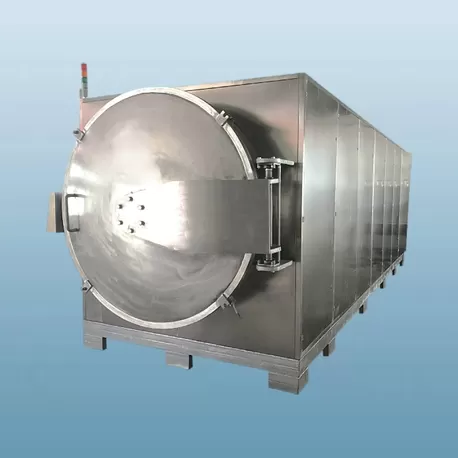
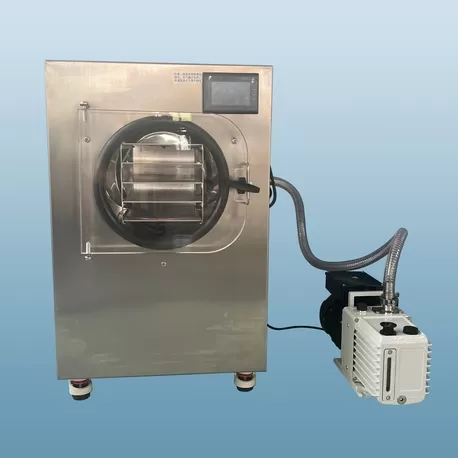
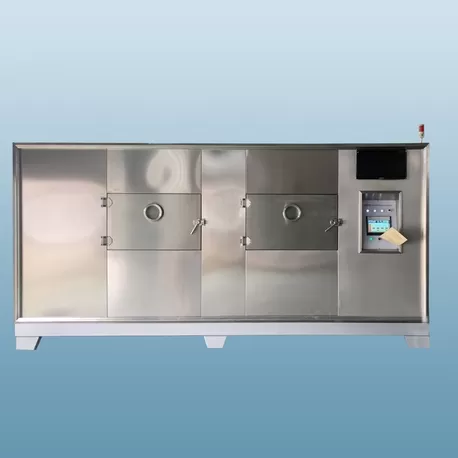
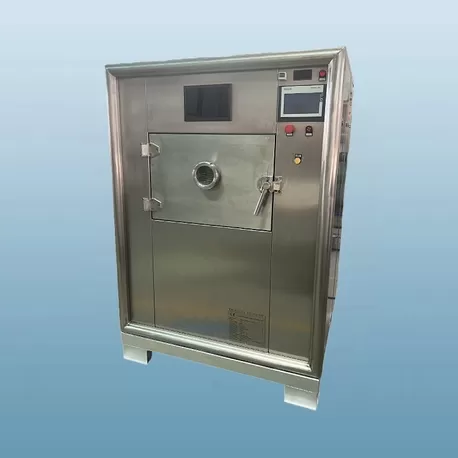
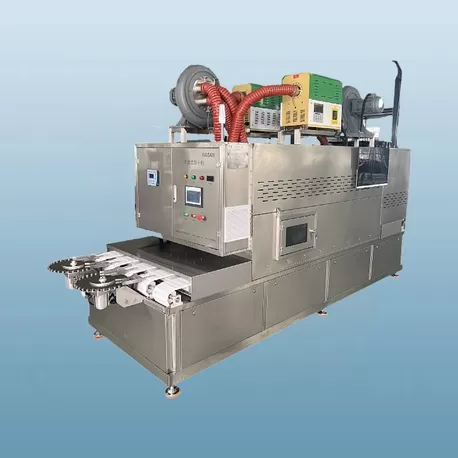
The continuous process of removing moisture from industrial solids is governed by strict laws of thermodynamics and transport phenomena. Convective drying represents one of the most common methods utilized across the chemical, polymer, agricultural, and pharmaceutical sectors to reduce moisture content to acceptable dry limits. For manufacturing operations looking to improve production efficiency and product consistency, selecting a high-performance hot air dryer is a fundamental engineering decision. This class of equipment uses a heated stream of air or gas to supply the heat necessary for vaporization and to carry away the resulting moisture.
Industrial thermal equipment manufacturers, such as Nasan, design convective systems that manage these transport mechanisms to maintain product physical integrity while preventing localized thermal degradation. Developing a highly efficient system requires careful calibration of heat transfer coefficients, air circulation velocities, and boundary layer resistance.

1. Thermodynamic Fundamentals of Convective Drying
Analyzing the operation of a convective dryer requires understanding the heat and mass transfer processes. The primary heat transfer process is represented by the formula:
Q = h * A * dT
Where:
- Q represents the rate of heat transfer (Watts)
- h is the convective heat transfer coefficient (W/m²·K)
- A is the physical surface area available for heat transfer (m²)
- dT is the temperature difference between the heating medium and the material surface (K)
Simultaneously, moisture is transported from the solid to the gas phase through mass transfer:
W = ky * A * dY
Where:
- W is the mass transfer rate (kg/s)
- ky is the mass transfer coefficient (kg/m²·s)
- A is the contact area (m²)
- dY is the absolute humidity difference between the saturated boundary layer of the material and the bulk drying air
During the constant rate drying phase, the surface of the solid is fully saturated with water. The rate of drying is governed by external heat and mass transfer coefficients, which are heavily dependent on the velocity and turbulence of the air stream. Consequently, accelerating air velocity past the boundary layer is a reliable method to reduce drying time during this initial period.
As moisture content drops below a specific threshold, internal capillary forces and molecular diffusion become the limiting rate factors. This is known as the falling rate period. At this stage, raising the air velocity yields minimal improvements; instead, raising the temperature or decreasing the absolute humidity of the inlet air is required to maintain a sufficient vapor pressure gradient.
2. Psychrometric Principles in Drying Medium Design
The behavior of the drying medium can be traced on a standard psychrometric chart. As fresh air enters the heating coils, its dry-bulb temperature increases while its absolute humidity remains constant. This process lowers the relative humidity of the air, significantly increasing its moisture absorption capacity.
When this hot air comes into contact with the wet product, it transfers sensible heat, driving the evaporation of liquid water. As the liquid evaporates, it absorbs latent heat of vaporization from the air stream, causing the dry-bulb temperature of the air to drop while its absolute humidity increases along a wet-bulb temperature path. In a continuous belt or tray-style hot air dryer, controlling these relative humidity gradients is necessary to maintain steady-state drying rates and prevent early saturation of the exhaust gas.
3. Engineering Architecture of Modern Convective Systems
From an engineering perspective, convective drying systems must be constructed to handle substantial thermal stress and provide uniform airflow. The physical system typically consists of an air filtration module, a thermal generation source, a distribution plenum, a drying chamber, and an exhaust recycling loop.
- Thermal Generation Sources: Heat can be supplied via direct combustion of natural gas or indirectly using steam-heated coils or electrical resistance heaters. Indirect heating is favored in high-purity industries to avoid exposing the product to combustion gases.
- Air Distribution Systems: Uniform air distribution across the material bed is required to avoid localized wet or dry zones. Engineers utilize customized perforated plates or baffled plenums to achieve laminar flow and uniform velocity profiles across the entire volume of the chamber.
- Exhaust Management and Heat Recovery: Fully exhausting moist air represents a significant thermal loss. Modern convective systems use recirculation loops that mix a calculated portion of the humid exhaust air back into the fresh inlet air, maximizing thermal efficiency while preventing the drying chamber from reaching dew-point conditions.
To manage sticky or cohesive powders that cannot be dried easily on static trays, fluidized bed designs are employed. In these systems, the upward velocity of the hot air matches the terminal settling velocity of the solid particles, causing them to behave like a fluid. This fluidization increases the active mass and heat transfer area, allowing for highly efficient drying cycles.
4. Mitigating Common Material Processing Challenges
Designing an effective thermal processing cycle requires identifying and mitigating material-specific physical transformations.
Case Hardening and Surface Shrinkage
High-temperature drying can cause rapid surface evaporation that exceeds the rate of internal moisture diffusion. The surface layer drys prematurely, shrinking and forming a dense, impermeable crust that traps moisture inside the material core. Maintaining an appropriate humidity level in the early drying stages helps keep the surface porous, enabling continuous internal moisture migration.
Thermal Sensitivities
Many agricultural products and pharmaceuticals decompose or change color when exposed to elevated temperatures. Designing multi-zone drying chambers allows operators to apply higher temperatures initially when surface evaporation protects the product from thermal damage, followed by lower dry-bulb temperatures during the falling rate period.
Dust Containment and Safety
Friable materials dry into fragile structures that can break apart under high air velocities. This degradation creates fine particles that can escape the drying chamber. Integrating cyclone separators or high-efficiency baghouse filters into the exhaust ductwork ensures complete particulate recovery.
5. Diverse Industrial Applications of Convective Drying
The selection of specific configuration parameters is highly dependent on the physical morphology of the raw material.
Bulk Polymers and Petrochemicals
Polymer pellets, catalysts, and inorganic salts require low residual moisture to prevent defects during downstream extrusion or chemical processing. Continuous belt or rotary convective units are utilized to process large volumes continuously, maintaining strict control over temperature and residence time.
Food Processing and Agri-Products
Dehydrating vegetables, grains, and proteins requires strict sanitary design. Systems must incorporate wash-down capabilities, such as clean-in-place (CIP) nozzles, and utilize high-grade stainless steel to prevent bacterial growth and cross-contamination.
Pharmaceutical Granulation
Active ingredients and excipients are dried post-granulation to ensure stable tablet pressing. Batch fluidized bed dryers are typically selected for this application due to their uniform temperature distribution, which prevents localized hot spots from degrading active molecular compounds.
6. Advanced Hybrid Configurations: Combining Convection and Electromagnetic Waves
For deep, dense material beds, relying solely on surface convection can lead to prolonged processing times and excessive thermal exposure on the outer layers. To overcome these limitations, advanced hybrid drying processes have been developed.
Integrating microwave energy with a traditional convective system offers a highly functional solution for complex drying challenges. In a hybrid system, microwave energy penetrates the core of the solid, causing polar molecules like water to rotate rapidly, generating volumetric heat. This volumetric heating creates an internal vapor pressure gradient that forces moisture toward the surface of the material.
Once the moisture reaches the surface, the integrated hot air dryer mechanism sweeps the vapor away, preventing surface condensation and thermal energy losses. This dual action dramatically accelerates drying kinetics. Organizations like Nasan develop combined microwave and convective platforms that allow operators to balance volumetric heat inputs with convective airflow, drying thick materials in a fraction of the time required by standard convective units alone.
7. Material Selection & Process Evaluation
Evaluating a material's suitability for convective drying involves characterizing its initial moisture content, physical form, and drying curves. Continuous belt conveyor systems are typically selected for granular, non-sticky bulk solids that require uniform transport through distinct temperature zones.
Alternatively, tray-style units provide operational flexibility for processing small batches of diverse products, allowing operators to run distinct thermal profiles for each batch. In situations where the material changes from a viscous slurry to a dry powder, spray dryers or agitated flash dryers are more appropriate than static convective systems. Incorporating a well-designed hot air dryer into the production flow requires balancing throughput requirements with the spatial constraints of the factory floor, ensuring seamless material handling from feed to discharge.
8. Request a Custom Industrial Drying Evaluation
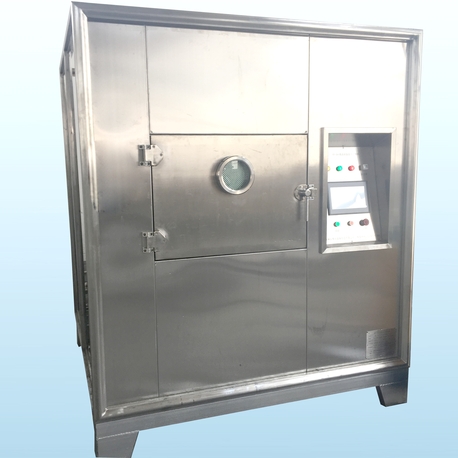
Selecting and configuring an industrial thermal system requires careful engineering analysis and empirical testing to verify performance. Our engineering team at Nasan provides comprehensive testing services to determine specific drying curves and moisture profiles for a variety of bulk materials and industrial solids.
We encourage engineers, plant managers, and procurement specialists to submit inquiries regarding custom system layouts, throughput capacities, and drying chamber configurations. Please utilize our inquiry portal to submit your material characteristics—including initial and target moisture content, material dimensions, and temperature limitations—to receive a detailed engineering proposal and mechanical specification sheet tailored to your production requirements.
9. Frequently Asked Questions
Q1: What are the main physical limitations when operating a standard hot air dryer on highly dense materials?
A1: The primary limitation is the rate of internal moisture diffusion. In dense materials, the surface dries quickly, but the internal moisture cannot migrate rapidly enough to match the convective evaporation rate. This leads to long drying cycles and energy inefficiency. In such cases, combining convective drying with volumetric heating methods, such as microwave energy, can help overcome this limitation.
Q2: How does airflow direction (co-current vs. counter-current) affect the product temperature profile?
A2: In co-current drying, the hot inlet air contacts the wettest material first. This results in rapid evaporation and maintains a lower material temperature due to evaporative cooling. In counter-current drying, the dry inlet air contacts the nearly dry material at the discharge end. This allows for lower residual moisture levels but subjects the dry product to higher temperatures, which may not be suitable for heat-sensitive materials.
Q3: What steps should be taken to prevent case hardening in starch-rich or polymeric materials?
A3: Case hardening is prevented by controlling the relative humidity of the drying air in the initial stages. By maintaining a higher relative humidity at the start, the evaporation rate at the surface is kept in balance with the internal diffusion rate. This prevents the surface layer from shrinking prematurely and forming an impermeable barrier.
Q4: How can mechanical fluidization improve heat transfer in bulk solids drying?
A4: Fluidization suspends the solid particles in the upward air stream, exposing the entire surface area of each particle to the hot air. This maximizes the convective heat transfer coefficient and ensures uniform temperature distribution throughout the material bed, eliminating wet spots and reducing processing times.
Q5: How is energy efficiency maintained when handling exhaust air with high relative humidity?
A5: Systems can utilize recuperative heat exchangers to preheat incoming fresh air using the thermal energy from the humid exhaust air before it is vented. Additionally, modulating the recirculation dampers based on continuous dew-point measurements ensures that only saturated air is exhausted, retaining valuable heat within the drying chamber.