Traditional solid-liquid extraction methodologies, such as Soxhlet extraction, maceration, and heat refluxing, have served industrial manufacturing for decades. However, these conventional processes present persistent challenges, including prolonged extraction cycles, excessive solvent consumption, and thermal degradation of temperature-sensitive target compounds. Because conventional heating relies on conduction and convection, thermal energy must slowly penetrate from the outer surface of the raw material matrix to the interior core. This temperature gradient often subjects active compounds to prolonged thermal stress, diminishing the quality of the final isolate.
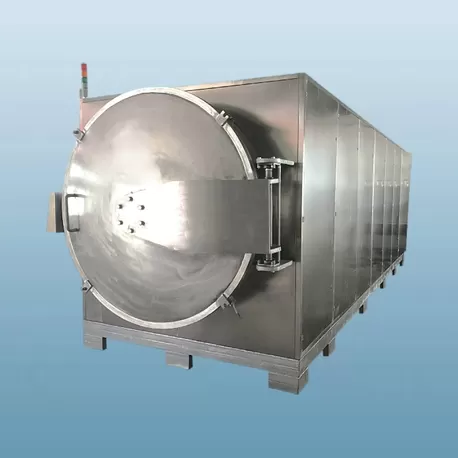
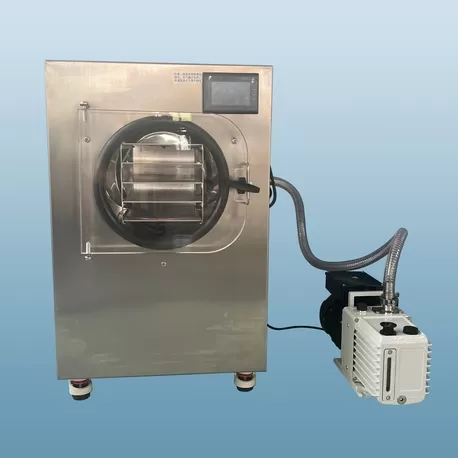
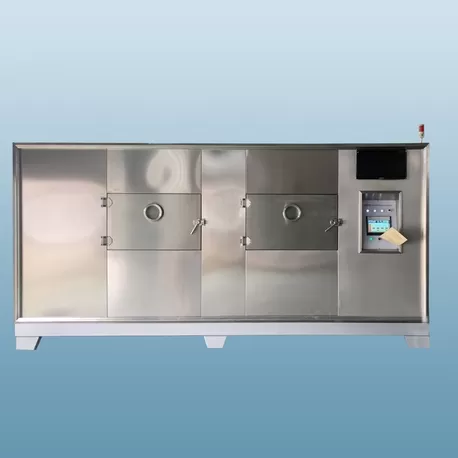
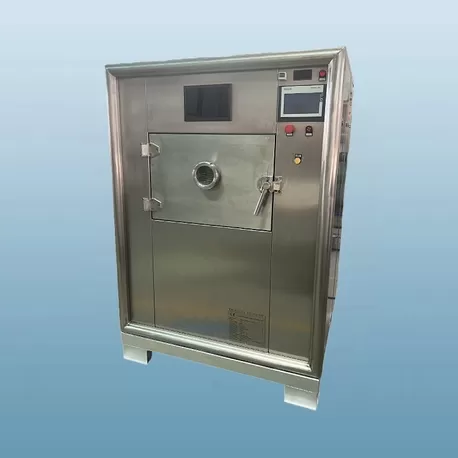
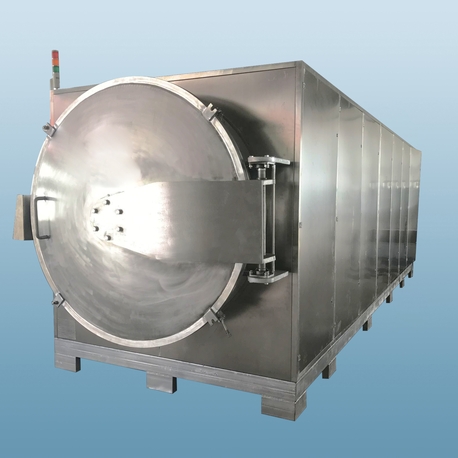
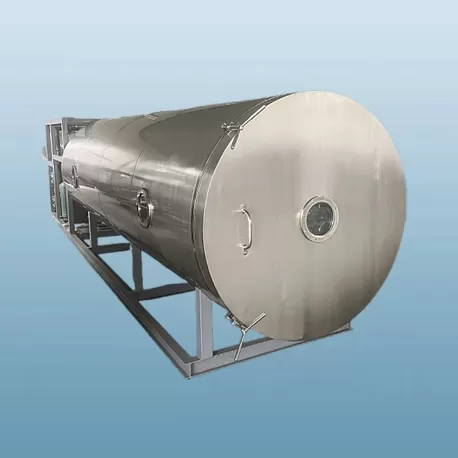
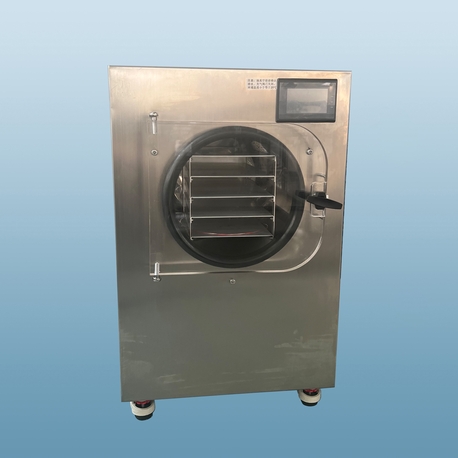
To overcome these kinetic and thermal limitations, modern processing facilities increasingly implement the microwave extractor. By using electromagnetic radiation to induce volumetric heating, this technology alters the thermodynamics and kinetics of mass transfer. Instead of relying on external heat sources to drive heat inward, microwave-assisted extraction generates heat directly within the damp plant tissues, accelerating cell wall disruption and expediting the release of intracellular components into the solvent phase.
The Biophysics of Microwave-Assisted Extraction
The operational mechanism of a microwave extractor relies on the interaction between electromagnetic waves and the dielectric properties of the raw material and solvent. This phenomenon involves two primary pathways: dipole rotation and ionic conduction.
Dielectric Heating and Molecular Friction
When subjected to a high-frequency electromagnetic field (typically 2450 MHz or 915 MHz), polar molecules within the extraction mixture align themselves with the rapidly oscillating electric field. At these frequencies, the electric field changes direction billions of times per second. Polar molecules, such as water and certain organic solvents, attempt to realign with these rapid fluctuations. This constant realignment causes molecular friction and collision, converting electromagnetic energy into thermal energy within the target volume. This process is known as dielectric heating.
The efficiency of this conversion depends on the complex permittivity of the material, expressed mathematically as:
ε = ε' - jε"
Here, the real part (ε') represents the dielectric constant, which determines the material's ability to store electromagnetic energy. The imaginary part (ε") represents the dielectric loss factor, which dictates how efficiently that stored energy is dissipated as heat. Solvents with high dielectric loss factors, such as water, methanol, and ethanol, heat rapidly under microwave radiation, whereas non-polar solvents like hexane do not absorb significant microwave energy.
Intracellular Vapor Pressure and Cell Rupture
In botanical extraction, target compounds are often located inside specialized plant cells, glands, or trichomes. Botanical matrices naturally contain moisture. Under the influence of localized microwave fields, this internal moisture absorbs energy and vaporizes rapidly. Because the cell wall acts as a semi-permeable barrier, this rapid vaporization causes a steep rise in internal pressure.
As the internal vapor pressure exceeds the structural threshold of the cell wall, the cell wall ruptures. This mechanical disruption creates pathways for the surrounding solvent to access the intracellular space. Consequently, the diffusion barrier is minimized, and the active compounds dissolve into the solvent with minimal mass transfer resistance. Engineering firms like Nasan design specialized cavities to maximize this field-to-matrix interaction, ensuring uniform disruption without localized overheating.
Traditional Extraction vs. Modern Microwave Extraction
Understanding the operational differences between conventional thermal methods and microwave-assisted systems is helpful for scaling production. Conventional extraction is limited by slow heat transfer rates, which often require long processing times. This extended exposure can lead to the oxidation and degradation of thermolabile molecules like polyphenols, volatile oils, and carotenoids.
In contrast, a microwave extractor heats both the solvent and the solid matrix simultaneously. This rapid heating shortens the extraction cycle from several hours to a few minutes. The table below compares the key operational parameters of these two approaches:
| Operational Parameter | Conventional Methods (Soxhlet, Maceration) | Microwave-Assisted Extraction (MAE) |
|---|
| Heating Mechanism | Conduction and convection (external to internal) | Volumetric heating (internal and external simultaneously) |
| Extraction Time | 1 to 24 hours | 5 to 30 minutes |
| Solvent Volume | High (typically 1:20 to 1:50 solid-to-solvent ratio) | Low (typically 1:5 to 1:15 solid-to-solvent ratio) |
| Thermal Stress | High, prolonged exposure to elevated temperatures | Low, rapid heating followed by controlled cooling |
| Yield and Purity | Variable, risk of thermal degradation products | High selectivity and preservation of active compounds |
The reduction in processing time and solvent use directly translates to lower operational footprints. By accelerating mass transfer, processing facilities can handle higher volumes of raw materials using smaller extraction vessels, improving overall facility throughput.
Addressing Industry Challenges with Advanced Microwave Design
Industrial extraction operations face challenges related to product quality, process consistency, and system scaling. Standard thermal processing methods struggle to meet these demands, but modern microwave engineering offers practical solutions to these issues.
Preventing Thermal Degradation of Bioactive Compounds
Many valuable botanical extracts contain heat-sensitive molecules that degrade when exposed to heat for too long. In a conventional system, the outer layers of the extraction mixture must be overheated to ensure the core reaches the target temperature. This uneven temperature profile causes thermal degradation of the extracted compounds near the vessel walls.
A microwave extractor addresses this through volumetric heating. Since energy is deposited directly into the volume of the slurry, the temperature rise is rapid and uniform throughout the mixture. Precise control systems, like those manufactured by Nasan, utilize non-contact infrared temperature sensors and variable power magnetrons. These components modulate microwave emission in real time to prevent localized hotspots, preserving the structure of fragile bioactive molecules.
Reducing Solvent Consumption and Improving Recovery
Traditional extraction requires large amounts of solvent to maintain a concentration gradient that drives diffusion. Handling, storing, and recovering these large volumes of solvent require significant energy and large-scale distillation equipment.
Because microwave systems physically rupture cell walls, the solvent does not need to rely solely on passive diffusion to penetrate intact cells. This mechanical assistance allows operators to reduce the solid-to-solvent ratio without compromising yield. In some configurations, such as solvent-free microwave extraction (SFME), the natural moisture inside the fresh plant material serves as the solvent. This allows for the extraction of essential oils without adding any external organic solvents.
Overcoming Scale-Up Obstacles
A primary challenge when moving microwave technology from the laboratory to industrial production is the limited penetration depth of microwaves. Electromagnetic waves attenuate as they penetrate lossy materials, meaning the center of a large-diameter vessel may receive less energy than the outer layers.
To address this penetration limit, equipment designers use continuous-flow configurations. Instead of utilizing large, static batch vessels, continuous-flow systems pump a thin layer of slurry through a focused microwave cavity. This ensures that every portion of the raw material receives an identical dose of microwave energy, enabling consistent scaling without losing extraction efficiency.
The configuration of an industrial microwave extractor depends on the physical properties of the raw material, the target compounds, and the required throughput. Industrial systems generally fall into two main design categories: batch extraction systems and continuous-flow extraction systems.
Batch Extraction Systems
Batch systems are typically used for smaller-scale operations, pilot plant testing, or processes that require frequent changes in raw material types. These systems feature a closed vessel placed inside a multi-mode microwave cavity. The cavity is designed to distribute the electromagnetic field across the vessel through mode stirrers and optimized waveguide geometries. Batch systems are useful for processing high-viscosity slurries or materials that require precise residence times under high pressure.
Continuous-Flow Extraction Systems
For high-throughput industrial facilities, continuous-flow systems are the standard choice. These systems pump a slurry of solvent and biomass through a microwave-transparent pipe (often made of PTFE, quartz, or borosilicate glass) that passes directly through the microwave cavity. This design offers several operational advantages:
- Uniform Exposure: The pipe diameter is engineered to match the microwave penetration depth, ensuring uniform heating throughout the product stream.
- Automated Control: Flow rates, temperature, and microwave power are linked in a closed-loop control system, allowing for automated, continuous operation.
- In-Line cooling: Immediately after exiting the microwave heating zone, the slurry can pass through a heat exchanger to cool down, protecting heat-sensitive compounds from extended thermal exposure.
Choosing the correct microwave frequency is also a key design factor. While 2450 MHz is suitable for thinner streams and smaller volumes, 915 MHz is preferred for high-capacity industrial systems. The longer wavelength of 915 MHz provides deeper penetration into larger diameter pipes, allowing for higher flow rates and coarser slurries.
Key Industrial Applications
The versatility of microwave-assisted extraction makes it applicable across several industries, including pharmaceuticals, nutraceuticals, food processing, and specialty chemicals.
Phytochemical and Herbal Processing
The extraction of essential oils, polyphenols, flavonoids, and alkaloids from plant matrices is highly dependent on extraction speed and temperature control. A microwave-assisted system rapidly heats the water within glandular trichomes and cell structures, causing them to rupture and release essential oils into the solvent phase. This method yields high-purity oils with rich volatile profiles, as the short extraction time prevents the degradation of delicate aroma compounds.
Food and Nutraceutical Production
In the nutraceutical sector, manufacturers use microwave technology to isolate active ingredients like natural antioxidants, vitamins, and functional food colorants. Because these compounds are intended for human consumption, minimizing solvent residue is a key requirement. The ability to use green, polar solvents like water or ethanol in microwave systems makes them highly compatible with clean-label food production standards.
Pharmaceutical Ingredient Isolation
Pharmaceutical manufacturing requires strict process control, high purity, and consistent reproducibility. Modern systems designed by manufacturers like Nasan feature precise instrumentation that logs temperature, pressure, and microwave power profiles. This level of control is helpful for complying with Good Manufacturing Practices (GMP) and isolating high-value active pharmaceutical ingredients (APIs) from botanical sources.

Operational Factors for Process Integration
Integrating a microwave extraction system into an existing production line requires careful consideration of several raw material and solvent parameters:
- Moisture Content: The raw material must contain a minimum level of moisture to absorb microwave energy effectively. Completely dry materials may require pre-wetting or the use of a polar solvent mixture.
- Particle Size: While smaller particle sizes increase the surface area for extraction, particles that are too fine can cause flow blockages in continuous systems and make downstream filtration difficult. A balanced grinding step is recommended.
- Solvent Selection: The solvent must have a dielectric loss factor that matches the process goals. If selective heating of the plant tissue is desired while keeping the solvent cool, a non-polar solvent can be paired with a high-moisture botanical matrix.
- Vessel Pressure: Closed vessels allow the extraction process to run at temperatures above the solvent's atmospheric boiling point. This elevated temperature increases solubility and further speeds up extraction kinetics, though it requires pressure-rated containment.
Process Optimization and Custom Engineering
Determining the precise microwave power, solvent mixture, and flow rate for your specific raw materials requires empirical testing and targeted engineering. For tailored extraction solutions that align with your operational requirements, please submit an inquiry with your material characteristics and throughput targets. Our engineering team can work with you to develop a configuration that integrates with your production workflows.
Frequently Asked Questions (FAQ)
Q1: What types of solvents are suitable for microwave-assisted extraction?
A1: Polar solvents like water, ethanol, and methanol are highly effective because their high dielectric constant allows them to absorb microwave energy directly. Non-polar solvents like hexane or toluene do not absorb microwaves on their own, but they can be used in mixtures or with target materials that contain sufficient internal moisture to generate heat.
Q2: How does a microwave extractor prevent the degradation of heat-sensitive compounds?
A2: The system minimizes thermal exposure by rapidly heating the internal moisture of the plant cells, causing immediate cell rupture and compound release. This shortens the heating cycle compared to traditional thermal extraction methods, preserving the integrity of thermolabile molecules.
Q3: Can continuous flow systems handle high-viscosity slurries?
A3: Yes, continuous flow designs utilize progress cavity pumps and wider processing tubes within the microwave cavity. This ensures steady movement of thick slurries while maintaining uniform electromagnetic field distribution.
Q4: What is the difference between 2450 MHz and 915 MHz microwave frequencies in extraction?
A4: 2450 MHz is typically used for smaller scale or laboratory applications because it provides rapid localized heating but has a shallower penetration depth. 915 MHz offers deeper penetration, making it more suitable for large industrial pipes and high-volume continuous processing.
Q5: How is safety managed when using flammable organic solvents in a microwave system?
A5: Industrial systems incorporate explosion-proof containment, continuous nitrogen purging to displace oxygen, and non-contact infrared sensors to monitor surface temperatures, minimizing the risk of ignition during operation.