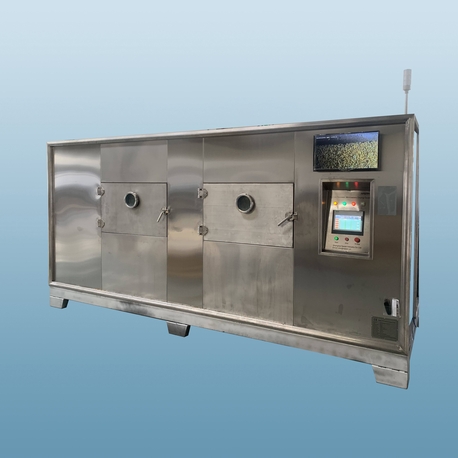
For commercial growers and processors, the transition from fresh harvest to
shelf-stable product hinges on one piece of equipment: the mushroom
dryer. The choice of drying system directly determines not only throughput
but also the rehydration ratio, color retention, and flavor profile of the final
output. Unlike general-purpose dehydrators, a purpose-built mushroom
dryer addresses the unique cellular structure of fungi, where rapid moisture
removal must be balanced against protein denaturation and volatile compound
loss. This examination moves beyond basic specifications to explore the
engineering principles that separate effective drying from destructive
desiccation.
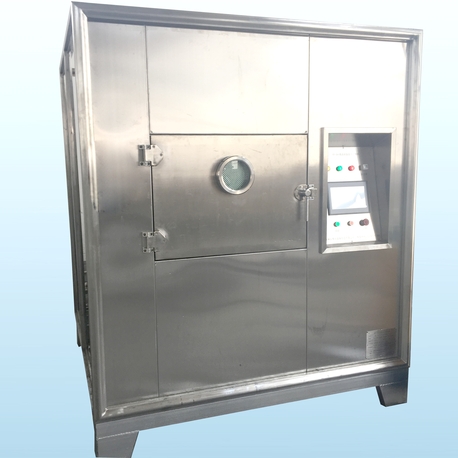
The Drying Process and Its Impact on Mushroom Quality
Fresh mushrooms contain 85–92% moisture by weight, with water distributed
between free capillary water and bound cellular water. A mushroom
dryer must remove this moisture in a controlled manner to prevent two
primary failure modes: case hardening and enzymatic browning. The drying curve
for mushrooms typically shows a constant-rate period followed by a falling-rate
period, each demanding different air conditions.
Cellular Structure Preservation
Mushroom cell walls contain chitin and β-glucans, which provide structural
integrity. When moisture evaporates too quickly, the cell wall collapses
irreversibly, leading to excessive shrinkage and a tough, leathery texture upon
rehydration. A professional mushroom dryer employs a
multi-stage temperature profile: initial drying at 40–45°C with high airflow to
remove surface moisture, followed by a gradual ramp to 55–60°C for bound water
extraction. This staged approach maintains turgor pressure within the hyphae,
preserving the porous microstructure that enables rapid rehydration.
Enzymatic Browning Control
Polyphenol oxidase (PPO) and tyrosinase are endogenous enzymes that catalyze
the oxidation of phenolic compounds to quinones, which polymerize into brown
pigments. These enzymes remain active until the moisture content drops below 10%
or the temperature exceeds 70°C. However, temperatures above 65°C can cause
protein coagulation and loss of umami nucleotides such as guanylate and
glutamate. The optimal mushroom dryer design
incorporates rapid initial heating to deactivate surface enzymes, combined with
precise humidity control to prevent condensation that would reactivate enzymatic
activity.
Key Specifications to Evaluate in a Mushroom Dryer
Commercial buyers often focus on capacity and power consumption, but the true
performance differentiators lie in airflow architecture, control system
resolution, and material compatibility. These parameters directly affect batch
consistency and operational flexibility.
Airflow Dynamics and Heat Distribution
Uniform air distribution is non-negotiable for mushroom drying. Tray-based
systems rely on horizontal airflow with baffles to equalize velocity across each
shelf, while belt-type mushroom dryer models use
impingement jets to disrupt boundary layer stagnation. The air exchange rate,
measured in air changes per minute, should be adjustable between 2 and 15 cycles
to accommodate different load densities. For high-capacity operations, a
reverse-flow design that periodically reverses air direction reduces the
gradient between edge and center trays.
Temperature Control Precision
Mushroom drying requires temperature stability within ±1.5°C of setpoint. PID
controllers with solid-state relays provide finer control than mechanical
thermostats, especially during the transition between drying stages. Data
logging capabilities allow operators to track the drying curve and adjust
parameters for seasonal variations in initial moisture content. Systems with
programmable logic controllers (PLC) enable recipe storage for different
mushroom varieties, reducing operator dependency and ensuring repeatability.
Capacity and Loading Density
Loading density, expressed as kilograms of fresh mushrooms per square meter
of tray area, typically ranges from 5 to 12 kg/m² depending on the variety and
initial moisture content. Overloading restricts airflow and extends drying time,
while underloading reduces energy efficiency. The tray material—stainless steel
304 or food-grade polypropylene—affects heat transfer and cleaning frequency.
Perforated trays with 3–5 mm holes improve air penetration but require careful
handling to prevent cap damage.
Common Drying Defects and How Equipment Design Prevents Them
Even with correct temperature settings, suboptimal equipment design
introduces defects that degrade market value. Understanding these failure
mechanisms helps buyers specify a mushroom dryer that mitigates
these risks through engineering choices.
Case Hardening
Case hardening occurs when surface moisture evaporates faster than internal
moisture can migrate to the surface, forming a dense outer layer that traps
moisture. This defect is prevalent in high-temperature, low-humidity drying
regimes. Prevention requires humidity management: maintaining relative humidity
above 40% during the first 30% of the drying cycle slows surface drying,
allowing internal moisture to move outward. Nasan integrates humidity sensors
and steam injection systems into their mushroom dryer designs,
enabling precise dew-point control that eliminates case hardening in shiitake
and oyster varieties.
Shrinkage and Deformation
Uneven shrinkage leads to curled caps and broken stipes, reducing the
percentage of whole-grade product. Shrinkage correlates with the drying rate
during the falling-rate period. Slowing the final drying stage from 30% to 10%
moisture content by reducing temperature by 5°C minimizes internal stress
gradients. A multi-zone mushroom dryer with
independently controlled zones allows operators to apply this gentle finishing
without sacrificing overall throughput, as the first zones operate at higher
capacity.
Flavor Compound Retention
Mushroom flavor is primarily contributed by free amino acids (glutamate,
aspartate) and 5'-nucleotides (guanylate, inosinate). These compounds degrade
through Maillard reactions and oxidation when exposed to prolonged high
temperatures. Volatile sulfur compounds, such as lenthionine in shiitake, are
particularly sensitive to thermal degradation. A rapid drying rate that achieves
<10% moisture within 8–12 hours minimizes exposure to degradative conditions,
provided the drying temperature stays below 60°C for the majority of the
cycle.
Application Scenarios Across Mushroom Varieties
Different cultivated mushrooms present distinct drying challenges that
influence equipment selection and parameter settings.
For shiitake (Lentinula edodes), the thick caps and high initial moisture
content (88–90%) require extended drying times. A mushroom dryer with a
dehumidification system is essential to maintain low relative humidity during
the final stages, preventing mold growth on the slow-drying stipes. The target
moisture content for shiitake is 9–10% for whole dried caps, with a rehydration
ratio of 1:3.5 to 1:4.
Oyster mushrooms (Pleurotus ostreatus) have thinner flesh and higher
surface-area-to-volume ratios, drying in 6–8 hours under standard conditions.
The challenge lies in preventing gill oxidation, which causes darkening and
off-flavors. Gentle air circulation with moderate velocity (1.5–2.5 m/s)
prevents gill damage while maintaining color. Some processors use a two-stage
process: 45°C for 4 hours followed by 55°C until completion.
Button mushrooms (Agaricus bisporus) contain high levels of free water in the
interstitial spaces, requiring an initial high-temperature burst (60°C for 30
minutes) to evaporate surface moisture before reducing to 50°C for the balance
of the cycle. The high protein content makes them susceptible to browning,
necessitating rapid enzyme deactivation.
For specialty mushrooms like maitake and enoki, which have fragile
structures, a mushroom dryer with
low-velocity airflow (0.8–1.2 m/s) and wide tray spacing minimizes physical
damage. These varieties also benefit from lower final moisture content (8–9%) to
maintain crisp texture for snack applications.

Maintenance Considerations for Continuous Operation
Industrial mushroom drying operations run 20–24 hours per day during peak
harvest seasons. Maintenance planning directly affects uptime and product
consistency. Key considerations include filter replacement schedules, coil
cleaning intervals, and sensor calibration.
Air intake filters should be inspected daily and replaced weekly in dusty
environments, as clogged filters reduce airflow and increase energy consumption
by 12–18%. Condenser coils require monthly cleaning with non-corrosive agents to
maintain heat exchange efficiency. Temperature and humidity sensors should be
calibrated quarterly using certified reference standards, with field
verification using wet-bulb psychrometers.
Stainless steel trays and racks require washing after each batch to remove
residual mushroom particles that can harbor spores and bacteria. Automated
wash-in-place (WIP) systems reduce labor costs and improve sanitation
consistency. Nasan offers mushroom dryer models with
removable tray carts and integrated wash-down nozzles, simplifying the cleaning
workflow for high-throughput facilities.
For operations processing multiple mushroom varieties, quick-change parameter
sets stored in the PLC reduce setup time between batches. The control interface
should display real-time moisture content estimates based on exhaust air
temperature and humidity, allowing operators to predict completion time and
schedule subsequent loads.
Frequently Asked Questions
Q1: What is the ideal drying temperature for mushrooms in a
commercial dryer?
A1: The optimal temperature profile starts at
40–45°C for the first 2–3 hours to remove surface moisture without thermal
shock, then gradually increases to 55–60°C for the remaining drying period.
Final finishing at 50°C ensures uniform moisture distribution. Temperatures
above 65°C should be avoided as they cause protein denaturation and loss of
umami compounds.
Q2: How long does it take to dry mushrooms in a commercial
dryer?
A2: Drying time varies by variety and loading density.
Shiitake typically requires 10–14 hours, oyster mushrooms 6–8 hours, and button
mushrooms 8–10 hours. Higher airflow rates and lower loading densities shorten
drying time but may increase energy consumption per kilogram.
Q3: Can a mushroom dryer handle different mushroom varieties without
cross-contamination?
A3: Yes, provided the dryer has washable trays,
removable rack systems, and programmable recipes. Cross-contamination is
minimized through proper cleaning between batches and using separate tray sets
for different varieties. Nasan dryers feature stainless
steel construction that resists fungal spore adhesion and simplifies
sanitation.
Q4: What is the difference between a mushroom dryer and a general
food dehydrator?
A4: A dedicated mushroom dryer offers tighter
temperature control (±1.5°C vs. ±5°C in general dehydrators), humidity
management to prevent case hardening, and airflow patterns designed for fungus
morphology. General dehydrators lack the programmable stage profiles and
dew-point control that preserve mushroom quality. Commercial mushroom dryers
also include larger capacity and food-grade materials suitable for continuous
operation.
Q5: How to ensure food safety during mushroom drying?
A5:
Food safety requires maintaining the drying temperature above 45°C during the
first 30 minutes to inhibit microbial growth. Regular cleaning of trays and
interior surfaces prevents cross-contamination. Moisture monitoring should
ensure the final product achieves ≤10% moisture, which inhibits mold and
bacterial proliferation. HACCP plans should include critical control points for
drying temperature, humidity, and finished moisture content.
Q6: What airflow rate is recommended for mushroom
drying?
A6: Airflow velocity between 1.5 and 3.0 m/s across the tray
surface provides optimal moisture removal without causing physical damage. Lower
velocities are suitable for fragile varieties like maitake, while higher
velocities benefit thick-capped varieties like shiitake. The air exchange rate
should be adjustable based on load density and drying stage.
Q7: Does the drying process affect mushroom rehydration
ratio?
A7: The rehydration ratio is directly influenced by drying
conditions. Mushrooms dried at 55°C with controlled humidity rehydrate to 85–90%
of their fresh weight, while those dried at higher temperatures or with
uncontrolled humidity achieve only 65–75% rehydration. The rehydration ratio
serves as a key quality indicator for processors and end-users.
For specific inquiries about mushroom dryer configurations,
capacity planning, or customized solutions for your operation, please contact
our engineering team through the inquiry form. We provide detailed performance
data and layout recommendations based on your production requirements.