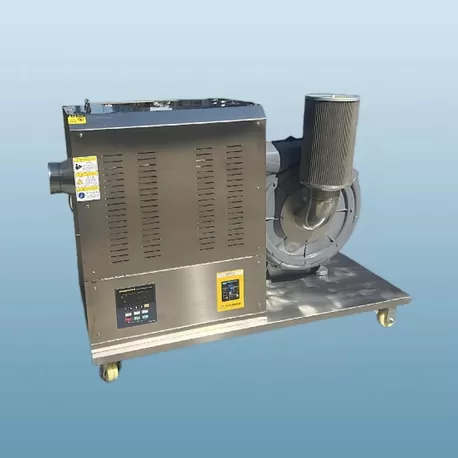
In continuous industrial drying, the hot air generator serves as the primary energy source that directly determines thermal efficiency, product consistency, and operational expenditure. Selecting an appropriate hot air generator requires evaluating combustion dynamics, heat exchanger metallurgy, airflow architecture, and control system responsiveness. This examination moves beyond superficial specifications to address the physical principles governing heat transfer, the influence of fuel variability on flame stability, and the practical constraints imposed by material hygroscopicity.

Thermodynamic Fundamentals of the Hot Air Generator
The performance of any industrial drying system hinges on the hot air generator capacity to deliver a consistent mass flow of heated air at defined temperature and velocity profiles. The underlying thermodynamic cycle involves fuel combustion, convective heat transfer to the air stream, and aerodynamic propulsion through ductwork. These three stages interact nonlinearly: burner turndown ratios affect excess oxygen levels, which in turn modify flame temperature and NOx emissions. Heat exchanger surface area and material conductivity dictate the upper temperature ceiling, while fan static pressure determines the achievable airflow against system resistance.
For operators managing hygroscopic materials—such as pharmaceutical granules, food ingredients, or ceramic precursors—the hot air generator must maintain outlet temperature within ±2 °C of setpoint across varying ambient conditions. This precision demands a control loop that integrates thermocouple feedback with variable frequency drives on the combustion air blower. Modern controllers employ proportional-integral-derivative algorithms tuned to the thermal inertia of the heat exchanger, preventing overshoot that could degrade heat-sensitive products. The relationship between fuel flow rate and air temperature rise follows the fundamental energy balance: Q = ṁ · cp · ΔT, where ṁ represents the air mass flow and cp the specific heat at constant pressure. This equation underscores why a hot air generator with inadequate turndown ratio forces the system to cycle on-off, inducing thermal fatigue on burner components and causing temperature ripple at the drying chamber inlet.
Combustion Chamber Design and Flame Stability
Flame stability in the combustion chamber governs both safety and thermal uniformity. A well-engineered hot air generator incorporates swirl-stabilized burners that create a recirculation zone, anchoring the flame root and ensuring complete combustion across a range of firing rates. The burner head geometry, coupled with the primary air velocity, determines the flame length and radiant heat distribution. For gaseous fuels, the Wobbe index of the supply gas must remain within the burner manufacturer's specification to avoid flashback or flame lift. Liquid-fueled systems require atomization nozzles that produce droplet sizes below 50 microns; otherwise, incomplete combustion generates soot deposits on heat exchanger tubes, reducing thermal conductivity and increasing exhaust gas temperatures.
Heat exchanger construction materials present another layer of consideration. Stainless steel alloys (e.g., 304H, 310S) resist oxidation up to 950 °C, whereas Inconel 601 extends service life in corrosive flue gas environments. The tube-and-shell configuration common in indirect-fired hot air generators offers a large heat transfer area but requires regular cleaning to remove ash accumulation. Direct-fired designs, where combustion products mix with the process air, eliminate the heat exchanger entirely, achieving near-100% thermal efficiency. This trade-off between efficiency and air purity defines the selection boundary for each application.
Performance Parameters That Define Hot Air Generator Suitability
Evaluating a hot air generator for a specific drying line involves quantifying several interdependent metrics. These parameters influence not only the drying rate but also the final product moisture distribution and bulk density.
- Outlet temperature range and stability: The maximum achievable temperature (typically 80–600 °C for industrial units) must align with the material's thermal degradation threshold. Temperature stability, measured as standard deviation over a 60-minute period, directly correlates with product quality uniformity.
- Airflow capacity and static pressure: Volumetric flow rate (m³/h) at the operating temperature, corrected for density changes, determines the drying kinetics. Static pressure (Pa) must overcome duct losses, filter resistance, and the pressure drop across the drying bed.
- Turndown ratio: The ratio between maximum and minimum stable firing rates. A ratio of 10:1 accommodates production turndown without cycling, preserving component life and outlet temperature consistency.
- Thermal efficiency: The percentage of fuel energy transferred to the process air. Indirect-fired units range from 75–85%, while direct-fired designs approach 95–98%.
- Emissions profile: NOx, CO, and particulate matter concentrations must comply with local environmental regulations, influencing burner selection and possible flue gas recirculation.
Each parameter interacts with the drying chamber configuration. For instance, a fluidized bed dryer demands high airflow at moderate pressure, whereas a pneumatic conveying dryer requires elevated static pressure to transport particles. The hot air generator must be matched to the dryer's characteristic curve; oversizing leads to short-cycling and poor efficiency, while undersizing causes inadequate drying and production bottlenecks. This matching process requires a detailed pressure drop calculation across the entire air path, from the generator outlet to the exhaust stack.
Direct-Fired versus Indirect-Fired Configurations
The decision between direct-fired and indirect-fired hot air generator designs represents one of the most consequential choices in system engineering. Each approach embodies distinct advantages and constraints that align with specific production environments.
In a direct-fired hot air generator, combustion products—including CO₂, H₂O vapor, and trace nitrogen oxides—enter the drying chamber and come into direct contact with the material. This configuration achieves maximal thermal efficiency because no heat exchanger introduces thermal resistance. The combustion air fan delivers ambient air through the burner, where fuel injection and ignition occur, and the resulting hot gas stream proceeds directly to the dryer. Applications that tolerate minimal contamination, such as drying aggregates, biomass, or certain minerals, benefit from this simplicity. The absence of a heat exchanger also reduces capital cost and maintenance frequency.
Indirect-fired hot air generators incorporate a heat exchanger that separates the combustion circuit from the process air circuit. The burner heats the exchanger tubes, and a separate fan propels process air across the tube bank. This arrangement delivers clean, uncontaminated hot air, making it mandatory for food processing, pharmaceutical manufacturing, and chemical production where product purity is paramount. The thermal efficiency penalty of 10–15% arises from heat loss through the exchanger casing and the temperature difference required to drive heat transfer. Periodic cleaning of the exchanger surfaces becomes essential, as fouling reduces the overall heat transfer coefficient and elevates exhaust temperatures.
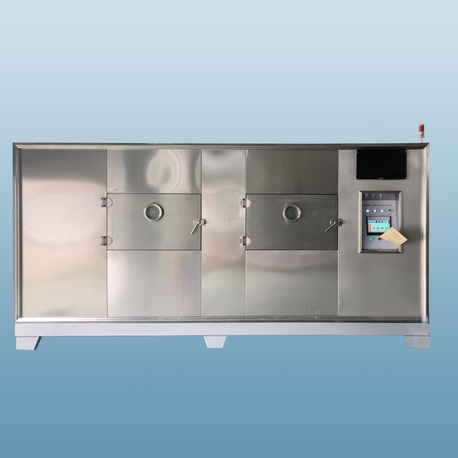
Hybrid configurations, such as the combined hot air and microwave drying systems offered by Nasan, integrate a hot air generator with dielectric heating to accelerate moisture removal in thick-section materials. This synergy reduces the thermal load on the hot air generator while improving drying uniformity, as microwave energy volumetrically heats the product interior and the hot air stream convects surface moisture away. The control strategy for such hybrid systems requires coordinated modulation of both energy sources to prevent thermal runaway and achieve the desired moisture profile.
Integration of Hot Air Generators with Drying Process Lines
Placing a hot air generator within a continuous production line demands careful attention to ductwork design, insulation, and safety interlocks. The air distribution manifold must balance flow to multiple zones, ensuring each drying bed section receives the appropriate temperature and velocity. Variable inlet vanes or frequency-controlled fans provide the means to adjust airflow dynamically as production rates change. Temperature sensors positioned at the generator outlet, at each zone inlet, and within the exhaust stream furnish the data for closed-loop control.
Material handling equipment upstream—such as feeders, conveyors, and pre-conditioners—affects the hot air generator's load profile. If the feedstock moisture content fluctuates, the controller must respond by adjusting the firing rate to maintain outlet temperature. Advanced systems incorporate feedforward control, where a moisture sensor upstream signals the anticipated change, allowing the hot air generator to pre-adjust before the material reaches the drying zone. This predictive strategy minimizes transient deviations that would otherwise compromise product quality.
Exhaust gas recirculation systems can be integrated to improve thermal efficiency and reduce NOx emissions. A portion of the cooled exhaust stream is returned to the combustion air inlet, lowering flame temperature and diluting oxygen concentration. This technique, while effective, introduces complexities in fan sizing and duct insulation, as the recirculated gas contains moisture and particulate matter that may condense on cold surfaces. Proper dew-point management prevents corrosion and maintains system reliability.

Maintenance Practices for Sustained Hot Air Generator Performance
Reliable operation of a hot air generator over extended production campaigns depends on a disciplined maintenance schedule. Combustion system components—ignition transformers, flame scanners, and gas valves—require periodic testing and calibration. Flame failure response time must remain below 2 seconds to prevent fuel accumulation in the event of a misfire. Air filters on the combustion blower and process fan should be inspected weekly, with differential pressure gauges indicating when replacement is necessary.
Heat exchanger cleaning intervals depend on fuel type and combustion efficiency. Natural gas firing produces minimal soot, allowing annual cleaning cycles, whereas heavy fuel oil or biomass combustion necessitates monthly inspections and mechanical brushing. For indirect-fired units, the temperature difference between the combustion gas and the process air provides an indirect measure of fouling; an increasing differential signals reduced heat transfer and the need for cleaning. Thermographic imaging of the exchanger casing can reveal hot spots caused by internal blockage or refractory damage.
Burner nozzle maintenance for liquid-fueled hot air generators includes atomization pressure checks and nozzle tip replacement at defined hour intervals. The fuel pump strainer and secondary filter must be cleaned to prevent nozzle erosion. Gas-fired burners require periodic inspection of the gas train—the shutoff valves, regulators, and pressure switches—to verify leak-tight integrity. Calibration of the oxygen trim system ensures the air-fuel ratio remains optimal, maintaining both efficiency and emissions compliance. Nasan provides comprehensive documentation covering these procedures, with service intervals tailored to the specific model and operating conditions.
Q1: What factors determine the appropriate hot air generator size for a drying line?
A1: Sizing a hot air generator requires calculating the total heat duty based on the mass flow rate of material, the initial and final moisture content, the specific heat of the solids, and the evaporation latent heat. An additional 15–20% safety factor accounts for heat losses through ductwork and the drying chamber. The airflow rate must be sufficient to transport the evaporated moisture away from the product surface without causing entrainment or excessive pressure drop. System resistance, including filter and duct losses, then determines the required fan static pressure. Matching these parameters ensures the hot air generator operates within its optimum efficiency band.
Q2: How does fuel choice affect hot air generator performance and maintenance?
A2: Fuel selection influences burner design, emission profile, and maintenance frequency. Natural gas offers clean combustion with low ash content, enabling extended intervals between heat exchanger cleanings. Propane provides similar benefits but requires vaporization equipment in cold climates. Light fuel oil demands atomization air and preheating to achieve proper viscosity, with increased nozzle and filter maintenance. Heavy fuels and biomass introduce significant ash and slagging risks, necessitating robust cleaning systems and more frequent refractory inspections. Local fuel availability and cost often dictate the final choice, but the maintenance implications must be factored into the total cost of ownership.
Q3: Can a hot air generator be retrofitted into an existing drying system?
A3: Retrofitting is feasible but requires a comprehensive audit of the existing ductwork, control system, and structural supports. The new hot air generator's footprint, weight, and inlet/outlet connections must align with available space. The control panel must integrate with the existing programmable logic controller (PLC) or be replaced to accommodate the new burner management system. Modifications to the exhaust stack and flue gas analysis ports may also be necessary to comply with emissions monitoring requirements. Engaging an experienced engineering firm minimizes unexpected modifications during installation.
Q4: What safety devices are mandatory on an industrial hot air generator?
A4: Essential safety devices include a flame scanner for burner supervision, high-temperature limit switches to prevent overheating, airflow proving switches to ensure combustion air supply, gas pressure switches for low and high gas pressure monitoring, and a manual shutoff valve. For liquid fuels, low-oil-pressure and high-oil-temperature switches are required. An emergency stop button, accessible from the control panel and remote locations, initiates a controlled shutdown sequence. The burner management system must conduct a pre-purge cycle to clear any combustible gases before ignition and a post-purge cycle after burner shutdown to cool the heat exchanger.
Q5: How does ambient temperature and altitude affect hot air generator output?
A5: Ambient temperature and altitude directly affect air density, which influences the mass flow of combustion air and the process air. At higher altitudes, lower air density reduces the oxygen mass available for combustion, requiring derating of the burner or adjustment of fuel pressure to maintain the correct air-fuel ratio. Cold ambient temperatures increase air density, boosting the mass flow but potentially causing condensation in the fuel gas train. The hot air generator's fan curves must be corrected for site conditions; otherwise, the delivered airflow at elevated temperature will be lower than the nominal capacity. Manufacturers provide correction factors for altitude and temperature to facilitate accurate selection.
Q6: What is the typical service life of a hot air generator heat exchanger?
A6: Heat exchanger service life depends on operating temperature, material grade, and fuel cleanliness. Stainless steel exchangers operating below 800 °C with natural gas firing often exceed 20 years of service. Higher temperatures or corrosive flue gases from fuel oil or biomass reduce this to 5–10 years. Regular inspection for cracking, pitting, and warping extends service life through timely repairs. Replacement of tube sections in modular designs offers a cost-effective alternative to complete exchanger replacement. Proactive maintenance programs that include annual nondestructive testing (NDT) can predict remaining life and schedule replacements during planned shutdowns.
For tailored solutions and detailed technical specifications, please direct your inquiries to our engineering team at Nasan. We provide comprehensive support for hot air generator selection, integration, and lifecycle management.