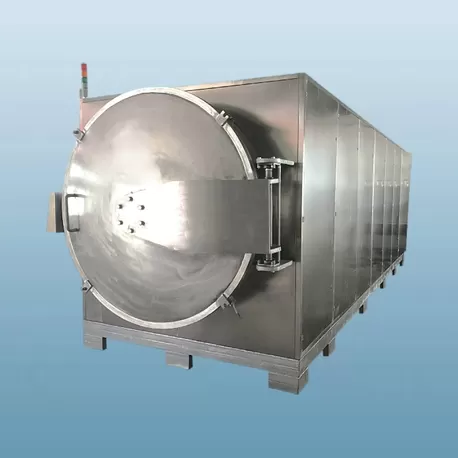
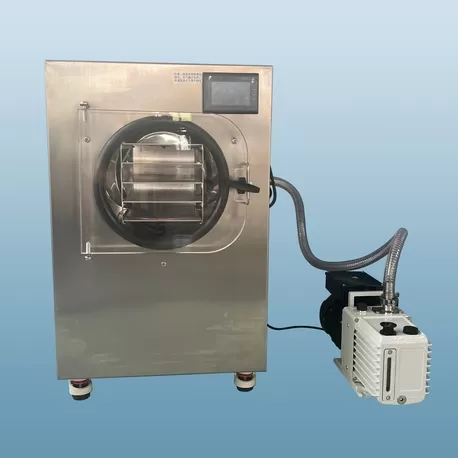
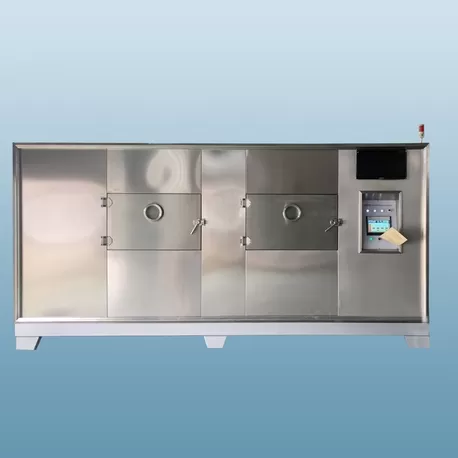
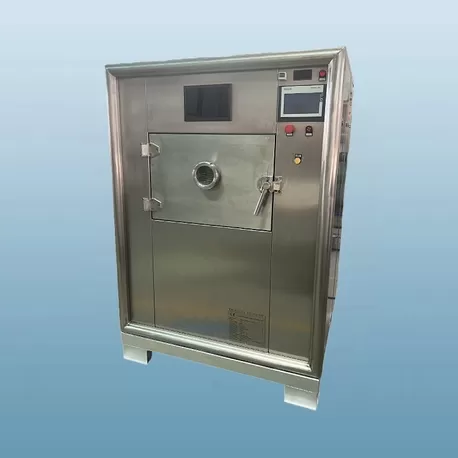
The industrial microwave dehydrator represents a departure from conventional thermal drying methods. Where convective or conductive drying relies on heat transfer from the surface inward, microwave drying generates heat volumetrically within the product itself. This fundamental difference enables moisture removal rates that are often faster, more uniform, and more energy-efficient—particularly for heat-sensitive or thick-section materials. For process engineers evaluating drying technologies, understanding the physics of microwave-material interaction, the design of applicator systems, and the integration of process controls is essential for successful implementation.
Microwave energy occupies the 300 MHz to 300 GHz frequency band, with industrial dehydrators almost exclusively operating at 915 MHz or 2450 MHz—the ISM (industrial, scientific, and medical) frequencies allocated for heating applications. The 915 MHz systems offer greater penetration depth, making them suitable for thick products such as whole vegetables or wood composites, while 2450 MHz systems provide more compact applicator designs and are common in food and pharmaceutical drying. A well-designed microwave dehydrator must balance frequency selection, power density, and product handling to achieve the target moisture profile without overheating or non-uniform drying.

Dielectric Heating Principles and Material Interaction
The drying effect of a microwave dehydrator arises from the interaction of the electromagnetic field with polar molecules—most notably water, but also certain organic solvents and ionic species. When subjected to an alternating electric field at microwave frequencies, dipolar molecules attempt to reorient with each field reversal. The rotational friction generates heat throughout the material volume, with the rate of heating proportional to the product's dielectric loss factor (ε″) and the square of the electric field strength.
This volumetric heating mechanism offers several distinct advantages over convective drying. In a conventional hot-air dryer, the surface dries first, forming a moisture gradient that drives liquid diffusion from the interior to the surface. As drying proceeds, the surface layer may harden or case-harden, reducing the effective diffusion coefficient and slowing the remaining drying process. In a microwave dehydrator, heat is generated in the moist interior regions, creating internal vapor pressure that drives moisture outward through capillary channels and cellular structures. This pressure-driven flow often enables faster drying rates and reduces the risk of surface cracking or shrinkage defects.
The penetration depth—defined as the distance at which power density decays to 1/e (approximately 37%) of its surface value—depends on both the frequency and the material's dielectric properties. For high-moisture foods at 2450 MHz, penetration depth ranges from 10 to 30 mm; at 915 MHz, the depth may exceed 60 mm. This relationship dictates the maximum product thickness that can be dried uniformly without excessive surface heating. When the product thickness exceeds the penetration depth, the core may remain underheated while the surface overheats, defeating the purpose of volumetric drying. Many industrial microwave dehydrator systems incorporate power modulation or variable frequency control to adapt to changes in product moisture content and geometry as drying progresses.
Magnetron and Applicator Design
The microwave power source for a dehydrator is typically a magnetron—a vacuum tube that converts high-voltage DC power into microwave oscillations. Magnetrons for industrial drying are available at power levels from 1 kW to 100 kW or more, with multiple magnetrons often combined in a single system to achieve the required total power. The efficiency of a magnetron, defined as the ratio of microwave output power to DC input power, generally falls between 70% and 85%, with higher-efficiency units delivering better overall energy utilization.
The applicator—the enclosure into which the product is placed—serves to distribute the microwave field uniformly over the product load. Three primary applicator configurations are used in industrial dehydrators:
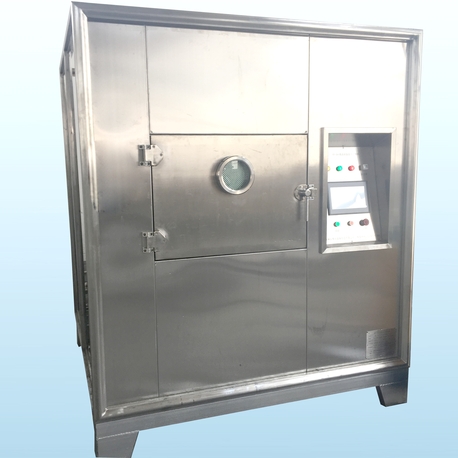
- Multimode cavity: A large, reflective enclosure where microwaves enter through one or more waveguides and reflect from the walls to create a complex standing-wave pattern. Mode stirrers—rotating metallic vanes—are often added to sweep the field distribution and reduce the formation of hot and cold spots. Multimode cavities are suitable for batch drying of heterogeneous loads but require careful placement of product to minimize field non-uniformities.
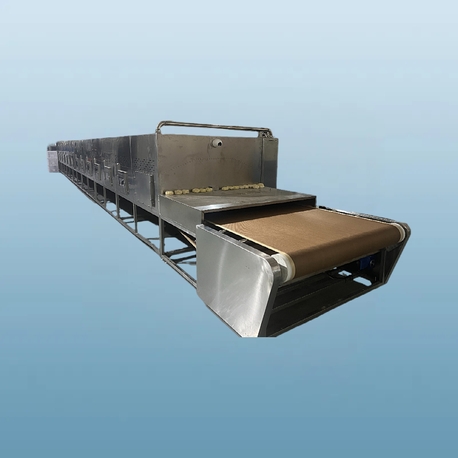
- Single-mode applicator: A waveguide section designed to support a single propagating mode, creating a well-defined field pattern with predictable maxima and minima. Product is passed through the field in a controlled manner, often on a conveyor belt or through a channel. Single-mode applicators offer higher field uniformity for a specific product geometry but are less flexible for varying load conditions.
- Traveling-wave applicator: A waveguide structure where microwave energy propagates along the product path, with energy being absorbed progressively as it travels. This design allows long residence times and gradual energy deposition, suitable for continuous drying of thin sheets or granules.
Each applicator type presents trade-offs between field uniformity, power efficiency, and product throughput. Multimode cavities are common in batch dehydrators for small to medium production volumes, while traveling-wave systems are preferred for high-throughput continuous lines. Nasan engineers applicator designs with the specific dielectric properties of the target product in mind, using electromagnetic simulation tools to predict field distributions and optimize waveguide feed positions.
Drying Kinetics and Process Control
The moisture removal curve in a microwave dehydrator differs markedly from that of a convective dryer. In conventional drying, the rate-limiting step is usually the diffusion of moisture from the interior to the surface, leading to a falling-rate period that extends over most of the drying cycle. In microwave drying, the internal vapor generation maintains a high driving force for moisture movement, often sustaining a relatively constant drying rate until the moisture content falls below 20–30% (wet basis).
This constant-rate period can be exploited to shorten the total drying time significantly. For example, a microwave dehydrator may reduce the drying time for certain fruits and vegetables from 8–12 hours in a hot-air cabinet to 2–4 hours, while maintaining better color retention and rehydration properties. The exact time reduction depends on the product's dielectric loss, moisture content, and the applied power density, but reductions of 50–70% are commonly reported in the literature.
Controlling the drying process in a microwave dehydrator requires real-time monitoring of product temperature and moisture content. Infrared pyrometers and fiber-optic temperature probes provide surface and internal temperature measurements, while near-infrared (NIR) or capacitance sensors can estimate moisture content in-line. These data feed into a control algorithm that adjusts magnetron power, conveyor speed, or product thickness to maintain the target drying trajectory. Overheating must be avoided, as local hot spots can cause discoloration, nutrient degradation, or melting of the product matrix.
For products with non-uniform initial moisture content—such as agricultural commodities harvested under varying conditions—the control system may need to accommodate spatial variations. Some advanced microwave dehydrator systems implement zone control, where multiple magnetrons are independently regulated based on temperature measurements from different regions of the product bed. This zoned approach helps compensate for the inherent variability in raw materials and improves the consistency of the final product.
Integration with Auxiliary Systems
An industrial microwave dehydrator rarely operates as a standalone unit. It is typically integrated with upstream and downstream equipment—pre-treatment stages, product handling, and post-drying cooling—to form a complete processing line. Key auxiliary systems include:
- Material handling: Vibratory feeders, conveyor belts, or screw augers move product into and through the applicator. The conveyor material must be microwave-transparent (e.g., PTFE-coated fiberglass or polypropylene) to avoid absorbing energy and heating unnecessarily. Belt speed is adjustable to match the desired residence time.
- Air circulation and moisture removal: Microwave drying generates steam that must be exhausted from the applicator to maintain efficient energy coupling and prevent condensation. A forced-air system—sometimes preheated to reduce thermal shock—carries the vapor-laden air to a condenser or scrubber. The airflow rate is balanced to remove moisture without cooling the product excessively.
- Electromagnetic interference (EMI) shielding: The applicator enclosure must contain microwave energy to comply with safety regulations (e.g., FCC Part 18 or IEC 60519-6). Choke flanges, conductive gaskets, and metal mesh doors are used to achieve leakage levels below 5 mW/cm² at 5 cm from the surface.
- Cooling and thermal management: The magnetron and power supply generate significant heat that must be dissipated. Liquid-cooled magnetrons are common for high-power systems, using a closed-loop water or dielectric fluid circuit to maintain stable operating temperatures.
The design of these auxiliary systems must consider the specific characteristics of the product. For heat-sensitive materials, the airflow rate and temperature are controlled to prevent surface condensation, which could re-wet the product or cause microbial growth. For sticky or hygroscopic products, the handling system may require anti-agglomeration features such as vibration or fluidization.
Nasan offers integrated microwave dehydrator solutions that include all necessary auxiliary components, with customized configurations for food preservation, pharmaceutical drying, chemical processing, and waste treatment applications.
Application-Specific Considerations
The selection and configuration of a microwave dehydrator must be tailored to the product's physical and chemical properties. Four major application categories illustrate the range of engineering adaptations required:
Food dehydration: Fruits, vegetables, herbs, and meats require gentle drying to preserve color, flavor, and nutritional value. Microwave dehydrators for food often operate at lower power densities (1–3 W/g) to avoid excessive internal heating that could cause rupture of cellular structures. The drying endpoint is determined by the desired moisture activity (aw) for shelf stability, typically below 0.60. In many cases, a combination of microwave and convective (or vacuum) drying is employed—a process known as microwave-assisted drying—to achieve the best balance of speed and quality. The vacuum microwave dehydrator, operating at reduced pressure, allows drying at lower temperatures, which is advantageous for heat-labile vitamins and enzymes.
Pharmaceutical and nutraceutical drying: Active pharmaceutical ingredients (APIs), excipients, and herbal extracts often require precise moisture control to ensure stability and bioavailability. Microwave dehydrators used in pharmaceutical applications must meet stringent validation and cleanliness requirements. The applicator interior is constructed from stainless steel with smooth surfaces to facilitate cleaning. Temperature monitoring is more precise, often using multiple thermocouples or fiber-optic probes placed within the product bed. Drying curves are validated using loss-on-drying or Karl Fischer titration to confirm that moisture levels meet specification.
Chemical and polymer drying: Powders, granules, and pellets in the chemical industry may contain solvents or water that must be removed before further processing. Microwave dehydrators offer rapid drying of thick beds or agglomerated materials that are difficult to dry convectively. For polymers, the drying temperature must be kept below the glass transition temperature to prevent tackiness or deformation. The exhaust air is often treated to recover volatile solvents, using condensation or adsorption systems.
Waste treatment and environmental applications: Microwave dehydrators are used to reduce the volume of organic sludge, food processing waste, and biosolids. The volumetric heating accelerates water removal and can also achieve pasteurization or sterilization effects, making the dried product suitable for land application or fuel use. These systems are typically designed for high throughput and robust operation, with coarse product handling that tolerates variable particle sizes.
Across all applications, the success of the microwave dehydrator depends on proper characterization of the product's dielectric properties as a function of moisture content and temperature. Laboratory-scale testing with a controlled microwave applicator is recommended to generate drying curves and determine the optimal power profile before scaling up to production equipment.

Operational and Maintenance Practices
Reliable operation of a microwave dehydrator requires a regimen of regular inspections, cleaning, and component replacement. The magnetron is the primary wear component, with a typical lifespan of 5,000 to 10,000 operating hours, depending on power level and cooling efficiency. Replacing magnetrons before they reach end-of-life—based on accumulated hours or a gradual decline in output power—prevents unplanned downtime.
Waveguide windows, which separate the waveguide from the applicator, accumulate dust and product residues that can absorb microwave energy and cause localized heating. These windows should be cleaned periodically using non-abrasive methods, and the condition of the dielectric material (often mica or ceramic) inspected for cracks or carbon tracks. If a window becomes damaged, microwave energy can leak into the waveguide and damage the magnetron.
The conveyor belt, if used, experiences thermal and mechanical stress. Belt tracking and tension must be adjusted to prevent misalignment, which could cause uneven product distribution or belt damage. Belt materials degrade over time due to exposure to moisture, temperature, and ultraviolet radiation (if applicable); replacement intervals are typically specified by the manufacturer based on operating hours.
Air handling systems—fans, filters, and condensers—require maintenance to ensure adequate moisture removal. Clogged filters restrict airflow and reduce the drying rate, while fouled condenser coils decrease the efficiency of vapor condensation. A maintenance schedule that includes filter replacement, coil cleaning, and fan bearing lubrication is essential for sustaining the dryer's performance.
Safety systems, including door interlocks and leakage sensors, must be tested regularly to confirm that they operate within regulatory limits. Record-keeping of maintenance activities and safety checks provides documentation for audits and regulatory inspections.
Frequently Asked Questions
Q1: How does a microwave dehydrator differ from a conventional hot-air dryer?
A1: The primary difference lies in the heat generation mechanism. A hot-air dryer transfers heat from the surface inward via convection, creating a temperature gradient and a falling-rate drying period. A microwave dehydrator generates heat volumetrically within the product, as water molecules absorb microwave energy and dissipate it as heat. This internal heating often produces faster drying rates, more uniform moisture distribution, and reduced surface hardening, especially for thick or heat-sensitive materials.
Q2: What factors determine the microwave frequency selection for an industrial dehydrator?
A2: The two main frequencies are 915 MHz and 2450 MHz. The choice depends on the product's penetration depth, which is inversely related to frequency. For thick products (e.g., whole fruits, wood, or ceramics), 915 MHz offers deeper penetration and more uniform heating. For thin or granular products where penetration is less of a concern, 2450 MHz allows more compact applicator designs and is widely available with lower-cost magnetrons. The product's dielectric properties also influence the frequency decision.
Q3: Can a microwave dehydrator be used for volatile solvents, or is it limited to water?
A3: Microwave dehydrators can evaporate volatile organic compounds (VOCs) as long as the solvent has a significant dielectric loss factor—meaning it can absorb microwave energy. Polar solvents such as ethanol, methanol, and acetone respond to microwave heating, while non-polar solvents like hexane or toluene do not. However, processing flammable solvents requires specialized explosion-proof designs, inert gas purging, and careful vapor handling to meet safety standards.
Q4: How is product temperature controlled during microwave drying to prevent thermal damage?
A4: Temperature is monitored using infrared sensors, fiber-optic probes, or thermocouples placed in the product bed. The control system modulates microwave power output—either through duty-cycle switching or continuous power adjustment—to maintain the product temperature within a set range. Additionally, the conveyor speed can be varied to change the residence time, and airflow can be increased to remove heat. For highly sensitive products, a vacuum microwave dehydrator operates at reduced pressure, lowering the boiling point and keeping temperatures below 60 °C.
Q5: What is the typical power efficiency of an industrial microwave dehydrator?
A5: Overall system efficiency—the ratio of energy absorbed by the product to the electrical power input—typically ranges from 50% to 70% for well-designed systems. Losses occur in the power supply, magnetron, waveguide transmission, and applicator reflections. The efficiency also depends on the product's dielectric coupling; materials with high loss factors absorb energy more effectively. Some systems incorporate power recycling or reflected-power management to improve efficiency, but practical values above 70% are uncommon in industrial installations.
Q6: Can a microwave dehydrator handle continuous production for large volumes?
A6: Yes, continuous microwave dehydrators are widely used in the food, chemical, and pharmaceutical industries. They employ conveyor belts, vibrating trays, or screw conveyors to move product through the applicator at a controlled rate. Multiple magnetrons are staged along the length to apply power progressively, allowing a uniform drying profile. Throughput is determined by product residence time, power density, and target moisture content; continuous systems can process several tons per hour for applications such as snack drying or sludge reduction.
For further technical consultation on microwave dehydrator selection, custom engineering, or process validation, direct your inquiry to Nasan with your product specifications and drying objectives.