Industrial thermal processing has long relied on conventional heat transfer mechanisms such as convection, conduction, and radiation. While these methods have served manufacturing sectors for decades, they present inherent physical limitations, particularly regarding drying speed and uniform moisture distribution. Standard surface-heating methods rely on thermal gradients to drive heat from the exterior of a material to its core. This process can lead to structural damage, uneven drying, and degradation of heat-sensitive compounds. To address these limitations, modern processing facilities are increasingly adopting advanced electromagnetic heating technologies.
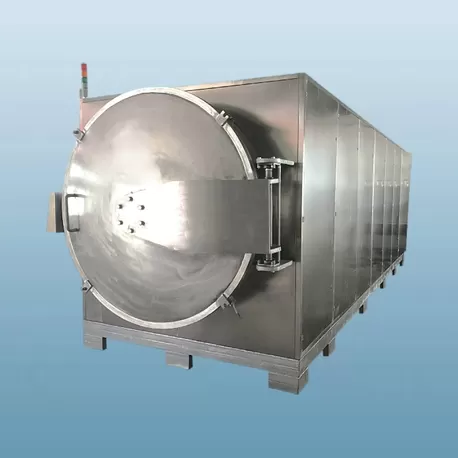
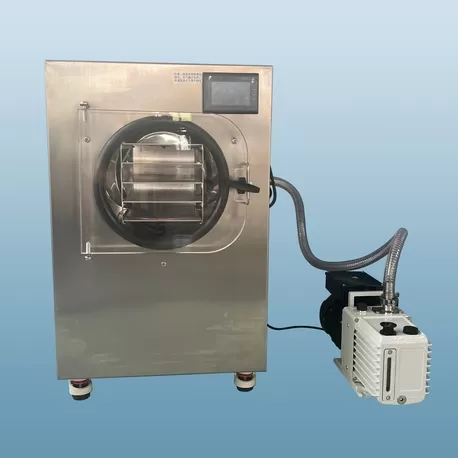
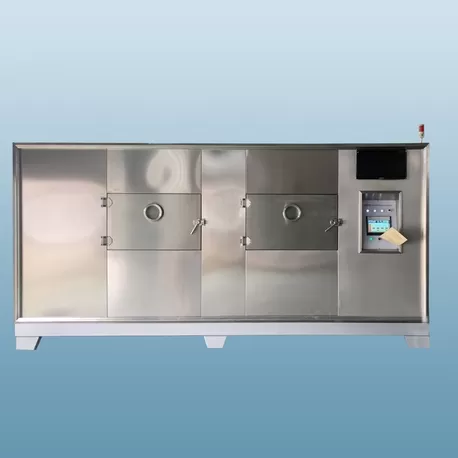
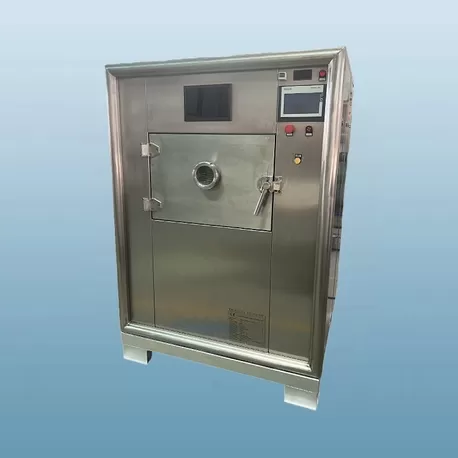
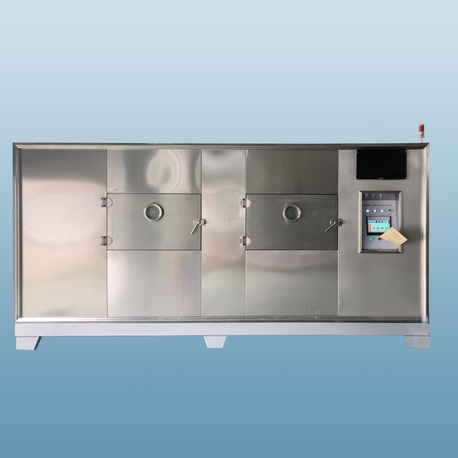
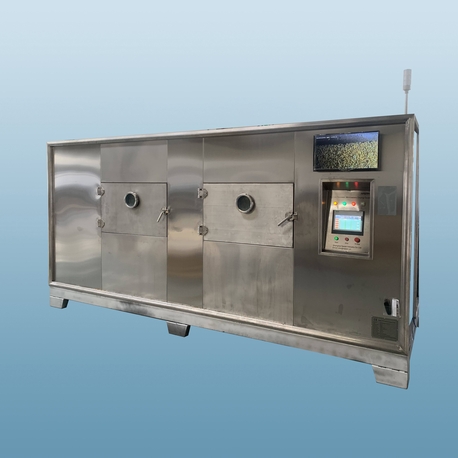
An industrial microwave drying machine represents a fundamental shift in how thermal energy is delivered to a product. Instead of applying heat to the outer boundary, this technology utilizes high-frequency electromagnetic fields to generate volumetric heating directly within the wet material. This approach significantly reduces processing times and offers precise control over moisture removal. Organizations like Nasan design and manufacture these advanced systems to meet the rigorous demands of modern industrial processing, ensuring high efficiency and product quality across diverse applications.
The Fundamentals of Dielectric Heating
The operation of a microwave-based system relies on the principle of dielectric heating. When a wet material is placed within a high-frequency alternating electromagnetic field, the polar molecules contained within the material attempt to align themselves with the rapidly changing electric field. Water, being a highly polar molecule with a permanent dipole moment, is exceptionally responsive to this excitation.
Under industrial microwave frequencies—typically 2450 MHz or 915 MHz—the direction of the electromagnetic field reverses billions of times per second. This rapid alternation causes water molecules to rotate back and forth at extreme speeds. The resulting molecular friction converts electromagnetic energy into thermal energy uniformly throughout the product. This phenomenon is governed by the dielectric properties of the material, specifically the dielectric constant and the loss factor.
The dielectric constant determines how much electrical energy the material can store, while the loss factor dictates how efficiently that stored energy is converted into heat. Materials with a high loss factor absorb microwave energy quickly, allowing for rapid heating. Because dry solids generally have a much lower loss factor than liquid water, microwave energy is selectively absorbed by areas of high moisture content. This self-limiting characteristic minimizes the risk of localized overheating once the moisture has evaporated.
Key Mechanical and Electromagnetic Components
An industrial-grade system is a complex assembly of mechanical, electrical, and electromagnetic components. Each part must be carefully engineered to ensure safe, continuous, and efficient operation.
- The Microwave Generator (Magnetron): This component converts high-voltage direct current electrical energy into electromagnetic waves. Industrial systems utilize highly durable magnetrons capable of continuous operation at high power outputs.
- Waveguides: These are precise, hollow metal conduits designed to guide the generated electromagnetic waves from the magnetron into the heating chamber without power loss. They prevent wave dispersion and maintain energy directionality.
- The Applicator Chamber: The chamber is a multimode resonant cavity where the material is exposed to the microwave field. Its dimensions and geometry are engineered to maximize field uniformity and ensure that electromagnetic energy is distributed evenly across the processing belt.
- Conveyor and Transport Systems: Continuous processing systems utilize conveyor belts constructed from microwave-transparent materials, such as polytetrafluoroethylene (PTFE) or reinforced silicone, allowing waves to pass through the belt to heat the product from all sides.
- Safety Chokes and Attenuators: Located at the entrance and exit ports of continuous tunnel systems, these components suppress electromagnetic leakage, keeping emissions well below regulatory safety limits.
By coordinating these components, equipment manufacturers like Nasan build robust continuous-flow platforms that fit seamlessly into existing industrial production lines, providing reliable thermal control under continuous operating conditions.
Direct Comparison: Volumetric vs. Convective Heat Transfer
To understand the advantages of a microwave drying machine, it is helpful to compare its heating mechanics directly with those of conventional hot-air convective dryers.
| Operational Parameter | Convective Hot-Air Drying | Microwave Volumetric Drying |
|---|
| Heat Transfer Direction | From the outside surface inward via conduction/convection. | Generated directly within the volume of the material. |
| Drying Rate | Slow; limited by the thermal conductivity of the material. | Rapid; limited primarily by the moisture evaporation rate. |
| Moisture Gradient | Dry exterior shell with a wet interior core. | Uniform moisture removal; interior is often drier than the exterior. |
| Energy Transfer Efficiency | Low; significant heat loss to the chamber walls and exhausting air. | High; energy is absorbed selectively by the water within the product. |
| Structural Impact | High risk of surface cracking, shrinking, and case hardening. | Low risk of surface damage due to positive internal vapor pressure. |
In traditional convective systems, the outer layer of the product dries first, creating a hard, insulating barrier known as case hardening. This dry outer layer slows down the migration of moisture from the core to the surface, resulting in extended drying cycles and increased energy consumption. Conversely, electromagnetic energy penetrates the material surface immediately, heating the internal moisture and creating a positive vapor pressure gradient. This pressure naturally drives water outward toward the surface, where it is easily removed by a low-velocity air stream.
Primary Industrial Applications
The unique properties of electromagnetic heating make it suitable for various processing sectors where product quality, structural integrity, and processing speed are paramount.
1. Food Processing and Preservation
The food industry requires dehydration methods that preserve color, flavor, nutrient content, and physical shape. Traditional high-temperature drying often degrades vitamins, oxidizes lipids, and causes browning. A microwave drying machine operates at lower overall temperatures for much shorter durations. This method is widely used for drying herbs, spices, pasta, grains, and snack foods, yielding products that retain high organoleptic quality and rehydration capabilities.
2. Chemical and Polymer Manufacturing
Chemical powders, catalysts, and polymers often have precise moisture specifications. Conventional drying of thick chemical cakes or powders can lead to thermal degradation of active compounds or uneven moisture distribution, which compromises subsequent processing steps. Uniform electromagnetic field distribution allows for continuous, highly controlled drying of chemical compounds without exposing them to extreme, damaging surface temperatures.
3. Pharmaceutical Production
Many pharmaceutical ingredients are highly sensitive to thermal exposure. Microwave-assisted vacuum drying systems allow water or organic solvents to evaporate at low temperatures under reduced atmospheric pressure. This method enables quick drying of granular mixtures, active pharmaceutical ingredients (APIs), and biological products while preserving molecular stability and chemical activity.
Resolving Common Industrial Drying Bottlenecks
In high-throughput manufacturing, drying is often a major production bottleneck. Traditional continuous dryers require large footprints and extended processing times, limiting overall plant capacity.
Integrating a microwave drying machine resolves these space and time constraints. Because volumetric heating does not rely on thermal conduction through the material, processing times are reduced by up to 80% compared to traditional hot-air tunnels. This rapid processing allows plants to transition from large, energy-intensive batch systems to compact, continuous inline configurations.
Additionally, conventional dryers struggle with uneven moisture distribution, which can lead to product spoilage, mold growth, or structural weakness. Because electromagnetic energy selectively targets areas with higher moisture concentration, it acts as a self-correcting system. High-moisture zones absorb more energy, accelerating evaporation until the moisture level matches the rest of the material. This uniform moisture profile improves product consistency and shelf life.
System Configuration and Process Engineering
Successful implementation of microwave drying requires careful configuration of process parameters based on the material's physical and dielectric properties. Process engineers must consider wavelength selection, power density, and belt speed to achieve the desired drying results.
For example, the choice between 2450 MHz and 915 MHz depends on product thickness and composition. At 2450 MHz, the wavelength is shorter, offering excellent heating control for thin materials, small granules, or narrow processing belts. At 915 MHz, the longer wavelength provides deeper penetration, making it suitable for thick material beds, large chemical cakes, or bulk food products.
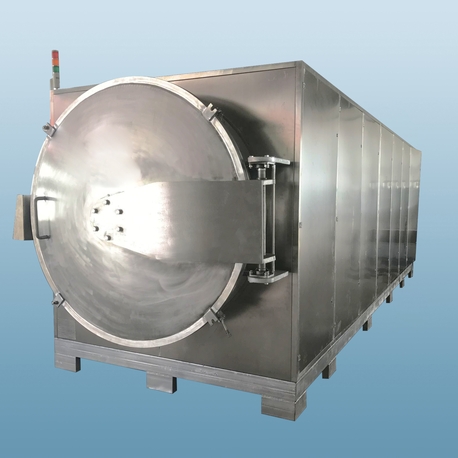
To achieve high thermal efficiency, modern installations often combine microwave energy with hot-air convective systems. In these hybrid configurations, conventional hot air is used initially to remove free surface moisture, which is highly cost-effective. Once the drying rate slows down and internal moisture migration becomes the limiting factor, microwave energy is introduced. This hybrid approach leverages the strengths of both methods to optimize drying speed and energy consumption. Nasan specializes in designing these hybrid systems, configuring the exact ratio of hot air and microwave energy to match the specific moisture desorption curves of different products.
A1: It prevents damage to heat-sensitive materials by utilizing selective heating and shorter processing times. Because electromagnetic energy targets water molecules directly, the dry solid matrix of the product remains relatively cool. Additionally, combining microwave systems with vacuum technology allows moisture to evaporate at lower boiling points (30°C to 45°C), protecting heat-sensitive compounds from thermal degradation.
Q2: What is the significance of 915 MHz vs. 2450 MHz frequencies in industrial systems?
A2: The primary differences lie in penetration depth and physical wavelength. The 915 MHz frequency has a longer wavelength (approximately 32.7 cm) and can penetrate deeply into thick, dense, or bulky materials. The 2450 MHz frequency has a shorter wavelength (approximately 12.2 cm), which limits its penetration depth but allows for more precise energy concentration in thin material layers or low-mass products.
Q3: How is electromagnetic leakage prevented in continuous belt systems?
A3: Leakage is prevented using engineered safety chokes and attenuation tunnels situated at the entry and exit points of the conveyor belt. These structures are designed as quarter-wave limiters or contain absorbing materials that suppress and contain the electromagnetic waves within the heating chamber, ensuring safe operating environments that meet CE and OSHA safety standards.
Q4: Can microwave systems process materials with high metal content?
A4: In general, bulk metals and highly conductive materials cannot be processed in standard microwave fields because they reflect the waves, which can cause arcing and damage the generator. However, trace metal powders or metal oxides dispersed uniformly within a non-conductive matrix can sometimes be processed under carefully managed field densities. For safety, materials containing significant metallic elements require specialized engineering evaluations before processing.
Q5: How does moisture content affect the absorption of microwave energy?
A5: The rate of energy absorption is directly proportional to the moisture content of the material. When a product is wet, its high dielectric loss factor causes it to absorb electromagnetic waves rapidly. As the material dries and its water content decreases, its dielectric loss factor drops, causing it to absorb significantly less energy. This relationship prevents over-drying and helps protect the dry material from thermal damage.
Engineering Inquiries and Collaboration
Integrating advanced electromagnetic drying into an existing production line requires a thorough understanding of material science, thermodynamics, and high-frequency wave propagation. Since every industrial material exhibits unique dielectric and physical properties, customized system configuration is necessary to achieve optimal performance.
For detailed technical consultations, material testing trials, or custom system designs, we invite process engineers and facility managers to submit an inquiry. Our engineering team is available to analyze your specific material profiles and develop a tailored processing solution that meets your throughput, space, and quality requirements.