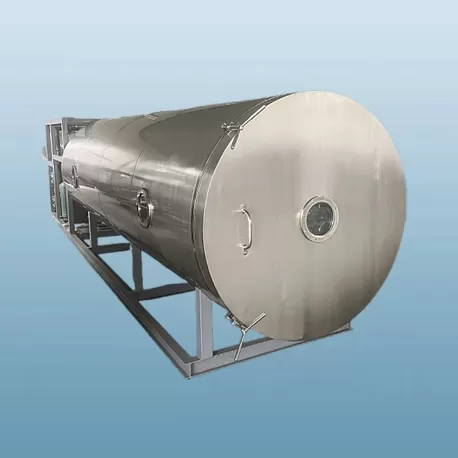
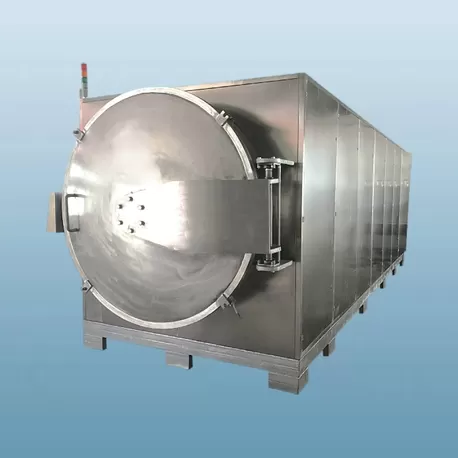
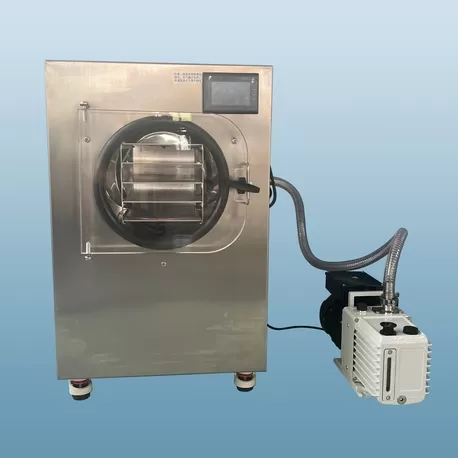
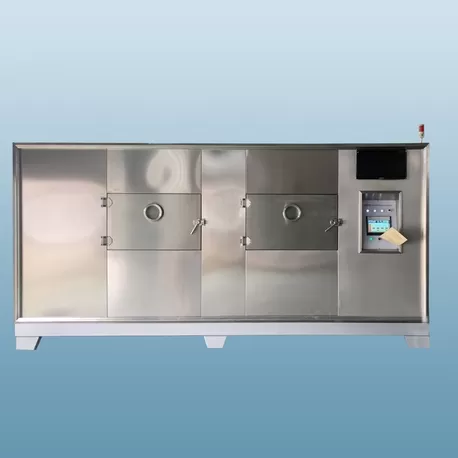
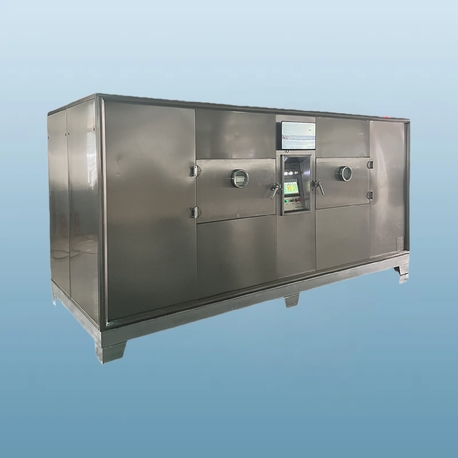
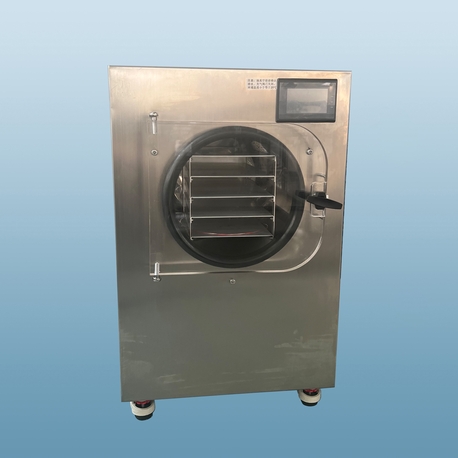
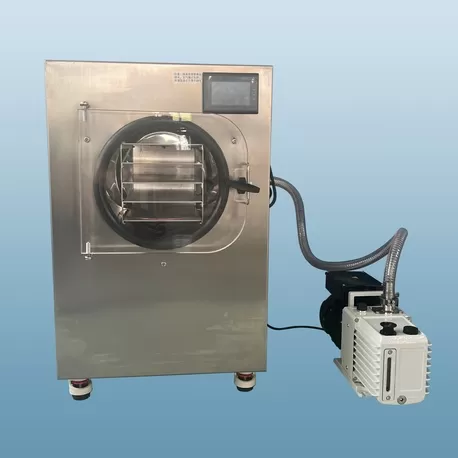
Industrial lyophilization—commonly performed by a freeze dehydrator—remains the preferred drying method
for heat-sensitive materials including biologicals, vaccines, coffee extracts,
and high-value food ingredients. Unlike conventional hot-air drying or vacuum
evaporation, a freeze dehydrator stabilizes the product by
first freezing it, then reducing surrounding pressure to allow ice sublimation
directly from solid to vapor. This avoids liquid-phase degradation reactions,
preserves microstructure, and enables long-term storage at ambient temperatures.
However, industrial-scale freeze dehydrator systems face persistent challenges:
uneven shelf heating, extended secondary drying times, and condenser ice
accumulation that reduces pump efficiency. This article provides an engineering
examination of freeze dehydrator subsystems, including heat transfer modeling,
pressure control strategies, and cleaning-in-place (CIP) validation. Nasan offers a range of industrial freeze drying
equipment referenced throughout this guide.
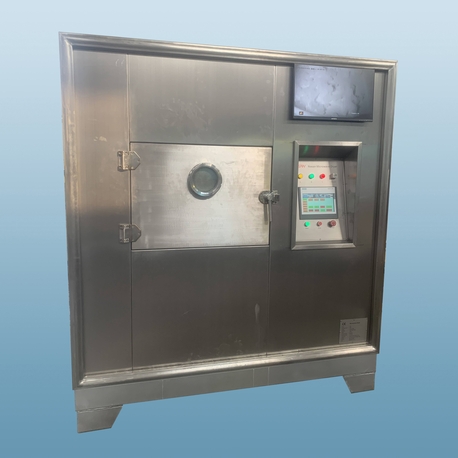
1. Primary and Secondary Drying Thermodynamics in a Freeze Dehydrator
Any freeze dehydrator cycle
consists of three phases: freezing, primary drying (sublimation), and secondary
drying (desorption). The efficiency of the entire process depends on precise
control of shelf temperature and chamber pressure.
1.1 Freezing Stage
The product is cooled below its eutectic or glass transition temperature
(Tg'). For most biologicals, target freezing temperature ranges from -40°C to
-50°C. The freezing ramp rate directly affects ice crystal morphology: slow
freezing (0.5-1°C/min) produces larger ice crystals, which leave larger pores
after sublimation and shorten primary drying time. Rapid freezing (2-3°C/min)
yields smaller crystals, better for protein stability but longer drying.
Industrial freeze dehydrators often use a controlled nucleation technique to
eliminate supercooling variability.
2.2 Primary Drying (Sublimation)
Chamber pressure is reduced below the triple point of water (typically 10-30
Pa), and shelf temperature is raised to provide latent heat of sublimation
(approximately 2837 kJ/kg). The key engineering metric is the product
temperature at the sublimation front – it must remain below collapse temperature
to prevent pore structure collapse. For many formulations, collapse temperature
is -25°C to -10°C. The heat input is balanced by vapor removal via the condenser
(maintained at -60°C to -80°C). Pressure control is achieved by adjusting the
vacuum pump speed or introducing inert gas (nitrogen).
A poorly designed freeze dehydrator shows large
shelf-to-shelf temperature variance (±3°C or more), leading to some vials
completing sublimation hours earlier than others. This forces operators to
extend the drying cycle based on the slowest vial, wasting energy.
High-performance systems from Nasan achieve shelf
uniformity within ±1°C through fluid-circulated heating plates.
2. Critical Subsystems: Condenser, Vacuum Pump, and Heat Transfer Fluid
Understanding the interaction between core components helps engineers
diagnose performance degradation.
2.1 Condenser Design
The condenser captures water vapor as ice on coils or plates. Key design
parameters include:
Surface area: Typically 1.5-2.5 m² per kg of ice capacity.
Insufficient area leads to high pressure during drying.
Defrost method: Hot gas defrost (using compressed
refrigerant) or electric heaters. Hot gas is faster (15-30 min) but requires
careful control to avoid thermal shock.
Icing uniformity: Uneven ice buildup reduces effective
area; therefore, some systems include rotating scrapers.
2.2 Vacuum System
Combinations of rotary vane pumps and Roots blowers achieve ultimate pressure
below 1 Pa. For freeze dehydrator operation, the pump must
handle large volumes of water vapor. Oil-sealed pumps require gas ballast to
prevent water condensation in the oil. Dry screw pumps (oil-free) are preferred
for pharmaceutical applications to avoid back-migration of oil mist.
2.3 Heat Transfer Fluid (HTF)
Silicone oil (e.g., Syltherm XLT) or synthetic hydrocarbon fluids circulate
through shelves. Viscosity at low temperature (-50°C) is a key factor – high
viscosity reduces heat transfer. Specify HTF with viscosity <100 cSt at
operating minimum.
For process scale-up from lab to production, freeze dehydrator manufacturers like Nasan provide
heat and mass transfer modeling to predict drying time based on vial geometry
and fill depth.
3. Industry Pain Points and Technical Solutions
3.1 Problem: Endpoint Detection Inaccuracy
Many operators rely on pressure rise test (PRT) to determine primary drying
endpoint – closing the isolation valve and measuring pressure increase due to
residual sublimation. However, PRT can be misleading when there is small leakage
or when product temperature varies. Solution: Install a tunable diode laser
absorption spectroscopy (TDLAS) sensor to directly measure water vapor
concentration in the duct. This provides real-time endpoint detection with ±5%
accuracy.
3.2 Problem: Collapse During Secondary Drying
Raising shelf temperature too quickly above Tg' causes amorphous product
collapse. Solution: Use a ramping rate of 0.1-0.2°C/min, and monitor product
resistance using a wireless temperature sensor placed in representative vials.
Modern freeze dehydrator control systems include a “collapse
temperature avoidance” algorithm that holds temperature 5°C below Tg' until
resistivity drops below a threshold.
3.3 Problem: Long Cycle Times for High-Concentration Formulations
Protein solutions at 20% solids may require 60-80 hours of drying. Solution:
Apply controlled nucleation (ice fog seeding) to increase ice crystal size,
reducing primary drying time by 30%. Also, consider using a “pressurized freeze
drying” technique – increasing chamber pressure to 100 Pa during primary drying
improves heat transfer by 40% without collapsing sensitive products.
4. Validation Protocols for Freeze Dehydrator Qualification
For pharmaceutical and biotech applications, regulatory audits (FDA, EMA)
require documented evidence of freeze dehydrator performance. The following
tests are standard:
Shelf temperature mapping: Place at least 15 thermocouples
across each shelf, run a dummy cycle, and report temperature deviation.
Acceptance criteria: ≤±1.5°C for all points after steady state.
Vacuum leak rate: After evacuating to 10 Pa, close the
isolation valve and measure pressure rise over 10 minutes. Acceptable leak rate
<0.01 Pa·L/sec per m³ of chamber volume.
Condenser ice capacity test: Load a known water volume
(e.g., 50% of rated capacity), run a full cycle, and confirm that chamber
pressure remains below 30 Pa throughout primary drying.
Residual moisture analysis (Karl Fischer): After secondary
drying, samples must show ≤1% residual moisture for most products.
Suppliers like Nasan provide factory
acceptance test (FAT) protocols and site acceptance test (SAT) documentation as
part of the delivery.
5. Energy Optimization and Cost Reduction Strategies
Industrial freeze dehydrator systems are energy-intensive, consuming 1.5-2.5
kWh per kg of water removed. Strategies to reduce operating cost include:
Heat recovery: Using condenser waste heat to preheat
cleaning water or to defrost the coils – reduces steam consumption by
15-20%.
Variable frequency drives (VFDs): On vacuum pumps and
circulation fans. During secondary drying, pump speed can be reduced to 40% of
maximum, cutting power draw by 60%.
Intermittent operation: For products with very low collapse
temperature, pulsed pressure (cycling between 10 Pa and 50 Pa) improves heat
transfer without energy penalty of continuous vacuum.
A well-optimized freeze dehydrator can
achieve a specific energy consumption below 1.2 kWh/kg, comparable to a
two-stage spray dryer.

6. Applications Across Industries
While freeze dehydrators are most common in pharmaceuticals, they serve
diverse markets:
Food industry: Freeze-dried coffee, fruits, instant meals,
and probiotics. Key requirement: color retention and texture rehydration ratio
>90%.
Biotechnology: Monoclonal antibodies, mRNA vaccines, and
enzyme storage. Requires aseptic design and clean-in-place (CIP)
capabilities.
Chemical industry: Stabilization of organic peroxides and
catalysts. Explosion-proof electricals and inert gas purge are mandatory.
Archaeology & herbaria: Waterlogged wood or plant
specimens – gentle drying without shrinkage.
Each application demands specific shelf loading patterns, vial types, and
cycle recipes. Nasan offers customized
freeze dehydrator configurations including CIP, steam sterilization (SIP), and
cleanroom integration.
7. Comparison with Alternative Drying Technologies
When evaluating a freeze dehydrator versus spray drying or vacuum belt
drying, consider the following trade-offs:

The freeze dehydrator is selected when product heat lability or structure
preservation outweighs higher capital and operating costs.
Frequently Asked Questions (FAQ) about Freeze Dehydrator Systems
Q1: What is the difference between a freeze dehydrator and a
conventional vacuum dryer?
A1: A freeze dehydrator operates below
the triple point of water, so ice sublimates directly to vapor without passing
through a liquid phase. This preserves the product's porous structure and
prevents thermal degradation. A conventional vacuum dryer typically applies heat
to liquid water, causing it to boil at reduced pressure – this can lead to
foaming and collapse of sensitive materials.
Q2: How do I calculate the required condenser capacity for my freeze
dehydrator?
A2: Total water load = (initial moisture % – final
moisture %) × product mass. For primary drying, assume 95% of water is removed.
Condenser ice capacity should be 1.2 × total water load (safety margin).
Additionally, the condenser surface area must remove at least 5 kg/m²·hour of
water vapor. For example, a 200 kg batch with 70% initial moisture (140 kg
water) needs a condenser capable of holding 168 kg ice, with surface area >34
m².
Q3: Can I use a freeze dehydrator for solvents other than
water?
A3: Yes, but the system must be modified. For organic
solvents (tert-butanol, ethanol, DMSO), the condenser temperature must be below
the solvent's freezing point. Explosion-proof electrical components and inert
gas purge are mandatory. Additionally, the vacuum pump must be compatible with
the solvent vapor – oil-sealed pumps may require special synthetic oils. Always
consult the manufacturer; Nasan offers
solvent-resistant configurations.
Q4: What causes “meltback” during freeze drying, and how to prevent
it?
A4: Meltback occurs when the product temperature rises above the
eutectic point during primary drying, causing ice to melt rather than sublimate.
This results in a collapsed, glassy layer. Prevention strategies: (a) Reduce
shelf temperature by 2-3°C, (b) Increase chamber pressure slightly (e.g., from
10 Pa to 25 Pa) to improve heat transfer uniformity, (c) Ensure the condenser is
not overloaded (ice buildup reduces vapor flow). Real-time product thermocouples
are the best monitoring tool.
Q5: How often should a freeze dehydrator be
validated?
A5: For GMP pharmaceutical use, full re-validation (shelf
temperature mapping, vacuum leak test, condenser performance) is required
annually or after any major repair (replacing heating fluid, changing vacuum
pump). For food-grade applications, a simplified quarterly check (vacuum hold
test and ice capacity verification) is sufficient. Always maintain a log of
cycle parameters (pressure, shelf temperature, product temperature) for each
batch.
Conclusion and Procurement Recommendations
Selecting an industrial freeze dehydrator requires balancing
batch size, product sensitivity, and validation requirements. Key specifications
to request from vendors:
Shelf temperature range (-50°C to +60°C) and uniformity (±1°C).
Ultimate vacuum (≤1 Pa) and leak rate (<0.01 Pa·L/s).
Condenser ice capacity and defrost time (<45 minutes).
CIP/SIP compatibility for pharmaceutical applications.
Nasan offers freeze dehydrator systems from 5 kg to
2000 kg ice capacity, all supplied with IQ/OQ documentation, thermal mapping
reports, and remote monitoring software. Their engineering team can also
retrofit existing freeze dryers with TDLAS sensors and automated pressure
control.
Request a technical consultation or a free feasibility test: Visit Nasan’s product page to submit your product parameters (fill
volume, target residual moisture, batch size). They will return a proposed cycle
recipe, estimated drying time, and energy consumption within 48 hours. For
volume orders (3+ units), they provide on-site commissioning and operator
training.
Send your inquiry now to optimize your lyophilization
process.
Inquiry
contact: Nasan – https://www.nasandry.com/ | Email: info@nasandry.com| Phone: +86 21 31006665 ext 801(Telephone)/ +86 139 1616 2131(Mobile No). All inquiries receive a technical
response within 24 hours.