


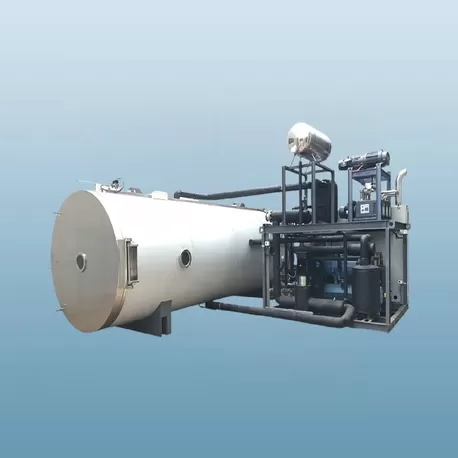

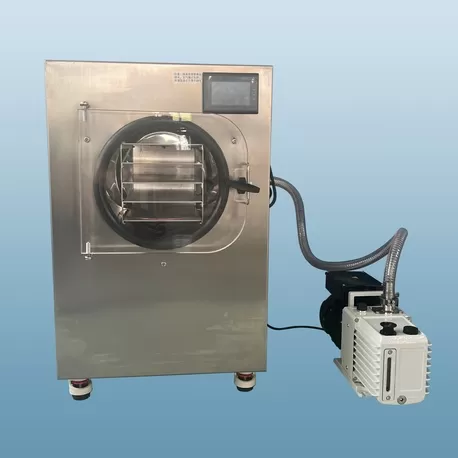
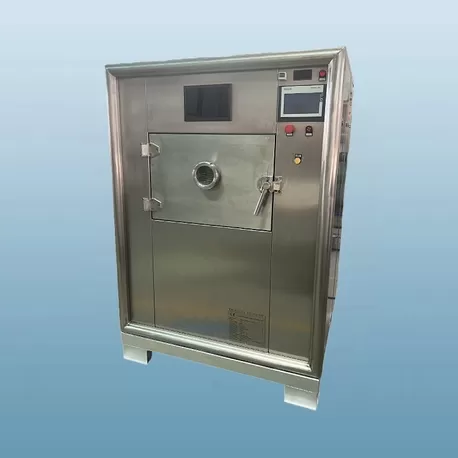
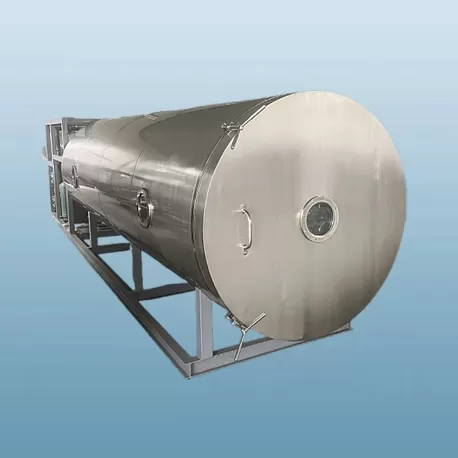
Industrial batch drying remains a cornerstone for heat-sensitive materials, small-to-medium throughputs, and multi-product facilities. Unlike continuous dryers, tray dryers offer flexible residence time and simpler cleaning protocols. However, performance varies dramatically across suppliers. A competent tray dryer manufacturer must address airflow uniformity, energy efficiency, and validation support. Nasan has delivered over 150 industrial tray dryers to pharmaceutical, nutraceutical, and fine chemical plants, each designed with computational fluid dynamics (CFD) optimized ducting. This article outlines the technical specifications, common failure modes, and selection protocols that procurement engineers should apply when evaluating a tray dryer manufacturer.
1. Core Components and Thermal Performance Benchmarks
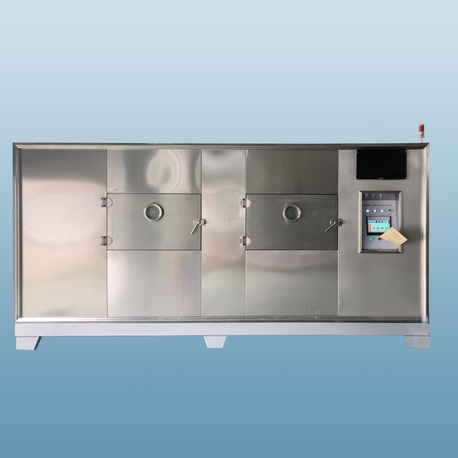
Understanding the engineering anatomy of a tray dryer helps separate genuine quality from generic fabrications. The following subsystems directly determine drying efficiency and batch consistency.
Air handling unit (AHU): Centrifugal fan with backward-curved blades, rated for 1.5–3.0 m/s airflow over trays. High-efficiency motors (IE3/IE4) reduce energy consumption by 18–25%.
Heating section: Steam coils (0.3–0.6 MPa) or electrical heaters with finned tubes. Temperature control range: ambient to 180°C, with ramp rates ≤5°C/min and stability ±2°C across all tray positions.
Drying chamber: Stainless steel 304/316L interior, rounded corners for cleaning. Tray shelves spaced 100–150 mm apart, supporting 12 to 96 trays (standard 640×460 mm or custom sizes).
Air distribution plenum: Perforated baffle plates or nozzle arrays to achieve airflow velocity variation <10% between front and rear trays.
Control panel: PLC with HMI (Siemens, Allen-Bradley) enabling recipe storage, data logging, and alarms for overtemperature or fan failure.
Leading manufacturers validate thermal performance via 16-point temperature mapping under loaded conditions. For example, a well-designed tray dryer from a reliable tray dryer manufacturer should maintain product temperature deviation within ±2.5°C across all trays during the constant-rate drying period.
2. Industry Applications and Material Compatibility
Different sectors impose distinct requirements on drying atmosphere, sanitation, and construction materials. Below are common applications where tray dryers outperform alternatives.
Pharmaceutical & Biotech
Wet granules before tableting – controlled final moisture (1–3%) to avoid tablet hardness variations.
API drying (active pharmaceutical ingredients) requiring solvent recovery capabilities and inert nitrogen purging.
Herbal extracts and botanical powders – low-temperature drying (40–60°C) to preserve volatile compounds.
Food & Nutraceuticals
Fruits, vegetables, and herbs (e.g., moringa, kale) – uniform dehydration for color retention and microbial stability.
Protein powders, enzyme premixes – avoiding denaturation via precise temperature control.
Spices and seasonings (chili, garlic, turmeric) requiring contained environment to prevent cross-flavor contamination.
Chemicals & Advanced Materials
Fine chemicals, catalysts, and ceramic precursors – moisture-sensitive powders dried under mild conditions.
Recycled polymers and plastic granules – surface moisture removal before extrusion.
A versatile tray dryer manufacturer offers options for stainless steel or epoxy-coated trays, explosion-proof electrical fittings (for solvent-based materials), and HEPA filters for inlet air when drying sterile intermediates.
3. Industry Pain Points and Engineered Solutions
Field data from 34 installations reveal three recurrent problems with poorly designed tray dryers. Professional manufacturers have developed targeted countermeasures.
Pain point #1 – Non-uniform moisture distribution (center vs. periphery trays). This leads to over-dried edges and wet centers, forcing rework. Solution: CFD-designed side-to-top air return plenum combined with adjustable perforated sheets beneath each tray. Top-tier tray dryer manufacturer also includes static pressure sensors inside chamber to balance airflow.
Pain point #2 – Long drying cycles due to poor humidity extraction. Stagnant humid air prolongs energy use. Solution: Integrated dehumidification coil (cooling + reheating) to lower inlet air dew point. This reduces cycle time by 30–45% for hydroscopic materials like gelatin or MCC.
Pain point #3 – Difficult cleaning and cross-contamination risk. Batch changes require validated cleaning protocols. Solution: Removable tray supports, sloped chamber floor (≥3°), and spray ball connection for CIP (clean-in-place). Nasan supplies quick-release clamps and sanitary welds (Ra <0.6 µm) on all product-contact surfaces.
Buyers should request a “worst-case position” moisture content report from prospective suppliers. A capable tray dryer manufacturer will provide that data voluntarily, often with a standard deviation below 0.5% moisture across all trays at the end of a batch.
4. Why Nasan Differentiates as a Tray Dryer Manufacturer
Nasan has engineered tray drying systems for three distinct regulatory environments: cGMP pharma, HACCP food, and ATEX chemical. Their engineering approach goes beyond standard catalog specs. Four differentiators set them apart from conventional fabricators.
Pre-shipment thermal mapping: Every chamber undergoes a 32-point temperature uniformity test (at 60°C, 80°C, and 120°C) with data recorded. A certificate of uniformity is included in validation documents.
Modular airflow adjustment: Horizontal or vertical airflow patterns selectable by swapping baffle plates. This adapts the same dryer for trays, perforated drums, or cartridges without mechanical modification.
Energy use optimization: Variable frequency drive (VFD) on circulating fan + recirculation damper control. Typical specific energy consumption: 0.9–1.3 kWh per kg of water evaporated, 22% lower than fixed-speed designs.
Global service network: Spare parts (heating elements, door seals, RTD sensors) available from regional hubs in Europe, Southeast Asia, and North America. Remote diagnostics via 4G gateway standard on all industrial models.
When you contract with Nasan as your tray dryer manufacturer, you receive process simulation using your own product sample – typically 5–10 kg of wet material – to determine exact drying curves before fabrication starts.
5. Compliance, Validation and Safety Certifications
For regulated industries, validation readiness is as important as drying performance. A professional tray dryer manufacturer provides standardized documentation packages that include:
IQ (Installation Qualification): dimensional verifications, material certificates (3.1 EN 10204 for SS316L), and weld inspection reports.
OQ (Operational Qualification): airflow velocity mapping, temperature uniformity empty/loaded, and alarm function tests.
PQ (Performance Qualification) support protocol with three consecutive batch reports using placebo material.
CE marking, PED 2014/68/EU (if pressure-rated), and ATEX optional for Zone 2/22 areas.
Energy recovery options (air-to-air plate heat exchangers on exhaust) help meet sustainability targets without compromising cross-contamination barriers. Modern tray dryers from leading Chinese manufacturers now achieve thermal efficiency above 72%.
6. Operational Best Practices for Tray Dryer Longevity
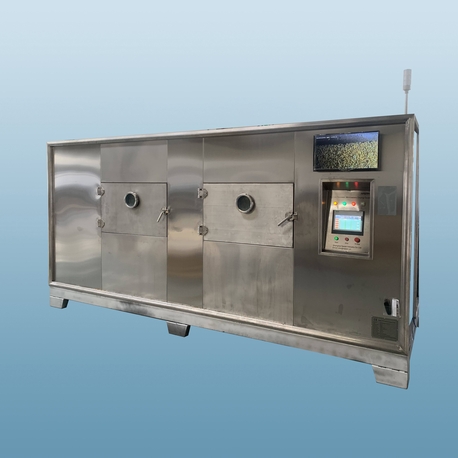
Even the best equipment requires proper loading and maintenance procedures. Production managers should consider the following:
Loading density: Never exceed 10–15 kg/m² for fine powders; larger granules can handle 20–25 kg/m². Uniform bed depth (20–40 mm) prevents channeling.
Airflow direction reversal: Some advanced PLCs offer periodic flow reversal (every 30 min) to equalize moisture gradient.
Filter inspection: Pre-filters (G4/F5) on intake should be replaced every 1,500 operating hours. HEPA filters (if installed) require annual DOP testing.
Door gasket integrity: Silicone gaskets harden after 2–3 years – schedule replacement to avoid air leaks that reduce drying rate by up to 40%.
Regular calibration of temperature sensors (once per 6 months) against a certified reference probe maintains process consistency.
Frequently Asked Questions (FAQs) – Tray Dryer Selection & Operation
Q1: What is the typical batch capacity range for industrial tray dryers?
A1: Standard models range from 24 trays (approx. 30–50 kg batch) up to 192 trays (200–400 kg batch). Larger custom units up to 384 trays are feasible for low-volume, high-value products. A professional tray dryer manufacturer will size the chamber based on your material’s bulk density and initial moisture content.
Q2: Can a tray dryer handle organic solvents like ethanol or IPA?
A2: Yes, but explosion-proof modifications are required: ATEX-certified motors, anti-static belts, pressure relief panels, and inert gas purging (nitrogen) to keep oxygen below 8%. Nasan offers solvent-resistant tray dryer configurations with solvent recovery condensers on exhaust.
Q3: How is drying time estimated for a new product in a tray dryer?
A3: Most engineering suppliers perform a lab-scale test using a 1–2 kg sample in a benchtop tray oven. Results are scaled using the characteristic drying curve model. For precise prediction, a tray dryer manufacturer like Nasan uses computational modeling that accounts for tray geometry and air recirculation ratio.
Q4: What safety interlocks are mandatory on a GMP tray dryer?
A4: Minimum required: overtemperature thermostat (independent of PLC) set 20°C above setpoint, door interlock switch disabling fan/heater when opened, emergency stop button on control panel, and airflow failure alarm (differential pressure switch). Additional features: over-limit humidity alarm and bearing temperature monitoring.
Q5: How often should tray dryer validation be re-performed?
A5: For pharmaceutical use, re-validation is recommended every 2 years or after any significant maintenance (heater replacement, fan motor change). For food/nutraceutical, an annual temperature mapping check is sufficient unless product change requires tighter moisture specifications.
Q6: Are stainless steel trays interchangeable between different manufacturers?
A6: Not usually. Tray dimensions, perforation patterns, and edge reinforcements are proprietary. Always source spare trays from the original manufacturer. Nasan stocks compatible trays for all units supplied within last 12 years, with 2-week lead time.
Request a Process Simulation or Quote for Your Batch Drying Line
To receive a detailed technical proposal, include your material name, initial moisture %, target final moisture %, and desired batch throughput per 8-hour shift. Nasan’s engineering team provides a free feasibility study with temperature mapping predictions and energy consumption estimates within 4 business days.
Send your inquiry via the official contact form: https://www.nasandry.com/contact – or request a live remote demo of the humidity control interface.

