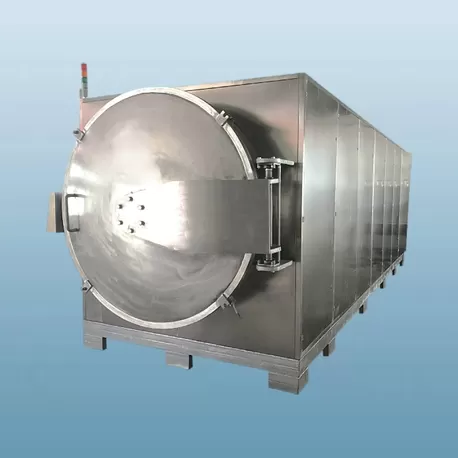
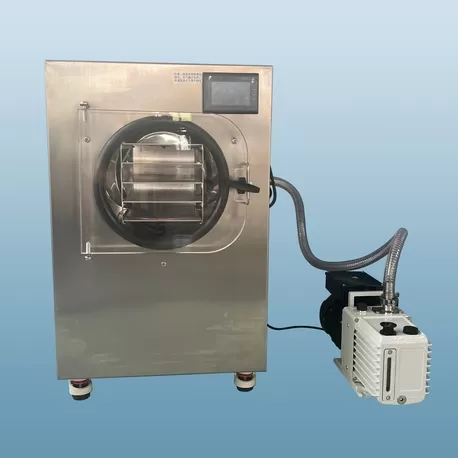
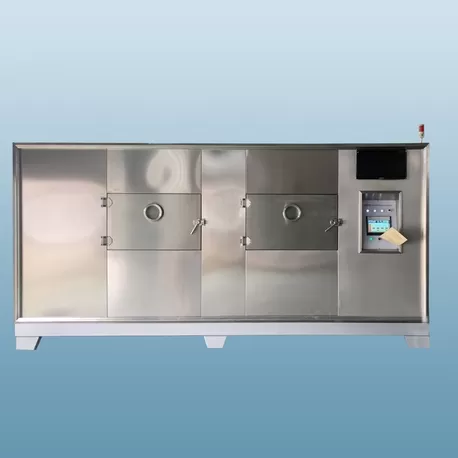
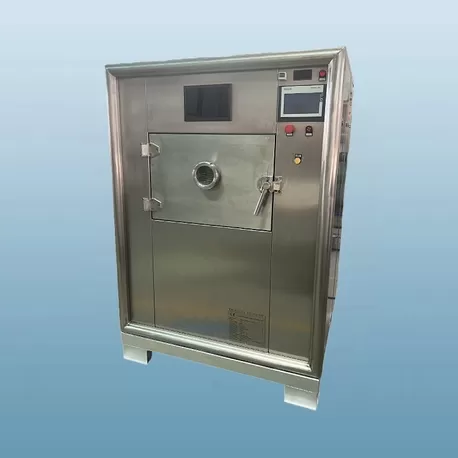
Drying is a fundamental process for preserving food, herbs, and other materials. While many are familiar with small countertop appliances, larger-scale operations require far more robust solutions. An industrial dehydrator oven is engineered for continuous, high-volume production, offering precision and reliability that consumer models cannot match. These systems are critical for businesses that need to ensure product consistency, shelf life, and food safety. Manufacturers like Nasan provide commercial-grade dehydrator ovens built to meet the stringent demands of food processors worldwide.
The basic principle of removing moisture through warm air is simple. However, executing this efficiently and consistently on an industrial scale requires sophisticated engineering. An industrial dehydrator oven integrates precise heating, airflow management, and control systems to manage the entire drying curve.
Unlike a simple heating element, an industrial unit uses multiple heating zones and sensors. This allows for exact temperature management, often within a +/- 1°C range. The heat is distributed evenly via a system of fans and ducts. This ensures that every tray or shelf receives the same amount of warm air, preventing hotspots that can lead to uneven drying and product waste.
The key to efficient drying is not just heat, but the removal of moisture-laden air. Industrial dehydrator ovens actively manage humidity. They have exhaust vents that expel wet air and often include dampers to control the rate of air exchange. Some advanced models integrate dehumidification systems or heat pumps to recycle energy while actively lowering the chamber's humidity. This creates a stronger driving force for moisture evaporation, speeding up the process and improving quality.
Investing in an industrial-grade system offers distinct benefits that directly impact a business's productivity, product quality, and profitability. These are the primary advantages over using smaller, domestic units for commercial purposes.
An industrial dehydrator oven is built for volume. Its internal chamber can accommodate dozens of square meters of drying space. This allows businesses to process hundreds of kilograms of raw material in a single batch. Furthermore, optimized airflow and heat transfer significantly reduce drying times compared to smaller appliances, enabling faster turnaround and higher throughput.
Consistency is non-negotiable in commercial production. The precise control systems in an industrial oven ensure that every batch dries exactly the same way. This results in uniform moisture content, color, texture, and flavor across all finished products. Such consistency is essential for brand reputation, meeting customer specifications, and complying with food safety standards where water activity levels are regulated.
Constructed from food-grade stainless steel and industrial components, these ovens are made for continuous operation. They are designed with safety features like overheat protection and proper electrical ratings. Their energy-efficient design, often incorporating heat recovery, lowers the cost per kilogram of dried product. This robust construction and efficiency lead to a lower total cost of ownership over time, a focus for equipment from providers like Nasan.
The use of industrial dehydrator ovens spans a wide range of sectors where controlled drying is a key processing step. Their versatility makes them valuable assets in many facilities.
They are extensively used for drying fruits (mangoes, apples, berries), vegetables (onions, carrots, herbs), and edible flowers. The production of meat jerky and fish is another major application. Beyond food, these ovens are used for drying certain pharmaceuticals, nutraceutical herbs, and botanical extracts where precise temperature control is vital to preserve active compounds. They are also employed in laboratories for test sample preparation.
Understanding the differences between equipment designed for home use and for factory use is crucial for making the right investment. Here is a clear comparison based on key operational aspects.
A domestic dehydrator is typically made from plastic and has a simple on/off thermostat. An industrial dehydrator oven is constructed from stainless steel, built to sanitary standards, and features a programmable logic controller (PLC). The PLC allows operators to set complex drying profiles with multiple stages, automating the entire process for repeatable results.
Home units often have a single fan at the base or back, leading to uneven drying where trays closest to the fan dry faster. Industrial ovens use engineered airflow systems—such as horizontal airflow (HAF) or vertical airflow (VAF)—that are scientifically designed to ensure the same air velocity and temperature reaches every part of every tray, guaranteeing uniform product quality.
While a domestic unit may use 500 watts to dry a few kilograms, an industrial oven might use 20kW to dry hundreds of kilograms. However, the energy cost per kilogram of dried product is typically much lower in the industrial unit due to better efficiency, insulation, and scale. The higher initial cost of an industrial oven is justified by its durability, output, and lower operational cost per unit of production.
Choosing the right commercial dehydrator oven requires careful evaluation of your specific needs. Focus on these practical factors to find the best fit for your operation.
Q1: Can I use a regular commercial oven as a dehydrator oven?
A1: It is not ideal. Commercial baking ovens are designed for high-temperature cooking and lack the precise low-temperature control (often needed below 70°C), uniform airflow, and humidity venting systems of a dedicated dehydrator oven. Using a regular oven typically results in uneven drying, case-hardening, and higher energy costs for the task.
Q2: What temperature should I set for drying different fruits and vegetables?
A2: Optimal temperatures vary. Delicate herbs and spices are often dried at 35-45°C. Most fruits and vegetables dry well between 50-60°C. Meats for jerky require higher temperatures, around 65-70°C, for food safety. An industrial unit allows you to program and save these specific profiles.
Q3: How do I clean and maintain an industrial dehydrator oven?
A3: Daily cleaning of trays and interior surfaces is essential. Regular maintenance includes inspecting and cleaning air filters, checking fan motors and bearings for wear, verifying calibration of temperature sensors, and ensuring electrical connections are tight. Follow the manufacturer's scheduled maintenance plan.
Q4: What is the difference between a dehydrator oven and a freeze dryer?
A4: A dehydrator oven uses warm air to evaporate moisture. A freeze dryer first freezes the product and then uses a vacuum to sublimate ice directly into vapor. Freeze drying preserves shape, color, and nutrients better but is far more expensive to purchase and operate. Dehydrator ovens are the cost-effective choice for most large-scale commercial drying applications.
Q5: How important is the material of construction for the oven interior?
A5: It is critically important for food safety, durability, and cleanliness. Grade 304 or 316 stainless steel is the standard. It is non-porous, corrosion-resistant, easy to sanitize, and can withstand the humid, acidic environment inside a dehydrator oven. It also ensures no contaminants leach into the product.
For any business serious about commercial drying, an industrial dehydrator oven is a necessary investment. It provides the control, capacity, and consistency required for professional production, far surpassing the capabilities of domestic appliances. By focusing on precise engineering for heat and airflow management, these systems ensure high-quality output and operational efficiency. When selecting equipment, consider partnering with established manufacturers like Nasan, who offer the expertise and reliable technology needed to integrate a robust drying solution into your production line successfully.