News Categories

Hot Articles

Microwave Sterilize Technology: 5 Key Advantages for Modern Food Processing

Source:NASAN
Published on:2026-02-18 14:06:48

Food safety and shelf-life extension are critical challenges in the global food industry. Traditional thermal methods can sometimes compromise product quality. Microwave sterilize technology offers a modern alternative, using electromagnetic energy to eliminate pathogens efficiently. This method provides rapid, uniform heating from within the product, leading to effective sterilization with better quality retention. Industrial-scale systems are becoming essential for processors aiming to meet stringent safety standards while preserving taste and nutrients. Companies like Nasan are at the forefront of integrating this advanced technology into robust, production-ready equipment.

How Industrial Microwave Sterilize Systems Work

The process relies on the interaction between microwave energy and water molecules within the product. Unlike conventional heating which relies on conduction from the surface, microwaves generate heat volumetrically. This fundamental difference is what drives the efficiency and effectiveness of the microwave sterilize process.

1. The Principle of Dielectric Heating

Microwaves are a form of non-ionizing electromagnetic radiation, typically at a frequency of 2450 MHz. When these waves encounter polar molecules like water, the molecules rotate rapidly to align with the alternating electric field. This molecular friction generates heat directly inside the material. This means the entire product heats simultaneously, drastically reducing processing time compared to waiting for heat to slowly penetrate from the outside in.

  • Direct Energy Transfer: Microwaves penetrate packaging and product, exciting water molecules throughout.
  • Volumetric Heating: Heat is generated within the entire mass of the product at once.
  • Frequency Specificity: The 2450 MHz frequency is highly effective for agitating water molecules in food matrices.

2. System Components and Process Control

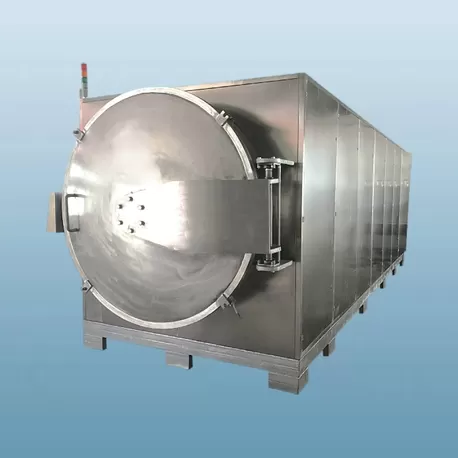
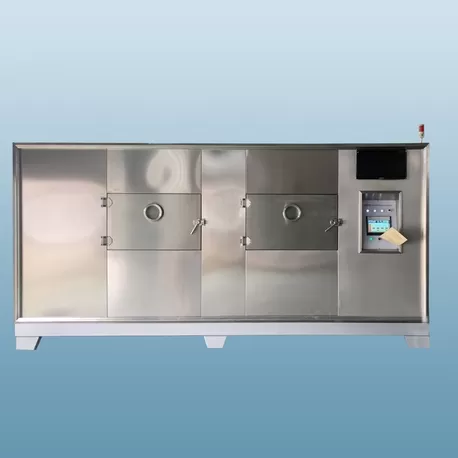
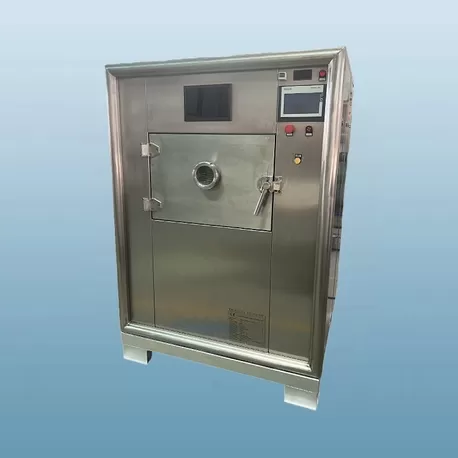
An industrial microwave sterilize system consists of a microwave generator (magnetron), an applicator or chamber where the product is exposed, a conveyor system, and sophisticated controls. The key to success is even exposure. Engineers design the chamber and use mode stirrers or specific conveyor layouts to ensure microwave energy is distributed uniformly, preventing cold spots where pathogens could survive.

Temperature and pressure are closely monitored and controlled. Since the process is so fast, precise sensors and programmable logic controllers (PLCs) are vital. They adjust power levels and exposure times in real-time to ensure every product unit reaches the required thermal dose for sterilization. This level of precision is a hallmark of professional systems from manufacturers like Nasan.

5 Core Advantages of Microwave Sterilization

Adopting microwave technology for sterilization provides tangible benefits over traditional retort or hot-air methods. These advantages impact safety, quality, and operational costs.

1. Superior Product Quality and Nutrient Retention

The rapid, internal heating minimizes the time food is exposed to high temperatures. This significantly reduces the overcooking effect often seen with conventional methods. Color, texture, and fresh flavor are preserved remarkably well. Heat-sensitive vitamins and nutrients also experience less degradation, resulting in a healthier, better-tasting final product.

2. Dramatically Reduced Processing Time

Traditional sterilization can take hours to ensure heat penetrates to the center of a package. Microwave sterilization can achieve the same lethality (F0 value) in a fraction of the time—often minutes instead of hours. This increase in throughput allows for higher production capacity without expanding floor space.

3. High Energy Efficiency and Lower Operating Costs

Microwave systems convert electrical energy directly into heat within the product, with minimal losses to the surrounding environment. There is no need to heat large volumes of water or air first. This targeted energy use leads to lower utility consumption per kilogram of processed product, improving the operation's overall sustainability and cost profile.

4. Flexibility and Uniformity in Processing

Microwave energy penetrates most packaging materials (plastic, glass) and product shapes effectively. This allows for more flexibility in package design compared to methods limited by metal cans. Advanced systems ensure uniform sterilization even in complex or dense products, overcoming a common hurdle in thermal processing.

5. Enhanced Food Safety and Process Control

The speed and controllability of microwave sterilize technology minimize the risk of under-processing. Automated controls and precise monitoring ensure the exact thermal dose is delivered consistently to every unit. This creates a highly reliable safety barrier against pathogens like Clostridium botulinum, Listeria, and E. coli.

Key Applications in the Food and Allied Industries

The unique benefits of microwave sterilization make it suitable for a range of high-value and sensitive products where quality is paramount.

It is extensively used for ready-to-eat meals, sauces, and soups in flexible pouches. The dairy industry uses it for sterilizing milk and cream-based products. It is ideal for fruit preparations, jams, and baby food where nutrient preservation is critical. The pharmaceutical and nutraceutical industries also employ this technology to sterilize heat-sensitive liquids and gels without compromising active ingredients.

Comparing Microwave Sterilization with Traditional Methods

Understanding how microwave technology stacks up against established techniques helps in making an informed processing choice.

Microwave vs. Retort (Autoclave) Sterilization

Retort sterilization uses saturated steam under pressure. It is reliable but slow, leading to significant quality degradation (mushy texture, cooked flavor). Microwave sterilization is faster and preserves quality better. However, retort systems have lower upfront costs and are deeply entrenched in many facilities. Microwave represents a higher initial investment for long-term gains in quality and efficiency.

Microwave vs. Hot Air / Conventional Thermal Sterilization

Hot air ovens rely on conduction and convection, which are inefficient and cause extreme surface heating. This often leads to case-hardening and uneven sterilization. Microwave energy bypasses these limitations by generating heat within. For pastes, powders, and granular products, microwave sterilization offers far more uniform results without damaging the product's surface.

Microwave vs. Chemical / Ethylene Oxide (EtO) Sterilization

Chemical methods like EtO are used for heat-sensitive medical devices but leave toxic residues and are heavily regulated. For food, chemical sterilization is generally not acceptable. Microwave provides a clean, residue-free, physical method of sterilization that is both safe and environmentally friendly, with no chemical handling or off-gassing concerns.

6 Critical Factors for Implementing an Industrial System

Successfully integrating microwave sterilization into a production line requires careful planning. Consider these factors before investment.

  • Product Dielectric Properties: The product's water content and composition directly affect how it interacts with microwaves. Testing is essential.
  • Uniformity and System Design: Ensure the supplier has a proven method for achieving even field distribution for your specific product type and package.
  • Capacity and Integration: Match the system's throughput to your line speed and consider how it will connect with upstream filling and downstream handling equipment.
  • Regulatory Compliance and Validation: The system must enable you to validate the sterilization process to meet FDA, USDA, or other relevant food safety authorities' requirements.
  • Safety Features: Industrial systems must have robust shielding, interlocks, and leakage prevention to protect operators from microwave exposure.
  • Supplier Expertise and Support: Choose a partner with deep application knowledge and strong after-sales support, such as Nasan, to ensure a smooth implementation and reliable operation.

Frequently Asked Questions (FAQs)

Q1: Is microwave sterilization safe? Does it make food radioactive?

A1: Yes, it is completely safe. Microwave sterilization uses non-ionizing radiation, the same type used in household microwave ovens but in a controlled industrial system. It does not and cannot make food radioactive. The process only generates heat through molecular friction, and once the power is off, no radiation remains in the food or the chamber.

Q2: Can microwave sterilization be used for metal packaging?

A2: Generally, no. Metal reflects microwaves and causes arcing, which is dangerous and ineffective. This technology is primarily used with microwave-transparent packaging like certain plastics, glass, and composite materials. This allows for innovative, lightweight, and convenient package formats.

Q3: How does microwave sterilization affect spores?

A3: It destroys them through heat. The rapid and uniform temperature rise achieved by microwaves is highly effective at inactivating even thermophilic bacterial spores (like Clostridium botulinum) when the proper time-temperature profile is applied. The thermal lethality (F0 value) is the same metric used for retort validation.

Q4: What are the main limitations of this technology?

A4: The primary limitations are higher initial capital cost compared to some traditional systems and the need for careful product and package development. Not all products heat uniformly if their composition is highly heterogeneous, and achieving perfect field uniformity in the chamber requires expert engineering.

Q5: How do I validate a microwave sterilization process?

A5: Validation follows principles similar to thermal process validation. It involves using biological indicators and temperature profiling with fiber-optic sensors to map the coldest spot in the product. You must demonstrate that the minimum required thermal dose is consistently delivered to all parts of all packages. Reputable equipment suppliers provide critical support during this validation.

Microwave sterilize technology represents a significant advancement in food and pharmaceutical processing. By delivering fast, uniform, and efficient thermal treatment, it achieves the essential goal of pathogen elimination while maximizing product quality. For businesses looking to innovate, improve their product offering, and enhance operational efficiency, investing in industrial microwave sterilization is a forward-thinking strategy. Exploring the engineered solutions from experienced providers like Nasan is a logical step toward implementing this powerful and proven technology.

Tags:

Related News

More +