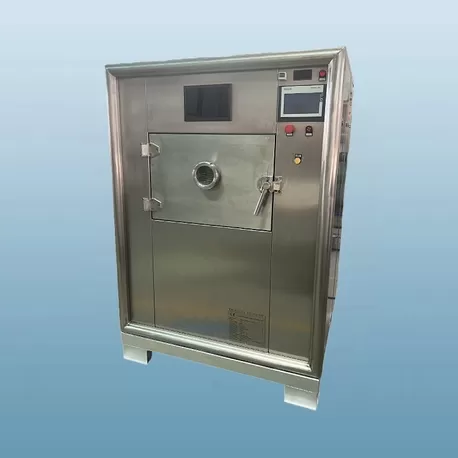
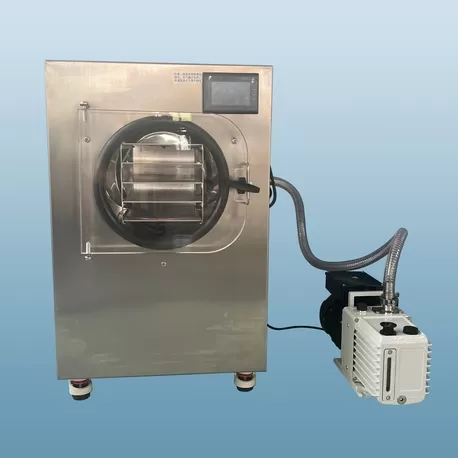
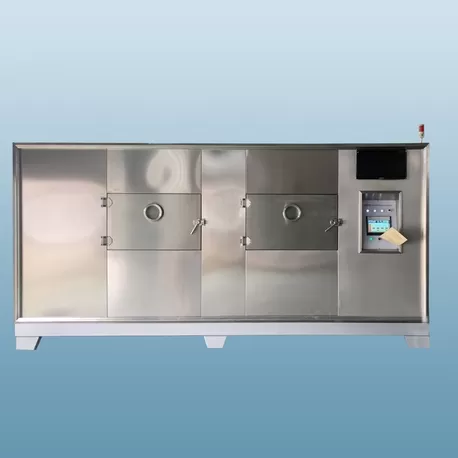
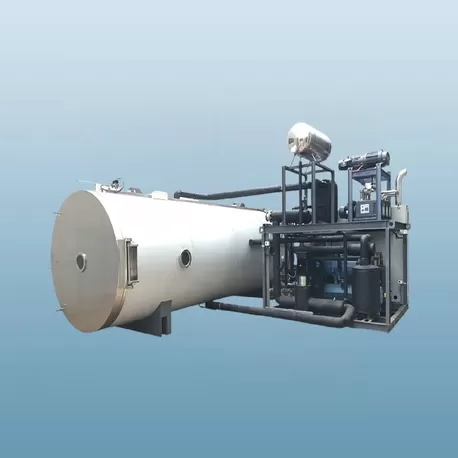
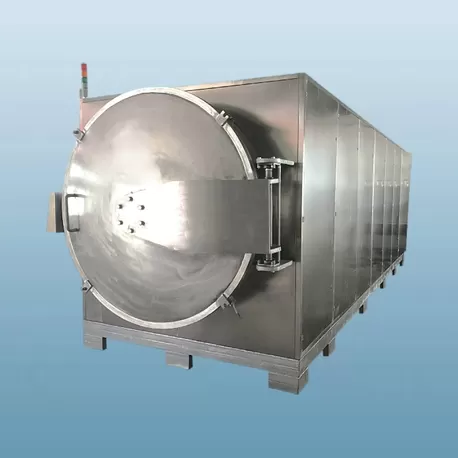
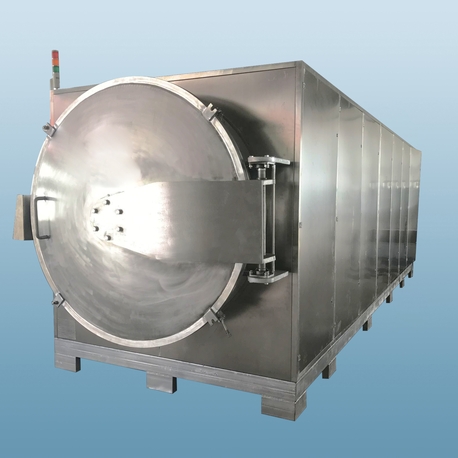
Industrial lyophilization has moved beyond basic preservation. Today,
production-scale freeze drying demands uniform heat transfer, sub-1Pa vacuum
integrity, and automated control cycles that comply with GMP and FDA standards.
Over the past decade, engineering improvements from Chinese manufacturing hubs
have redefined cost-performance benchmarks. Among established suppliers,
Nasan delivers integrated freeze dryer platforms that
address energy efficiency and scale-up reproducibility. A modern China freeze dryer is no
longer a commodity — it is a precision tool built for validated processes, from
monoclonal antibody production to high-value food ingredients.

1. Technical Architecture of a Production China Freeze Dryer
Understanding core subsystems helps engineers match equipment to specific
product characteristics. Below are the five critical modules of any industrial
lyophilizer manufactured in China.
Refrigeration & shelf cooling: Two-stage cascade or
single-stage compressor sets with silicone oil circulation. Typical shelf
temperature range: -55°C to +70°C, with ramp rates ≥1°C/min under full
load.
Vacuum system: Dry screw pumps + roots blower combinations
reaching ultimate pressure ≤0.5 Pa. Leak rate must stay below 0.005 Pa·m³/s for
pharmaceutical batches.
Condenser (ice trap): Coiled stainless steel or finned
coils, condenser temperature ≤ -75°C. Ice capture efficiency >98% for 30kg/m²
ice load per cycle.
Hydraulic/thermal fluid circulation: Plate heat exchangers
and high-temperature valves for secondary drying (up to +70°C shelf temperature
uniformity ±1°C).
Control & data acquisition: Siemens or Allen‑Bradley
PLCs with SCADA, 21 CFR Part 11 audit trails, recipe management, and remote
diagnostic ports.
Advanced Chinese systems now incorporate capacitance manometers for vapor
pressure measurement and automated freeze-dry microscopy (FDM) interfaces. These
features directly reduce primary drying time by 12–18% compared to legacy
designs.
2. Key Industrial Applications Where China Freeze Dryer Platforms Excel
Different sectors impose unique process constraints. Leading Chinese
manufacturers have accumulated specialized references for the following
verticals.
Pharmaceutical & Biopharmaceutical
Vials of therapeutic proteins (mAbs, vaccines, antibody-drug conjugates) –
requiring controlled nucleation and avoidance of collapse temperature.
Liposomes and nanoparticles: fast freezing protocols to preserve particle
size distribution.
Diagnostic reagents and blood plasma products – validated sterile
lyophilization with isolated loading/unloading barriers.
Food & Nutraceutical Ingredients
Freeze-dried probiotics, lactic acid bacteria cultures – protection against
moisture and oxygen during secondary drying.
Premium instant coffee, fruit powder, and herbal extracts – preserving aroma
and bioactive compounds.
Emergency ration meals and space food applications.
Technical & Advanced Materials
Aerogel composites, metallic oxide nanoparticles, ceramic precursors where
solvent removal must avoid pore collapse.
Preserving biological tissue scaffolds for medical implants.
Production flexibility distinguishes current Chinese equipment:
interchangeable shelf spacing (50mm–120mm) and in-situ steam sterilization (SIP)
enable multi-product facilities to switch between drug vials and bulk trays
within hours.
3. Industry Pain Points and Engineered Solutions from Modern Chinese
Systems
Despite apparent maturity, operators still report three main challenges with
freeze dryers. Advanced China freeze dryer designs now provide concrete
solutions.
Pain point #1 – Non-uniform shelf temperature distribution: Variations >2°C between edges and center cause batch rejection.
Solution: CFD-optimized fluid channels + embedded Pt100 sensors on each
shelf. Closed-loop PID control reduces deviation to ±0.5°C across all
shelves.
Pain point #2 – Long primary drying time due to conservative
pressure setpoints: Operators often use fixed chamber pressure
(10–30Pa) regardless of product resistance. Solution: Tunable diode
laser absorption spectroscopy (TDLAS) measures water vapor concentration in
real-time, allowing automated pressure increase during the primary drying
plateau. Average cycle time reduction: 8-14 hours per batch.
Pain point #3 – Difficult CIP (clean-in-place) validation for potent
compounds: Dead legs and rough welds trap residues. Solution: Electropolished stainless steel (Ra < 0.4µm), fully draining sloped ducts,
and spray ball coverage validated via riboflavin test. Automated CIP recipes
include alkaline/acid rinses with conductivity verification.
Data from field installations shows that addressing these three points lowers
batch failure rates from ~4% to under 0.8%, while also cutting energy usage per
kilogram of ice condensed by 22%.
4. How Nasan Delivers Performance and Compliance in China’s
Freeze Dryer Market
Nasan has supplied over 280 industrial lyophilizers
globally, ranging from pilot units (0.5m²) to large production lines (50m²).
Their engineering team focuses on validated performance rather than generic
specifications. Three differentiators stand out for B2B buyers sourcing a
China freeze dryer:
Process simulation at design stage: Before fabrication,
Nasan uses computational fluid dynamics (CFD) and heat/mass transfer models to
predict the drying curve for your specific product (e.g., 5% sucrose solution or
20% skim milk). This eliminates guesswork during commissioning.
Modular utility integration: Pre-assembled skids for
refrigeration, vacuum, and CIP/SIP reduce on-site installation time by 40%
compared to field-assembled systems. All interconnecting pipes are factory
pressure-tested and insulation-integrated.
Controlled nucleation option (ice fog seeding): For
biopharmaceuticals sensitive to ice crystal size, Nasan provides vacuum-induced
surface freezing (VISF) technology. This creates uniform, fine ice structure,
decreasing primary drying time by up to 30% while improving reconstitution
time.
Third-party performance certificates (TÜV SÜD, CE, GMP-compliant FAT)
accompany each unit. Nasan’s after-sales team also supplies spare parts (shelf
temperature sensors, vacuum pump rebuild kits) with 48-hour dispatch from
regional warehouses in Europe and Southeast Asia.
5. Compliance, Validation and Energy Efficiency Metrics
For regulated industries, validation packages are non-negotiable. Modern
Chinese freeze dryer suppliers provide:
IQ/OQ protocols (installation/operational qualification) including
temperature mapping reports and vacuum leak rate tests.
PQ support (performance qualification) with three consecutive batch runs
using placebo/product.
Software validation summary for 21 CFR Part 11 (electronic signatures, audit
trail, user privilege levels).
Energy consumption baseline: per m² of shelf area, typical advanced
China freeze dryer consumes 18–25 kWh per batch for sublimation
– roughly 35% lower than Japanese or European models from 2015 generation, due
to variable-frequency drives (VFD) on compressors and heat recovery from
condenser defrost loops.
Facility engineers should also evaluate water usage: new Chinese designs
recirculate defrost water through a cooling tower loop, cutting process water
consumption by 60% versus once-through systems.
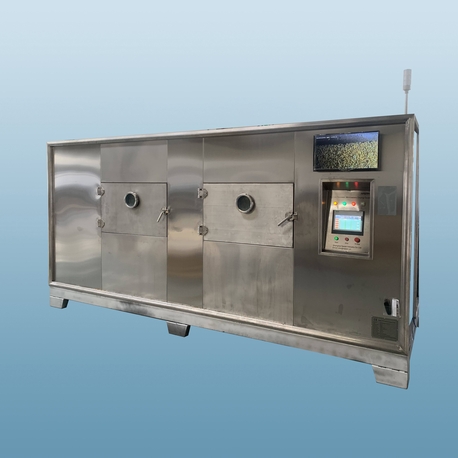
6. Emerging Trends: Automation, Remote Diagnostics, and Continuous
Manufacturing
China’s freeze dryer R&D is shifting toward IIoT connectivity. Top-tier
suppliers now embed vibration sensors on vacuum pumps and temperature trend
anomaly detection via cloud-based dashboards. For contract manufacturing
organizations (CMOs), adaptive control algorithms propose real-time adjustments
to shelf heating ramp rates based on product temperature feedback from wireless
probes inside vials. Moreover, semi-continuous freeze dryers (rotary or
multi-chamber carousel designs) are being piloted – these reduce hold times
between batches, increasing annual throughput by 250% for high-volume products
like generic antibiotics.
When evaluating a China freeze dryer for future expansion,
ensure the control platform supports open protocol (OPC-UA) and batch recipe
exchange via SQL databases. Proprietary locked-down systems quickly become a
bottleneck in Industry 4.0 pharmaceutical plants.
Frequently Asked Questions (FAQs) – Industrial Freeze Dryer Selection &
Operation
Q1: What shelf area range is typical for a production China freeze
dryer?
A1: Chinese manufacturers offer modular designs from 2m²
(for R&D and small clinical batches) up to 50m² (large-scale vaccine or food
plants). The most commonly ordered sizes for mid-volume pharmaceutical
production are between 10m² and 25m², with 1,200 to 2,500 vials per batch (10R
vial size).
Q2: How do you validate sterile boundary integrity on a freeze dryer with
stoppering mechanism?
A2: Full validation includes three steps: (i) helium leak
test on the chamber after CIP/SIP cycle; (ii) biological indicator (B.
atrophaeus spores) placed inside vials across all shelf zones; (iii) pressure
rise test (PRT) at 10 Pa/min threshold. Leading Chinese suppliers provide
automatic PRT routines before stoppering.
Q3: Can a standard China freeze dryer handle organic solvent-based
formulations (ethanol, DMSO)?
A3: Yes, but modifications are required: explosion-proof
electrical components, inert gas purge (nitrogen blanketing), and
solvent-compatible seals (Viton or Kalrez). Condenser must operate at lower
temperatures (< -85°C) to prevent solvent vapor breakthrough. Nasan builds
optional "solvent-resistant" variants with ATEX-certified instrumentation.
Q4: What is the expected energy consumption per kg of ice condensed?
A4: In an efficient China freeze dryer with VFD compressors
and waste heat recovery, energy consumption ranges 0.8–1.1 kWh per kg of ice.
Older constant-speed systems consume 1.6–2.0 kWh/kg. For a 500 kg ice load
batch, upgrading to a modern system saves over 400 kWh per cycle.
Q5: How often should the vacuum pump oil and condenser coils be
serviced?
A5: Vacuum pump oil change every 3,000 operating hours (or
every 8–12 months under normal production). Condenser coil defrost and
inspection every 6 months for scaling or ice-pack uniformity checks. Nasan smart
control panels track running hours and push maintenance reminders via email.
Q6: Which international standards apply to China freeze dryer
manufacturing?
A6: CE marking (PED 2014/68/EU for pressure vessels), ASME
BPE (for bioprocessing equipment), ISO 9001:2015, and GMP-specific annexes for
sterile manufacturing. Always request a compliance matrix before
purchase.
Request Detailed Specifications or a Pilot Test
To receive a technical datasheet, customized layout drawing, or to arrange a
factory acceptance test (FAT) with your product sample, send your inquiry to
Nasan’s B2B engineering team. Include your batch
size, product type (solution concentration or solid), and desired daily
throughput. Nasan provides feasibility reports and energy consumption
simulations within 72 hours.
Start your inquiry here: https://www.nasandry.com/contact – or use the official form to
request live remote demonstration of the SCADA control system.