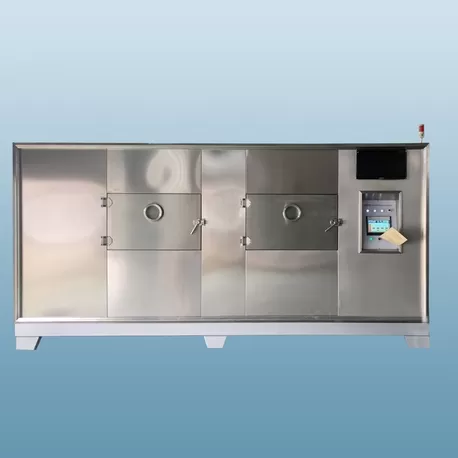
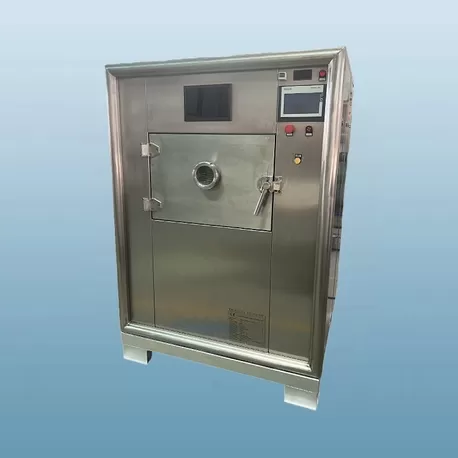
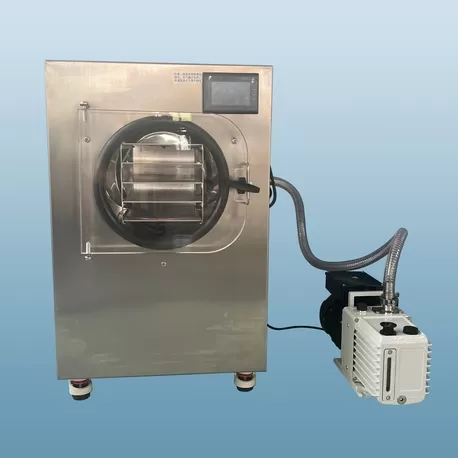
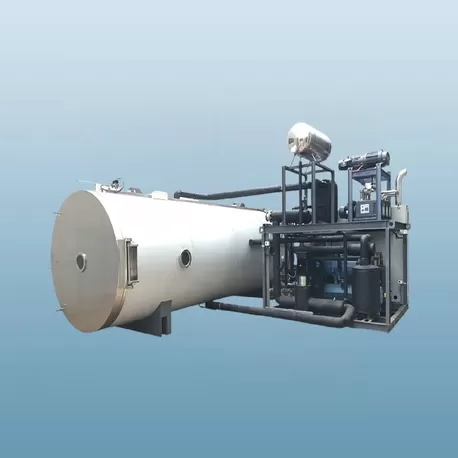
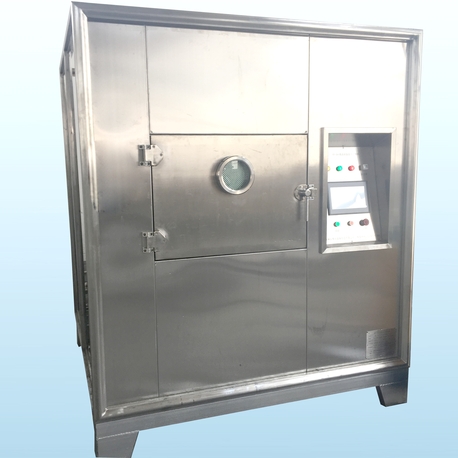
Industrial Meat Dehydrator | Semiconductor-Grade Precision Drying by NasanIn the global protein processing industry, the transition from artisanal drying methods to fully engineered, data-driven dehydration platforms represents the single largest leap in product consistency, food safety, and operational scalability. For operations managers, food technologists, and engineering leads, the selection of an industrial meat dehydrator directly determines yield, energy expenditure, and regulatory compliance. Drawing from principles used in semiconductor wafer fabrication—where temperature uniformity of ±0.5°C dictates die-level reliability—modern drying equipment must now satisfy similarly stringent performance criteria. Nasan has pioneered the convergence of these two demanding disciplines, delivering industrial drying infrastructure that redefines capability in meat preservation.
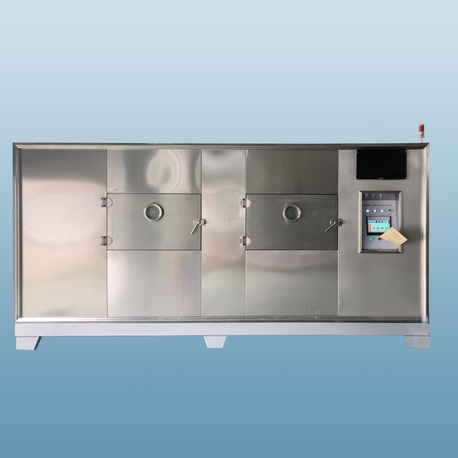
The Engineering Architecture of a High-Performance Meat Dehydrator
Conventional drying chambers often suffer from thermal gradients, uneven airflow, and open-loop control, resulting in moisture variability that compromises shelf life and texture. An advanced industrial meat dehydrator must integrate three core subsystems: thermodynamic fluid dynamics, multi-zone closed-loop regulation, and real-time moisture analytics. Drawing from semiconductor cleanroom standards, these systems eliminate the batch-to-batch inconsistency that plagues legacy equipment.
Airflow Uniformity & Static Pressure Engineering
In semiconductor diffusion furnaces, laminar flow patterns ensure that every wafer experiences identical thermal budgets. The same principle applies to protein dehydration. Nasan’s industrial dehydrators employ computational fluid dynamics (CFD)-optimized plenums and adjustable vane diffusers, achieving air velocity variation below ±3% across all trays. This eliminates “hot spots” and “wet pockets,” ensuring that jerky, biltong, or rendered protein ingredients achieve precise water activity (aw) targets between 0.70 and 0.85 without over-drying edge products.
Multi-Zone PID Control & Semiconductor-Grade Sensors
Temperature excursions are the primary cause of case hardening and microbial survival. A state-of-the-art meat dehydrator employs independent proportional-integral-derivative (PID) loops for each drying zone, with thermocouple placement mimicking semiconductor wafer-mapping protocols. Coupled with capacitive humidity sensors (accuracy ±1.5% RH), the control system dynamically modulates heating elements and damper actuators to maintain setpoint deviations under ±0.8°C. This level of precision is non-negotiable for USDA-inspected facilities producing ready-to-eat meat snacks.
Critical Applications Across the Protein Processing Spectrum
Modern industrial dehydration extends far beyond traditional jerky production. The following segments demand the performance characteristics of a semiconductor-grade meat dehydrator:
Pet food & treat manufacturing: High-protein inclusions (chicken breast, beef liver, fish) require low-temperature dehydration (45–60°C) to preserve palatability and enzymatic activity while achieving < 10% moisture for extended shelf life.
Functional meat ingredients: Powdered meat proteins and hydrolysates used in sports nutrition demand uniform dehydration to prevent scorching and maintain amino acid profiles; batch consistency is paramount.
Specialty cured meats: Artisanal salami, bresaola, and coppa rely on precisely controlled drying curves to avoid excessive weight loss (target 25–35%) while promoting desired mold ripening without pathogen proliferation.
Industry Pain Points: Why Conventional Drying Falls Short
Food processing engineers consistently report four critical failures with standard drying infrastructure. Each directly correlates to the absence of semiconductor-grade engineering in the meat dehydrator design.
Batch inconsistency: Traditional units exhibit >8% coefficient of variation (CV) in final moisture content across trays, leading to rejected batches and rework costs exceeding $15,000 per incident for mid-sized processors.
Energy inefficiency: Single-pass air systems without heat recovery consume 35–40% more kWh per kilogram of water removed, inflating utility budgets and carbon footprints.
Microbiological risk: Uneven drying creates zones where water activity remains above 0.90 for extended periods—ideal conditions for Staphylococcus aureus or Salmonella proliferation, jeopardizing FSMA compliance.
Limited data traceability: Lack of continuous monitoring and batch logging makes it impossible to conduct root-cause analysis during audits or customer complaints, a gap that modern B2B buyers consider unacceptable.
Nasan’s Paradigm: Semiconductor-Inspired Meat Dehydrator Solutions
Nasan addresses these challenges by applying manufacturing protocols borrowed from wafer fabrication: statistical process control (SPC), cleanability to sanitary design standards (3-A SSI), and fully documented validation protocols. Every industrial meat dehydrator in the Nasan portfolio features modular tray carts with integrated RFID tracking, allowing operators to correlate drying curves to specific production lots. The systems are equipped with:
High-efficiency cross-flow heat exchangers that recover 65% of exhaust enthalpy, reducing specific energy consumption (SEC) to
<1.2 kwh="">Sanitary 304 stainless steel interiors with fully radiused corners, eliminating harborage points for pathogens and reducing cleaning validation time by 50% compared to riveted designs.
Remote IoT connectivity with OPC-UA interface, enabling real-time parameter adjustments and predictive maintenance alerts—a prerequisite for Industry 4.0-ready food plants.
By integrating semiconductor-style process control, Nasan equipment achieves a process capability index (Cpk) > 1.33 for moisture content, meaning less than 63 ppm of batches fall outside specification. For protein processors operating under private-label requirements, this reliability translates directly to contract retention and brand protection.
Economic Justification: Total Cost of Ownership & ROI
Capital expenditure decisions for industrial drying equipment must weigh initial investment against long-term operational savings. A lifecycle analysis comparing Nasan’s precision meat dehydrator against conventional batch ovens reveals compelling metrics:
Energy savings: 28–32% reduction in natural gas/electricity consumption due to inverter-driven fans and multi-stage heat recovery.
Yield improvement: Elimination of over-drying saves 3–5% of raw material weight annually—for a facility processing 2,000 tons of meat per year, this equates to $120,000–$200,000 in recovered product.
Labor efficiency: Automated recipe management and remote monitoring reduce operator intervention by 8–10 hours per week, allowing redeployment to value-added tasks.
Compliance risk reduction: Full data logging and alarm history simplify third-party audits (BRC, SQF, FSSC 22000), cutting non-conformance costs by an average of $45,000 per year.
These advantages typically yield a payback period of 14–22 months, making the upgrade to a precision drying platform a fiscally justifiable investment for mid-to-large-scale protein manufacturers.

Future Trajectory: AI-Driven Drying & Industry 4.0 Integration
The next generation of industrial meat dehydrator technology will leverage machine learning to predict optimal drying curves based on real-time feedstock variability (fat content, initial moisture, muscle fiber density). Nasan’s R&D roadmap includes adaptive drying algorithms that self-optimize using historical batch data—a direct analog to process control in semiconductor etch and deposition tools. Early pilot data shows that such AI models can reduce drying time by an additional 12% while improving moisture uniformity by 20% compared to static recipe control. For B2B buyers, this represents an opportunity to future-proof their protein dehydration lines against rising labor costs and tightening food safety regulations.
Frequently Asked Questions (FAQ)
Q1: What distinguishes an industrial meat dehydrator from commercial or residential units?
A1: Industrial-grade meat dehydrator systems are engineered for continuous 24/7 operation, featuring sanitary construction (welded seams, hygienic drains), high-capacity airflow (typically >5,000 CFM), and precise environmental control with data logging. Residential units lack the thermal uniformity, throughput, and validation capabilities required for USDA-inspected facilities or large-scale contract manufacturing. Industrial platforms also integrate energy recovery and comply with global food safety standards like FSMA preventive controls.
Q2: How does Nasan ensure temperature uniformity across large drying chambers?
A2: Nasan utilizes computational fluid dynamics (CFD) modeling during the design phase to map air distribution. Each chamber is equipped with multi-zone PID controllers, independent heating modules, and high-torque backward-curved fans. Temperature mapping validation is performed per ISO 21807 guidelines, guaranteeing uniformity within ±1.0°C across all loaded trays—a level of precision that mirrors semiconductor furnace qualification protocols.
Q3: Can a single meat dehydrator handle different products like beef jerky, chicken strips, and pet treats without cross-contamination risk?
A3: Yes, when designed with proper sanitation protocols. Nasan’s systems feature smooth interior surfaces with no crevices, and optional HEPA-filtered inlet air minimizes airborne cross-contact. Between batches, a validated clean-in-place (CIP) or manual sanitation procedure can be executed; the equipment’s materials (316L stainless steel for high-moisture zones) resist corrosion and chemical cleaners. However, allergen management (e.g., beef vs. poultry) requires separate scheduling and validated allergen removal swab testing—a standard industry practice.
Q4: What is the typical ROI timeline for upgrading to a Nasan precision meat dehydrator?
A4: Based on data from installations in North America and Europe, the average ROI is realized within 16 to 24 months. The primary drivers are energy savings (25–35% reduction), reduced product giveaway from over-drying (3–5% yield gain), and decreased labor costs via automated recipe control. Facilities processing over 500 tons annually typically see payback at the lower end of that range. Nasan provides site-specific ROI modeling to support capital approval.
Q5: How does Nasan’s equipment support compliance with FSMA and international food safety standards?
A5: Every meat dehydrator from Nasan is designed with preventive controls in mind. Features include real-time monitoring of critical control points (temperature, air velocity, aw), automated deviation alarms, and complete batch history exportable in PDF or CSV format. The systems are built to 3-A Sanitary Standards and can be validated to meet requirements of BRC, IFS, and SQF certification. Furthermore, Nasan provides installation qualification (IQ) and operational qualification (OQ) documentation to streamline plant audits.
For protein processors seeking to eliminate variability, reduce energy intensity, and achieve semiconductor-grade repeatability in drying operations, the choice of drying platform dictates competitive positioning. Nasan continues to lead the convergence of advanced manufacturing discipline and food-grade safety, delivering industrial meat dehydrator solutions that meet the most rigorous engineering and regulatory demands of the global protein industry.