

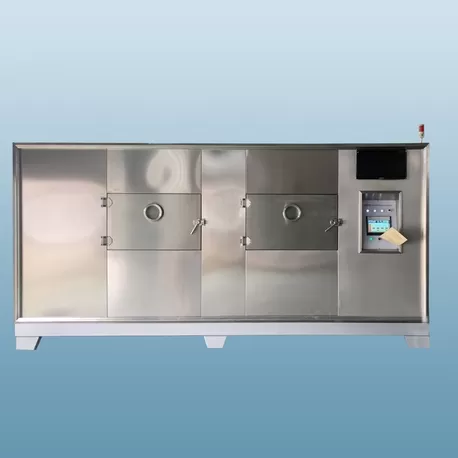
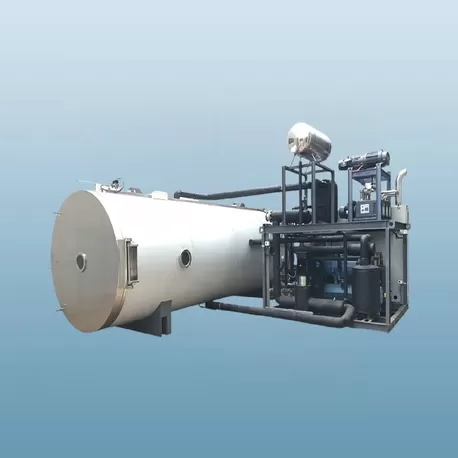
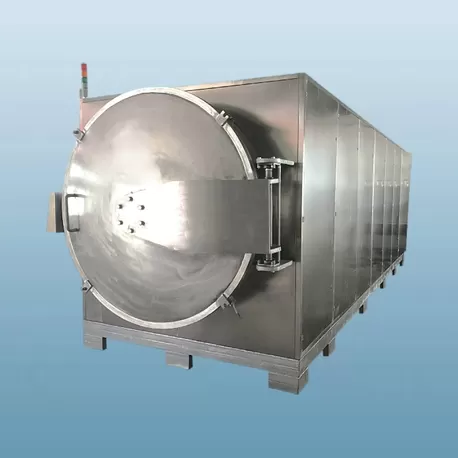
In industrial manufacturing, the hot air blower represents a critical thermal processing component that directly impacts product quality, energy efficiency, and production throughput. With over 22 years of experience designing industrial drying systems for automotive, pharmaceutical, and electronics manufacturing, I have observed that improperly specified blowers contribute to uneven drying, thermal degradation of sensitive materials, and energy waste exceeding 30% of operating budgets. This technical guide dissects the engineering principles that define high-performance hot air blower systems—from airflow dynamics and temperature control to application-specific configurations and lifecycle cost optimization.

1. Core Engineering Parameters: Airflow, Pressure, and Temperature
The performance of any hot air blower is defined by three interdependent variables that must be matched to the application:
Airflow Rate (CFM / m³/h)
Airflow determines heat transfer capacity and drying speed. For drying applications, a general rule is 100–150 CFM per square foot of surface area for convective drying. For example, a 4 ft × 8 ft drying tunnel requires 3,200–4,800 CFM. Undersized airflow results in extended cycle times; oversized airflow wastes energy and can cause turbulence that displaces lightweight products.
Static Pressure (inches H₂O / Pa)
Static pressure measures the blower's ability to overcome system resistance from ducts, filters, and nozzles. Industrial systems typically require 2–8 inches H₂O (500–2,000 Pa). High-static designs (up to 20 inches H₂O) are necessary for long duct runs, narrow nozzle arrays, or high-efficiency particulate air (HEPA) filtered systems.
Outlet Temperature Range & Uniformity
Operating temperatures vary by application:
Low-temperature drying (50–120°C): Pharmaceuticals, printed electronics, food dehydration.
Medium-temperature processing (120–350°C): Powder coating cure, ink drying, component preheating.
High-temperature applications (350–650°C): Annealing, glass forming, ceramic drying.
2. Heating Element Technologies: Resistance, Finned, and Ceramic
The heating system defines thermal efficiency and longevity. Three primary configurations dominate industrial hot air blower designs:
Open-coil resistance elements: Fast response (3–5 seconds to reach temperature), high power density (up to 50 W/in²). Suitable for clean air applications where oxidation of the element is acceptable. Typical lifespan: 8,000–12,000 operating hours.
Finned tubular heaters: Encapsulated elements with aluminum fins, providing 20–30% higher heat transfer efficiency than open coils. Lower surface temperature reduces risk of igniting airborne particulates—ideal for dust-laden environments. Lifespan: 15,000–20,000 hours.
Ceramic infrared elements: Emit long-wave infrared combined with forced convection. Used for rapid surface drying where volumetric heating is not required. Efficiency gains of 15–25% compared to pure convection systems in applications like ink or coating drying.
Leading manufacturers like Nasan offer modular heating cassettes that allow field replacement of elements without removing the entire blower assembly—reducing maintenance downtime by 70%.
3. Air Moving Systems: Centrifugal vs. Axial Fans
Fan selection directly affects system efficiency and noise characteristics:
Centrifugal (radial) fans: Generate higher static pressure (up to 20 inches H₂O) with lower airflow per horsepower. Preferred for applications requiring focused air jets, long duct runs, or high system resistance. Efficiency range: 60–75%.
Axial fans: Higher airflow at lower pressure, suitable for open drying tunnels or ventilation. Efficiency: 50–65% at typical operating points. Noise levels are generally 5–10 dB higher than centrifugal equivalents.
Modern blowers incorporate variable frequency drives (VFDs) that adjust fan speed to match process requirements, reducing energy consumption by 30–50% during idle or partial-load conditions. Energy savings typically yield payback periods of 12–18 months.
4. Temperature Control Architectures: PID vs. On-Off vs. SCR
Precision temperature control is essential for consistent drying results. Control methodologies include:
On-Off (bang-bang) control: Simple relay switching; temperature fluctuation of ±10–20°C. Acceptable for non-critical applications where process variation does not affect quality.
PID (Proportional-Integral-Derivative) control: Modulates heater output using solid-state relays (SSRs). Achieves temperature stability of ±1–3°C at the nozzle. Auto-tuning algorithms simplify commissioning.
SCR (Silicon Controlled Rectifier) phase-angle control: Provides infinitely variable power output with zero voltage switching to minimize EMI. Used in applications requiring rapid response and tight thermal uniformity (±0.5°C). Ideal for continuous processes with fluctuating load conditions.
Advanced blowers integrate PLC-based controls with recipe storage, allowing operators to recall pre-set parameters for different products, eliminating setup errors and reducing changeover time by 50%.
5. Application-Specific Configurations
Different industries require specialized hot air blower configurations to address unique process constraints:
Pharmaceutical & Cleanroom Drying
Requires 316L stainless steel construction, HEPA filtration (99.97% at 0.3 µm), and compliance with cGMP guidelines. Blowers must be designed for clean-in-place (CIP) protocols and feature welded, crevice-free surfaces. Pressure decay testing validates system integrity.
Electronics & PCB Manufacturing
Flux drying and conformal coating curing demand laminar airflow with low particulate generation. Anti-static nozzles and ESD-safe housings prevent electrostatic damage to sensitive components. Temperature profiling ensures thermal shock<5°c>
Automotive Painting & Coating
Flash-off zones between paint layers require precise temperature control (40–60°C) with high airflow volume to accelerate solvent evaporation. Explosion-proof motors and ATEX-certified components are mandatory for solvent-borne coatings. Systems often integrate with conveyor speed monitoring to adjust airflow automatically.
Food & Beverage Drying
FDA-compliant materials, washdown-duty enclosures (IP69K rating), and quick-disconnect ducts for sanitation. Stainless steel blowers with corrosion-resistant coatings withstand aggressive cleaning chemicals. Airborne oil-free certification is required for direct food contact applications.
Nasan provides application engineering services to configure blower packages with appropriate filtration, control systems, and certification for each industry vertical—reducing customer engineering workload by 30–40%.
6. Energy Efficiency: Reclaim Systems and Heat Recovery
Industrial drying accounts for 15–25% of manufacturing energy consumption. Strategies to reduce operating costs:
Heat recovery wheels: Capture waste heat from exhaust air (typically 60–80°C) and transfer to incoming makeup air, reducing energy demand by 20–35%.
Recirculating systems: In closed-loop drying, 80–90% of air is recirculated, with only 10–20% fresh air makeup. This reduces heating load proportionally.
Insulated housings: 2-inch mineral wool insulation reduces surface heat loss by 70–80% compared to uninsulated blowers, lowering ambient temperature rise in production areas.
A recent installation at a tier-1 automotive supplier replaced 12 conventional blowers with high-efficiency recirculating units from Nasan, resulting in annual energy savings of $47,000 and a 22-month payback period.
7. Safety Systems and Regulatory Compliance
Industrial hot air blower installations must incorporate multiple safety layers:
Overtemperature protection: Redundant thermal cutouts (manual reset) prevent runaway heating in case of control failure. Class II safety circuits comply with IEC 61508 (SIL 2).
Airflow verification: Differential pressure switches prove airflow before enabling heating—prevents heater burnout and fire risk.
Explosion-proof construction: For volatile atmospheres, motors and controls must meet Class I, Division 2 (or ATEX Zone 2) requirements. Sealed housings prevent ingress of flammable vapors.
Electrical compliance: UL 499 (electric heating appliances) and UL 508A (industrial control panels) for North American installations; CE marking for European markets.
Third-party field inspections verify compliance; non-compliant equipment can result in fines exceeding $50,000 per OSHA citation in addition to insurance invalidation.
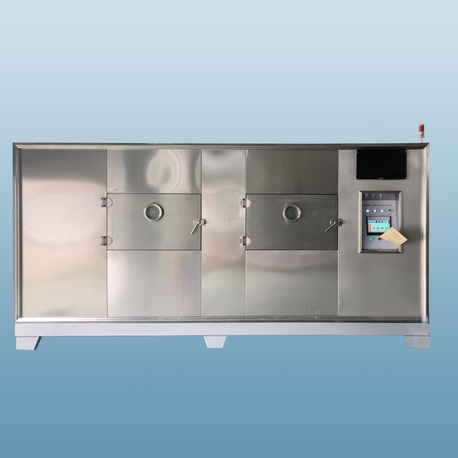
8. Maintenance Strategy and Lifecycle Cost Optimization
Total cost of ownership for industrial blowers extends far beyond initial purchase. Best practices include:
Filter maintenance: Clogged inlet filters reduce airflow, causing heater overtemperature and reduced drying efficiency. Differential pressure gauges indicate when filter replacement is needed (typically 500–2,000 operating hours).
Motor bearing lubrication: For belt-drive systems, bearing lubrication intervals of 2,000–3,000 hours using high-temperature grease extend motor life by 300%.
Thermal imaging inspection: Annual infrared scans identify loose electrical connections or heater element degradation before failure occurs.
Calibration: Temperature sensors should be calibrated annually using NIST-traceable references to maintain process consistency.
Predictive maintenance programs reduce unplanned downtime by 70% and extend equipment lifespan by 3–5 years, according to industry benchmark data.
Frequently Asked Questions (FAQ)
Q1: What is the difference between a hot air blower and a heat gun?
A1: While both produce heated airflow, industrial hot air blowers are designed for continuous duty (24/7 operation), feature higher airflow rates (200–5,000+ CFM), and incorporate industrial-grade motors and heating elements. Heat guns are handheld, intermittent-use tools with airflow typically below 50 CFM. Industrial blowers also offer remote control, temperature profiling, and integration with manufacturing automation systems—capabilities not found in handheld devices.
Q2: How do I calculate the required hot air blower capacity for a drying application?
A2: The calculation requires four inputs: (1) mass of product, (2) moisture content to remove, (3) required drying time, and (4) temperature rise. A simplified method: Required power (kW) = (mass of water to evaporate in kg/hr × latent heat of vaporization 2,260 kJ/kg) / (3,600 × heating efficiency). Airflow is then determined by: CFM = (kW × 3,412) / (1.08 × ΔT). For complex geometries, computational fluid dynamics (CFD) simulation is recommended to optimize nozzle placement and airflow distribution.
Q3: Can hot air blowers be used in hazardous environments with flammable vapors?
A3: Yes, but only if the blower is specifically rated for hazardous locations. For Class I, Division 1 (gas present during normal operation), explosion-proof motors and sealed enclosures with purge systems are required. For Division 2 (gas present only under abnormal conditions), NEMA 7/9 enclosures and non-sparking fans are acceptable. All components must carry UL or ATEX certification for the specific classification. Never use standard industrial blowers in flammable environments—ignition sources can cause catastrophic explosions.
Q4: What is the typical lifespan of an industrial hot air blower?
A4: With proper maintenance, industrial blowers typically last 15–20 years. Key component lifespans: electric motors (50,000–100,000 hours with bearing replacement), heating elements (8,000–15,000 hours depending on cycling frequency), and bearings (20,000–30,000 hours). The control system (PLC, SCR) generally has the longest service life (20+ years). Nasan provides detailed lifespan projections and replacement parts availability for 10+ years after equipment sale.
Q5: How do I reduce noise levels from a hot air blower system?
A5: Noise reduction strategies include: (1) Installing silencers on inlet and outlet ducts (reduces noise by 10–20 dB). (2) Enclosing the blower in a sound-attenuating cabinet with forced ventilation. (3) Using centrifugal fans instead of axial designs (5–8 dB reduction). (4) Mounting the blower on vibration isolation pads. (5) Operating at reduced speed using VFD control during idle periods. Industrial blowers should be specified with maximum noise levels at the design stage; 75–85 dB(A) is typical, with quieter designs available at 65–70 dB(A).
Q6: What are the advantages of electric hot air blowers over gas-fired systems?
A6: Electric blowers offer: (1) No combustion byproducts (CO₂, NOx, water vapor) that can contaminate sensitive products. (2) Precise temperature control with fast response (seconds vs. minutes for gas). (3) No requirement for flue gas exhaust or combustion air makeup. (4) Lower installation cost (no gas piping or venting). Gas systems are advantageous for very high temperatures (>500°C) or where electric power costs exceed gas by >2:1. For most drying applications below 200°C, electric blowers deliver lower total cost of ownership.
Q7: How do I ensure temperature uniformity across a wide drying area?
A7: Uniformity requires: (1) Manifold design with equal-length flow paths to each nozzle. (2) Computational fluid dynamics (CFD) modeling to balance pressure distribution. (3) Adjustable orifice plates or dampers to fine-tune individual nozzle flow rates. (4) Multiple temperature sensors feeding back to zone controllers. For large areas, modular blower arrays with independent zone control achieve ±5°F uniformity across 10 ft × 10 ft areas. Field verification using thermal imaging cameras validates system performance.
For detailed technical specifications, CFD simulations, or customized hot air blower configurations for your specific application, contact the engineering team at Nasan—specialists in precision industrial drying and thermal processing equipment.