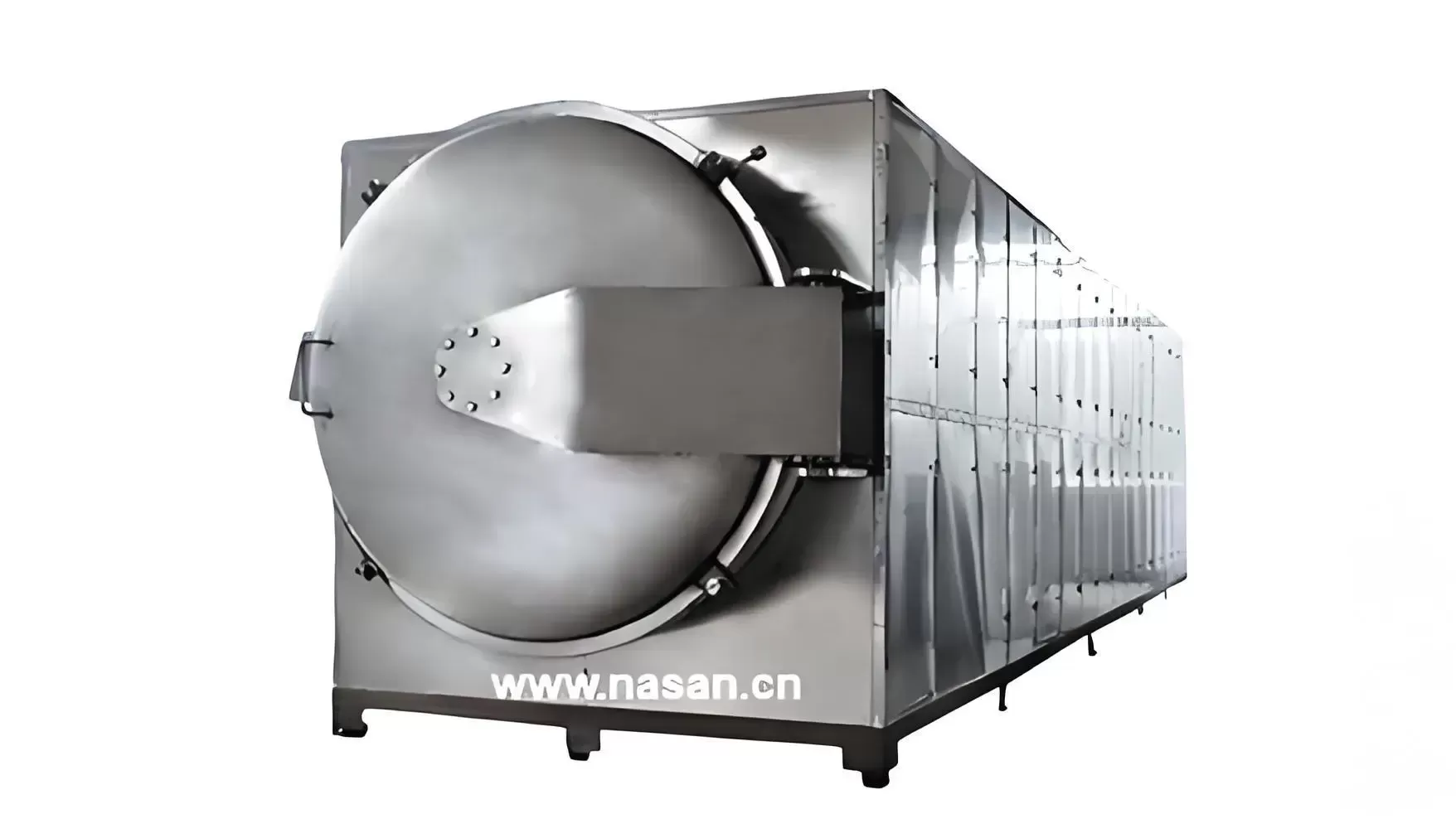



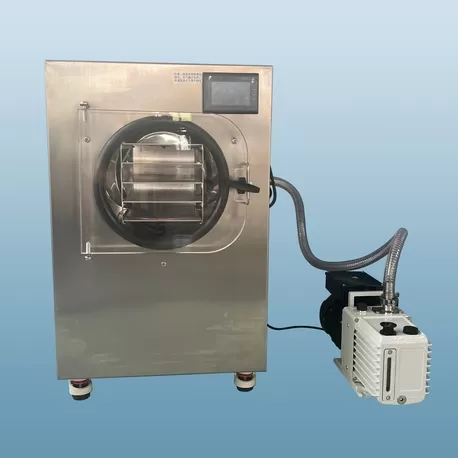
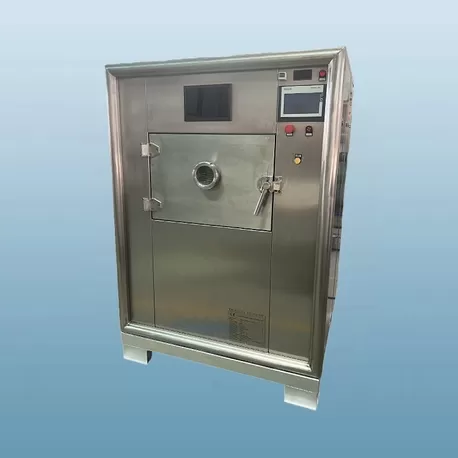
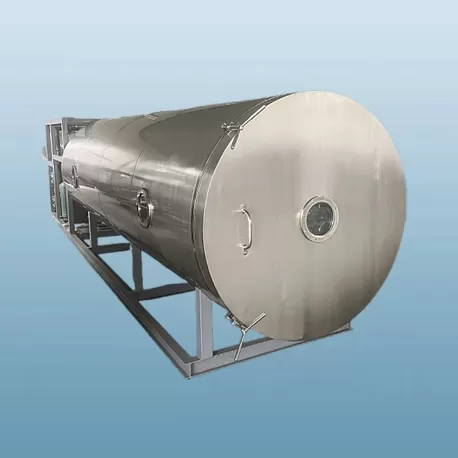
For process engineers and production managers, the limitations of conventional drying methods—slow heat transfer, surface overheating, and non-uniform moisture profiles—have long been accepted as inevitable. Industrial microwave drying changes this paradigm. By directly exciting polar molecules within the material, microwave energy converts electromagnetic waves into thermal energy almost instantaneously, eliminating the need for slow conductive or convective pathways. This article provides a technical examination of industrial microwave drying principles, equipment configuration strategies, industry-specific performance data, and practical solutions to real-world challenges—written from the perspective of a drying process authority.
1. Fundamentals of Industrial Microwave Drying
Unlike conventional hot-air or steam-heated systems, industrial microwave drying relies on dielectric heating. Water molecules and other polar compounds align with the rapidly alternating electromagnetic field (2.45 GHz or 915 MHz), causing molecular friction and volumetric heat generation. The result: heat is generated from the inside out, not from the surface inward. Key parameters governing performance include the material's dielectric loss factor (ε''), penetration depth, and specific heat capacity.
Practical benefits derived from this physics:
Selective heating: Water absorbs microwave energy 12–18 times more efficiently than dry solids, preventing unnecessary energy waste.
Temperature uniformity: In a properly designed applicator, temperature variation across the product cross-section remains ≤ ±3°C, eliminating thermal gradients.
Rapid response: Microwave power can be adjusted in milliseconds, allowing precise control during the falling-rate drying period.
Reduced oxidation: Since ambient air is not the primary heat transfer medium, surface oxidation and flavor loss are minimized—critical for food and nutraceutical applications.
When comparing industrial microwave drying to infrared or radio-frequency drying, microwave offers deeper penetration and better coupling with moist materials. The typical drying rate for microwave systems is 0.5–2.5 kg water/kWh, depending on load geometry and dielectric properties.
2. Engineering Configurations: Batch vs. Continuous Systems
Choosing the right equipment topology is central to maximizing ROI. Modern industrial microwave drying systems come in two primary configurations:
Batch Microwave Dryers
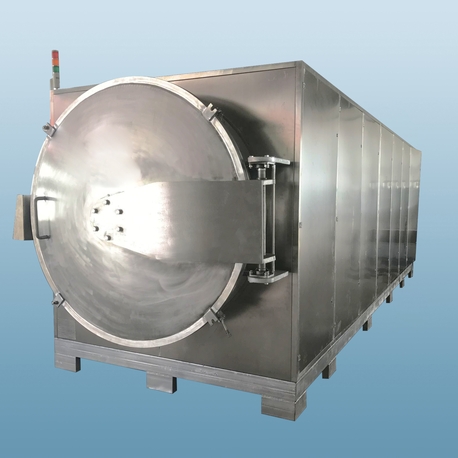
Suitable for low-to-medium throughput (20–500 kg/batch), R&D pilot trials, and products requiring extended dwell times. Typically equipped with rotating turntables or multimode cavities to improve field uniformity. Batch units allow simple changeover between different product types without cross-contamination.
Continuous Belt or Tunnel Microwave Dryers
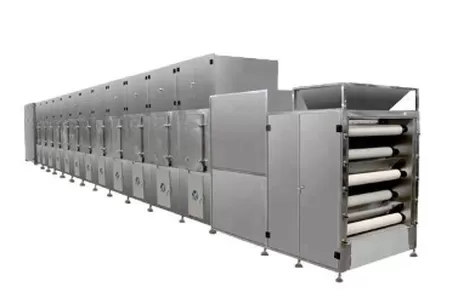
For high-volume production (>500 kg/h), continuous industrial microwave drying lines are preferred. They feature multiple microwave chambers in series, each with independent power control. Conveyor speeds from 0.2 to 5 m/min accommodate varying moisture reduction targets. Advanced designs include integrated air knives, cooling zones, and inline moisture sensors for closed-loop feedback.
Equipment selection must consider product form (powder, granule, slab, liquid), initial moisture (20–80% wb), target final moisture (0.5–12% wb), and heat sensitivity. For sticky or low-melting-point materials, a hybrid microwave-fluid bed dryer prevents agglomeration while preserving drying efficiency.
3. Industry-Solved Pain Points with Microwave Drying
Below are four industries where industrial microwave drying has replaced legacy methods, delivering measurable improvements in yield, energy use, and product consistency.
3.1 Ceramic Core and Preform Drying
Problem: Conventional drying of alumina and zirconia green bodies causes differential shrinkage and cracking due to moisture gradients. Microwave solution: Volumetric heating removes water uniformly, reducing internal stresses. Data from a technical ceramics plant: scrap rate dropped from 14% to 3.2% after switching to a 75 kW continuous microwave dryer. Drying cycle for 40mm thick plates reduced from 18 hours to 22 minutes. Energy per unit: 0.32 kWh/kg versus 1.15 kWh/kg for gas-fired infrared.
3.2 Food Processing – Herbs, Spices and Nuts
Problem: Hot-air drying degrades volatile oils, leading to loss of aroma and color. Moreover, long residence times promote microbial growth. Microwave solution: Rapid, low-temperature drying (≤50°C) preserves essential oils. A spice processor reported retention of 94% of volatile terpenes (vs. 62% with hot air). Additionally, pasteurization effect due to selective heating reduces total plate count by 2–3 log cycles.
3.3 Chemical Catalyst and Zeolite Production
Problem: Impregnated catalysts require gentle drying to avoid pore collapse and maintain active surface area (>300 m²/g). Conventional ovens cause crust formation and non-uniform metal dispersion. Microwave solution: Even moisture removal preserves mesoporous structure. A zeolite manufacturer using industrial microwave drying achieved 7% higher BET surface area and 12% improvement in catalytic activity compared to tray-dried batches.
3.4 Engineered Wood and Veneer
Problem: Kiln drying of 50mm hardwood takes 20–30 days, with substantial risk of checking and collapse. Microwave-assisted drying: By alternating microwave exposure with tempering periods, internal stresses are relieved. Drying time for oak lumber reduced to 72 hours with near-zero surface checks. Energy consumption per cubic meter slashed by 55%.
4. Technical Challenges and Engineered Countermeasures
Despite its advantages, industrial microwave drying presents specific engineering hurdles. Reputable manufacturers like Nasan have developed proprietary solutions:
Thermal runaway (hot spots): Occurs when a local region heats faster, increasing its loss factor further. Countermeasure: Staggered magnetron firing, variable power density profiling, and real-time IR thermal mapping with closed-loop feedback. Nasan’s dynamic tuning algorithm adjusts frequency and power split across multiple applicators to maintain field homogeneity.
Load impedance mismatch: Changes in product moisture and geometry alter the cavity’s reflection coefficient. Countermeasure: Automatic stub tuners or circulators with dummy loads. Modern systems incorporate VSWR monitoring and instant power reduction when reflected power exceeds 15%.
Arcing from metallic contaminants: Even small metal fragments (nails, staples) can cause destructive arcs. Countermeasure: Metal detection upstream of the microwave section, plus burn-resistant waveguide materials and arc-suppression electrodes.
Non-uniform field distribution in multimode cavities: Solved by mode stirrers, rotating belts, or using traveling-wave applicators. For powders, vibratory conveyors improve exposure uniformity.
For safety, all systems must comply with IEC 60519-6 and FCC Part 18. Leakage levels should be <1 mW/cm² at 5cm from any access point. Redundant interlock systems and automatic power shutdown when doors open are mandatory.
5. Process Optimization: Key Variables and Control Strategies
To fully exploit industrial microwave drying, operators must monitor and control:
Specific energy input (kWh/kg water): Optimal range 1.0–2.2 kWh/kg depending on material. Lower values indicate efficient coupling; higher values suggest poor load matching or over-drying.
Power density (kW/m³ of cavity): Too high leads to arcing or scorching; typical values 10–40 kW/m³.
Residence time distribution: For continuous belts, ensure uniform bed depth (typically 20–80mm for granular materials).
Exhaust airflow and humidity control: Removing evaporated moisture prevents condensation inside the waveguide. Maintain dew point below 35°C.
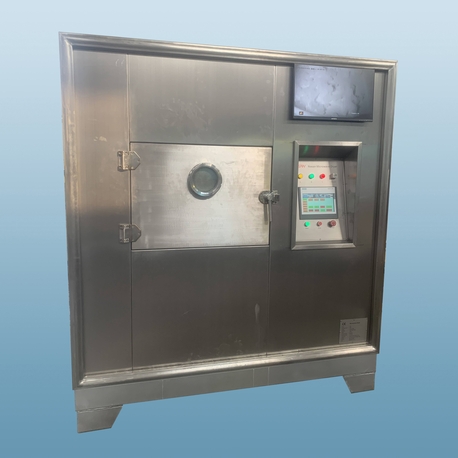
Advanced control systems (PLC with SCADA integration) store recipe parameters for different products: ramp-up power, target temperature profiles, and endpoint detection using near-infrared moisture sensors. Nasan offers a patented control architecture that automatically adjusts power distribution among magnetron groups to maintain product exit moisture within ±0.3% absolute, even with incoming moisture variations up to 8%.
6. Economic Assessment and Sustainability Metrics
Adopting industrial microwave drying affects three financial pillars: operating expenditure (OPEX), capital expenditure (CAPEX), and environmental compliance.
OPEX reduction: A comparison across 12 installations showed average energy cost reduction of 47% versus natural gas convection dryers, and 62% versus electric resistance ovens. Maintenance costs are comparable or slightly higher due to magnetron replacement every 8,000–10,000 hours. However, the reduction in product rejects (typically 6–15% absolute improvement in first-pass yield) often provides a payback period of 9–18 months.
CAPEX considerations: A microwave dryer costs 1.5–2.5x more than a conventional unit of equivalent throughput. However, the reduced footprint (40–60% less floor space) and lower foundation requirements offset part of the premium. Furthermore, many regions offer energy-efficiency grants or carbon tax credits for switching from fossil-fuel heating.
Carbon footprint: For a facility processing 5,000 tons/year of wet material, switching from natural gas to grid-powered microwave reduces Scope 2 emissions by 210–380 tCO2e/year (assuming average grid intensity). If powered by on-site solar or wind, industrial microwave drying can approach net-zero thermal processing.
7. Implementation Roadmap: From Feasibility to Full Production
Successful deployment follows a structured approach:
Dielectric screening: Measure loss factor and penetration depth at your operating frequency (laboratory cavity perturbation method).
Pilot testing: Use a 6–15 kW batch microwave dryer to determine drying kinetics, optimal power profile, and final product quality. Nasan offers free pilot trials using customer-supplied material.
Scale-up modeling: Apply empirical drying curves to design continuous system length and power distribution. Rule of thumb: multiply batch residence time by 1.2–1.5 for continuous belt equivalent.
Installation and validation: Include temperature mapping, leakage surveys, and run-in with dummy loads.
Operator training: Focus on load matching, cleaning procedures, and emergency shutdowns.
Frequently Asked Questions (Industrial Microwave Drying)
Q1: Can industrial microwave drying be used for solvents other than
water?
A1: Yes, if the solvent has a high dielectric loss factor
(e.g., ethanol, methanol, acetone). However, safety considerations are stricter
due to flammability. Special explosion-proof designs with nitrogen purging and
solvent recovery condensers are required. Water-based solutions are the most
common and safest application.
Q2: What happens if the product dries below 1% moisture in a
microwave dryer?
A2: Below critical moisture (typically 3–8%,
depending on material), the dielectric loss factor drops sharply. The remaining
bound water may still couple, but energy efficiency declines. Over-drying can
lead to scorching if power is not reduced. A hybrid approach (switching to hot
air for final drying) prevents this. Most industrial microwave drying systems are
designed to stop at 2–5% moisture, followed by gentle finishing.
Q3: How do I prevent arcing when drying products with irregular
shapes or metal inclusions?
A3: install a metal detector upstream
and use an air-knife reject system. For products that inherently contain fine
metallic particles (e.g., powdered metals, carbon black), use a traveling-wave
applicator with reduced electric field strength and increase belt speed to limit
exposure. Also, ensure sharp edges (which concentrate field intensity) are
avoided. Nasan’s arcing prevention package includes real-time arc detection and instant power shutdown within 2
milliseconds.
Q4: What is the typical lifespan of magnetrons in continuous
industrial microwave drying?
A4: Quality magnetrons (e.g., Toshiba,
Muegge, Richardson) last 8,000–12,000 operational hours under proper cooling and
clean operating conditions. Running at less than 70% rated power extends life.
Nasan systems use hot-swappable
magnetron modules, allowing replacement in under 20 minutes without production
stoppage, by simply switching to a redundant generator.
Q5: Can industrial microwave drying be integrated with existing
hot-air ovens?
A5: Yes. A common retrofit involves inserting
microwave applicator sections into an existing continuous hot-air belt dryer.
This hybrid configuration reduces overall length by 30–50% and cuts energy use
by 40%. The microwave section handles the falling-rate period where conventional
methods are inefficient. Retrofitting requires careful waveguide design and
airflow modification to prevent microwave leakage through air ducts.
Q6: How do I validate uniform drying across the entire conveyor
width?
A6: Perform a thermal mapping test using fiber-optic sensors
placed at nine grid points and at different material depths. Run the dryer under
normal load and record temperature every 30 seconds. Acceptable uniformity:
coefficient of variation <8% across width. Adjust mode stirrers, choke
placements, or power split between left/right magnetron banks as needed.
Request a Process Evaluation for Your Material
Industrial microwave drying is not a one-size-fits-all solution, but for a wide range of moisture-sensitive products and high-value materials, it delivers unmatched quality and efficiency. Provide your drying specifications—initial and final moisture, throughput target, product thermal sensitivity, and current energy expenses—to receive a free feasibility analysis and preliminary equipment layout.
Contact the process engineering team at Nasan for a confidential discussion. Pilot testing is available for qualified clients. Send your inquiry via the form below or call directly. A technical proposal with ROI simulation will be returned within 3 business days.
Submit your inquiry now: Include material name, moisture data, and desired production rate. Our specialists will respond with test results, a custom quote, and a sample drying curve.