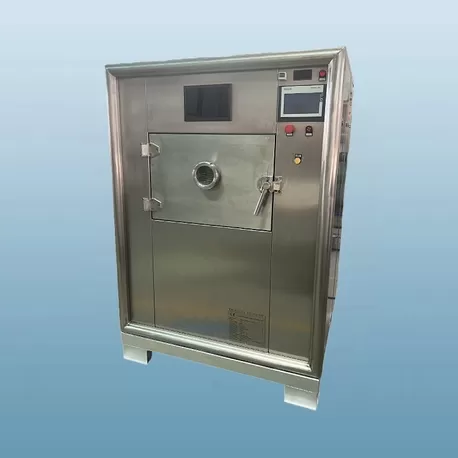
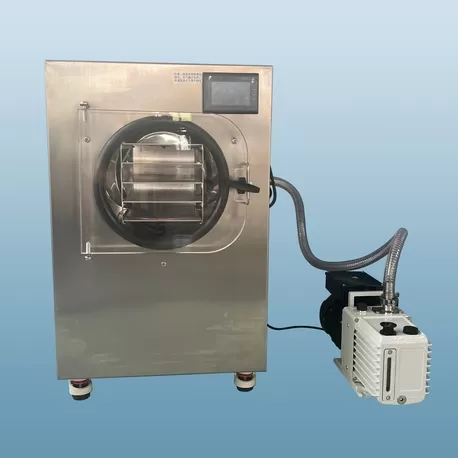
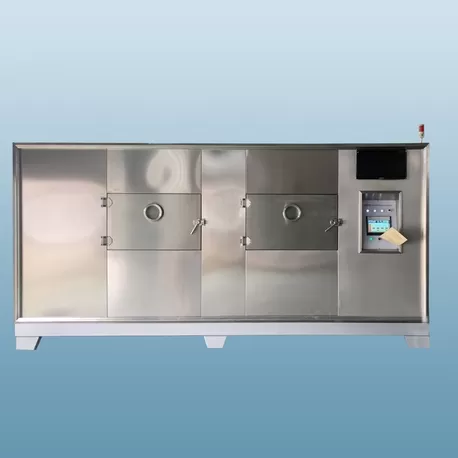
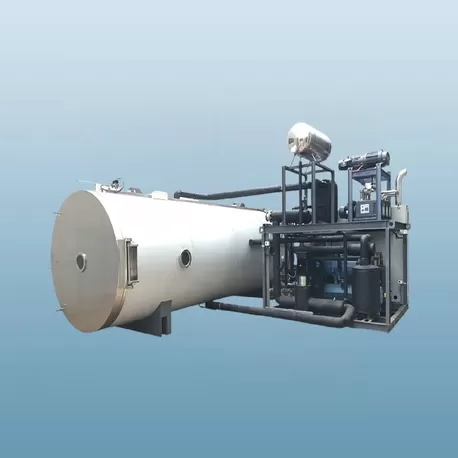
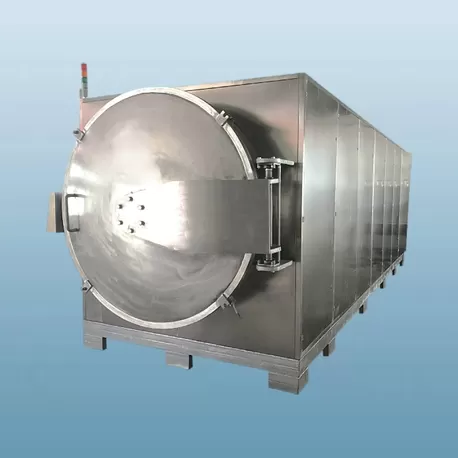
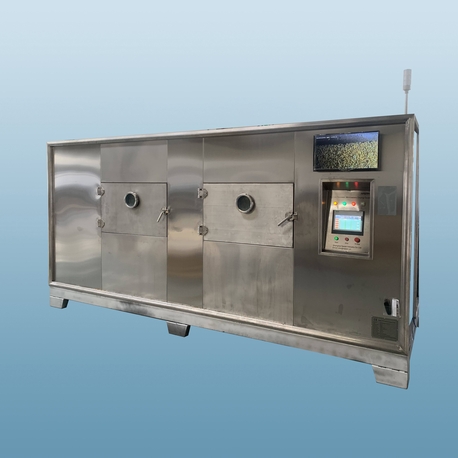
12 Critical Parameters for a High-Performance Vacuum Oven | NasanIn industries ranging from pharmaceutical manufacturing to aerospace materials processing, the vacuum oven represents a critical processing tool where controlled low-pressure environments enable thermal operations impossible under atmospheric conditions. Unlike conventional convection ovens, these systems operate by removing atmospheric pressure, allowing solvents to vaporize at lower temperatures, preventing oxidation, and enabling uniform heat transfer through radiation and conduction rather than convection. The selection, validation, and operation of such equipment demand rigorous engineering discipline.
This article provides a technical framework for evaluating and optimizing a vacuum oven for demanding applications. Drawing on thermal engineering principles, we will examine key performance indicators, discuss chamber design considerations, and outline validation protocols that ensure consistent, reproducible results. For organizations that rely on precise thermal processing under reduced pressure, these insights form the foundation of process capability and regulatory compliance.

1. Fundamental Principles: Why Vacuum Alters Thermal Processing
The operating principle of a vacuum oven rests on the relationship between pressure and boiling point. At standard atmospheric pressure (101.3 kPa), water boils at 100°C. At 10 kPa absolute pressure, the boiling point drops to approximately 45°C. This thermodynamic relationship enables gentle drying of heat-sensitive materials, removal of high-boiling-point solvents without thermal degradation, and processing of oxygen-sensitive compounds in an inert environment.
Three primary heat transfer mechanisms operate within a vacuum oven:
Radiation: The dominant mechanism at low pressures. Heat transfers from heated shelves or chamber walls to the product via infrared radiation.
Conduction: Direct contact between product containers and heated shelves provides controlled, uniform heat input.
Convection: Minimal at pressures below 10 kPa due to the absence of a gaseous medium for energy transfer.
Understanding these mechanisms is essential for process design; a vacuum oven used for drying powders requires different loading configurations than one used for curing epoxy adhesives.
2. Temperature Uniformity: The Cornerstone of Process ConsistencyTemperature uniformity across the working chamber is perhaps the most critical specification for any vacuum oven. Variation between shelves or across a single shelf leads to inconsistent drying rates, incomplete curing, or batch rejection.
2.1. Industry Benchmarks
Pharmaceutical applications: Temperature uniformity typically required within ±2.5°C across the usable volume, verified through thermal mapping with 9–15 calibrated sensors.
Electronics and semiconductor: Tighter tolerances of ±1.0°C are common for curing conductive adhesives and encapsulants.
Research and development: Laboratories may accept ±3.0°C for non-critical applications, though validation remains necessary for published data.
Manufacturers achieve uniformity through multiple heated shelves with independent zone control, thick insulation, and chamber designs that minimize thermal gradients. Nasan incorporates multi-zone PID controllers with individually calibrated sensors to maintain uniformity even under rapid ramp-rate conditions.
3. Vacuum Integrity and Pumping Systems
The ability to achieve and maintain a specified vacuum level defines a vacuum oven's suitability for specific processes. Key parameters include ultimate vacuum pressure, pump-down time, and leak rate.
3.1. Vacuum Level Classifications
Rough vacuum (1–1000 Pa): Suitable for solvent removal, drying of non-hygroscopic materials, and general laboratory applications.
Medium vacuum (0.1–1 Pa): Required for removing tightly bound solvents, degassing polymers, and processing materials with high vapor pressure.
High vacuum (10⁻³–10⁻¹ Pa): Used in semiconductor processing, thin film deposition, and advanced materials research. Requires diffusion or turbomolecular pumps.
3.2. Pump Selection
Oil-sealed rotary vane pumps are standard for most industrial vacuum oven applications, offering reliability and moderate ultimate pressures (down to 0.1 Pa). For processes sensitive to hydrocarbon backstreaming, dry scroll or diaphragm pumps eliminate oil contamination risks. Inert gas purge capabilities protect pump oil from corrosive solvent vapors.
4. Control Systems: Programmability and Data Integrity
Modern vacuum oven systems integrate programmable logic controllers (PLC) with human-machine interfaces (HMI) that support recipe management, data logging, and audit trail functionality—requirements for FDA 21 CFR Part 11 compliance in regulated industries.
4.1. Essential Control Features
Multi-segment programming: Allows complex profiles with ramp, soak, vacuum release, and inert gas purge steps.
Cascade control: Coordinates temperature and vacuum interlocks to prevent overheating under low-pressure conditions where convection cooling is absent.
Real-time data acquisition: Records temperature, pressure, and power consumption at user-defined intervals for batch traceability.
Remote monitoring: Ethernet or serial connectivity enables integration with facility management systems and alarm notifications.
5. Material Compatibility and Chamber Construction
The internal environment of a vacuum oven can be highly corrosive due to solvent vapors, acidic byproducts, or the materials being processed. Chamber construction must resist chemical attack while maintaining structural integrity under external atmospheric pressure.
304 stainless steel: Standard for general-purpose applications; resists oxidation and is suitable for most organic solvents.
316 stainless steel: Required for processes involving chlorinated solvents, acids, or pharmaceutical applications where corrosion resistance is paramount.
Electropolished surfaces: Reduces surface roughness, minimizing particle entrapment and improving cleanability for sterile or ultra-clean applications.
Welded seam construction: All internal seams should be continuously welded and ground smooth to eliminate crevices that can trap contaminants or compromise vacuum integrity.
6. Shelf Design and Loading Configurations
Shelf design directly impacts heat transfer, loading capacity, and cleanability. Options include:
Fixed welded shelves: Provide maximum structural rigidity and uniform heat distribution but limit flexibility for different container types.
Removable shelf assemblies: Allow reconfiguration for various product sizes and simplify cleaning between batches.
Heated shelves vs. radiant wall heating: Heated shelves provide direct conduction to product containers, achieving faster heat-up and better uniformity than wall-heated designs.
Shelf spacing must accommodate product geometry while allowing adequate radiant heat transfer. A general guideline: maintain at least 50 mm clearance above and below each shelf for uniform thermal distribution.
7. Safety Systems and Overpressure Protection
Operating under vacuum introduces specific safety considerations. A properly engineered vacuum oven incorporates multiple safety features:
Over-temperature protection: Independent thermocouple and controller that shuts down heating elements if a setpoint is exceeded, preventing thermal runaway.
Vacuum relief valve: Automatically vents the chamber to atmosphere if internal pressure rises above a safe threshold, preventing chamber implosion.
Interlock system: Prevents door opening while the chamber is under vacuum and disables heating if vacuum is lost during a process requiring low-pressure conditions.
Solvent vapor detection: Optional sensors monitor for flammable vapor concentrations and trigger exhaust or inert gas purge.
8. Validation and Qualification Protocols
For regulated industries, installation qualification (IQ), operational qualification (OQ), and performance qualification (PQ) are mandatory. A vacuum oven validation package typically includes:
8.1. Installation Qualification (IQ)
Verification of correct installation per manufacturer specifications
Utility connections (electrical, cooling water, inert gas) confirmed
Documentation of materials of construction and component certifications
8.2. Operational Qualification (OQ)
Vacuum leak rate test: A pressure rise rate of ≤0.13 Pa/min (0.001 Torr/min) is typical for high-quality systems
Pump-down time verification: Time to reach operating vacuum from atmosphere
Temperature calibration: Verification of sensor accuracy against certified reference standards
Temperature uniformity mapping: 9–15 sensor locations over full working volume
8.3. Performance Qualification (PQ)
Process simulation with actual product or surrogate material
Demonstration of moisture removal or cure profile to specification
Repeatability across multiple batches (typically three consecutive successful runs)
9. Applications Across Industries
The versatility of the vacuum oven makes it indispensable across multiple sectors:
Pharmaceutical manufacturing: Drying of active pharmaceutical ingredients (APIs), sterile product drying, and stability testing under accelerated conditions.
Electronics and semiconductors: Curing of epoxy underfill materials, degassing of potting compounds, and pre-baking of substrates to remove moisture before coating.
Aerospace and automotive: Drying of composite prepreg materials, curing of structural adhesives, and processing of heat-sensitive components.
Food science: Low-temperature drying of heat-sensitive ingredients, extraction of volatile compounds for analysis, and stability testing.
Materials research: Synthesis of aerogels, drying of sol-gel materials, and thermal treatment of nanomaterials where oxidation must be prevented.
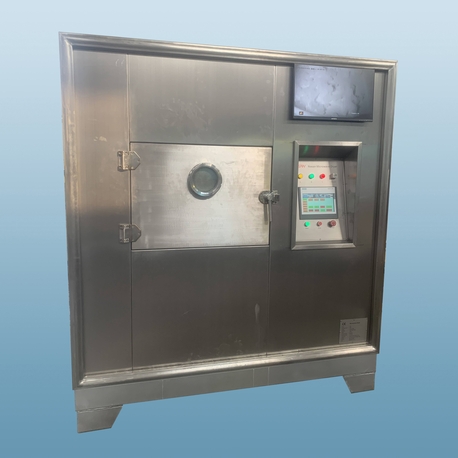
10. Energy Efficiency and Operating Cost Considerations
While the initial capital cost of a vacuum oven is significant, lifecycle operating costs can vary substantially based on design choices:
Insulation quality: Chambers with 75–100 mm of high-density mineral wool insulation reduce heat loss by 30–40% compared to thinner insulation.
Heated shelf efficiency: Systems that heat only the shelves rather than the entire chamber wall reduce thermal mass and achieve faster cycle times.
Vacuum pump maintenance: Oil-sealed pumps require oil changes every 2,000–3,000 operating hours; dry pumps eliminate this recurring cost.
Inert gas consumption: For processes requiring nitrogen backfill, a system with automated purge control minimizes gas usage compared to manual operation.
Manufacturers like Nasan offer energy consumption modeling as part of equipment selection, enabling organizations to project operating costs before purchase and optimize processes for efficiency.
11. Common Failure Modes and Troubleshooting
Understanding potential failure modes enables operators to minimize downtime. Frequent issues in vacuum oven operation include:
Leak rate exceeding specification: Often due to degraded door gaskets, improperly sealed feedthroughs, or micro-cracks in welded seams. Smoke testing or helium leak detection identifies sources.
Temperature overshoot: PID tuning that is too aggressive or failed solid-state relays causing uncontrolled heating. Controller autotune functions or replacement of switching components resolves.
Non-uniform drying: Results from uneven loading, blocked radiant paths, or variance in shelf temperatures. Thermal mapping and loading pattern adjustments address this.
Pump oil contamination: Solvent vapors that condense in pump oil reduce vacuum performance. Installing cold traps or using inert gas ballast extends pump life.
12. Future Trends: Integration and Automation
The next generation of vacuum oven systems will increasingly integrate with Industry 4.0 frameworks. Emerging capabilities include:
Predictive maintenance: Vibration sensors on vacuum pumps and thermal imaging of heaters predict failures before they occur.
Machine learning for process optimization: Systems that analyze historical batch data to recommend optimal temperature and pressure profiles for new materials.
Paperless validation: Automated generation of validation protocols and reports directly from PLC data, reducing documentation burden.
Conclusion: Precision Through Engineering
The selection and operation of a vacuum oven require a thorough understanding of thermal dynamics, vacuum technology, and process requirements. By prioritizing measurable parameters—temperature uniformity, vacuum integrity, control precision, and sanitary design—organizations can achieve consistent, reproducible results that meet regulatory standards and production targets. Whether for pharmaceutical drying, electronics curing, or advanced materials processing, the properly engineered system becomes a platform for process excellence rather than a source of variability.
Frequently Asked Questions (FAQ)
Q1: What is the difference between a vacuum oven and a conventional convection oven?
A1: A vacuum oven operates under reduced pressure, allowing lower-temperature processing, preventing oxidation, and enabling removal of solvents that would require higher temperatures at atmospheric pressure. Convection ovens rely on air circulation for heat transfer and are not suitable for oxygen-sensitive materials or for drying thick samples where case hardening occurs under atmospheric conditions.
Q2: How do I select the correct vacuum level for my application?
A2: The required vacuum level is determined by the vapor pressure of the liquid to be removed and the thermal sensitivity of the material. For water removal at 40–50°C, 10–20 kPa is typically sufficient. For removing high-boiling solvents like DMSO or NMP, pressures below 1 kPa are required. A process development study with a laboratory-scale vacuum oven can establish optimal parameters before scaling to production equipment.
Q3: Can a vacuum oven be used for curing epoxy or silicone adhesives?
A3: Yes, vacuum ovens are ideal for curing adhesives where bubble formation (outgassing) must be prevented. The reduced pressure allows trapped air to escape before the material crosslinks, resulting in void-free bonds. However, the curing profile must account for the absence of convective heat transfer; radiant and conductive heating require longer dwell times or higher shelf temperatures compared to convection curing.
Q4: How often should vacuum oven calibration and validation be performed?
A4: For regulated industries, temperature calibration is typically required annually or semiannually depending on usage intensity. Vacuum integrity testing (leak rate) should be performed quarterly. Full revalidation (IQ/OQ/PQ) is generally required after any major repair, relocation, or change in process parameters, and on a scheduled basis (commonly every 2–3 years) to ensure ongoing performance.
Q5: What are the most common causes of vacuum oven failure?
A5: The most frequent failures are (1) door gasket degradation causing inability to achieve or maintain vacuum, (2) heating element burnout due to thermal cycling fatigue, (3) contamination of vacuum pump oil from solvent vapors, and (4) PID controller drift leading to temperature inaccuracies. Implementing a preventive maintenance schedule—including gasket inspection, pump oil changes, and controller calibration—significantly reduces unplanned downtime.
For technical specifications, process testing, or assistance with your next vacuum oven project, consult the thermal processing specialists at Nasan. Their engineering team provides pre-sale testing, installation validation, and ongoing support tailored to your application requirements.