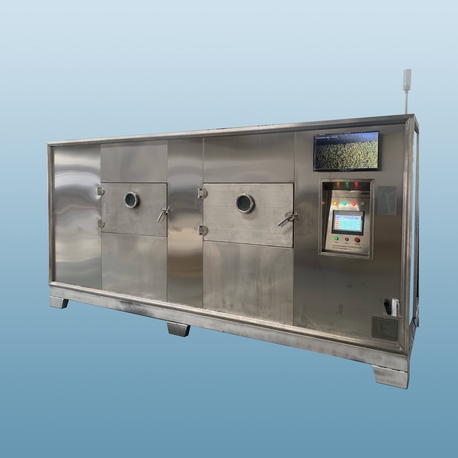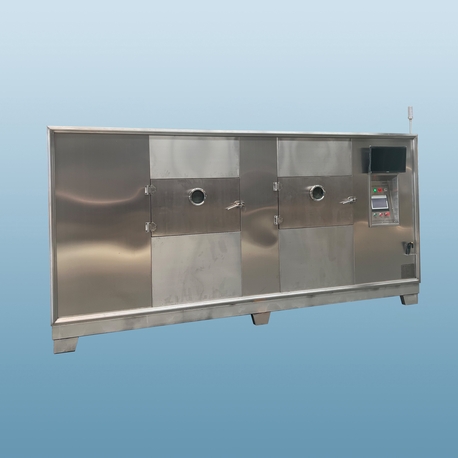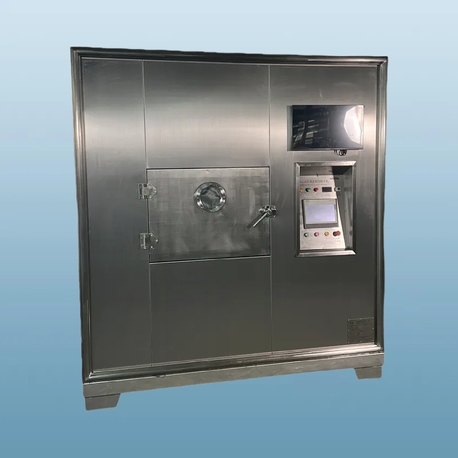
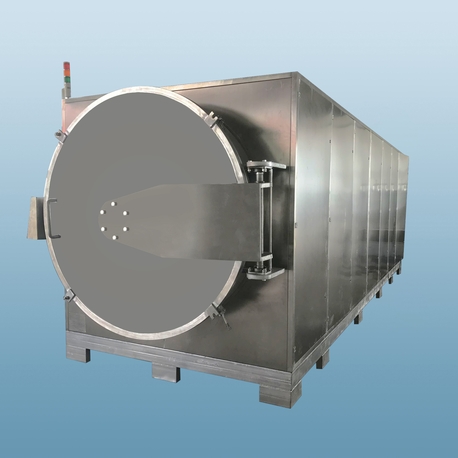
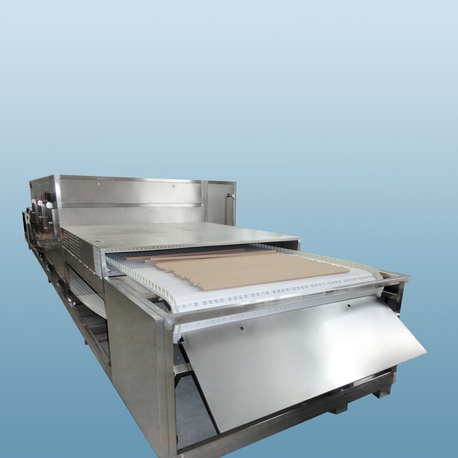
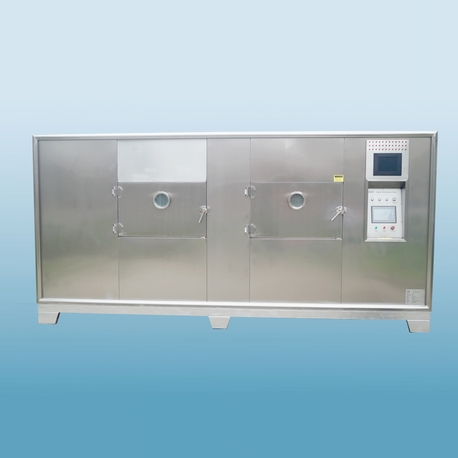
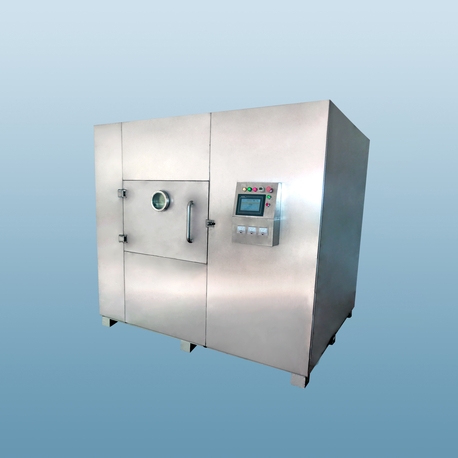
In industrial drying processes, microbial safety and product uniformity remain persistent challenges. Traditional thermal methods often compromise organoleptic properties or consume excessive energy. The microwave sterilization machine has emerged as a precise, energy-efficient alternative—integrating rapid dielectric heating with continuous material handling. For over a decade, Nasan has engineered these systems for spice mills, nut processors, and pharmaceutical contract manufacturers. This article delivers a technical breakdown of microwave sterilization, addresses real adoption barriers, and provides selection criteria based on production scale and product dielectric properties.
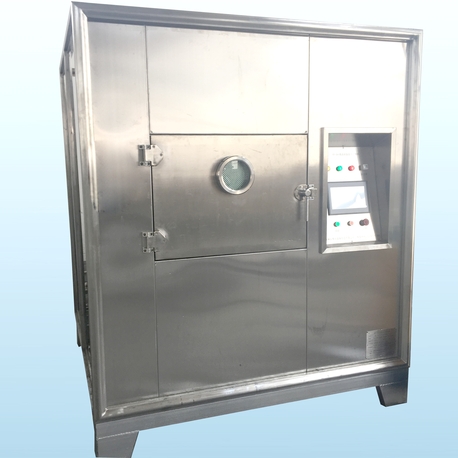
Unlike conduction or convection heating, a microwave sterilization machine relies on electromagnetic waves at 915 MHz or 2.45 GHz. These waves penetrate the product bulk and induce molecular dipole rotation—primarily of water molecules—generating volumetric heat. Simultaneously, the alternating electric field disrupts microbial membrane potentials (non-thermal effect), accelerating inactivation of Salmonella, Listeria, and molds. Key technical subcomponents include:
Magnetron arrays with power modulation (1–200 kW configurable).
Waveguide and mode stirrers to eliminate hot/cold spots.
Conveyor belt systems (PTFE or ceramic-supported) for continuous product bed depths of 20–80 mm.
Infrared and fiber-optic sensors for closed-loop temperature control (±1.5°C precision).
This mechanism ensures uniform dielectric heating and continuous microwave drying with retention of volatile compounds—a critical requirement for herbal extracts and enzyme-rich powders.
Industrial drying lines frequently adopt steam or hot air tunnels, but they suffer from five intrinsic limitations:
Thermal gradient issues: surface overheating and core under-processing.
Long processing times (15–40 minutes vs. 2–8 minutes for microwave).
High energy consumption (up to 1200 kWh/ton for steam drying).
Moisture migration problems leading to case hardening.
Residue risks (e.g., ethylene oxide on spices).
By contrast, a microwave sterilization machine reduces processing time by 60–75% while improving energy efficiency to 0.6–0.9 kWh per kg of evaporated water. For a medium-scale nut roaster processing 500 kg/h, this translates to annual savings of $85,000–$120,000 in energy alone (based on 0.12 USD/kWh). Furthermore, the rapid come-up time (seconds vs. minutes) preserves natural colors and minimizes Maillard reaction byproducts—validated by GC-MS analysis of roasted sesame seeds.
Tunnel microwave sterilization systems have been validated across several high-value sectors. Below is a summary of validated applications with performance metrics:
Initial load: 400 kg/h of turmeric powder (6% wb moisture, 10^6 CFU/g total plate count).
Microwave parameters: 80 kW, 2.45 GHz, residence time 4.5 minutes.
Outcome: Aerobic plate count reduced to < 500 CFU/g; moisture content 2.1%; curcumin loss < 3.5% (HPLC).
Challenge: Salmonella Enteritidis on almond kernels with standard roasting causing discoloration.
Microwave sterilization machine setting: 55 kW, bed depth 35 mm, 130 seconds exposure.
Result: 5-log reduction of Salmonella without bitterness or oil oxidation (peroxide value < 1.5 meq O2/kg).
Requirement: Terminal sterilization without degradation of active pharmaceutical ingredient (API).
Solution: continuous microwave sterilization machine with nitrogen purging to avoid oxidation. API remained > 98.5% potency (by dissolution testing).
Nasan has supplied tailor-made microwave sterilization lines to 14 herb extract plants across Europe and Southeast Asia, each validated against ISO 22000 and FSSC 22000 standards.
Plant managers often report three technical barriers when considering microwave technology: non-uniform drying, regulatory validation, and integration into existing lines. Below are engineering solutions Nasan implements:
Conventional single-mode applicators create standing wave patterns. Industrial microwave sterilization systems from Nasan utilize multi-mode cavities with rotating diffusers and variable-frequency power supplies (VFD) sweeping across 2.4–2.5 GHz. This reduces coefficient of variation (CV) of temperature to < 5% across a 1.2 m wide belt. For validation, thermal imaging maps are generated during FAT (factory acceptance test).
Unlike irradiation, microwave pasteurization is classified as a thermal process. Compliance is achieved through documented heat distribution studies and challenge tests with Enterococcus faecium as surrogate. Nasan provides full validation protocols including:
Time-temperature profiles at 12 geometric positions.
Moisture sorption isotherms pre/post treatment.
Allergen residue swab tests (ELISA).
The microwave module can be inserted between a fluid bed dryer and a vibratory sifter. Nasan supplies modular sections with variable belt speeds (0.1–5 m/min) and optional in-line cooling zones to prevent condensation.
When evaluating proposals, B2B buyers should request the following data from suppliers:
Penetration depth at operating frequency for your product’s dielectric constant (ε’) and loss factor (ε’’). For high-moisture products (≥30% wb), 2.45 GHz offers 20–35 mm penetration; for low-moisture powders, 915 MHz is preferable.
Magnetron efficiency curve at partial loads—many systems lose 30% efficiency below 70% power.
EM leakage containment < 1 mW/cm² at 5 cm distance (per IEC 60519-6).
PLC recipe storage for at least 50 product SKUs, with SCADA connectivity (OPC UA).
Hygienic design: sloped surfaces, radius corners, and washdown-rated IP69K panels for dairy/pharma applications.
Always request a material test using a pilot-scale microwave sterilization machine. Nasan operates a testing laboratory in Rotterdam with 5–200 kg/h setups for customer samples.
To justify capital expenditure, produce a TCO model over 5 years. Below is a comparison between a 400 kg/h steam-heated belt dryer and a 70 kW microwave sterilization machine (installed cost $245,000 vs steam line $190,000).
Energy cost (annual): Steam dryer consumes 980 kWh/ton → $52,800/year (@0.12/kWh). Microwave system consumes 610 kWh/ton → $32,900/year. Savings: $19,900/year.
Maintenance: Steam traps, boilers, and descaling cost $14,000/year. Magnetron replacement (every 8,000 hours) costs $6,000/year.
Product yield improvement: 2–5% less breakage and fines → additional $30,000–$75,000/year for nut/spice lines.
Payback period: typically 18–26 months for continuous operations (≥12 hours/day).
Further savings come from smaller footprint (saving 25–40 m² of factory space) and lower HVAC load because microwave systems release less ambient heat.
A1: Yes, modern industrial microwave systems can process products from -5°C to ambient without tempering. The dielectric loss factor of ice is significantly lower than water, so initial heating is slower until thawing occurs. For frozen meatballs or fish feed, we recommend a pre-tempering tunnel (infrared or ambient air) to reduce thermal stress on magnetrons. Nasan integrates smart power ramping to avoid arcing from ice crystal irregularities.
A2: Arcing occurs when metallic particles are longer than 1/4 wavelength (~30 mm at 2.45 GHz). Our systems include a metal detector reject gate before the microwave cavity plus a reflected power monitoring loop. If reflected power exceeds 5% of forward power, the system automatically reduces power and alerts operators. Additionally, PTFE liners on conveyor surfaces prevent metal-to-metal contact.
A3: Nasan supplies an Installation Qualification (IQ)/Operational Qualification (OQ)/Performance Qualification (PQ) package including: electromagnetic field uniformity maps, temperature probe calibration certificates (NIST traceable), and software validation for data logging (electronic signatures optional). Our PLC generates encrypted batch reports compliant with 21 CFR Part 11 for audit trails.
A4: Yes, but with configuration changes. High-moisture products require higher specific energy (200–300 kJ/kg) and shorter residence time to avoid steaming. Low-moisture products need longer retention and lower applied power to prevent thermal runaway. Our units feature recipe-driven controls that adjust belt speed, power distribution across magnetrons, and air knife flow. A typical machine can switch between two product categories within 15 minutes using clean-in-place (CIP) nozzles.
A5: Industrial-grade magnetrons (Samsung or Toshiba) operate for 8,000–12,000 hours before power output degrades by 15%. In a 2-shift operation (4,000 hours/year), this means replacement every 2–3 years. Each magnetron unit costs $800–$1,200; a 100 kW machine uses 32 units (3.3 kW each). Total replacement part cost ~$32,000. However, Nasan offers a magnetron exchange program at 40% discount when returning cores. Preventive annual maintenance (cleaning waveguides, checking seals) costs $3,500–$5,000.
The transition to a microwave sterilization machine provides measurable improvements in microbial safety, energy efficiency, and product quality. For operations processing heat-sensitive powders, dehydrated vegetables, or nutraceuticals, the technology eliminates the trade-off between sterility and organoleptic degradation. Nasan‘s application engineering team assists with on-site dielectric measurements, pilot trials, and turnkey integration—including remote monitoring via IoT dashboards.
To obtain a technical datasheet, a custom ROI simulation based on your utility rates, or to schedule a material test with a microwave sterilization machine pilot unit, please contact our process specialists. Provide your product moisture profile, target pathogen, and desired throughput (kg/h) for a preliminary feasibility analysis within 48 hours.
Ready to upgrade your drying & sterilization
line?
Request a confidential consultation and process audit from
Nasan’s engineering team. We will provide:
✔️ Free dielectric property
testing for your product (up to 3 samples)
✔️ CAPEX/OPEX comparison model vs.
current system
✔️ Layout drawing integration with existing conveyors and
packing stations
✔️ On-site or remote FAT witness plan
Send your RFQ to info@nasandry.com or use the inquiry form at www.nasandry.com/contact. Mention reference code “MW-ST-2024” for priority response.
For existing Nasan clients, explore our extended warranty packages for microwave magnetrons and waveguide components.