


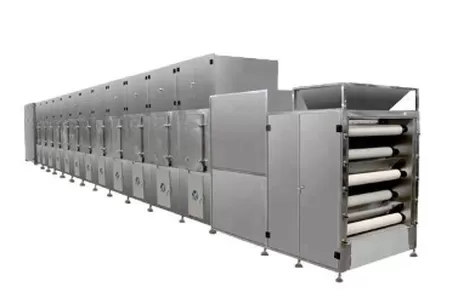
For decades, conventional hot-air and infrared drying methods have struggled with uneven heating, long processing cycles, and surface defects. The shift to microwave-based thermal processing offers a scientifically superior alternative. An industrial microwave oven leverages volumetric heating to overcome these limitations, delivering precise moisture extraction with minimal energy waste. This article provides an in-depth technical exploration of industrial microwave oven technology, its integration challenges, industry-specific solutions, and performance benchmarks—written for plant managers, process engineers, and procurement specialists.
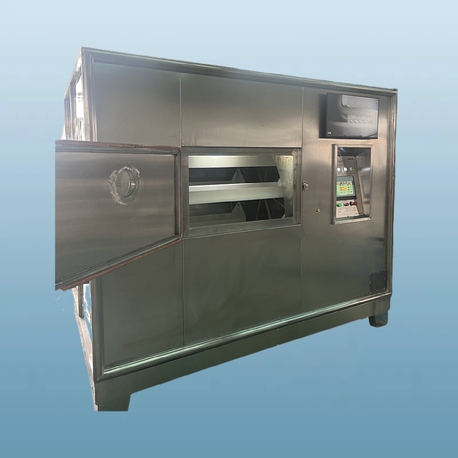
1. Core Principles: Volumetric Heating vs. Surface-Dominated Transfer
Conventional drying relies on conductive or convective heat transfer from the surface inward, creating steep thermal and moisture gradients. This often leads to case hardening, internal stresses, and extended drying times. Industrial microwave oven technology operates at frequencies of 915 MHz or 2.45 GHz, directly interacting with polar molecules (water, certain solvents) and ionic species inside the material. The electromagnetic field generates molecular friction and dielectric heating, converting electromagnetic energy into heat instantly throughout the product volume.
Key physical parameters governing performance include dielectric loss factor (ε''), loss tangent (tan δ), and penetration depth. Materials with high moisture content couple efficiently with microwave energy, resulting in rapid, selective heating. The result: drying cycles reduced by 70–90% compared to conventional methods, while retaining product integrity.
2. Technical Advantages Backed by Process Data
Implementing an industrial microwave oven provides measurable improvements across multiple operational metrics:
Energy conversion efficiency: Microwave systems convert 70–85% of electrical energy into useful heat, versus 30–40% for steam-heated air dryers.
Uniform temperature distribution: Eliminates cold spots and overheating. In ceramic preforms, temperature variance ≤ ±2°C across a 1.2m belt width.
Selective heating: Water absorbs microwave energy 10–20 times more efficiently than dry solids, preventing unnecessary heating of inert materials.
Reduced footprint: A 100 kW microwave drying tunnel occupies 70% less floor space than a comparable hot-air convection line.
Lower post-processing reject rates: Consistent moisture removal reduces cracking in ceramics and uneven curing in polymer composites by up to 15%.
Additional advantages include instantaneous power control, rapid startup (no preheating), and the ability to operate in vacuum or controlled atmospheres—critical for oxygen-sensitive pharmaceutical intermediates.
3. Industry-Specific Applications and Engineering Solutions
Different sectors impose unique demands on microwave drying systems. Below we detail four major industries, typical pain points, and how modern continuous microwave drying systems resolve them.
3.1 Food & Agricultural Processing
Products: herbs, spices, pasta, fruit pomace, nuts, ready-to-eat meals. Pain points: long processing time leads to microbial risks; surface crusting reduces rehydration ability. Microwave volumetric drying preserves color, aroma, and bioactive compounds. For nut pastes, a high-power industrial microwave oven can reduce aflatoxin by simultaneous thermal and non-thermal effects. Case example: A spice processor reduced drying time from 8 hours (tray drying) to 25 minutes while maintaining volatile oil content ≥92%.
3.2 Advanced Ceramics & Refractories
Challenges in ceramic green-body drying: moisture gradients cause warping and microcracks. Microwave technology, when paired with power density profiling, assures uniform water removal even in thick-walled parts. For silicon carbide and alumina components, an industrial microwave oven reduces drying-related scrap from 18% to below 4%, while cutting energy consumption per ton by 55%.
3.3 Chemical & Catalyst Production
Catalyst pellets, zeolites, and precipitated powders demand gentle yet thorough drying to preserve pore structure. Hybrid systems combining microwave and fluidized bed technology now achieve final moisture <0.2% without agglomeration. Solvent recovery modules are also integrated with microwave dryers for closed-loop processing of organic solvents.
3.4 Wood and Engineered Lumber
Traditional kiln drying takes weeks and causes checking. Microwave wood modification (MWD) not only dries but also increases permeability for preservative uptake. Using an industrial microwave oven on 50mm oak boards reduces drying time from 28 days to 72 hours, with near-zero surface cracks.
4. Overcoming Technical Hurdles: Thermal Runaway & Load Matching
Despite the advantages, industrial microwave drying faces real engineering challenges: thermal runaway (localized overheating), load impedance mismatch, and arcing due to metal contaminants. Leading manufacturers like Nasan have developed proprietary solutions to these problems, ensuring robust 24/7 operation.
Dynamic frequency tuning and power staggering: Real-time monitoring of reflected power and automatic adjustment of magnetron output prevents standing wave patterns. This eliminates hot spots even for heterogeneous loads.
Shielded applicator design with choke structures: Leakage levels below 1 mW/cm², far exceeding OSHA and ICNIRP standards.
Hybrid energy distribution: Combining microwave with forced recirculated hot air or infrared ensures the final stage of drying (hygroscopic bound water) is completed without arcing risks.
Advanced process control (PLC + SCADA): Recipe-based drying with moisture sensors, IR temperature feedback, and automatic load matching networks.
For high-throughput facilities, Nasan offers modular tunnels with segregated microwave chambers. Each chamber can be individually serviced while production continues, maximizing uptime. Their designs incorporate anti-arcing electrode geometry and continuous belt cleaning mechanisms for products with sticky residues.

5. Safety, Compliance, and Maintenance Protocols
Any industrial microwave oven must comply with international RF emission standards (FCC Part 18, IEC 60519-6). Key design checks: interlock systems on all access doors, redundant magnetron over-temperature protection, and hermetic waveguide seals. Maintenance intervals:
Weekly inspection of door seals and choke grooves for debris.
Quarterly measurement of magnetron cathode current and replace air filters.
Annual calibration of temperature and humidity sensors, plus waveguide water dummy load cleaning.
Using predictive maintenance with vibration analysis on conveyor drives and bearing assemblies can prevent unplanned downtime. Nasan provides remote diagnostic support and OEM spare parts for all critical components, including magnetrons produced by Toshiba and Muegge.
6. Economic & Sustainability Impacts
Adopting microwave drying directly contributes to Scope 2 emission reductions. For a mid-sized chemical plant processing 8 tons/day of inorganic salts, switching to an industrial microwave oven reduced annual natural gas consumption by 1.2 million kWh equivalent, eliminating 485 metric tons of CO₂. Payback periods typically range from 12 to 24 months, driven by energy savings and lower reject rates.
Furthermore, microwave processes enable low-temperature drying (≤60°C) for heat-labile products such as enzymes, probiotics, and bioactive extracts, opening new product lines previously unattainable with conventional dryers. The precise moisture control (±0.2% final MC) also enhances downstream processes like milling, granulation, and tableting.
7. Core Specifications and Sizing Guidelines
When specifying an industrial microwave oven, consider these parameters:
Microwave power output: 6 kW – 200 kW per module (multiple modules can be cascaded).
Frequency selection: 915 MHz for deeper penetration (e.g., thick timber or dense ceramics), 2.45 GHz for faster heating of thin layers or porous materials.
Conveyor width / chamber size: 0.5 m to 2.2 m; appropriate for production rates of 50–8000 kg/h.
Control architecture: Ethernet/IP, Profibus, or Modbus TCP for integration with plant DCS.
Conducting a free-space or loaded test is recommended. Reputable vendors like Nasan provide on-site or sample-testing services using their lab-scale microwave dryer to determine optimal power profile and residence time before full-scale purchase.
Frequently Asked Questions (FAQ)
Q1: What is the typical power consumption difference between an
industrial microwave oven and a conventional gas-fired dryer?
A1:
For every kilogram of water removed, a gas convection dryer consumes
approximately 4,200–5,000 kJ (considering efficiency losses). An industrial microwave oven typically uses
1,300–1,800 kJ per kg of evaporated water, equating to 60–70% less primary
energy. However, if electricity is generated from fossil fuels, the total carbon
comparison depends on local grid mix. For facilities with renewable power
contracts, microwave offers the lowest environmental footprint.
Q2: Can an industrial microwave oven handle products with metallic
particles or sealed packaging?
A2: Metal objects with dimensions in
the range of half-wavelength (about 6 cm for 2.45 GHz) can cause arcing and
damage. For products containing fine metallic additives (e.g., metal powders or
ferrites), special applicators with reduced field intensity or defocused
waveguides are used. For metal-filled polymers, hybrid heating (microwave + IR)
at lower power density is recommended. Nasan's
engineering team designs custom applicators to safely process such
materials.
Q3: What is the maximum permissible moisture content for efficient
microwave drying?
A3: Minimum moisture content depends on material's
dielectric properties. Most products above 3% moisture couple efficiently. Below
that, bound water requires higher field strengths. Hybrid systems that add a
small amount of steam or reintroduce humid air can improve coupling in the final
drying stage. In general, for final moisture targets as low as 0.1%, the
industrial microwave oven can be combined
with a vacuum chamber or nitrogen purge to prevent corona discharge.
Q4: How do I validate that my material will not experience thermal
runaway during microwave drying?
A4: The risk of thermal runaway
increases when the material’s dielectric loss factor rises sharply with
temperature (e.g., certain aqueous salt solutions). A simple test using a
multimode microwave cavity with fiber-optic thermometry at three points can map
the thermal response. Nasan's free process validation lab conducts dielectric property measurements (using the cavity perturbation method)
and provides a thermal stability report, recommending power ramps or staggered
magnetron firing sequences.
Q5: What maintenance does a high-power industrial microwave oven
require?
A5: Routine items: cleaning of waveguide mica windows
(every 500 operating hours), replacement of magnetron filament power supplies
(every 8000–10000 hours), and inspection of conveyor belt tracking.
Additionally, water-cooled magnetrons require closed-loop coolant monitoring
(conductivity <20 µS/cm). With proper maintenance, the MTBF for a modern
industrial microwave oven exceeds 15,000
hours. Nasan provides service contracts including 24-hour remote diagnostics and
onsite recalibration.
Q6: Can I retrofit my existing hot-air dryer to microwave hybrid
technology?
A6: Yes. Many clients add microwave-transparent sections
into existing drying lines. Typically, a 6–12 meter zone is retrofitted with
modular microwave heads inserted above or
below the belt. This hybrid approach accelerates the falling-rate period,
reducing total residence time by 35–50%. Nasan offers retrofitting audits for
existing continuous dryers including tray, belt, and fluid bed
configurations.
Ready to Optimize Your Drying Line?
Whether you are processing hygroscopic powders, composite sheets, engineered wood, or delicate food ingredients, an industrial microwave oven offers repeatable quality, lower operating costs, and a faster time-to-market. The data is clear: transition to microwave volumetric heating not only meets sustainability targets but also enhances product uniformity beyond what conventional systems can achieve.
For a thorough technical discussion and a custom feasibility study, contact the engineering team at Nasan. Provide your material profile, target throughput, and current energy expenses to receive a preliminary ROI model. Request a quote or a sample test using the industrial microwave pilot system.
Send your inquiry now — include your drying capacity, moisture specifications, and product type. Our specialists will respond with a detailed proposal and process simulation results within 48 hours.
Inquiry form: Visit Nasan’s industrial drying solutions page to speak directly with an application engineer. For immediate technical questions, reference this article.