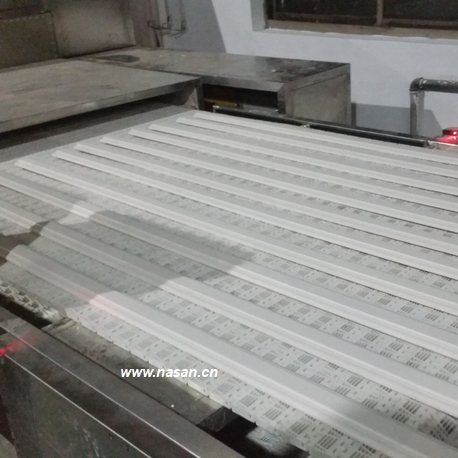


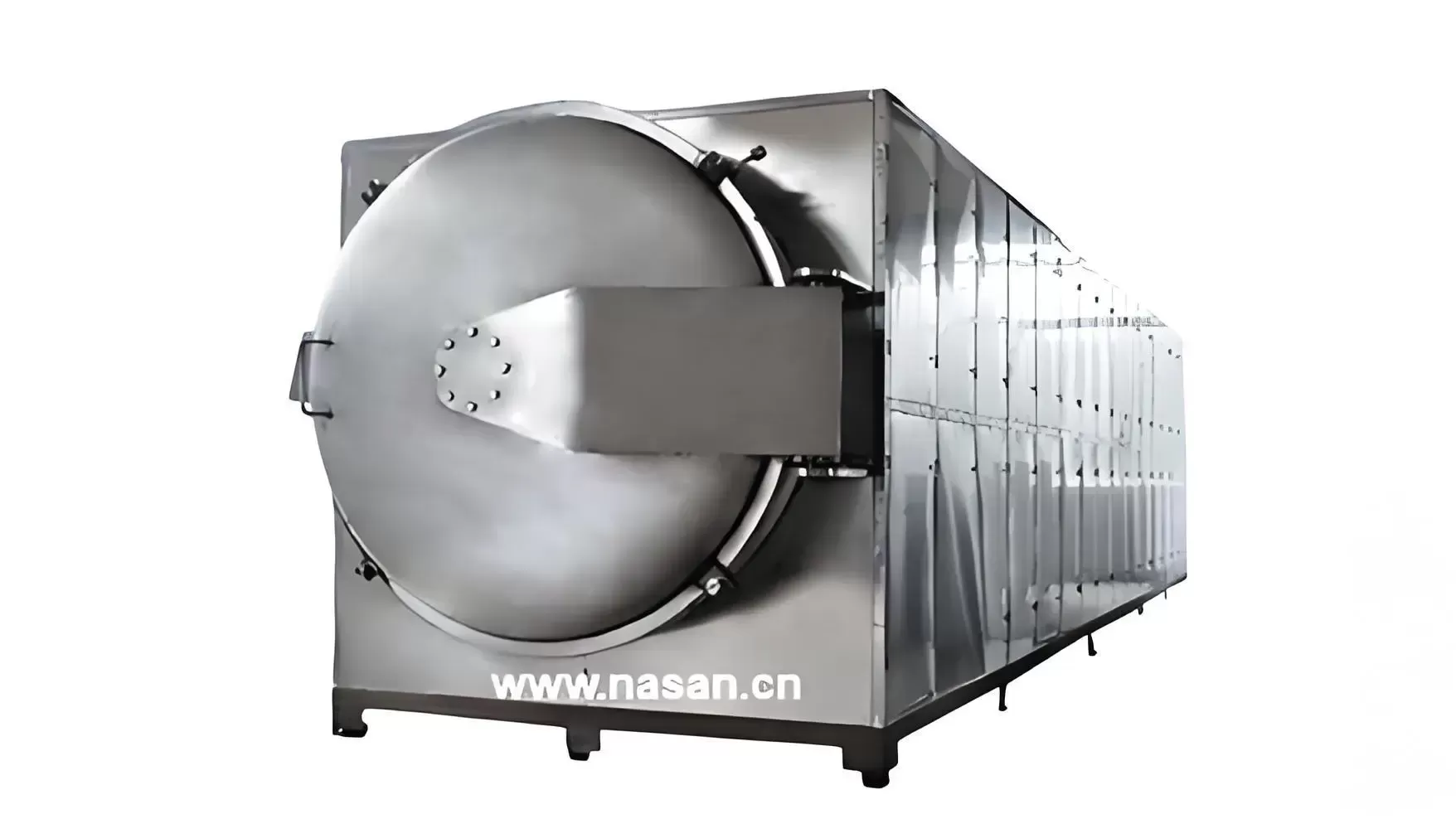
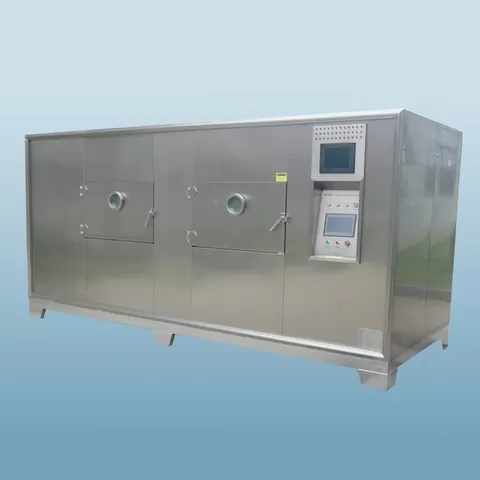

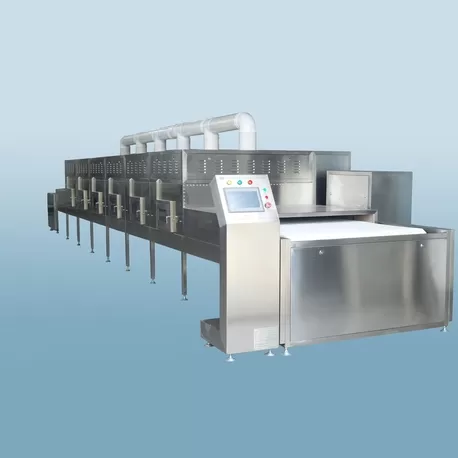
For production managers in pharmaceutical, nutraceutical, and fine chemical industries, conventional drying methods often create a trade-off between throughput and product integrity. Hot-air drying induces thermal degradation, while freeze-drying carries high operational expenses and long cycle times. Microwave vacuum drying equipment eliminates this compromise by applying volumetric microwave energy inside a vacuum chamber. This combination lowers water boiling points to 30–45 °C and accelerates moisture removal without raising bulk material temperature. Below, we examine seven quantifiable performance indicators, compare technology alternatives, and provide engineering solutions validated by Nasan’s industrial installations.
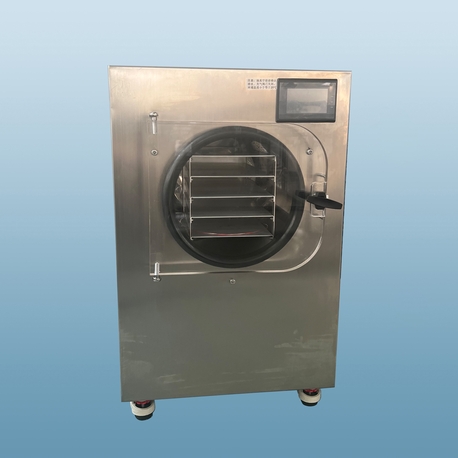
1. Drying Kinetics and Energy Transfer Mechanism
Unlike conductive or convective systems where heat penetrates from the surface inward, microwave vacuum drying equipment generates heat directly inside the product’s water molecules via dielectric hysteresis. The alternating electromagnetic field (typically 915 MHz or 2.45 GHz) causes polar molecules to rotate billions of times per second, producing frictional heat. Meanwhile, the vacuum environment (absolute pressure 20–100 mbar) allows vapor to escape at much lower temperatures. The combined effect yields three distinct advantages:
Volumetric heating profile – Eliminates temperature gradients between core and surface, preventing case hardening.
Low thermal exposure – Heat-sensitive APIs, probiotics, and natural colorants retain >92% potency.
High evaporation efficiency – Removes 1 kg of water using only 0.85–1.1 kWh, versus 1.8–2.5 kWh for conventional vacuum drying.
Industrial systems from Nasan integrate electromagnetic field simulation (HFSS) to achieve ±2% heating uniformity across a 600 L working volume, even for materials with heterogeneous dielectric properties.
2. Comparative Analysis: Microwave Vacuum vs. Freeze Drying vs. Vacuum Oven
Process engineers frequently evaluate three technologies for heat-sensitive powders. The table below presents real-world data from drying a ginseng extract (initial moisture 68% wb, target ≤2%).
Vacuum shelf dryer (60 °C, 30 mbar) – Cycle time 22 hours; final moisture variation ±1.2%; noticeable brownish discoloration from Maillard reaction.
Freeze dryer (lyophilization) – Excellent product appearance but 38 hour cycle; capital cost >$450,000 for 200 kg batch; energy 2.4 kWh/kg water removed.
Microwave vacuum drying equipment – Cycle reduced to 105 minutes; moisture uniformity ±0.3%; energy consumption 0.92 kWh/kg water; no surface oxidation due to inert vacuum atmosphere.
For high-value products such as anthocyanin-rich berries, lactobacillus strains, or curcumin extracts, the short residence time and absence of oxygen preserves both bioactivity and organoleptic properties. Nasan has documented a 37% higher total phenolic retention compared to conventional forced-air ovens and a 22% lower cost per kilogram than freeze drying.
3. Technical Parameters That Determine Equipment Performance
Selecting or specifying microwave vacuum drying equipment requires precise evaluation of three interdependent engineering domains. Suboptimal choices lead to arcing, localized overheating, or low energy efficiency.
3.1 Microwave Power Density and Frequency Selection
Power density (W/g of wet load) directly controls heating rate. For most organic powders, a density of 1.2–2.0 W/g yields safe temperature ramp rates of 2–5 °C/min. Higher densities risk thermal runaway when residual moisture drops below 10%. Advanced controllers from Nasan’s product line feature pulsed magnetron operation (on/off cycles as short as 5 seconds) and frequency sweeping across 2.4–2.5 GHz, preventing standing wave patterns.
3.2 Vacuum Level and Vapor Management
Lower chamber pressure (absolute 15–50 mbar) accelerates moisture diffusion but may cause puffing in high-sugar or high-protein materials. A multistage rotary vane vacuum pump combined with a surface condenser (coolant at 5 °C) maintains stable pressure while extracting up to 18 kg water/hour per m³ of chamber volume. Nasan’s integrated vapor handling systems recover 85% of latent heat for preheating cleaning water, reducing total steam consumption by 15%.
3.3 Material Handling and Field Uniformity
Non-uniform electromagnetic fields cause under-dried zones and charred spots. Industrial solutions include rotating drums (2–6 rpm), vibratory conveyors with PTFE coating, and mode stirrers rotating at 10–20 rpm. Microwave vacuum drying equipment from Nasan uses 3D electromagnetic simulation to optimize waveguide positioning, achieving a coefficient of variation (CV) below 3% for load temperature distribution.
4. Application-Specific Process Validation
Four industries have adopted microwave vacuum drying equipment as a standard for premium products. Below are validated case parameters.
Pharmaceutical intermediates – Drying of cefixime trihydrate from 52% to 0.8% moisture in 75 minutes without impurity formation. Compliant with cGMP (CIP nozzles, electropolished 316L steel, complete drainability).
Functional food powders – Dehydrating matcha, moringa, and baobab pulp. Vacuum microwave preserves chlorophyll and avoids browning, delivering a green color score (ΔE < 2). Retention of volatile terpenes exceeds 94%.
Industrial enzymes – For lipase-immobilized granules, low-temperature drying (max 42 °C) retains 96% activity, whereas spray drying at 80 °C causes 35% denaturation.
Lithium-ion battery cathode materials – Removing NMP solvent from LiFePO₄ slurries: uniform drying prevents cracking in green electrodes, improving final energy density by 8%.
A Nasan installation for a European botanical extractor processed 220 kg batches of chamomile in 2.2 hours, compared to 16 hours in a vacuum oven, with essential oil retention improved from 59% to 93%.
5. Solving Common Production Challenges with Engineered Design
Despite its advantages, vacuum microwave drying presents potential technical hurdles. Below are five frequent industrial pain points and validated mitigation strategies.
Challenge: Non-uniform heating due to load geometry
Solution: Implement a rotating drum with internal baffles and a variable-frequency microwave generator (2.45 GHz ±50 MHz). This dynamic field homogenization reduces temperature CV from 12% to 3%.Challenge: Plasma discharge (arcing) at low pressure – Sharp edges or conductive dust can cause corona.
Solution: Use rounded internal welds, and bleed nitrogen (200 ml/min) to raise the Paschen minimum. Nasan’s anti-arcing chambers include internal PTFE liners for highly conductive materials.Difficulty in continuous processing – Batch systems limit throughput for high-volume lines.
Solution: Continuous rotary vacuum microwave dryer with dual airlock feeders and staggered magnetron sections achieves 500 kg/h throughput for sliced fruits.Product sticking to trays – High-sugar or high-fat materials become adhesive early in the cycle.
Solution: Vibratory conveyor bed with silicone-coated surface, combined with pulsed microwave energy (5 s on, 3 s off) to prevent localized melting.High initial capital expenditure – Budget justification.
Solution: Lifecycle cost analysis: 70% shorter cycles reduce labor and energy costs. Premium product pricing (e.g., organic-certified, high-potency) provides payback in 10–16 months.

6. Economic Assessment: Operating Cost Breakdown and ROI
Adopting microwave vacuum drying equipment changes the financial model for contract dryers and in-house production. A medium-scale facility processing 500 tons/year of herbal extracts reports the following annual operational expenditure (OPEX) comparison (all figures USD).
Electricity (magnetron, vacuum pump, controls): $8,200 – Based on $0.12/kWh and 0.95 kWh/kg water removed.
Cooling water for condenser: $1,900 – Recirculated closed loop with cooling tower.
Maintenance (magnetron replacement every 8,000 h, seals): $3,500.
Labor (one operator per shift, 2 shifts): $24,000 – Compared to $68,000 for freeze-drying requiring three shifts and post-processing milling.
Total annual OPEX: $37,600 vs. vacuum shelf dryer ($58,200) and freeze dryer ($112,000).
Additionally, improved product quality allows pricing premiums of 15–25% for “low-temperature dried” and “preserved bioactives” labels. ROI typically occurs within 14 months for continuous-use applications.
7. Frequently Asked Questions (FAQ) About Microwave Vacuum Drying Systems
Q1: What is the maximum batch size feasible with industrial microwave vacuum drying equipment?
A1: Single-chamber systems range from 50 L to 2,500 L working volume. For a typical bulk density of 400 kg/m³, the largest units process up to 1,000 kg per batch. For higher throughput, Nasan’s modular designs allow parallel chambers operating from a shared vacuum and power system, scaling to 5 tons per hour.
Q2: Can microwave vacuum drying equipment handle organic solvents such as ethanol or acetone?
A2: Yes, but only with ATEX-certified construction. Solvent vapors require explosion-proof magnetrons, inert gas purging, and flame arrestors on vacuum lines. Nasan’s solvent-series equipment complies with Zone 1/21 standards and includes automatic solvent concentration monitoring.
Q3: What is the typical lifespan of microwave generators (magnetrons) in continuous production?
A3: Industrial continuous-wave magnetrons rated at 1.5 kW provide 6,000–9,000 hours when operated below 80% of maximum power. Nasan offers predictive maintenance with hour counters and power output diagnostics; many users exceed 10,000 hours before replacement.
Q4: Is there any risk of thermal runaway as the product dries?
A4: Thermal runaway occurs when dry regions absorb microwaves poorly, causing remaining wet spots to overheat. Modern equipment avoids this via closed-loop control using in-line NIR moisture sensors and fiber-optic thermometry. When moisture drops near target, the system reduces power or switches to pulsed mode. Nasan’s endpoint detection algorithm automatically terminates the cycle at ±0.2% residual moisture.
Q5: How does product texture compare to freeze-dried materials?
A5: For porous materials like fruits, coffee extract, or protein powders, microwave vacuum drying produces a similar open-cell structure without shrinkage, because water rapidly vaporizes below the boiling point. Rehydration rates are typically 85–95% of freeze-dried equivalents, but at 30% of the cost. For dense ceramics or pharmaceutical compacts, the uniform heating prevents crack formation better than conventional vacuum drying.
8. Future-Ready Integration: Industry 4.0 and AI-Driven Control
The next generation of microwave vacuum drying equipment incorporates real-time dielectric spectroscopy, allowing the system to adjust power distribution per product zone. Nasan is currently deploying a cloud-based neural network that compares drying trajectories across hundreds of installations to recommend optimal power-density profiles for new materials. Early adopters report a further 12% reduction in energy consumption and a 50% decrease in validation cycles for new products.
For production teams aiming to differentiate through clean-label, high-potency, or organic-certified products, transitioning to microwave vacuum drying is not an incremental improvement but a strategic redefinition of process capability. The technology enables faster response to market demand, lower operating costs, and superior quality metrics that justify premium pricing.
Ready to assess microwave vacuum drying equipment for your specific product? Share your material’s initial moisture, target residual humidity, and production volume with Nasan’s process engineering group. We provide free sample testing in our pilot-scale lab, a detailed ROI model, and a performance guarantee.
Send your inquiry now to secure a customized drying solution tailored to your throughput and quality goals.