Large-scale food preservation relies heavily on moisture reduction to halt
enzymatic degradation and microbial proliferation. For agricultural processors,
selecting a high-capacity vegetable drying
machine involves understanding the complex balance of heat
transfer, mass transfer, and product quality retention. Commercial dehydration
is not merely a process of heating wet produce; it is a highly regulated
thermodynamic process where temperature, humidity, and airflow velocity must be
modulated to match the specific biophysical properties of each vegetable
variety.
Industrial thermal dehydration solutions developed by manufacturers like
Nasan focus on
processing volume, thermal efficiency, and hygiene. By analyzing how water moves
within vegetable tissues during thermal exposure, plant operators can refine
their drying profiles. This mechanical approach reduces energy consumption while
maintaining the color, shape, nutritional profile, and rehydration capability of
the processed vegetables.

Thermodynamic Mechanisms of Vegetable Dehydration
To evaluate the performance of dehydration equipment, one must examine the
internal and external mechanisms of moisture transport. When raw vegetables
enter the drying chamber, they possess high moisture content, typically between
80% and 95% on a wet basis. The dehydration process occurs in distinct phases,
governed by psychrometric principles and heat-mass transfer coefficients.
The Constant Rate Drying Phase
During the initial phase of operation, the surface of the vegetable slice is
fully saturated with free water. The rate of evaporation is governed by the
difference between the dry-bulb temperature of the air and the wet-bulb
temperature of the product surface. The drying speed during this period is
determined by external factors: air velocity, temperature, and relative
humidity. Because vapor pressure at the surface remains high, evaporation occurs
rapidly, keeping the product surface cool and preventing thermal damage at the
start of the cycle.
The Falling Rate Drying Phase
As the surface moisture decreases, a dry zone forms at the boundary, and the
drying process enters the falling rate phase. Here, internal moisture transfer
becomes the limiting factor. Water must travel from the inner cellular matrix to
the outer surface via capillary action, vapor diffusion, and molecular
diffusivity. The rate of drying drops continuously as the internal water path
becomes longer and more resistive. During this phase, precise temperature
regulation is paramount; excess heat will not accelerate drying but will instead
damage heat-sensitive vitamins and cause surface disfigurement.
The airflow path inside a commercial vegetable drying
machine determines the uniformity of this moisture migration.
Uneven air distribution leads to varying moisture levels across batches, where
some portions remain under-dried and vulnerable to mold, while others become
over-dried and brittle.
Categorization of Commercial Dehydration Systems
Industrial processors select drying systems based on production volume, space
constraints, and material handling preferences. Different structural
configurations offer distinct mechanical advantages depending on whether the
process is batch-based or continuous.
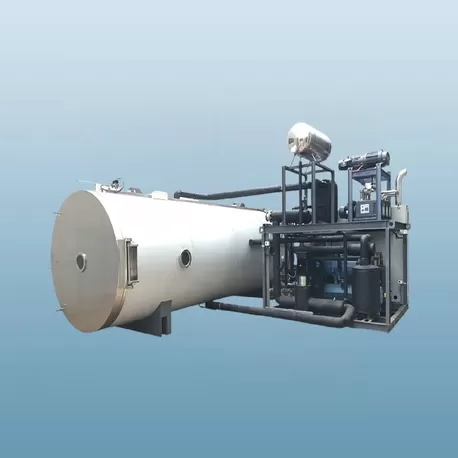
Continuous Belt Dryers: Designed for high-throughput
facilities, these systems transport vegetables along single or multiple
perforated conveyor belts. Heated air passes vertically through the product bed,
ensuring rapid heat transfer. This configuration is highly suitable for diced,
sliced, or shredded vegetables that require uniform exposure over a consistent
processing window.
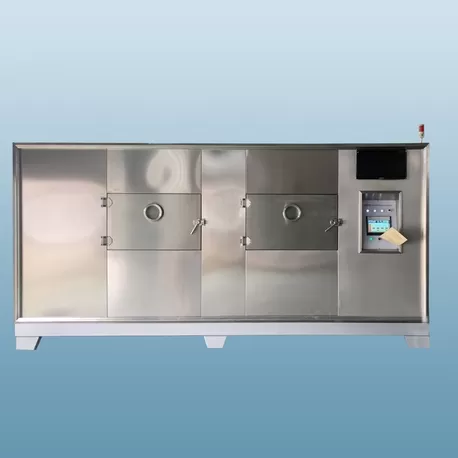
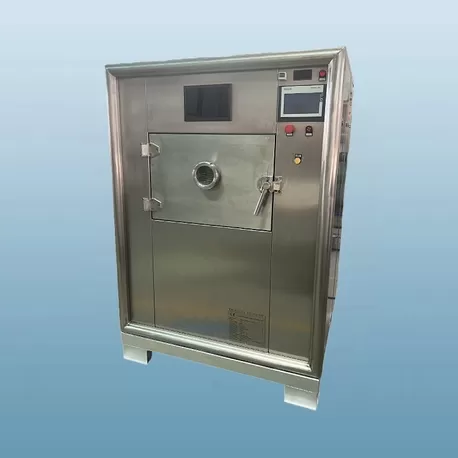
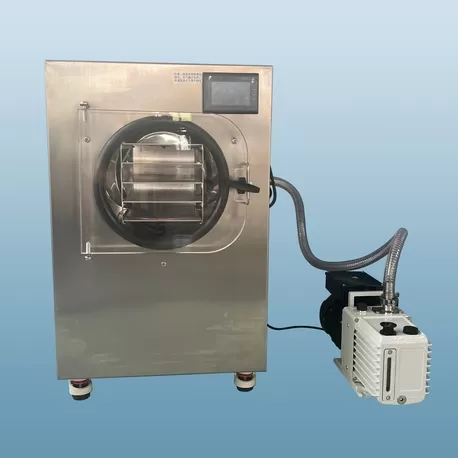
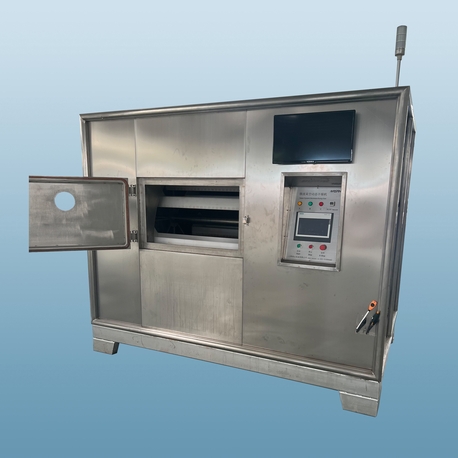
Chamber and Cabinet Dryers: Operating as batch systems,
these units utilize carts filled with perforated trays. They are suited for
smaller production runs, seasonal crops, or processing diverse product lines
that require thorough cleaning between cycles.
Heat Pump Dehydrators: Utilizing a closed-loop
refrigeration cycle, these systems extract moisture from the air by condensation
before reheating and recirculating it. This low-temperature approach is ideal
for delicate, volatile, or highly heat-sensitive leafy greens and herbs,
maintaining product integrity at lower operating temperatures.
Modern vegetable
drying machine configurations feature direct-drive axial or
centrifugal fans, which modulate air volume based on real-time relative humidity
metrics inside the drying chamber. This feedback loop minimizes heat waste by
only discharging exhaust air when it reaches saturation capacity.
Key Engineering Parameters for Commercial Processing
Achieving stable product quality requires precise control over several
interconnected operational parameters. Operators must monitor and adjust these
variables to prevent product defects and structural collapse of the plant
tissues.
| Process Parameter | Target Range (Typical) | Impact on Vegetable Structure |
|---|
| Drying Air Temperature | 50°C – 75°C | Regulates drying speed; excessive heat causes case hardening and nutrient
loss. |
| Airflow Velocity | 1.0 – 2.5 m/s | Determines convective heat transfer rate; must be balanced to prevent
product displacement. |
| Relative Humidity (RH) | 10% – 40% (Chamber Air) | Controls vapor pressure deficit; regulated via exhaust dampers and fresh air
intake. |
| Bed Depth / Tray Loading | 15 – 40 mm | Affects air resistance and pressure drop; deeper beds require higher static
fan pressure. |
Case Hardening Prevention
A frequent processing issue is case hardening, which occurs when wet
vegetables are exposed to excessively high temperatures and dry air early in the
drying cycle. The rapid evaporation of surface moisture causes the outer
cellular layers to shrink and seal, creating an impermeable barrier. This traps
moisture deep within the core, leading to internal spoilage during subsequent
storage. To mitigate this, drying profiles must maintain moderate relative
humidity in the initial stages, allowing internal moisture to diffuse outward
before the surface layer dries out.
Air Recirculation and Energy Reclamation
Dehydration is energy-intensive due to the latent heat required to vaporize
water. To improve thermal efficiency, industrial drying systems integrated by
Nasan utilize sensible
heat recovery exchangers. By routing hot, semi-dry exhaust air through a
recovery matrix, incoming fresh air is preheated. This reduces the energy demand
on the primary heating elements while maintaining the necessary dry-bulb
temperature inside the dehydration chamber.
Structural Standards and Sanitation Protocols in B2B Systems
Food processing machinery must adhere to rigorous sanitary design principles
to prevent contamination and simplify maintenance cycles. Equipment intended for
commercial vegetable dehydration is subjected to high moisture levels, organic
acids, and continuous thermal stress, requiring robust material selection.
High-grade stainless steel (SUS304 or SUS316) is the standard for all
food-contact surfaces. These alloys resist corrosion caused by natural plant
sugars, sulfuring agents, and sanitizing chemicals. The internal structural
framework of the drying chamber must feature coved corners, continuous smooth
welds, and sloped floors to facilitate drainage and prevent water accumulation
during washdown procedures.
Furthermore, internal ductwork and fan assemblies must be easily accessible.
Incorporating Clean-in-Place (CIP) nozzles allows automated cleaning cycles to
sterilize the interior without requiring complete disassembly of the conveyor or
tray racks. This reduction in labor hours directly correlates to increased
operational uptime for large-scale agricultural processors.
Tailoring Dehydration Profiles to Specific Vegetable Classes
Vegetables differ widely in their physical structure, cell wall composition,
and moisture retention properties. Consequently, a single, uniform drying
profile cannot be applied across all product classes. Operators must adjust the
vegetable drying
machine variables to suit the specific raw material being
processed.
Root Vegetables (Carrots, Beets, Sweet Potatoes)
Root crops contain high levels of dense starches and complex sugars. Because
of their structural density, moisture diffusivity is low, requiring longer
drying cycles. The temperature profile typically begins at 70°C to initiate
rapid moisture migration, subsequently stepping down to 55°C as the process
enters the falling rate phase to prevent Maillard browning and sugar
caramelization.
Leafy Greens and Culinary Herbs (Spinach, Basil, Parsley)
Leafy crops are highly sensitive to thermal degradation, which can quickly
destroy chlorophyll and volatile aromatic oils. These items require
low-temperature dehydration, often between 40°C and 50°C. High air velocities
are applied to compensate for the lower thermal input, ensuring that moisture is
removed quickly without subjecting the fragile leaves to prolonged heat
exposure.
Alliums (Onions, Garlic)
Onions and garlic contain volatile sulfur compounds responsible for their
flavor and aroma. High-temperature drying can degrade these compounds, resulting
in a bland finished product. Dehydration is typically carried out in multi-stage
continuous belt dryers, starting at approximately 60°C and finishing below 45°C
to preserve the active flavor precursors.
Integrating Sensors and Automation in Modern Drying Operations
Precision control in food dehydration has transitioned from manual sampling
to real-time, sensor-driven automation. Modern processing systems rely on a
network of sensors linked to a central programmable logic controller (PLC) to
manage the entire cycle without manual intervention.
Humidity transmitters, temperature probes, and product weight sensors are
positioned at strategic locations within the drying chamber. By measuring the
moisture loss of the product dynamically, the PLC can automatically adjust the
conveyor belt speed, modify fan RPMs, and modulate burner output or steam valve
openings. This automated control maintains a consistent drying curve even if the
incoming raw vegetables exhibit slight variations in moisture or slice
thickness, reducing the likelihood of batch rejection.
Evaluating Systems for Procurement and Integration
For procurement officers and plant engineers, evaluating a potential
vegetable drying
machine purchase involves assessing mechanical specifications, air
distribution designs, and ease of system integration. The chosen system must
align with the processing plant's upstream washing and slicing machinery and
downstream packaging lines.
Key procurement factors include:
Static Pressure and Fan Selection: Ensure the fan
assemblies can overcome the pressure drop caused by dense product beds.
Thermal Source Compatibility: Evaluate whether steam,
natural gas, electricity, or biomass is the most practical energy source for the
facility's location.
Footprint and Modularity: Verify that the layout fits
within the facility constraints, and consider modular designs that allow for
future capacity expansion.
Consulting with engineering specialists at Nasan provides processing plants
with custom-engineered configurations tailored to specific crop profiles and
throughput requirements. Ensuring that the structural specifications of the
drying equipment match the physical dynamics of the target vegetable is a
reliable path to consistent product quality and efficient processing.
Submit a Technical Inquiry for Your Processing Needs
If you are planning to upgrade your facility's dehydration capacity or
require a custom engineering review for specific agricultural crops, please
submit your detailed operational requirements. Our engineering team provides
comprehensive assessments of airflow dynamics, material handling structures, and
thermal integration options. Let us help you design a dehydration system that
meets your production goals. Contact us with your raw material specifications,
target moisture levels, and throughput requirements to receive a detailed
technical proposal.
Frequently Asked Questions
Q1: What is the primary cause of uneven drying in commercial
vegetable dryers?
A1: Uneven drying is typically caused by poor airflow distribution within the
drying chamber, resulting in localized dead zones where air movement is
stagnant. It can also stem from inconsistent product loading, such as variable
bed depths or uneven tray spacing, which creates paths of least resistance for
the heated air.
Q2: How does case hardening affect the quality of dehydrated
vegetables?
A2: Case hardening traps moisture inside the vegetable by rapidly drying and
sealing the outer surface layer. This trapped moisture can eventually lead to
microbial spoilage and decay during storage, while the outer shell becomes
brittle and darkens due to heat stress.
Q3: Why is relative humidity monitoring vital in the early stages of
dehydration?
A3: Monitoring relative humidity in the early stages is crucial to managing
the evaporation rate. If the relative humidity is allowed to drop too quickly,
surface evaporation will outpace internal moisture diffusion, causing case
hardening. Maintaining controlled humidity levels early on keeps the surface
pliable for uniform drying.
Q4: Which stainless steel grades are suitable for processing acidic
vegetables?
A4: For processing acidic vegetables, such as tomatoes, food-grade SUS316
stainless steel is preferred because it contains molybdenum, which provides
superior resistance to organic acids and chloride corrosion compared to
SUS304.
Q5: What are the differences between continuous belt drying and batch
tray drying?
A5: Continuous belt drying is automated and designed for high-volume,
single-product processing, offering high throughput and consistent results.
Batch tray drying is more flexible, allowing operators to dry different types of
vegetables or small custom batches, though it requires more manual labor for
loading and unloading.