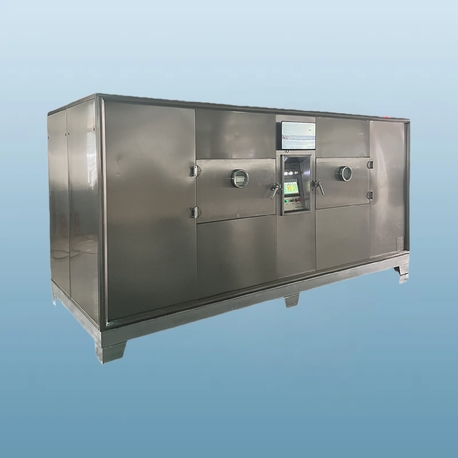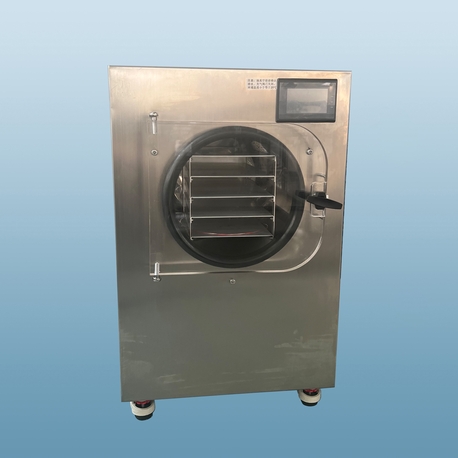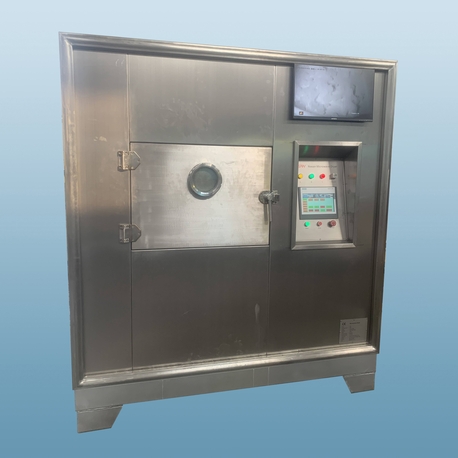


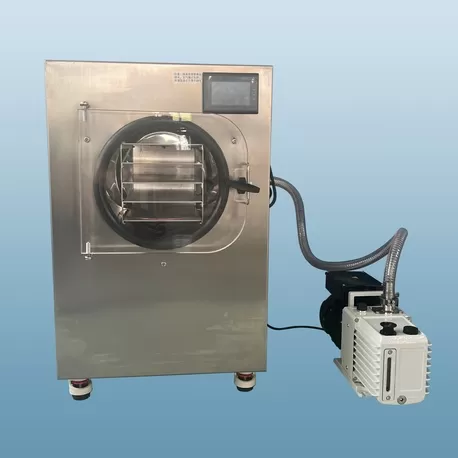
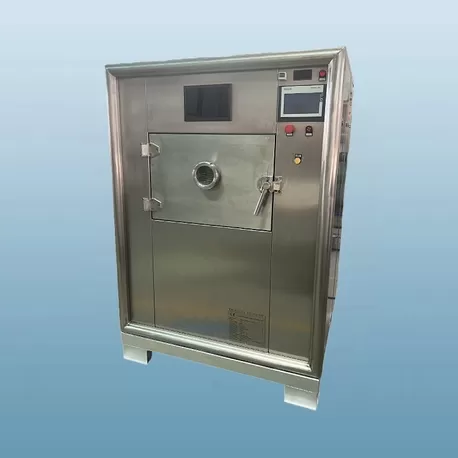
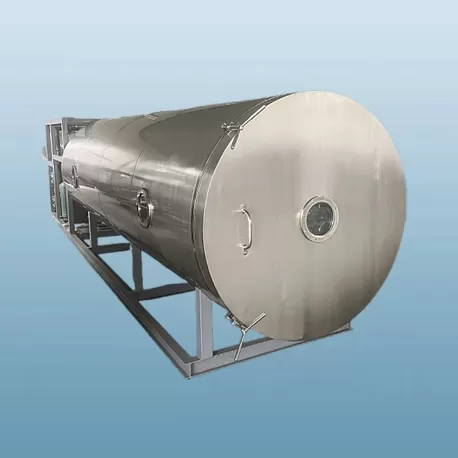
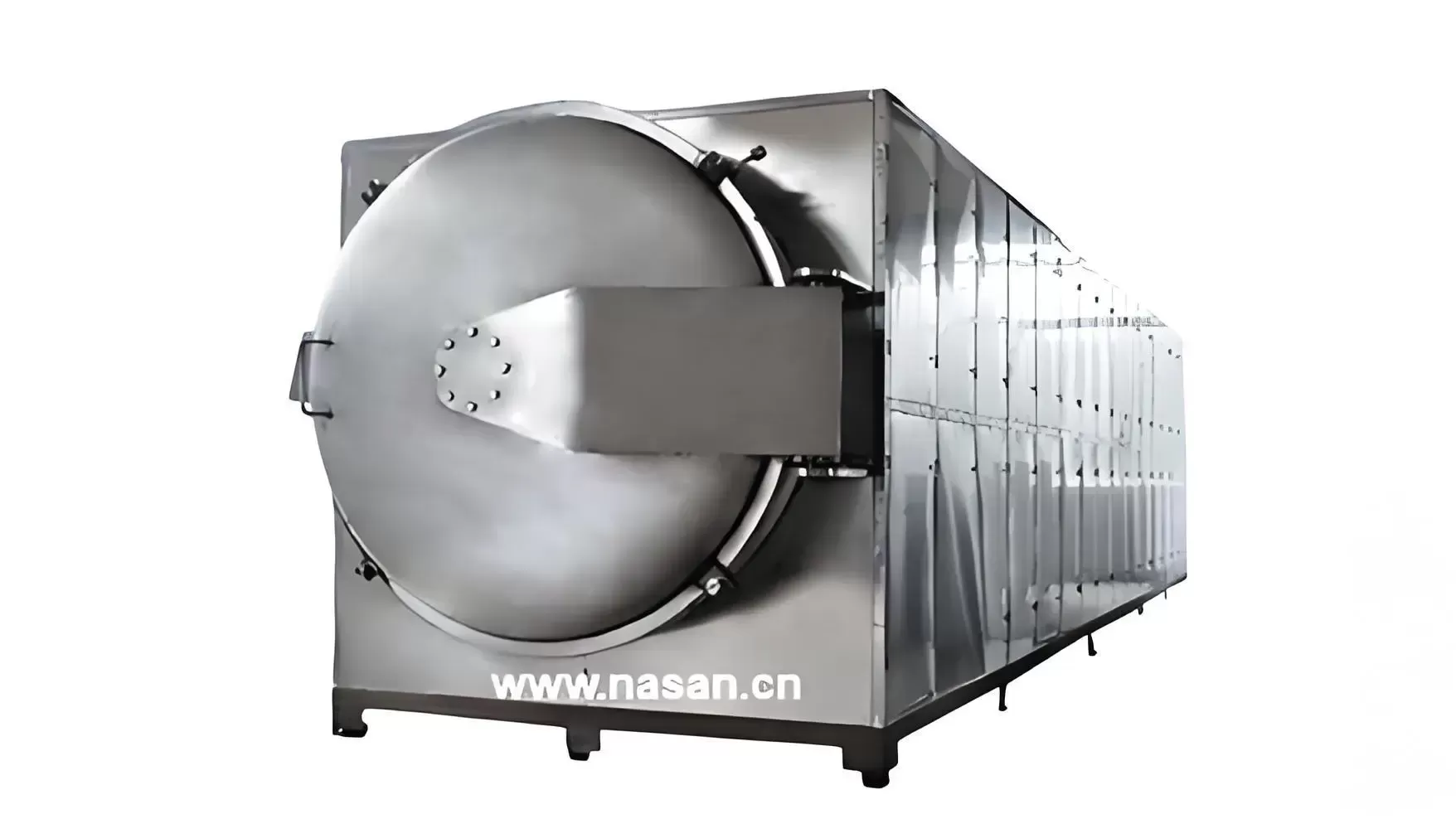

Dry processing of heat-sensitive materials requires precise control over phase transitions. In industrial manufacturing, preserving molecular structure, biological activity, and organoleptic properties while removing solvent presents a persistent engineering baseline. Thermally aggressive methods like spray drying or rotary hot-air drying frequently induce protein denaturation, structural collapse, and loss of volatile compounds. Industrial drying operations rely on low-temperature vacuum sublimation to clear moisture while preserving product integrity.
Operating a modern commercial freeze dehydrator involves balancing heat input against vapor removal rates under deep vacuum. The goal is to maximize ice sublimation throughput without crossing the thermal thresholds that destroy product matrices. Achieving this balance demands a comprehensive understanding of heat and mass transfer, thermodynamic properties of frozen solutions, and mechanical equipment design.

Thermodynamics of Low-Temperature Sublimation
Sublimation occurs when water converts directly from a solid phase to a gas phase without entering the liquid state. This phase transformation happens below the triple point of water, defined at 611.65 Pascals (4.58 Torr) and a temperature of 0.01 degrees Celsius. Commercial operations maintain system pressures far lower than this baseline, typically between 5 and 50 Pascals, to accelerate vapor transport.
Thermal energy must be introduced to supply the latent heat of sublimation, which is approximately 2,840 kilojoules per kilogram of ice. If heat transfer to the frozen product shelf is too slow, sublimation stalls, prolonging cycle times and increasing operational costs. Conversely, if thermal energy exceeds the sublimative drying capability of the ice interface, the local product temperature rises above its critical collapse threshold ($T_c$) or eutectic melting point ($T_e$). Such structural failure causes matrix shrinkage, reduced rehydration capacity, and uneven moisture retention.
Preserving matrix geometry during sublimation creates a porous structure within the dried cake. This porous cake facilitates rapid rehydration and maintains low water activity ($a_w$), often bringing residual moisture levels below 2%. These parameters prevent enzymatic degradation and microbial proliferation during long-term storage.
Core Architectural Components of Industrial Sublimation Equipment
An industrial system operates as an integrated thermal and vacuum network designed to maintain precise operational parameters across multi-day production runs. Equipment reliability hinges on four primary subsystem interactions.
Vacuum Processing Chamber: Built from heavy-gauge stainless steel (316L for product-contact surfaces and 304 for structural frames), the main vessel withstands deep vacuum conditions and automated cleaning cycles. Internal surface finishes are polished to a high mirror standard (Ra less than 0.4 micrometers) to prevent bio-burden accumulation and streamline sanitation protocols.
Refrigerated Condenser Coils: Located either inside the main vessel or within an adjacent short-path isolation module, the condenser acts as a high-capacity vapor trap. It traps sublimated water vapor onto sub-zero surfaces, preventing moisture from entering and damaging the vacuum pumping group.
Thermal Fluid Shelf Array: Product shelves serve dual roles: freezing the liquid product down to solid form and delivering heat during the sublimation process. Hollow internal channels carry a heat-transfer fluid, such as synthetic silicone oil, through designed flow pathways to ensure surface temperature uniformity across all tray positions.
Vacuum Generation System: A multi-stage pumping skid combining dry screw pumps and roots blowers evacuation capabilities. This configuration removes non-condensable gases while keeping system pressures stable throughout primary and secondary drying phases.
Engineering standards developed by Nasan focus on balancing these subsystems to prevent process bottlenecks. A bottle-neck typically arises when vapor production at the shelf exceeds the ice-condensation rate of the cold trap, causing choked flow conditions through the vapor duct and raising chamber pressure.
Primary and Secondary Drying Dynamics
The operational cycle of a freeze dehydrator unfolds across three distinct process steps: freezing, primary drying, and secondary drying. Each stage demands careful setpoint execution to prevent product defects.
Initial Matrix Freezing
Freezing establishes the morphology of the ice crystals, which governs the pore size during sublimation. Cooling must occur at controlled rates. Rapid freezing generates tiny ice crystals, creating small pores that impede vapor escape during primary drying. Slow freezing forms larger ice crystals, yielding larger channels for rapid vapor escape, though it can disrupt cell walls in biological tissue. Target temperatures must fall safely below the product eutectic point to ensure full solidification.
Primary Drying (Sublimation)
Primary drying removes the vast majority of unfrozen, free water. Chamber pressure is lowered below the equilibrium vapor pressure of ice, and shelf temperatures are stepped upward to drive sublimation. The sublimation interface gradually moves downward from the top of the frozen cake to the bottom of the container. System pressure during this phase is closely managed using capacitance manometers. Controlling thermal input ensures the sublimation front stays below the collapse temperature threshold.
Secondary Drying (Desorption)
Once boundary ice is sublimated, a fraction of bound water remains absorbed within the solid cake matrix. Secondary drying removes this remaining moisture by desorption. The vacuum is maintained at minimal levels while shelf temperatures are increased, sometimes up to 40 or 50 degrees Celsius, depending on heat sensitivity. This step continues until residual moisture content reaches target specification levels, ensuring long-term shelf stability.
Processing Challenges and System Solutions
Industrial scale-up introduces non-linear variables. A protocol developed in a small laboratory unit rarely translates directly to a commercial manifold chamber without adjustment. Differences in heat transfer mechanisms, edge effects on shelves, and vapor flow resistance must be factored into production protocols.
A frequent challenge involves shelf temperature non-uniformity across large surface areas. Temperature gradients cause inconsistent drying rates between trays at the center versus those at the edges. Advanced fluid distribution manifolds engineered by Nasan mitigate this variance, maintaining shelf surface tolerances within tight margins of plus or minus 0.5 degrees Celsius across multi-square-meter layouts.
Another operational challenge involves monitoring the completion of primary drying. Ending primary drying too early and ramping shelf heat for secondary drying causes localized melting ("melt-back") of residual ice, ruining the batch. Relying on fixed time intervals often leads to extended, inefficient drying cycles. Process analytical technology (PAT) tools address this issue. Comparative pressure measurements using Pirani and capacitance gauges, together with dew-point mass spectrometry and pressure rise testing (PRT), provide real-time validation of sublimation endpoints.
Comparative Analysis of Drying Methodologies
Selecting the appropriate dehydration equipment requires analyzing trade-offs between operating costs, capital expenditure, and final product quality standards. The table below outlines structural differences across common commercial drying processes.
| Process Parameter | Industrial Freeze Dehydration | Vacuum Tray Drying | Spray Drying |
|---|---|---|---|
| Operating Temperature | Sub-zero phase (-40°C to +40°C under vacuum) | Moderate thermal range (+40°C to +90°C) | High thermal range (+150°C to +220°C inlet) |
| Physical State During Removal | Solid ice directly to water vapor | Liquid water to water vapor | Liquid droplet flash evaporation |
| Structural Matrix Preservation | High retention of porous cake structure | Moderate contraction and density increase | Fine powder formation, localized thermal stress |
| Retention of Bioactive Compounds | High preservation rate (typically 95-99%) | Moderate loss due to thermal exposure | Variable loss based on heat exposure time |
| Rehydration Kinetics | Rapid rehydration capacity | Slow and partial rehydration | Rapid dissolution of powder phase |
Energy Balance and Lifecycle Costs
High energy consumption remains a known consideration for large-scale vacuum sublimation systems. Power is required concurrently for deep refrigeration cycles, heat-fluid circulation loops, and continuous vacuum creation over extended run durations. Evaluating total operational costs involves examining electrical loads, maintenance intervals, and process throughput capacity.
System upgrades focused on waste-heat recovery significantly improve efficiency. Heat rejected from primary refrigeration compressors can be captured to warm thermal fluids during secondary drying, lowering facility power consumption. Incorporating continuous heat recovery loops into modern installations by Nasan helps plants lower total electrical loads per kilogram of removed solvent.
Preserving clean-in-place (CIP) and steam-in-place (SIP) compliance helps maximize plant uptime. Fully automated CIP/SIP skids reduce turnaround times between batch runs, minimize human exposure to active compounds, and prevent batch-to-batch cross-contamination. Investing in robust stainless steel construction and high-grade seal materials (such as EPDM or Viton) reduces seal degradation under repeated thermal cycling, lowering unexpected maintenance downtime.
Commercial Scope and Material Suitability
Modern applications extend across high-value bio-processing sectors where structural integrity and biological activity must be retained without hot thermal exposure.
Nutraceutical Extracts and Botanicals: Preserves heat-sensitive antioxidants, polyphenols, and active enzymes that degrade in standard hot-air systems.
Probiotic and Bacterial Cultures: Keeps cell walls intact during water removal, maintaining high colony-forming unit (CFU) viability after rehydration.
Specialty Marine and Food Products: Retains fragile flavor profiles, aromatic compounds, and original physical shapes without shrinkage.
Active Chemical and Enzyme Powders: Maintains catalytic activity and long-term shelf stability without adding stabilizing preservatives.
A well-configured commercial freeze dehydrator serves as an operational insurance policy for high-value materials. Ensuring low water activity ($a_w < 0.2$) locks down biochemical reaction rates, enabling long-term ambient storage without chemical degradation.
Frequently Asked Questions
Q1: How does a freeze dehydrator differ from standard thermal vacuum dryers?
A1: A low-temperature unit freezes product water into ice, sublimating it directly into vapor under deep vacuum without entering a liquid phase. Standard thermal vacuum dryers evaporate water from a liquid phase at lower temperatures. Evaporative drying risks thermal degradation, structural shrinkage, and active compound migration within the drying matrix.
Q2: What role does the collapse temperature play during primary drying?
A2: The collapse temperature ($T_c$) is the point above which a frozen solute matrix loses its structural rigidity and softens or flows. If heat input causes the drying front temperature to cross this limit during primary drying, the porous cake structure collapses. This results in reduced rehydration rates, trapped residual moisture, and extended drying cycles.
Q3: Why is shelf temperature uniformity decisive for batch consistency?
A3: Uneven shelf temperatures lead to varying drying rates across trays within the same batch chamber. Trays on warmer zones finish sublimation earlier and risk localized overheating, while trays on cooler zones lag behind, retaining un-sublimated ice. Uniform shelf heat distribution ensures consistent moisture levels across all processed batches.
Q4: How can processing plants reduce cycle times without compromising product quality?
A4: Cycle times can be minimized by optimizing controlled freezing step profiles to foster uniform ice crystal formation, adjusting chamber pressure to match peak heat transfer kinetics, and leveraging real-time PAT tools like pressure rise testing to identify the exact end of primary drying without adding unnecessary safety margins.
Q5: What maintenance protocols are necessary for maintaining deep vacuum performance?
A5: Regular maintenance should focus on replacing vacuum pump oil or servicing dry screw mechanisms, checking door gaskets for degradation, verifying cold trap defrosting schedules, and conducting periodic helium leak testing on chamber ports and fluid lines to prevent micro-leaks from compromising processing pressures.
Evaluating specialized drying systems for your production facility demands detailed mechanical, thermodynamic, and process design. Contact the engineering team at Nasan to request a technical consultation, submit test materials for trial analysis, or receive customized equipment specifications tailored to your batch requirements.