Global fruit production exceeds 800 million metric tons annually, yet
post-harvest losses range from 20% to 40% across many supply chains. A
significant portion of this waste occurs because fresh fruit has a narrow window
for sale and consumption. Dehydration offers a practical solution. An
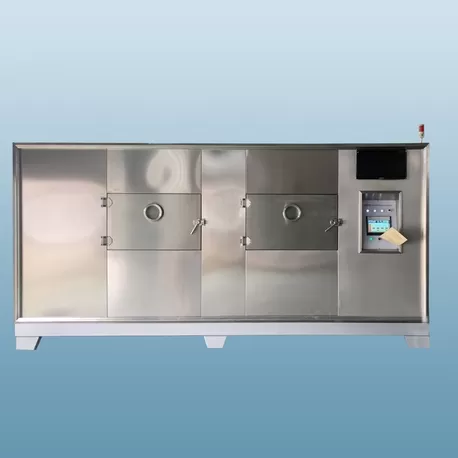
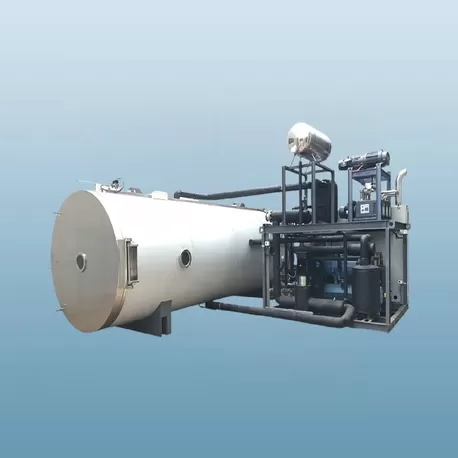
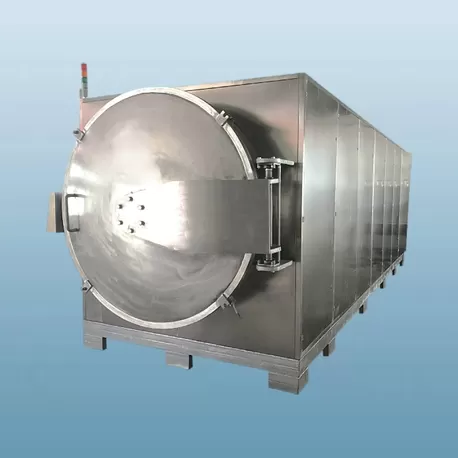
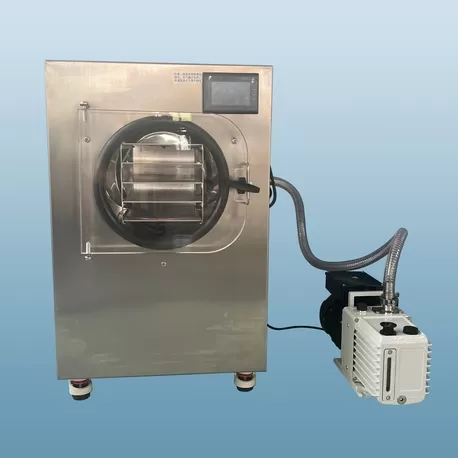
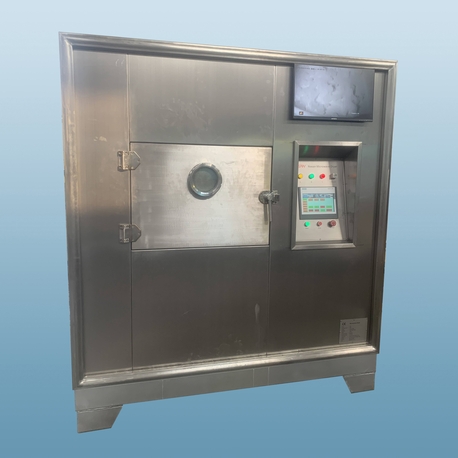
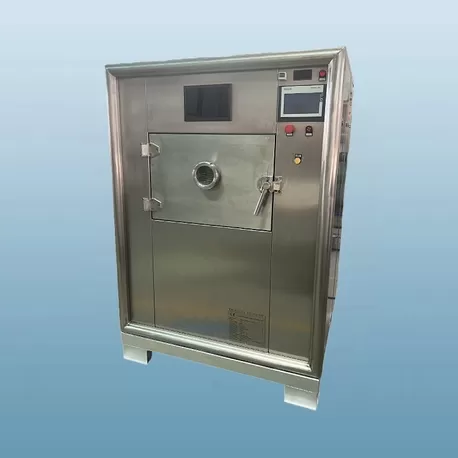
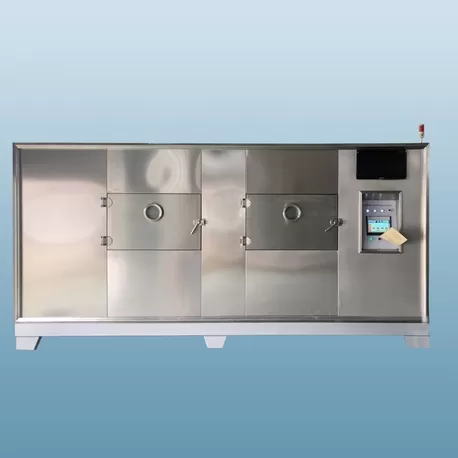
industrial fruit dryer removes moisture systematically,
extending shelf life from days to months while retaining nutritional value. For
processors handling large volumes, the choice of drying equipment directly
affects operating margins, product quality, and energy consumption. This
analysis examines the engineering principles, energy trade-offs, and quality
control measures that define effective fruit drying at scale.
Drying Principles and Heat-Mass Transfer in Fruit Processing
Fruit drying involves simultaneous heat and mass transfer. Heat energy raises
the temperature of the fruit flesh, increasing the vapor pressure of water
inside the cells. Moisture then migrates from the interior to the surface, where
it evaporates into the surrounding air. The rate of this process depends on
three variables: air temperature, relative humidity, and air velocity across the
product surface.
In a typical industrial fruit dryer, heated air passes
through a bed of fruit pieces or over trays arranged in a chamber. The air
temperature ranges from 50°C to 80°C, depending on the fruit type. Softer fruits
like berries require lower temperatures to prevent case-hardening—a condition
where the surface dries too quickly, trapping moisture inside. Firmer fruits
such as apples or mangoes tolerate higher temperatures without structural
damage.
Air velocity also plays a role. At low velocities, the boundary layer of
moist air adjacent to the fruit surface becomes saturated, slowing evaporation.
Increasing air velocity disrupts this layer, improving the drying rate. However,
excessive velocity can cause fruit pieces to tumble or abrade, leading to
product loss. A well-designed industrial fruit dryer balances
these parameters through adjustable airflow systems and variable-speed fans.
Energy consumption represents the largest operating cost for fruit
dehydration facilities. The choice of heat source—electricity, natural gas, heat
pumps, or biomass—determines both the per-kilogram cost and the environmental
footprint of the operation.
Electric resistance heating offers precise temperature control but carries
high operating costs in most regions. Natural gas-fired systems provide lower
energy costs per unit of heat, though they require exhaust management and CO₂
monitoring. Heat pump dryers have gained attention for their energy efficiency.
A heat pump industrial fruit dryer recovers latent heat from
the exhaust air, reusing it to preheat incoming air. This closed-loop approach
can cut energy use by 40% to 60% compared to conventional electric or gas
systems. The trade-off lies in higher upfront equipment costs and more complex
maintenance procedures.
Biomass-fired dryers are common in regions with agricultural waste—rice
husks, coconut shells, or wood chips—available at low cost. These systems
require additional handling equipment and ash removal, but they offer a pathway
to lower operational expenses for facilities with steady access to biomass
feedstocks. When selecting an energy source, processors must evaluate local fuel
prices, emissions regulations, and the expected annual running hours. A dryer
operating 24 hours per day, 300 days per year justifies a higher capital
investment in efficient technology than a seasonal operation running only during
harvest windows.
Drying Uniformity and Product Quality Factors
Uniform drying is the single most important quality attribute in fruit
processing. Non-uniform moisture distribution leads to inconsistent texture,
color variation, and reduced shelf life. Some pieces become brittle and
over-dried, while others remain chewy or sticky—problems that affect packaging,
storage, and consumer acceptance.
Different fruit varieties exhibit distinct drying curves. Apple slices dry
relatively predictably, with a falling-rate period that extends over several
hours. Mango pieces contain higher sugar content, which depresses water activity
and lengthens the drying time. Banana slices have a tendency to stick together,
requiring periodic turning or fluidized-bed designs. Berries such as blueberries
and cranberries have tough skins that resist moisture release; these fruits
often benefit from a brief blanching or skin-pricking pre-treatment before
loading into the industrial fruit dryer.
Quality monitoring extends beyond moisture content. Colour retention is a key
metric—browning reactions (enzymatic and non-enzymatic) accelerate above 60°C.
Sulfite treatments or ascorbic acid dips can slow discoloration, though many
buyers prefer additive-free products. Nutrient retention, particularly vitamin C
and polyphenols, correlates with drying temperature and oxygen exposure.
Lower-temperature drying preserves more bioactive compounds but requires longer
residence times, reducing throughput capacity. Processors must weigh these
factors against market specifications and price points.
Operational Challenges in Large-Scale Fruit Drying
Scaling fruit drying from pilot batches to continuous industrial production
introduces several challenges that are not apparent in laboratory tests.
Case hardening occurs when the surface moisture evaporates faster than
internal moisture can migrate to the surface. The outer layer shrinks and forms
a dense barrier, trapping water inside. This defect results in a hard, leathery
exterior and a moist, sometimes mold-prone interior. Remedies include reducing
the initial drying temperature, increasing air humidity during the first drying
stage, or using intermittent drying cycles that allow moisture to
redistribute.
Color degradation remains a persistent issue for dark-fleshed fruits like
apricots and peaches. The Maillard reaction and caramelization produce unwanted
brown pigments at elevated temperatures. Controlled atmosphere drying—using
nitrogen or reduced oxygen—can mitigate these reactions, though this adds system
complexity. For most operations, precise temperature control and uniform airflow
provide adequate colour protection.
Microbial spoilage poses a risk during the initial drying phase, when the
fruit surface is still moist and warm. Airborne mould spores can colonize the
product if hygiene protocols are not strictly followed. An industrial
fruit dryer with stainless steel internal surfaces, UV air
sterilization, and positive-pressure airflow reduces contamination risks.
Regular cleaning schedules and sanitation verification are mandatory for
food-grade production.
Stickiness and agglomeration affect high-sugar fruits such as figs and dates.
These products require either belt-type dryers with anti-stick coatings or
periodic mechanical agitation. Some processors pre-treat sticky fruits with a
light coating of food-grade starch or oil to maintain piece separation during
drying.
Automation and Process Monitoring Systems
Modern fruit drying facilities rely on automation to maintain batch-to-batch
consistency. A programmable logic controller (PLC) manages temperature
setpoints, air velocity, and drying time based on product-specific recipes.
Sensors placed at multiple points within the drying chamber provide real-time
feedback on temperature and humidity gradients.
Data logging enables traceability—each batch carries a record of drying
parameters, start and end times, and operator identification. This documentation
supports food safety certifications (BRC, IFS, HACCP) and allows process
engineers to fine-tune recipes for seasonal variations in fruit quality. Some
systems incorporate near-infrared (NIR) moisture sensors that measure moisture
content in-line, adjusting drying time automatically to achieve target final
moisture levels.
Automation also reduces labour costs and operator error. A single operator
can supervise multiple drying units from a central control panel, with alarm
notifications for temperature deviations or equipment faults. For facilities
processing multiple fruit types, recipe storage allows rapid changeover—an
operator selects "mango" or "apple" from the control interface, and the system
loads the corresponding drying profile. This flexibility is particularly
valuable for contract drying operations that handle diverse customer orders.
Nasan has integrated advanced control architectures into its dryer systems,
allowing remote monitoring and diagnostic support. The company's approach
emphasizes modular control hardware, which simplifies upgrades and reduces
downtime during maintenance.
Capacity Planning and Throughput Considerations
Throughput capacity—measured in kilograms of fresh fruit processed per
hour—determines the scale of equipment required. Batch dryers suit smaller
operations or those handling multiple fruit types with varying drying times.
Continuous dryers, such as conveyor-belt designs, achieve higher throughput and
are preferred for single-product, high-volume lines.
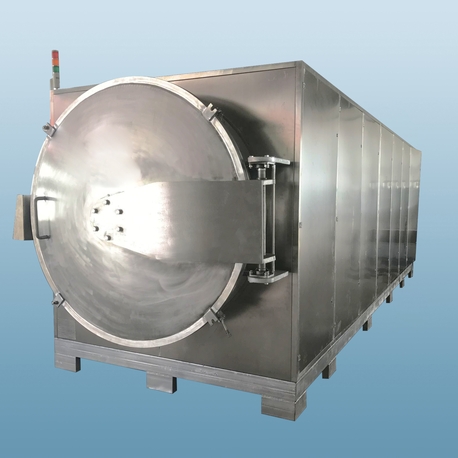
A batch industrial fruit dryer with a 1,000 kg fresh-fruit
load capacity typically requires 10 to 18 hours to complete a drying cycle,
depending on the fruit type and final moisture specification. Annual throughput
thus depends on the number of cycles per week. Continuous dryers, by contrast,
process fruit continuously, with residence times ranging from 3 to 8 hours. For
an operation processing 5 metric tons of fresh mango per day, a continuous
system with 3 tons/hour feed rate would be appropriate.
Fruit preparation also affects dryer capacity. Slicing thickness, peel
removal, and pitting all impact the drying load. Thinner slices dry faster but
require more careful handling to prevent breakage. A comprehensive capacity plan
accounts for preparation yield losses (typically 10% to 30% for peeling and
coring) and the moisture reduction ratio—fresh fruit with 85% moisture requires
removal of roughly 6 kg of water per 7 kg of fresh fruit to reach 15% final
moisture.
Seasonal fluctuations in fruit supply influence equipment sizing. A dryer
sized for peak harvest may operate at partial capacity during off-seasons,
affecting cost efficiency. Some processors address this by drying multiple fruit
types across different seasons or by incorporating a buffer storage system for
fresh fruit prior to drying.

Maintenance and Equipment Longevity
Industrial drying equipment operates in a demanding environment—high
temperatures, variable humidity, and fruit acids that can corrode unprotected
surfaces. Preventive maintenance schedules are not optional; they are necessary
for consistent performance and safety.
Key maintenance tasks include cleaning of heat exchangers (which accumulate
dust and fruit debris), inspection of fan belts and bearings, and calibration of
temperature and humidity sensors. Air filters require replacement or cleaning at
regular intervals—clogged filters reduce airflow, increasing drying time and
energy consumption. For heat pump dryers, refrigerant charge checks and
compressor oil changes follow manufacturer-recommended intervals.
Fruit acids, particularly citric and malic acid, can attack aluminum
components over time. Nasan specifies food-grade stainless steel (304 or 316L)
for all product-contact surfaces and internal chamber linings. This material
selection resists pitting corrosion and facilitates sanitation. The company also
provides maintenance documentation and spare parts kits that cover commonly
replaced items such as heating elements, temperature probes, and door seals.
Proactive maintenance reduces unplanned downtime—an hour of unscheduled
stoppage on a large continuous dryer can represent hundreds of kilograms of lost
production. Many facilities adopt condition-monitoring approaches, using
vibration analysis on fans and blowers and thermal imaging on electrical
connections to detect developing issues before they cause failures.
Frequently Asked Questions
Q1: What is the typical payback period for an industrial fruit
dryer?
A1: Payback periods range from 18 to 36 months, depending on
throughput, energy costs, and product value. A dryer processing high-value dried
fruit (such as organic mango or pineapple) often achieves payback within the
shorter end of this range. The calculation should include capital cost,
installation, energy consumption, maintenance, and the revenue premium for dried
versus fresh product. A detailed financial model, incorporating local utility
rates and expected annual running hours, provides the most accurate
estimate.
Q2: How does an industrial fruit dryer compare to sun drying in terms
of product quality?
A2: Sun drying relies on ambient weather
conditions, which are unpredictable and vary widely. Open-air drying leads to
contamination from dust, insects, and birds, and UV exposure degrades colour and
nutrients. An industrial fruit dryer offers controlled temperature, humidity,
and airflow, producing consistent colour, flavour, and microbiological safety.
Sun drying also requires extensive labour for turning and protecting the fruit,
whereas mechanical drying reduces manual handling. The primary advantage of sun
drying is its low capital cost; however, quality and hygiene drawbacks often
outweigh this benefit for commercial operations.
Q3: Can the same dryer handle different fruit types without
cross-contamination?
A3: Yes, with proper cleaning protocols and
recipe management. Between batches, the drying chamber should be cleaned and
sanitized to remove residual sugars and fruit particles that could harbour mould
or bacteria. Effective cleaning involves removing trays or belts, washing them
with food-grade detergents, and rinsing with potable water. Drying at high
temperature (above 70°C) for a short cycle after cleaning helps eliminate
microbial contaminants. For allergen management—for example, drying mangoes
after tree nuts—separate equipment or dedicated production lines are advisable,
depending on regulatory requirements.
Q4: What final moisture content should I target for dried
fruit?
A4: Target moisture content depends on the fruit type and the
intended application. For whole dried fruit consumed as snacks, 15% to 20%
moisture is common, providing a pliable texture and extended shelf life. For
fruit powders or ingredients used in baking and confectionery, moisture below 5%
is necessary to prevent caking and ensure free-flowing properties. Intermediate
moisture fruits (20% to 25%) are used in fruit bars and fillings; these products
require humectants or specialised packaging to control water activity. Water
activity (aw) below 0.65 generally prevents mould and bacterial growth,
regardless of the exact moisture percentage.
Q5: How does altitude affect industrial fruit dryer
performance?
A5: At higher altitudes, air density decreases,
reducing the heat-carrying capacity of the air. This lowers the drying rate for
a given air velocity and temperature. For facilities above 1,000 metres,
designers compensate by increasing air velocity, raising the drying temperature
slightly, or extending the residence time. The boiling point of water also
decreases with altitude, which can affect the moisture evaporation dynamics.
When installing an industrial fruit dryer at high-altitude sites, it is
advisable to consult with the manufacturer to adjust the equipment
specifications—fan selection, heater sizing, and control algorithms may require
modification to maintain throughput and product quality.
Q6: What are the signs that an industrial fruit dryer needs
servicing?
A6: Several indicators suggest maintenance is due:
increased drying time for the same batch size, higher energy consumption per
kilogram of product, unusual noise from fans or motors, temperature fluctuations
that require frequent manual adjustment, and visible corrosion or deposits on
heating surfaces. A consistent increase in drying time of 10% or more, without
changes in fruit quality or load size, typically signals that heat exchangers
need cleaning or that airflow is restricted. Regular monitoring of these
parameters allows maintenance to be scheduled proactively, avoiding costly
emergency repairs.
For inquiries regarding industrial fruit dryer specifications, capacity planning, or pricing for your processing line, contact
Nasan's engineering team with details of your fruit types, throughput
requirements, and site energy availability. The company provides tailored
solutions and technical documentation to support informed equipment
selection.