Commercial flower dehydration requires exact science. A single flawed drying
run can oxidize anthocyanins, strip out volatile essential oils, and turn
vibrant petals into brittle, brown waste. For commercial growers, botanical tea
processors, and herbal extractors, finished aesthetic and chemical integrity
determine profit margins.
Traditional sun drying exposes crops to birds, dust, and unpredictable
weather. Standard agricultural dryers run too hot and unevenly. To secure top
market prices in 2026, processors are upgrading to purpose-engineered drying
systems designed specifically for fragile botanical tissues.
As a global processing equipment manufacturer with 20 years of engineering
expertise, Nasan builds advanced industrial systems for commercial facilities in
more than 40 countries. Whether you process delicate rose petals or thick
medicinal blossoms, this review covers the five best commercial setups available
this year.
Planning an equipment upgrade? Contact the Nasan engineering team today to discuss throughput calculations and
receive custom layout drawings for your facility.
Commercial Evaluation Criteria: Choosing an Industrial Flower
Dehydrator
Investing in a commercial flower drying machine requires evaluating metrics
far beyond initial purchase price. Industrial processors should evaluate
equipment based on four primary performance standards:
- Color and Morphology Retention: Does the dryer preserve the
natural flower geometry without shriveling, scorching, or browning? Pigments
like carotenoids and anthocyanins degrade quickly under direct, uncontrolled
heat.
- Aroma and Bioactive Preservation: High temperatures boil
off aromatic monoterpenes and sesquiterpenes. A high-grade flower dehydrator
must run at precise, low temperatures to lock in medicinal phytochemicals and
natural fragrance.
- Thermal Efficiency and Operational Costs: Drying flowers
requires pulling substantial moisture out of delicate structures. Energy
consumption per kilogram of evaporated water dictates your daily operating
margins.
- Multi-Stage Process Control: Petals shed surface water
rapidly, while flower receptacles (calyxes) retain dense core moisture.
Equipment must provide staged temperature and moisture adjustments across the
cycle.
1. Nasan Vacuum Microwave Flower Dryer: Best for High-Value Botanicals
High-value medicinal flowers, rare herbal teas, and cosmetic-grade blossoms
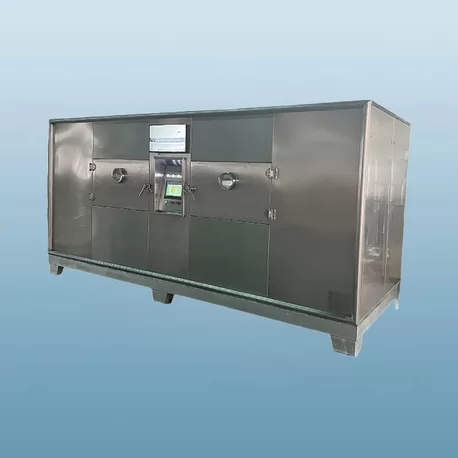
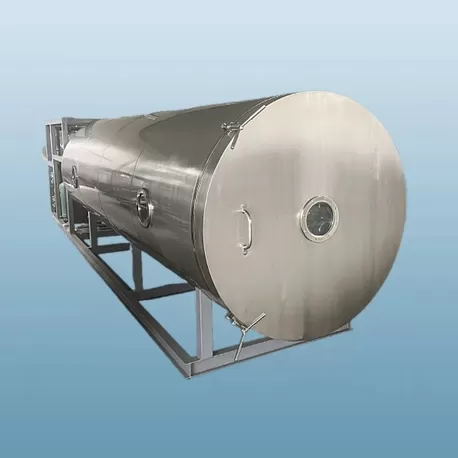
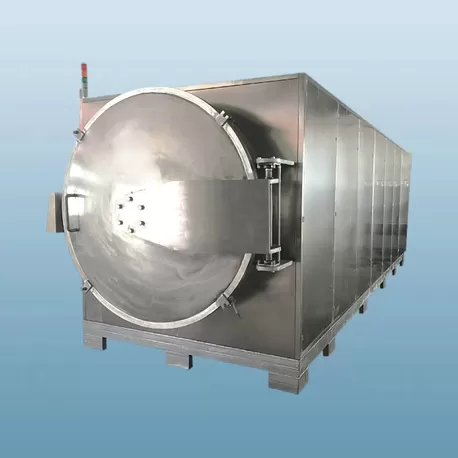
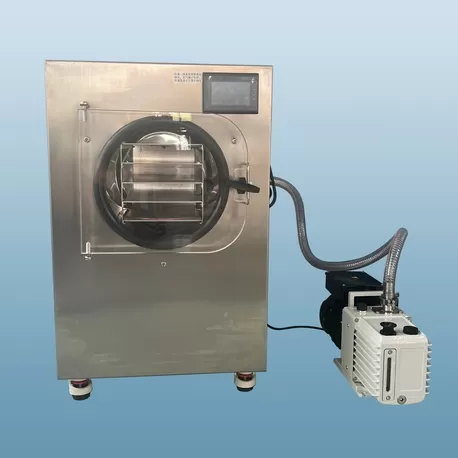
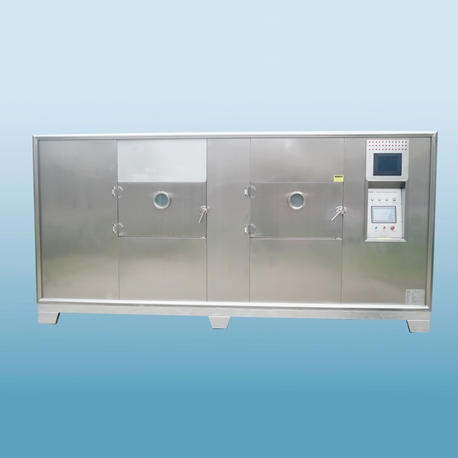
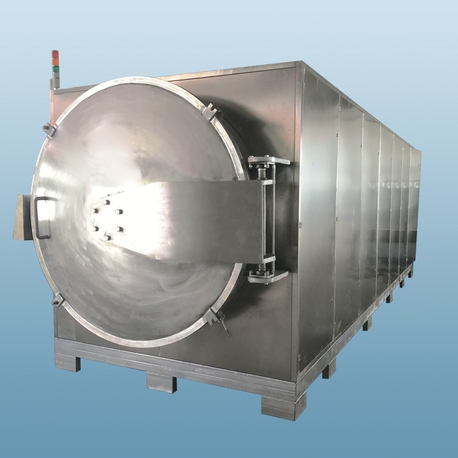
demand speed without heat damage. The Nasan industrial vacuum microwave flower
dryer solves this problem by dropping atmospheric chamber pressure. Under
vacuum, water boils at 30°C to 45°C rather than 100°C.
Microwave energy penetrates directly to the molecular core of the flower
rather than relying on surface conduction. Water vaporizes uniformly from the
inside out within minutes instead of days. Research documented by ScienceDirect
on botanical vacuum dehydration demonstrates that low-temperature vacuum
drying preserves bioactive polyphenols and volatile oils far better than
conventional convective air methods.
The vacuum environment expands the cell walls slightly, producing an
attractive, unwrinkled bloom that reconstitutes instantly in hot water.
Processing cycles drop from 24 hours down to 25 to 45 minutes, slashing labor
and inventory bottlenecks.
- Ideal applications: Saffron, butterfly pea flower,
medicinal chamomile, high-grade whole tea flowers.
- Core advantage: Extreme speed combined with maximum
retention of active chemical compounds.
- Capacity: Scalable batch configurations from 50 kg to 500
kg per run.
2. Nasan Industrial Heat Pump Rose Dryer: Best for Fragrance and Petal
Integrity
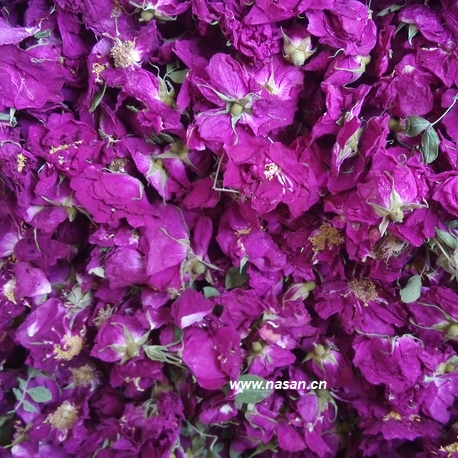
Rose processing presents a difficult processing paradox. Damask, French, and
Pingyin roses hold dense concentrations of precious aromatic oils that vaporize
at moderate heat. Yet their layered petals trap moisture that quickly breeds
mold if dried too slowly.
The Nasan closed-loop rose petal dehydrator machine uses advanced
thermodynamic heat pump technology. It continuously recycles latent heat from
the exhaust air while pulling out moisture through condensation coils. Operating
smoothly between 35°C and 52°C, it simulates dry natural breezes indoors without
introducing outside contaminants.
The system features multi-stage temperature and humidity ramping. During the
initial phase, high airflow strips exterior petal moisture. The system then
steps down relative humidity while holding lower temperatures, ensuring the
dense center of the rose dries completely without burning outer petals.
- Ideal applications: Damask rosebuds, loose rose petals,
hibiscus calyxes, and peony tea.
- Core advantage: Exceptional aroma retention with up to 60%
lower electricity usage than standard electric heat.
- Capacity: Modular drying rooms handling 500 kg to 5,000 kg
per batch.
3. Nasan Continuous Mesh Belt Chrysanthemum Dryer: Best for High-Throughput
Operations
Commercial operations handling tons of fresh material daily cannot rely on
manual tray loading. The Nasan continuous mesh belt industrial
chamomile/chrysanthemum dryer is built for high-volume agribusiness operations
that require 24/7 continuous output.
Chrysanthemums, such as Golden Silk Imperial and Hangbai varieties, feature
dense, moisture-laden central disks surrounded by delicate, dry petals. Nasan
utilizes a multi-layer stainless steel belt configuration where hot,
dehumidified air circulates up and down through the falling material beds.
As the flowers move from the top deck down through lower tiers, the system
gently turns them over, exposing every surface to balanced airflow. Adjustable
speed drives and variable heat zones prevent case hardening, ensuring the thick
calyx dries thoroughly without over-baking the external florets. Guidelines from
the Food and
Agriculture Organization (FAO) highlight continuous convective drying as a
primary safeguard against commercial post-harvest crop spoilage.
- Ideal applications: Chrysanthemum, chamomile, calendula,
and large-scale culinary herb processing.
- Core advantage: High-throughput, fully automated 24/7
continuous drying with minimal labor overhead.
- Capacity: Continuous input rates from 500 kg/hour to over
3,000 kg/hour.
4. Nasan Jasmine and Osmanthus Dryer: Best for Fragile Micro-Blooms
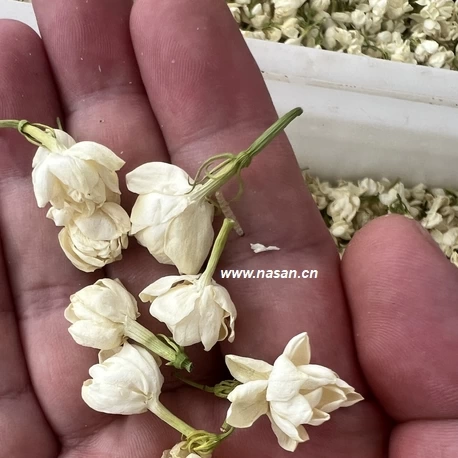
Tiny botanical flowers like jasmine, osmanthus, and elderflower carry unique
operational hazards. High-velocity industrial fans blow tiny blossoms right off
the trays, clogging air ducts and wasting expensive raw materials. Heat also
turns osmanthus brown and turns white jasmine petals dull yellow.
The Nasan micro-flow flower dehydrator employs horizontal laminar air
circulation running at tuned, ultra-low air speeds. Micro-perforated food-grade
stainless steel trays hold small flowers securely while dry air passes across
the product bed.
A specialized desiccant dehumidification wheel works alongside the cooling
circuit, pulling room humidity down rapidly without demanding high heat.
Osmanthus retains its natural bright golden amber hue, while jasmine stays snowy
white, commanding top tier pricing from beverage blenders and culinary
bakeries.
- Ideal applications: Osmanthus, Arabian jasmine,
elderflower, and linden blossom.
- Core advantage: Low-velocity airflow stops petal movement
while specialized dehumidification protects light pigments.
- Capacity: Cabinet and modular walk-in models from 100 kg to
1,200 kg per load.
5. Nasan Large-Chamber Lotus and Water Lily Dryer: Best for Dense
Blooms
Whole-flower tea presentations, such as dried royal lotus and blue water
lilies, are expanding across the specialty infusion market. These flowers weigh
up to 200 grams each when harvested fresh and carry thick, fleshy stems that
hold high water volumes.
Drying these blooms in standard cabinet dryers typically results in rotten
cores or collapsed, discolored petals. The Nasan deep-bed lotus flower
dehydrator provides high static air pressure and deep vertical air penetration
to push through multi-layered aquatic petals.
The automated PLC system controls a multi-tier cycle: warm, dry air opens the
petals into full natural bloom before deep-core moisture extraction seals the
central stem. By managing humidity removal curves alongside flower stem
expansion, the unit maintains the flower's natural radial geometry, allowing it
to unfurl cleanly in the consumer's teapot.
- Ideal applications: Royal lotus, sacred blue water lily,
artichoke blooms, and large decorative sunflowers.
- Core advantage: High-pressure airflow prevents core mold
while holding full structural bloom geometry.
- Capacity: Chamber setups accommodating 200 kg to 2,000 kg
of fresh whole flowers.
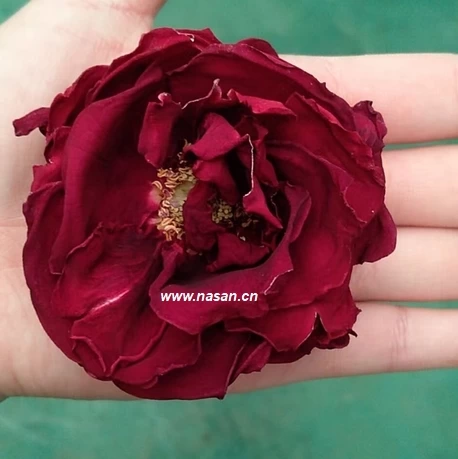
Commercial Buyer's Guide: Matching Capacity, Heat Source, and ROI
Choosing the best dehydrator for tea flowers or botanical extracts requires
balancing harvest volumes against capital expenditure and local energy
costs.
Batch Tray vs. Continuous Belt: If your farm harvests
selectively, processes multiple distinct flower species, or handles under 1,500
kg daily, modular tray chambers offer the greatest flexibility. If you manage
extensive acreage of a single crop like chamomile, a continuous belt drying
system reduces manual labor costs and prevents processing bottlenecks.
Selecting Your Thermal Source: Energy consumption typically
represents over 40% of ongoing post-harvest costs. Electric heat pumps provide
the cleanest and most cost-effective performance in temperate and warm climates.
For massive industrial volumes, hot water or steam heat exchangers tied to
central biomass or natural gas boilers provide lower operating costs per
ton.
Review agricultural processing parameters supported by the United States Department
of Agriculture (USDA) to ensure equipment meets proper sanitation and
handling protocols.
Why Commercial Processors Choose Nasan
Nasan brings 20 years of dedicated thermal and dehydration manufacturing
experience to the botanical industry. Rather than selling generic food ovens,
Nasan designs machinery configured around the thermodynamic properties of
botanical tissues.
Our industrial drying solutions operate across 40 countries, including the
United States, Germany, France, Vietnam, and the United Arab Emirates. Every
commercial flower dehydrator is constructed from food-grade SUS304 or SUS316
stainless steel, fitted with Siemens PLCs, and backed by international warranty
support.
Nasan engineers provide complete turnkey planning: from facility layout and
thermodynamic balance calculations to on-site installation, commissioning, and
operational training.
Frequently Asked Questions
Q1: What temperature range is best for preserving color and fragrance
in a commercial flower dehydrator?
A1: Most botanicals should dry
between 35°C and 50°C. Temperatures above 55°C quickly degrade anthocyanins and
carotenoids while boiling away light aromatic terpenes. Vacuum microwave systems
operate effectively at even lower temperatures (30°C to 40°C) because reduced
pressure lowers the boiling point of moisture.
Q2: How does an industrial vacuum microwave flower dryer differ from
a commercial freeze dryer?
A2: Freeze dryers sublimate ice under
high vacuum over 24 to 72 hours, resulting in fragile, hygroscopic material at
high operational and equipment costs. A vacuum microwave flower dehydrator
removes moisture in 30 to 60 minutes using direct electromagnetic excitation. It
produces comparable color and compound retention with significantly lower
equipment investment and faster inventory turnaround.
Q3: Can a commercial flower drying machine process both whole flowers
and loose petals?
A3: Yes, provided the system features adjustable
fan speeds and variable temperature settings. Loose petals dry quickly under
light airflow. Dense whole flowers require higher static pressure and tiered
drying profiles to pull core moisture out of the stem and calyx without
over-drying the exterior petals.
Q4: How do I stop thick flower calyxes from molding while keeping the
petals from scorching?
A4: You need multi-stage humidity control.
Start with moderate heat and high air exchange to remove loose surface petal
moisture. Then drop the humidity while holding low temperatures so core moisture
wicks outward through capillary action. Pulsed drying profiles prevent case
hardening.
Q5: What utility connections are required for an industrial
continuous belt dryer?
A5: Continuous belt systems require a
three-phase electrical drop (typically 380V to 480V) for the drive motors,
exhaust blowers, and controls. The primary heating coils run on electricity,
steam hookups, natural gas burners, or closed-circuit heat pump loops depending
on site specifications.
Request a Commercial Equipment Consultation and Material
Test
Upgrading your botanical processing line requires precise engineering data.
Nasan maintains a state-of-the-art testing facility where we can process your
raw flower samples to calculate exact drying curves, yield percentages, and
energy metrics.
Talk directly with a Nasan application engineer: Contact us
today to discuss your daily harvest volumes, explore customized flower
dehydrator options, and receive a transparent capital quote for your
facility.